Quick Verdict: The 2019 RAV4 Hybrid XLE in 2026
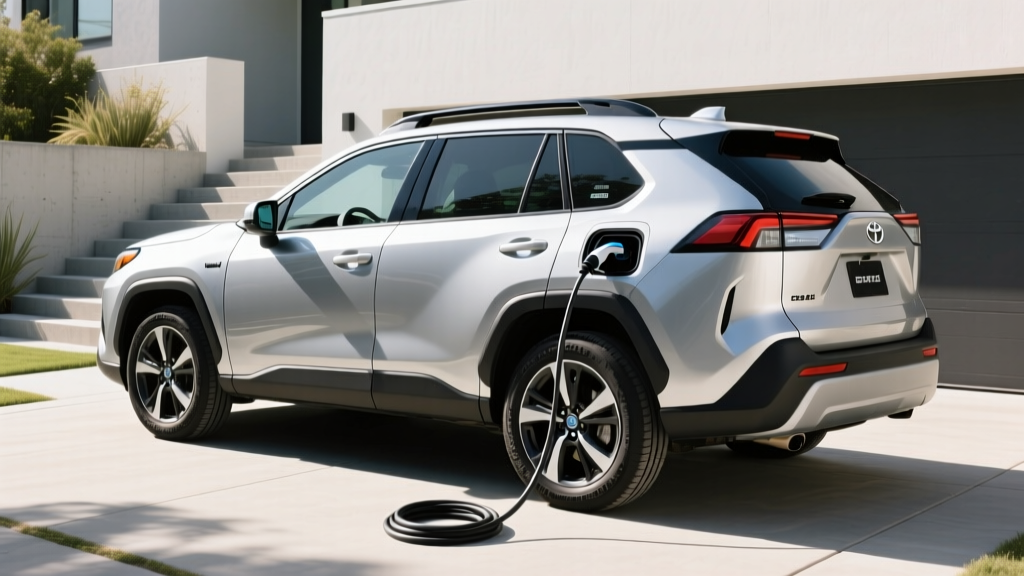
The 2019 Toyota RAV4 Hybrid XLE remains one of the most practical used hybrid SUVs on the market in 2026. With EPA ratings of 41 MPG city / 38 MPG highway / 40 MPG combined, standard electronic all-wheel drive, and Toyota's proven hybrid synergy drive system, it delivers crossover utility without ever needing a plug. For used-car buyers weighing their first hybrid purchase, the XLE trim hits the value sweet spot — adding keyless entry, dual-zone climate, and a power-adjustable driver seat over the base LE without the premium of the Limited.
This is a conventional hybrid (HEV), not a plug-in. You never plug it in. The gasoline engine and regenerative braking charge a small nickel-metal hydride battery pack automatically. If you want electric-only driving, you need the RAV4 Prime (PHEV), which Toyota introduced for the 2021 model year. We cover that distinction below.
| Spec | Value |
|---|---|
| Powertrain | 2.5L 4-cyl + 3 electric motors (AWD-i) |
| Combined Horsepower | 219 HP |
| EPA MPG (City / Hwy / Combined) | 41 / 38 / 40 |
| Drivetrain | Electronic AWD (eAWD) |
| Hybrid Battery | ~1.6 kWh, Nickel-Metal Hydride (NiMH) |
| 0–60 mph | ~7.8 seconds |
| Cargo Volume (behind rear seats) | 37.6 cu ft |
| Towing Capacity | 1,750 lbs |
| Original MSRP (XLE) | $29,750 (+ $1,120 D&H) |
| Typical Used Price (2026, ~70k mi) | $18,500 – $23,000 |
| Hybrid Battery Warranty | 8 yr / 100,000 mi (10 yr / 150,000 mi in CARB states) |
HEV vs PHEV: Why the 2019 RAV4 Hybrid Is Not a Plug-In
This distinction trips up many used-car shoppers. The 2019 RAV4 Hybrid is a conventional hybrid electric vehicle (HEV). It has no charging port, no plug, and no meaningful electric-only range. The hybrid battery is small (~1.6 kWh) and charges exclusively through regenerative braking and the gasoline engine. You drive it exactly like a normal car — fill up with gas and go.
A plug-in hybrid (PHEV) like the RAV4 Prime (introduced in 2021) carries a much larger battery (18.1 kWh), offers a dedicated charging port, and can drive up to 42 miles on electricity alone before the engine engages. The Prime also qualifies for federal tax credits; the 2019 Hybrid does not.
| Factor | RAV4 Hybrid (HEV) | RAV4 Prime (PHEV) | Fully Electric SUV (e.g., Ioniq 5) |
|---|---|---|---|
| Plug in to charge? | No | Yes (Level 1 or 2) | Yes (Level 1, 2, or DC fast) |
| Electric-only range | ~1 mile at low speed | 42 miles (EPA) | 250–320+ miles |
| Fuel/energy | Gasoline only | Gasoline + electricity | Electricity only |
| Best for | No home charging access | Short commutes + road trips | Home charging + daily driving |
| Federal tax credit | None | Up to $7,500 (if eligible, when new) | Up to $7,500 (§30D rules apply) |
Fuel Economy: EPA Ratings vs Real-World MPG
The EPA rates the 2019 RAV4 Hybrid XLE at 41 MPG city, 38 MPG highway, and 40 MPG combined, per fueleconomy.gov. These figures apply to all 2019 RAV4 Hybrid trims (LE, XLE, XSE, Limited) because they share the same powertrain and AWD-i system.
| Driving Condition | EPA MPG | Real-World Expectation |
|---|---|---|
| City | 41 MPG | 38–44 MPG (hybrids often exceed EPA in stop-and-go) |
| Highway (70 mph cruise) | 38 MPG | 34–37 MPG (less regen benefit at sustained speed) |
| Combined | 40 MPG | 37–41 MPG depending on driving mix |
| Cold weather (below 32°F) | — | 33–37 MPG (engine runs more for cabin heat) |
Why city MPG beats highway MPG: Conventional hybrids recapture energy through regenerative braking, which is maximized in stop-and-go traffic. On the highway, the gasoline engine does most of the work, and the electric motors provide less assistance. This is the opposite pattern of a conventional gas car and is a key advantage for urban and suburban drivers.
Cold-weather note: Expect a 5–10% MPG drop in winter. The engine runs more frequently to generate cabin heat (there's no electric heater in the 2019 model) and the battery is less efficient at low temperatures. Owners in northern climates commonly report 33–37 MPG combined in January.
Powertrain and Driving Dynamics
The 2019 RAV4 Hybrid pairs a 2.5-liter Dynamic Force 4-cylinder engine (176 HP, 163 lb-ft torque) with three electric motor-generators:
- MG1: Engine starter and generator
- MG2: Primary drive motor for the front axle
- Rear motor: Powers the rear axle for AWD (up to ~50% torque distribution)
Net system output is 219 HP. The electronic continuously variable transmission (eCVT) provides smooth, stepless acceleration — no gear hunting on hills. The 0–60 mph time of approximately 7.8 seconds is brisk for a compact hybrid SUV and noticeably quicker than the non-hybrid 2019 RAV4 (which runs a 203 HP 4-cylinder with an 8-speed automatic).
The AWD-i system is fully electronic — there is no mechanical driveshaft connecting the front and rear axles. The rear motor engages automatically when slip is detected or during hard acceleration. It's effective for snow and rain but not designed for serious off-roading. Towing capacity is rated at 1,750 lbs, which covers a small utility trailer or a pair of dirt bikes but not a boat or camper.
Hybrid Battery Longevity, Warranty, and Replacement Cost
2019 RAV4 Hybrid Battery Warranty:
- Federal states: 8 years / 100,000 miles
- CARB states (CA, NY, MA, CT, RI, VT, ME, NJ, MD, OR, WA, CO, MN, NV, NM, and others adopting CARB rules): 10 years / 150,000 miles
- Coverage threshold: Toyota warrants the hybrid battery against failure and excessive capacity loss (typically below ~60% of original capacity)
The 2019 RAV4 Hybrid uses a nickel-metal hydride (NiMH) battery pack located under the rear seat. NiMH is a mature, well-understood chemistry that Toyota has used in its hybrids since the original 1997 Prius. It is heavier and less energy-dense than lithium-ion, but it is extremely durable and tolerant of temperature extremes.
Real-world longevity data: Toyota hybrid battery packs routinely last 150,000–200,000+ miles before significant degradation. Many first-generation Prius taxis surpassed 300,000 miles on the original pack. For a 2019 RAV4 Hybrid with 70,000 miles in 2026, the battery is likely well within its useful life.
Battery replacement cost (if needed out of warranty):
- New OEM replacement: $3,000 – $4,500 (parts + labor at a Toyota dealer)
- Refurbished/remanufactured pack: $1,500 – $2,500
- Individual module replacement: $300 – $800 (some independent hybrid specialists can replace only the failed cells)
The good news: catastrophic hybrid battery failure on a 2019 RAV4 Hybrid is rare. Most owners will never face this expense. If you're buying used, ask for a hybrid battery health check — many Toyota dealers can pull the State of Health (SoH) data through the OBD-II port.
Pricing and Tax Credit Eligibility in 2026
Original MSRP: The 2019 RAV4 Hybrid XLE started at $29,750 plus a $1,120 destination charge, for a total of ~$30,870. Options like the Convenience Package (moonroof, power liftgate) or the XLE Premium Package could push the sticker to $33,000–$35,000.
Used market (2026): Expect to pay $18,500–$23,000 for a well-maintained 2019 RAV4 Hybrid XLE with 60,000–80,000 miles, depending on condition, region, and options. Clean-title examples with service records command a premium. Certified Pre-Owned (CPO) units from Toyota dealers carry an extended warranty and typically cost $1,000–$2,000 more.
Federal tax credit: The 2019 RAV4 Hybrid does not qualify for the federal §30D clean vehicle tax credit. That credit applies only to plug-in electric vehicles (BEVs and PHEVs) with sufficient battery capacity. Conventional hybrids like this one are ineligible regardless of buyer income or purchase price.
Used EV credit (§25E): Similarly, the used clean vehicle credit (up to $4,000 or 30% of sale price, whichever is less) applies only to used BEVs and PHEVs — not conventional hybrids. The 2019 RAV4 Hybrid does not qualify.
State incentives: A handful of states offer rebates or HOV lane access for hybrids, but most state-level incentives have shifted to plug-in vehicles. Check your state's energy office or DMV for current programs — they vary significantly by jurisdiction.
Who Should Buy the 2019 RAV4 Hybrid XLE?
Choose the 2019 RAV4 Hybrid XLE if:
- You want 40 MPG without changing your habits — no plugs, no apps, no charging planning
- You live in an apartment or lack access to home/work charging
- Your daily driving is a mix of city and suburban roads (where the hybrid system shines)
- You need AWD for snow or rain but don't want the fuel penalty of a traditional AWD SUV
- You're buying used and want proven Toyota reliability with a strong hybrid battery track record
Look elsewhere if:
- You want electric-only driving for a short commute — consider a used RAV4 Prime (PHEV, 2021+)
- You have reliable home Level 2 charging and want zero tailpipe emissions — a used BEV like the Hyundai Ioniq 5 or Tesla Model Y may save more on fuel
- You tow more than 1,750 lbs — the RAV4 Hybrid's towing capacity is modest
- You want the latest infotainment — the 2019 model's 7-inch screen and Entune system feel dated by 2026 standards (no wireless CarPlay; Android Auto was not available on the 2019 model year)
Pros
- 40 MPG combined with AWD — exceptional efficiency for the segment
- No plug-in required; zero lifestyle change from a gas car
- 219 HP provides confident merging and passing
- Toyota hybrid reliability is among the best in the industry
- Spacious cargo area (37.6 cu ft) with no battery-pack intrusion
- Strong resale value; parts and service widely available
Cons
- No federal or state tax credits available for conventional hybrids
- Dated infotainment — no Android Auto, no wireless Apple CarPlay
- eCVT drone under hard acceleration (common to all Toyota hybrids)
- 1,750-lb towing limit is below some competitors
- Rear motor AWD is not a substitute for a true off-road system
Frequently Asked Questions
How many MPG does the 2019 Toyota RAV4 Hybrid XLE get?
The EPA rates it at 41 MPG city, 38 MPG highway, and 40 MPG combined. In real-world driving, most owners average 37–41 MPG combined, with city driving sometimes exceeding the EPA estimate thanks to regenerative braking. Cold weather can reduce combined MPG to 33–37.
Does the 2019 RAV4 Hybrid need to be plugged in?
No. This is a conventional hybrid (HEV), not a plug-in hybrid. The battery charges automatically through regenerative braking and the gasoline engine. You simply fill up with gas as you would with any car.
Is the 2019 RAV4 Hybrid reliable?
Yes. Toyota's hybrid synergy drive system is one of the most proven electrified powertrains in history, with decades of real-world data. The NiMH battery pack is durable and typically lasts 150,000–200,000+ miles. The 2019 RAV4 Hybrid consistently earns high reliability ratings from Consumer Reports and J.D. Power. According to NHTSA, the 2019 RAV4 received a 5-Star Overall Safety Rating.
What does a replacement hybrid battery cost?
If the hybrid battery fails out of warranty, a new OEM replacement runs $3,000–$4,500 at a Toyota dealer. Refurbished packs cost $1,500–$2,500, and individual cell-module repairs can be as low as $300–$800 at a hybrid specialist. However, most 2019 packs will never need replacement during typical ownership.
Does the 2019 RAV4 Hybrid qualify for any tax credit?
No. The federal §30D clean vehicle credit and the §25E used clean vehicle credit both require a plug-in vehicle (BEV or PHEV) with a minimum battery capacity. The 2019 RAV4 Hybrid is a conventional HEV and is ineligible for federal EV tax credits. State-level hybrid incentives are rare in 2026 — check your local jurisdiction.
Hybrid vs PHEV vs EV — which should I choose?
If you lack home charging access or frequently drive long distances in rural areas, the HEV (2019 RAV4 Hybrid) is the simplest choice. If you can charge at home and have a short commute, a PHEV like the RAV4 Prime (2021+) gives you 42 miles of electric driving for daily errands plus gas flexibility for road trips. If you have reliable home Level 2 charging and want the lowest operating cost, a fully electric SUV eliminates gasoline entirely. Per IRS guidelines, only plug-in vehicles (PHEVs and BEVs) are eligible for current federal clean vehicle credits, which can meaningfully reduce purchase cost if you meet income and sourcing requirements.
How does the 2019 RAV4 Hybrid compare to the gas-only 2019 RAV4?
The gas-only 2019 RAV4 AWD is rated at 25 MPG city / 33 MPG highway / 28 MPG combined. The Hybrid's 40 MPG combined represents a 43% improvement in fuel economy, plus more horsepower (219 vs 203) and standard AWD. The hybrid typically costs $1,500–$2,500 more on the used market but pays for itself through fuel savings within 2–4 years for an average driver covering 12,000 miles annually.