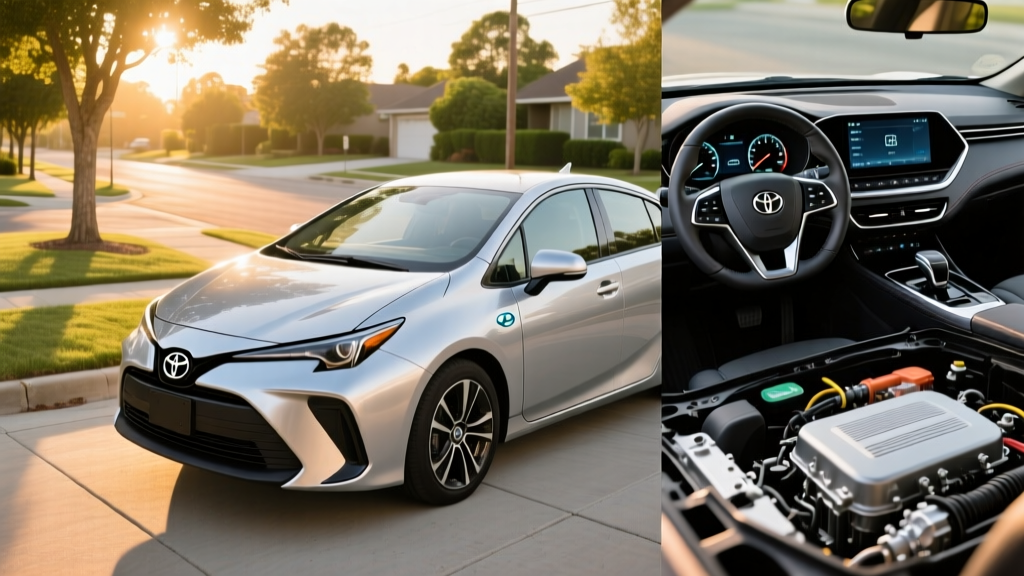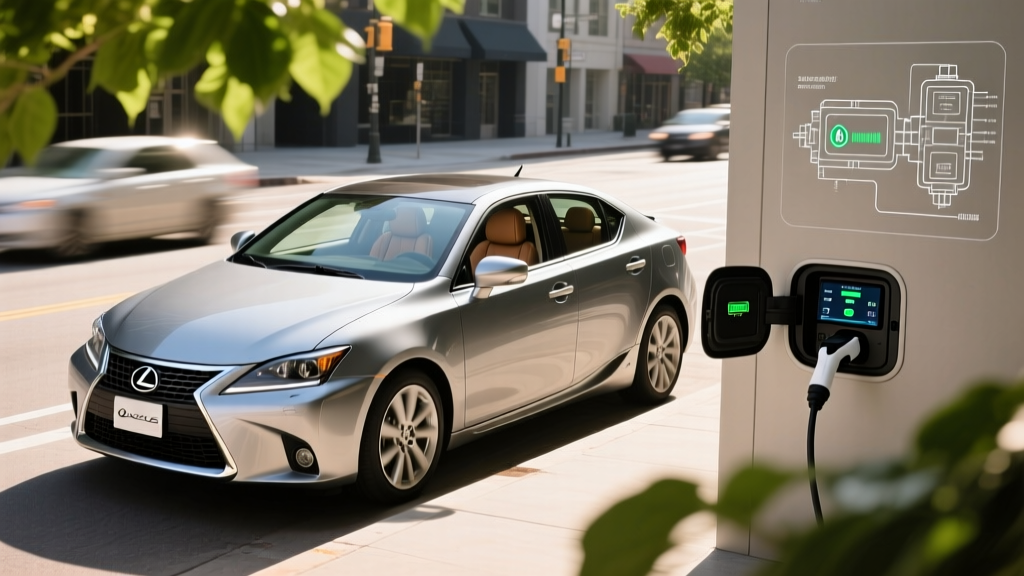
The 2014 Lexus CT 200h occupies a unique space in the used-hybrid market: a premium compact hatchback that shares its powertrain with the legendary Toyota Prius but wraps it in Lexus refinement. If you are cross-shopping this model against newer hybrids, plug-in hybrids, or full EVs, you need hard numbers on fuel economy, battery longevity, and total cost of ownership — not marketing nostalgia. This guide delivers exactly that.
HEV vs PHEV vs EV: Where the CT 200h Fits
The 2014 Lexus CT 200h is a conventional hybrid electric vehicle (HEV). It cannot be plugged in, has no electric-only driving range, and requires zero charging infrastructure. The gasoline engine and regenerative braking keep a small nickel-metal hydride (NiMH) battery charged. This matters because used-car shoppers sometimes confuse the CT 200h with plug-in models — it has no EV mode beyond low-speed creeping for a fraction of a mile.
Quick Hybrid-Type Reference
| Feature | HEV (CT 200h) | PHEV (e.g., Prius Prime) | BEV (e.g., Model 3) |
|---|---|---|---|
| Plug-in required | No | Yes | Yes |
| Electric-only range | ~0.5 mi at low speed | 25–44 mi | 250–360+ mi |
| Battery size | 1.3 kWh (NiMH) | 13.6 kWh (Li-ion) | 50–82 kWh (Li-ion) |
| Fuel needed | Gasoline | Gasoline + electricity | Electricity only |
| Federal tax credit (new) | None | Up to $7,500 (§30D) | Up to $7,500 (§30D) |
2014 Lexus CT 200h MPG: EPA vs Real-World Numbers
The EPA rates the 2014 CT 200h at 51 city / 48 highway / 50 combined MPG according to fueleconomy.gov. Those figures come from the same 1.8-liter Atkinson-cycle four-cylinder and hybrid synergy drive found in the third-generation Prius, tuned identically for efficiency.
| Driving Scenario | EPA Estimate | Real-World Expectation |
|---|---|---|
| City (stop-and-go) | 51 MPG | 48–55 MPG (regen braking excels here) |
| Highway (70 mph cruise) | 48 MPG | 40–44 MPG (aero drag, less regen benefit) |
| Combined | 50 MPG | 42–48 MPG (varies by climate, terrain, tire pressure) |
| Cold weather (below 32°F) | — | 36–42 MPG (engine runs more for cabin heat) |
Like most conventional hybrids, the CT 200h actually outperforms its EPA city rating in mild-climate urban driving, where regenerative braking recaptures energy at every stop. Highway efficiency drops because the electric motor assists less at sustained high speeds, and the 1.8L engine shoulders more of the load. Owners in hot or cold extremes should budget 10–15% below the combined sticker.
Powertrain and Performance Specs
| Specification | 2014 Lexus CT 200h |
|---|---|
| Engine | 1.8L Atkinson-cycle inline-4 |
| Engine horsepower | 98 hp @ 5,200 rpm |
| Electric motor output | 80 hp (60 kW) |
| Combined net system horsepower | 134 hp |
| Transmission | eCVT (planetary gearset, not a belt CVT) |
| 0–60 mph | 9.8 seconds |
| Drivetrain | Front-wheel drive |
| Battery type | Nickel-metal hydride (NiMH) |
| Battery capacity | 1.3 kWh |
| Fuel tank | 10.6 gallons |
| Total driving range | ~530 miles (at 50 MPG combined) |
| Cargo volume (rear seats up) | 14.3 cu ft |
| Cargo volume (rear seats folded) | 37.4 cu ft |
The 134 combined horsepower is modest by modern standards, and the 9.8-second 0–60 time reflects that. The CT 200h was never engineered for performance — it was engineered to deliver Lexus-quiet commuting at Prius efficiency. The eCVT planetary gearset is bulletproof (no belts, no pulleys, no fluid to change at short intervals) and is one of the most reliable transmissions ever mass-produced.
Hybrid Battery Longevity, Warranty, and Replacement Cost
Battery Warranty & Expected Lifespan
Original warranty: 8 years / 100,000 miles (10 years / 150,000 miles in CARB states including CA, NY, MA, and others).
Real-world lifespan: Toyota/Lexus NiMH hybrid batteries commonly last 150,000–200,000+ miles before significant degradation. Many first-generation Prius packs (2001–2003) exceeded 200,000 miles.
Replacement cost (2026): $2,200–$3,800 for a new OEM battery at a Lexus dealer; $1,200–$2,000 for a refurbished/reconditioned pack from independent hybrid specialists.
For a 2014 model, the original 8-year/100,000-mile federal emissions warranty on the hybrid battery has expired in most cases unless the vehicle was registered in a CARB state and has under 150,000 miles. Used buyers should pull a battery health report via an OBD-II scanner app (such as Dr. Prius or Techstream) to check individual module voltage spread — a variance above 0.3V between modules signals impending failure.
The NiMH chemistry in the CT 200h is less energy-dense than modern lithium-ion but is exceptionally tolerant of heat and deep cycling. The primary failure mode is cell imbalance from prolonged sitting (weeks without driving), not normal use. If you drive regularly, the pack will likely outlast the rest of the car.
Pricing and Tax Credit Eligibility in 2026
The 2014 Lexus CT 200h originally started at approximately $32,350 MSRP (base) and reached $38,000+ with the Premium and F Sport packages. In the 2026 used market, expect to pay:
- $9,000–$12,000 for examples with 100,000–140,000 miles
- $12,000–$16,000 for examples under 80,000 miles in good condition
- $7,000–$9,000 for high-mileage or cosmetically challenged units
Tax credit eligibility: The federal §30D new clean vehicle credit does not apply — the CT 200h is a conventional hybrid, not a plug-in, and is no longer sold new. The used clean vehicle credit (IRC §25E) provides up to $4,000 (30% of sale price, capped) but only for plug-in electric vehicles (PHEVs and BEVs) with a battery of at least 7 kWh. The CT 200h's 1.3 kWh NiMH pack does not qualify. No federal tax incentive is available for this purchase. Some states may offer minimal used-hybrid rebates — check your state energy office for current programs.
Reliability and Ownership Costs
The CT 200h is among the most reliable vehicles Lexus has produced, which is saying something. Its powertrain is shared with the third-generation Prius (2010–2015), one of the most extensively proven hybrid systems in history. Key reliability notes:
- Engine: The 2ZR-FXE 1.8L has no timing belt (chain-driven), no turbo, and runs the low-stress Atkinson cycle. Head gasket issues that plagued early 2010 Prius models were largely resolved by the 2012 refresh and are rare on the 2014.
- eCVT: Essentially maintenance-free. No fluid changes required under normal service.
- Brakes: Regenerative braking dramatically reduces pad wear. Original brake pads lasting 80,000–100,000 miles is common.
- 12V auxiliary battery: Located in the rear cargo area, this is a standard AGM 12V battery (not the hybrid traction battery). Replace every 4–5 years to avoid no-start issues. ~$180–$250.
- Common complaints: Water pump failure (electric, ~$400–$600 replacement), EGR valve clogging at high mileage, and dashboard rattles on early builds (largely resolved by mid-2013).
Annual maintenance costs average $400–$600 at independent shops, per repair-industry aggregators — well below the luxury-brand average and comparable to a Corolla. Insurance runs $1,100–$1,500/year depending on state and driver profile.
Pros
- 50 MPG combined EPA — among the most efficient non-plug-in vehicles ever sold
- Proven Prius-derived powertrain with exceptional reliability
- Lexus build quality, quiet cabin, premium materials
- Low maintenance costs (long brake life, no timing belt)
- Hatchback practicality with 37.4 cu ft cargo space
- Strong used-market value retention
Cons
- Slow acceleration (9.8 sec 0–60) — underpowered for highway merging
- Firm ride quality, especially with 17-inch F Sport wheels
- Dated infotainment (no Apple CarPlay/Android Auto, small screen)
- Rear seat is tight for adults over 6 feet
- No plug-in capability — no EV mode, no tax credits
- Mouse-style joystick controller is frustrating to use
Who Should Buy the 2014 CT 200h — And Who Shouldn't
Choose the 2014 CT 200h if:
- You want maximum MPG without plugging in or changing your routine
- You commute in stop-and-go city traffic where hybrid efficiency shines
- You want Lexus reliability at near-Corolla running costs
- Your budget is $9,000–$15,000 and you want a premium badge
- You don't have access to home or workplace charging
Look at a PHEV or BEV instead if:
- You have home charging and want electric-only daily driving (consider a used Prius Prime or Clarity PHEV)
- You want federal tax credits — the used EV credit applies to PHEVs/BEVs only
- You need strong acceleration for highway merging (134 hp is limiting)
- You want modern infotainment with smartphone integration
- You drive more than 60% highway miles where the hybrid advantage narrows
Frequently Asked Questions
How many MPG does the 2014 Lexus CT 200h hybrid get?
The EPA rates it at 51 city / 48 highway / 50 combined MPG. In real-world mixed driving, expect 42–48 MPG combined, with city driving often exceeding the EPA estimate and highway cruising dropping to 40–44 MPG. Cold weather and aggressive driving can push it into the mid-to-high 30s.
Does the 2014 CT 200h need to be plugged in?
No. The CT 200h is a conventional self-charging hybrid (HEV). The battery recharges through regenerative braking and the gasoline engine. There is no plug, no charging port, and no electric-only driving range beyond a brief low-speed crawl.
Is the 2014 Lexus CT 200h reliable?
Yes — it is one of the most reliable vehicles in the Lexus lineup. The powertrain is shared with the Toyota Prius and has been proven across millions of vehicles worldwide. The eCVT transmission is essentially maintenance-free, and the hybrid battery typically lasts 150,000–200,000+ miles. The most common repair items are the electric water pump and EGR system at higher mileages.
How much does a hybrid battery replacement cost?
A new OEM Lexus hybrid battery costs $2,200–$3,800 installed at a dealer. Refurbished/reconditioned batteries from hybrid specialists run $1,200–$2,000 installed. Given the typical 150,000–200,000+ mile lifespan, most owners will never need a replacement, or will need only one over the vehicle's lifetime.
Does the 2014 CT 200h qualify for any tax credit?
No. The federal §30D new vehicle credit and the §25E used clean vehicle credit both require a plug-in electric vehicle (PHEV or BEV) with a battery capacity of at least 4–7 kWh depending on the credit. The CT 200h's 1.3 kWh NiMH battery and lack of a charging port make it ineligible for any federal EV tax incentive. Check your state energy office for any local hybrid rebates.
How does the CT 200h compare to a used Prius?
Mechanically, they are nearly identical — same engine, same hybrid system, same EPA ratings. The CT 200h adds Lexus sound insulation, a more refined interior, a sport-tuned suspension (firm), and a hatchback design. You pay a $2,000–$4,000 premium over an equivalent-year Prius on the used market for the badge and cabin quality, but running costs are essentially the same.
Can I add Apple CarPlay or Android Auto?
Not through the factory system. The 2014 CT 200h uses Lexus' older Remote Touch interface with a 7-inch display. Aftermarket head-unit replacements exist (typically $600–$1,200 installed) that add CarPlay/Android Auto, but they require dash modification and may affect the backup camera integration.
Sources: EPA fuel economy data via fueleconomy.gov; IRS clean vehicle credit rules via irs.gov; NHTSA safety ratings via nhtsa.gov.