Quick Verdict: The High-MPG Sedan That Still Holds Up
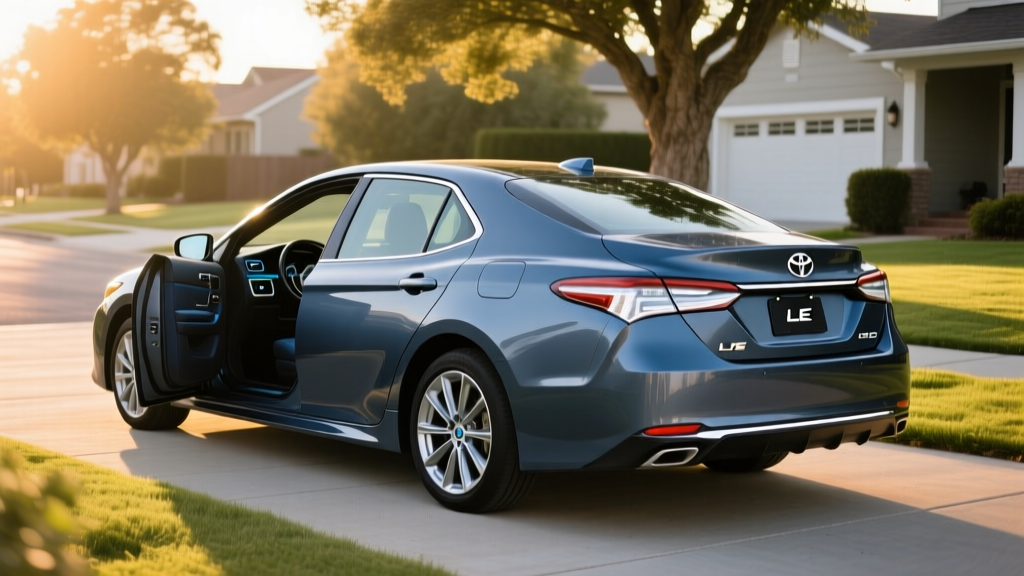
The 2019 Toyota Camry Hybrid LE remains one of the most fuel-efficient midsize sedans ever sold in the United States. With an EPA-rated 52 MPG combined, a proven 2.5-liter Dynamic Force hybrid powertrain, and Toyota's 10-year/150,000-mile hybrid battery warranty, it's a compelling used-car purchase in 2026 for drivers who want maximum efficiency without plugging in. Unlike a plug-in hybrid (PHEV) or battery-electric vehicle (BEV), the Camry Hybrid LE is a conventional hybrid (HEV) — it charges its own small battery through regenerative braking and the gasoline engine, so there's no cord, no charging anxiety, and no dependency on public infrastructure.
This guide breaks down everything a used-car shopper or current owner needs to know: exact EPA and real-world MPG, powertrain specs, battery longevity, ownership costs, and how the Camry Hybrid stacks up against PHEVs and full EVs in today's market.
EPA Fuel Economy and Real-World MPG
The LE trim is the efficiency champion of the 2019 Camry Hybrid lineup. Heavier trims (SE, XLE) with larger wheels drop the rating slightly.
| Metric | LE Trim | SE / XLE Trims |
|---|---|---|
| City MPG | 51 | 44 |
| Highway MPG | 53 | 47 |
| Combined MPG | 52 | 46 |
| Fuel Tank Capacity | 13.2 gal | 13.2 gal |
| Total Range (est.) | ~686 miles | ~607 miles |
Source: EPA fueleconomy.gov
Toyota's hybrid system excels in stop-and-go city driving, where the electric motor handles low-speed propulsion and regenerative braking recaptures energy. In real-world use, owners frequently report exceeding the EPA city rating — 53-56 MPG is common in urban commutes under 45 mph. Highway driving at 75+ mph tends to drop efficiency to roughly 44-48 MPG due to aerodynamic drag and reduced regen opportunity. In cold weather (below 30°F), expect a 5-10% efficiency reduction as the engine runs more frequently to provide cabin heat and maintain battery temperature.
Powertrain Specs: Engine, Motor, and Combined Output
The 2019 Camry Hybrid uses Toyota's fourth-generation Hybrid Synergy Drive, pairing a high-efficiency four-cylinder engine with two motor-generators through a planetary gearset (eCVT). There is no traditional belt-and-pulley CVT or multi-gear automatic — the eCVT is a power-split device with no belts to wear.
| Gasoline Engine | 2.5L Dynamic Force I4 (A25A-FXS) |
| Engine Power | 176 hp @ 5,700 rpm / 163 lb-ft @ 3,600-5,200 rpm |
| Electric Motor (MG2) | 88 kW (118 hp) / 149 lb-ft |
| Combined Net Horsepower | 208 hp |
| Transmission | eCVT (power-split device) |
| Drivetrain | Front-wheel drive |
| 0-60 mph | ~7.6 seconds (MotorTrend tested) |
| Hybrid Battery | 1.6 kWh nickel-metal hydride (NiMH), 244.8V nominal |
| Curb Weight | ~3,472 lbs |
The 1.6 kWh battery is small by EV standards — it stores enough energy for roughly one mile of electric-only driving at low speeds. That's intentional: the battery acts as a buffer, not a primary energy source. The engine and motor work together seamlessly, with the car frequently shutting off the engine at stops and during gentle deceleration.
HEV vs. PHEV vs. EV: Which Powertrain Fits You?
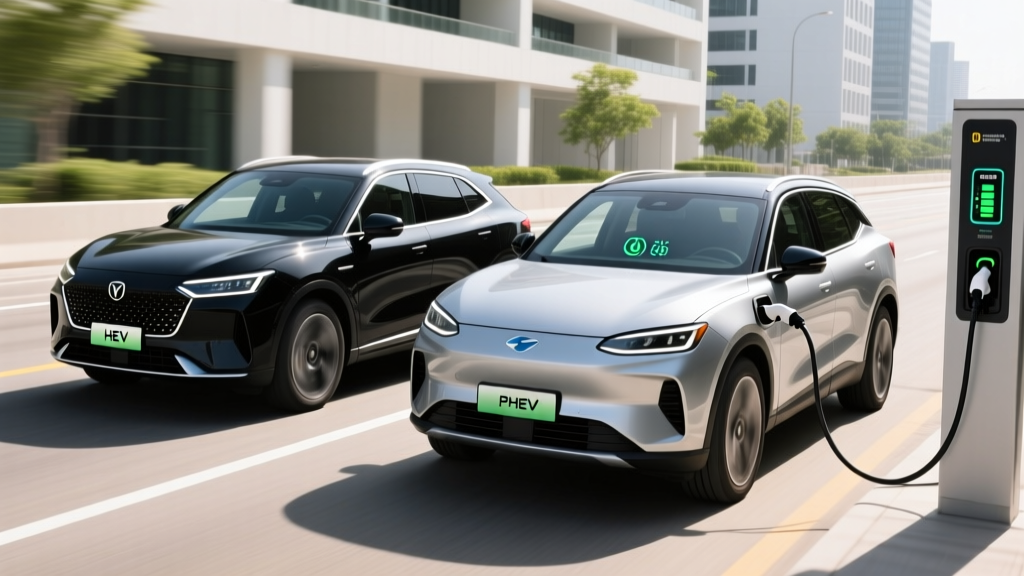
The Camry Hybrid LE is a conventional hybrid (HEV). It cannot plug in and has no meaningful electric-only range. Here's how it compares to the alternatives:
| Factor | HEV (Camry Hybrid) | PHEV (e.g., Prius Prime) | BEV (e.g., Tesla Model 3) |
|---|---|---|---|
| Plug-in Required? | No | Yes (optional but recommended) | Yes (mandatory) |
| Electric-Only Range | ~1 mi (low speed) | 25-44 mi (model-dependent) | 250-360+ mi |
| Total Range | ~686 mi | ~600+ mi combined | 250-360+ mi |
| Home Charging Needed? | No | 120V outlet sufficient | 240V Level 2 strongly recommended |
| Federal Tax Credit (new) | None | Up to $7,500 (§30D) | Up to $7,500 (§30D) |
| Fuel Cost (per mile) | ~$0.07 (gas) | ~$0.03-0.05 (mix) | ~$0.03-0.05 (electric) |
| Best For | No home charging, long trips | Short commute + road trips | Home charging + daily driving |
Choose the Camry Hybrid (HEV) if: You lack access to home or workplace charging, regularly drive long highway distances, want a proven low-maintenance powertrain, or simply want the lowest cost of ownership without changing your fueling habits.
Choose a PHEV if: You have a 120V or 240V outlet at home, your daily commute is under 30 miles round-trip (covering most driving on electricity), but you still want gas-engine range for road trips.
Choose a BEV if: You have reliable Level 2 home charging, want to eliminate gasoline entirely, and your typical trips fall within the vehicle's range.
Battery Longevity, Warranty, and Replacement Cost
Hybrid battery lifespan is the single most common concern among used hybrid buyers. Here's what the data shows for Toyota's NiMH hybrid batteries:
- Original warranty: 10 years / 150,000 miles (in CARB states including CA, NY, MA, and others adopting California emissions standards)
- Federal minimum: 8 years / 100,000 miles (all other states)
- Coverage threshold: Battery capacity loss resulting in measurable performance degradation or failure
- Transferable? Yes — warranty transfers to subsequent owners automatically
Source: Toyota Owner's Warranty Guide
For a 2019 model in 2026, the vehicle is approximately 7 years old. In CARB states, the hybrid battery warranty remains active through the 2029 model year or 150,000 miles — whichever comes first. In non-CARB states, the 8-year/100,000-mile warranty may be nearing expiration depending on mileage.
Real-World Battery Lifespan
Toyota's NiMH hybrid batteries have an exceptionally strong track record. Data from taxi fleets, high-mileage owner forums, and third-party surveys indicate these batteries commonly last 180,000 to 250,000+ miles before significant degradation. Unlike the large NMC or LFP batteries in EVs, the Camry Hybrid's 1.6 kWh pack operates within a narrow state-of-charge window (roughly 40-80%), which dramatically reduces stress on the cells. Toyota's battery management system never allows a full charge or full discharge.
Battery Replacement Cost
If the hybrid battery does fail outside of warranty coverage:
- New OEM battery (Toyota dealer): $2,500 - $4,000 installed
- Refurbished/remanufactured battery: $1,000 - $2,000 installed
- Individual cell module replacement: $500 - $1,200 (specialist hybrid shops can replace only the degraded modules)
Given the Camry Hybrid's battery reliability record, most owners will never face this expense. The cost is also substantially lower than an EV traction battery replacement ($5,000-$20,000+), reflecting the much smaller pack size.
Ownership Costs and Tax Credit Eligibility
Used Pricing in 2026
As of early 2026, a used 2019 Toyota Camry Hybrid LE with 60,000-90,000 miles typically lists between $17,000 and $22,000 depending on condition, mileage, and region. The Camry Hybrid holds value well due to its reliability reputation and strong fuel economy — depreciation has been gentler than most midsize sedans.
Federal Tax Credit
The 2019 Camry Hybrid LE does not qualify for the federal §30D clean vehicle tax credit. Under current IRS rules, only plug-in electric vehicles (BEVs and PHEVs) with sufficient battery capacity are eligible. Conventional hybrids like the Camry Hybrid have no plug-in capability and therefore fall outside the credit's scope.
- ❌ No plug-in charging capability (required for §30D)
- ❌ Battery capacity below 7 kWh threshold (Camry Hybrid: 1.6 kWh)
- ✅ Used EV credit (§25E): Also not applicable — requires a plug-in EV or PHEV
- ✅ Some states offer separate hybrid incentives — check your state energy office
Source: IRS.gov — Clean Vehicle Credits
Annual Fuel Cost
At $3.20/gallon (national average as of early 2026) and 15,000 miles/year:
- Camry Hybrid LE (52 MPG): ~$923/year in fuel
- Gas-only Camry LE (32 MPG combined): ~$1,500/year in fuel
- Annual savings vs. gas model: ~$577/year
Over 5 years of ownership, the Hybrid LE saves approximately $2,800-$3,000 in fuel compared to the conventional gas Camry — easily justifying any used-price premium.
Pros and Cons for Used Buyers
- 52 MPG combined EPA — among the highest of any midsize sedan
- Proven hybrid system with 200,000+ mile battery track record
- No plug-in charging needed — works with existing gas infrastructure
- Remaining hybrid battery warranty (CARB states through ~2029)
- Strong resale value and low depreciation
- Comfortable ride, spacious rear seat, 15.1 cu-ft trunk
- Toyota Safety Sense P standard (pre-collision, lane departure, auto high beams, dynamic radar cruise)
- No federal tax credit eligibility (new or used)
- NiMH battery is older tech — smaller and heavier than lithium equivalents
- Modest 208 hp — adequate but not sporty
- Infotainment system feels dated by 2026 standards (no wireless CarPlay on 2019 models)
- No plug-in option means no electric-only commuting
- Road noise is noticeable at highway speeds
- Only FWD — no AWD option on 2019 Hybrid (AWD hybrid arrived in 2020)
Who Should Buy the 2019 Camry Hybrid LE?
- You drive 15,000+ miles per year and want to minimize fuel cost without plugging in
- You live in an apartment or lack reliable home/workplace charging access
- You want a proven, low-risk used car with strong reliability data
- Your daily commute involves heavy city/stop-and-go traffic (where hybrids shine)
- You regularly take long road trips and don't want to plan around charging stops
- You want electric-only commuting — consider a used Prius Prime or a BEV
- You need AWD — look at the 2020+ Camry Hybrid or a RAV4 Hybrid
- You prioritize modern infotainment and driver-assist tech over efficiency
- You want to claim a federal tax credit — only plug-in vehicles qualify
Frequently Asked Questions
How many MPG does the 2019 Toyota Camry Hybrid LE get?
The EPA rates the 2019 Camry Hybrid LE at 51 city / 53 highway / 52 combined MPG. In real-world city driving, many owners report 53-56 MPG. Highway driving at speeds above 70 mph typically yields 44-48 MPG. Cold weather can reduce efficiency by 5-10%.
Does the 2019 Camry Hybrid need to be plugged in?
No. The 2019 Camry Hybrid LE is a conventional hybrid (HEV), not a plug-in hybrid (PHEV). It charges its 1.6 kWh battery entirely through regenerative braking and the gasoline engine. You fuel it like any other car — just with far fewer trips to the gas station.
How long will the hybrid battery last?
Toyota's NiMH hybrid batteries commonly last 180,000-250,000+ miles based on fleet and owner data. The battery management system keeps the pack within a narrow charge window (roughly 40-80% state of charge), which minimizes degradation. For a 2019 model, the hybrid battery warranty may still be active — 10 years/150,000 miles in CARB states, 8 years/100,000 miles in others.
What does a replacement hybrid battery cost?
A new OEM replacement from a Toyota dealer costs approximately $2,500-$4,000 installed. Refurbished batteries run $1,000-$2,000, and individual cell module replacement at a specialist shop can be as low as $500-$1,200. Most owners never need a replacement.
Is the 2019 Camry Hybrid reliable?
Yes. The 2019 Camry Hybrid earns above-average reliability ratings from Consumer Reports and has no major systemic issues. The hybrid powertrain is one of Toyota's most proven systems, with decades of real-world data from Prius, Camry, and RAV4 Hybrid models. The eCVT power-split device has no belts or clutch packs to wear, contributing to long-term durability.
Does it qualify for any tax credit?
No. The 2019 Camry Hybrid LE does not qualify for the federal §30D new clean vehicle credit or the §25E used clean vehicle credit. Both credits require plug-in capability and a minimum battery capacity of 7 kWh. The Camry Hybrid's 1.6 kWh NiMH battery does not meet these thresholds. Some state or local utility incentives may apply — check your jurisdiction.
How does the Camry Hybrid compare to a PHEV like the Prius Prime?
The Prius Prime (PHEV) offers 25 miles of electric-only range when plugged in, then operates as a conventional hybrid with ~54 MPG. If you can charge at home and your commute is under 25 miles, the Prime can run almost entirely on electricity during the week. The Camry Hybrid LE requires no charging and offers more interior space and a more refined ride, but cannot drive on electricity alone for meaningful distances. The right choice depends on your charging access and commute pattern.