Quick Verdict: A Practical PHEV for Short-Commute Electrification
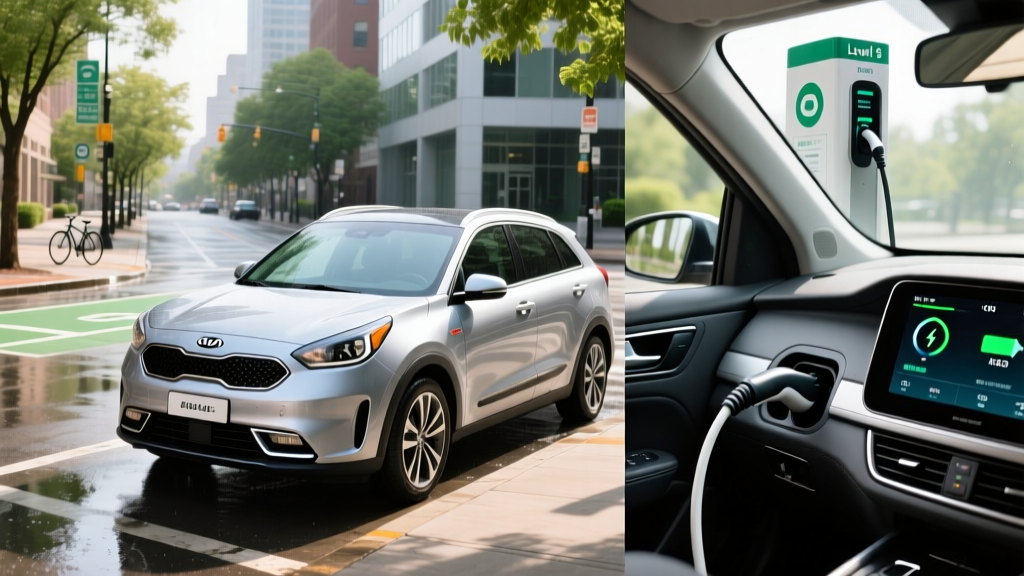
The 2019 Kia Niro Plug-In Hybrid occupies a specific niche: it's a compact crossover that lets daily commuters drive 26 miles on electricity alone before the gasoline engine kicks in. For the used-car buyer in 2026, it represents one of the most affordable entry points into plug-in hybrid ownership, with examples trading well below their original MSRP. But with a modest 8.9 kWh battery and no DC fast-charging capability, the Niro PHEV rewards patience and routine — it's built for predictable, short-distance electrification, not road-trip flexibility.
This guide covers everything a prospective buyer or current owner needs: EPA fuel economy, real-world MPG, electric-only range, powertrain specs, battery longevity, and how the Niro PHEV stacks up against its conventional hybrid sibling and full EVs on the market.
HEV vs PHEV: Understanding the Niro Lineup
Kia sold the Niro in two distinct electrified variants for 2019, and confusing them is the most common mistake buyers make. Here's the breakdown:
| Feature | 2019 Niro Hybrid (HEV) | 2019 Niro Plug-In Hybrid (PHEV) |
|---|---|---|
| Plug-in charging | No — charges via regen & engine | Yes — J1772 Level 1/Level 2 |
| Battery capacity | 1.56 kWh | 8.9 kWh (lithium-ion polymer) |
| Electric-only driving | Minimal (low-speed assist only) | EPA-rated 26 miles |
| EPA combined MPG | 49–50 MPG | 46 MPG (gas) / 105 MPGe (combined) |
| Combined horsepower | 139 hp | 139 hp |
| Transmission | 6-speed DCT | 6-speed DCT |
| Starting MSRP (2019) | ~$23,490 | ~$28,500 |
The HEV is a self-charging hybrid — you never plug it in, and the small battery captures energy from braking and the engine. The PHEV uses a much larger battery that you charge from a wall outlet or public Level 2 station, enabling genuine electric-only commuting before the gasoline engine takes over. If you cannot charge at home or work, the PHEV's advantage shrinks considerably.
Fuel Economy: EPA Numbers vs Real-World MPG
According to fueleconomy.gov, the 2019 Kia Niro PHEV achieves:
| Metric | EPA Rating |
|---|---|
| Combined (charge-depleting + sustaining) | 105 MPGe / 46 MPG |
| City (gasoline only) | 48 MPG |
| Highway (gasoline only) | 44 MPG |
| Electric-only range | 26 miles |
| Total combined range | ~560 miles |
What to Expect in the Real World
The 105 MPGe figure only applies when you're regularly charging and driving within that 26-mile electric window. In practice, owners who plug in nightly and commute under 25 miles round-trip may go weeks without burning fuel. Once the battery depletes, the Niro PHEV operates as a conventional hybrid at 46 MPG combined — slightly less than the HEV variant due to the added weight of the larger battery pack.
Real-world observations from owner communities and testing suggest:
- City driving (gas mode): 44–50 MPG — hybrids typically match or exceed EPA city ratings in stop-and-go traffic thanks to regenerative braking
- Highway driving (gas mode): 39–44 MPG — the Atkinson-cycle 1.6L engine loses its city advantage at sustained high speeds
- Electric-only range: Expect 20–24 miles in warm weather, dropping to 16–20 miles in freezing temperatures as battery efficiency decreases and cabin heating draws additional power
- Cold-weather gas MPG: 38–42 MPG combined — shorter warm-up cycles and winter fuel blends reduce efficiency
Battery, Charging, and Powertrain Specs
| Specification | 2019 Kia Niro PHEV |
|---|---|
| Engine | 1.6L GDI 4-cylinder (103 hp, 109 lb-ft) |
| Electric motor | 44.5 kW permanent-magnet synchronous (60 hp) |
| Combined system output | 139 hp / 195 lb-ft |
| Battery capacity | 8.9 kWh (lithium-ion polymer) |
| Usable battery capacity | ~7.8 kWh (buffer protects longevity) |
| Electric-only range (EPA) | 26 miles |
| Level 1 charging (120V, 12A) | ~9 hours (0–100%) |
| Level 2 charging (240V, 3.3 kW onboard) | ~2 hours 30 min (0–100%) |
| DC fast charging | Not available |
| Charge port | J1772 (Level 1 & Level 2) |
| 0–60 mph | ~9.7 seconds |
| Drivetrain | Front-wheel drive |
| Transmission | 6-speed dual-clutch automatic |
| Cargo volume | 19.4 cu ft (rear seats up) |
Charging Reality: What Owners Should Know
The Niro PHEV's onboard charger maxes out at 3.3 kW. This means Level 2 charging tops out at roughly 3.3 kW regardless of the station's capability — plugging into a 7.2 kW or 11.5 kW public charger won't speed things up. A full charge from empty takes about 2.5 hours on Level 2, which is perfectly adequate for overnight home charging or topping up at a workplace station during the workday.
The absence of DC fast charging is a deliberate trade-off at this price point and battery size. With only 8.9 kWh to fill, DC fast charging would be overkill for most use cases — a Level 2 session during a grocery run or work shift easily replenishes the pack.
Battery Warranty & Longevity
Kia provides a 10-year/100,000-mile hybrid battery warranty on the 2019 Niro PHEV (for original owners; coverage transfers as 10-year/100,000-mile from original in-service date in most states, though some states may reduce to 5-year/60,000-mile for subsequent owners — verify with your dealer). The warranty covers battery capacity falling below a specified threshold, typically around 70% of original capacity.
As of 2026, a 2019 Niro PHEV is 7 years old. Most examples remain within the original 10-year battery warranty window, which is a significant advantage for used buyers. Battery replacement cost, if out of warranty, typically ranges from $3,000 to $5,500 including labor, though widespread failures have not been a common pattern for this generation.
Reliability and Ownership Costs
The 2019 Niro PHEV benefits from Kia's mature hybrid powertrain, which debuted in the 2017 model year and saw incremental refinements. The 1.6L Atkinson-cycle engine and 6-speed DCT are well-understood components, and the lithium-ion polymer battery pack has demonstrated strong longevity in owner reports. The Niro line earned an IIHS Top Safety Pick rating when equipped with specific headlights, adding confidence for family buyers.
Common maintenance considerations include:
- DCT transmission: Some owners report minor hesitation at low speeds — typical of dry-clutch DCT designs, not a failure mode
- Brake wear: Regenerative braking significantly extends pad life; many owners report 80,000+ miles on original pads
- 12V auxiliary battery: Like all hybrids, the 12V battery can fail independently of the traction pack — budget $150–$250 for a replacement every 4–5 years
- Coolant service: The hybrid system uses separate coolant loops; follow Kia's 60,000-mile interval
Insurance costs for the Niro PHEV tend to run slightly above the segment average for compact crossovers, partly due to battery-related repair costs in collision scenarios. Expect annual premiums in the $1,200–$1,600 range depending on your profile.
Tax Credits and Used-Buyer Economics
When new, the 2019 Kia Niro PHEV qualified for a $4,543 federal tax credit under the pre-2023 IRS §30D rules (based on its 8.9 kWh battery capacity). That original credit has expired for new purchases, but used buyers in 2026 may benefit from a different incentive:
Used Clean Vehicle Credit (§25E)
Under current IRS rules, purchasing a qualifying used PHEV from a licensed dealer can yield a tax credit of up to $4,000 (30% of the sale price, capped at $4,000). Key eligibility requirements:
- Sale price must be $25,000 or less
- Buyer income caps: $75,000 (single), $112,500 (head of household), $150,000 (joint)
- Vehicle must be at least 2 model years old (2019 qualifies in 2026)
- Must purchase from a licensed dealer — private-party sales do not qualify
- Credit is non-refundable and cannot exceed your tax liability (point-of-sale transfer available)
- Buyer cannot have claimed the used-EV credit in the prior 3 years
With 2019 Niro PHEV examples trading in the $16,000–$22,000 range from dealers in 2026, many buyers can capture the full $4,000 credit — effectively reducing the purchase price by 18–25%. This makes the Niro PHEV one of the best-value electrified vehicles on the used market.
Note: State and local incentives vary by jurisdiction. Check your state's energy office or a tax professional for additional credits, rebates, or HOV-lane access programs.
Niro PHEV vs Full EV vs Gas Car: Which Fits You?
Decision Framework
Choose the 2019 Niro PHEV if:
- Your round-trip commute is under 26 miles and you can charge at home overnight
- You want electric daily driving but need gasoline flexibility for longer road trips
- You don't have access to reliable public DC fast charging in your area
- Your budget is $16,000–$22,000 (before used-EV credit)
Choose a full EV (like a used Bolt EV or Leaf) if:
- You can install a Level 2 home charger and rarely drive more than 150 miles in a day
- You want to eliminate oil changes, spark plugs, and exhaust maintenance entirely
- You have access to DC fast charging for road trips
Choose the Niro HEV (conventional hybrid) if:
- You cannot charge at home or work — no apartment outlet, no workplace station
- You want maximum MPG without any plug-in routine
- You prioritize the lowest purchase price in the Niro lineup
Choose a gas car if:
- You drive very few miles annually (<5,000) — the fuel savings won't offset a higher purchase price
- You regularly tow or carry heavy loads beyond the Niro's capacity
Pros and Cons
Pros
- 26 miles of electric-only range covers most daily commutes
- 46 MPG combined in gas mode — excellent for road trips
- 10-year/100,000-mile battery warranty (most 2019 examples still covered)
- Eligible for up to $4,000 used-EV tax credit in 2026
- Comfortable ride quality and practical cargo space (19.4 cu ft)
- Standard Apple CarPlay and Android Auto
- Low running costs: infrequent brake wear, modest tire sizes
Cons
- Only 3.3 kW onboard charging — no DC fast charging
- Electric range drops significantly in cold weather (16–20 mi)
- 9.7-second 0–60 time — leisurely acceleration
- DCT can feel hesitant at low-speed takeoffs
- Rear seat space is tight for taller passengers
- Gas-mode MPG slightly lower than the HEV variant
- No all-wheel-drive option
Frequently Asked Questions
How many MPG does the 2019 Kia Niro Plug-In Hybrid get?
The EPA rates the Niro PHEV at 46 MPG combined (48 city / 44 highway) when operating on gasoline after the battery is depleted. When factoring in electric-only driving, the combined rating is 105 MPGe. Real-world city driving often matches or slightly exceeds the EPA city figure, while sustained highway speeds tend to yield 39–44 MPG.
How far can the 2019 Niro PHEV go on electric only?
The EPA rates it at 26 miles of electric-only range. In warm weather with gentle driving, expect 22–26 miles. In freezing temperatures or with aggressive acceleration, that drops to 16–20 miles. The total combined range (electric + gasoline) is approximately 560 miles.
Does the 2019 Niro PHEV qualify for any tax credit in 2026?
The original new-vehicle federal tax credit ($4,543) is no longer available. However, buying a used 2019 Niro PHEV from a licensed dealer for $25,000 or less may qualify you for the Used Clean Vehicle Credit (§25E) — up to $4,000, subject to income caps ($75K single / $150K joint) and a 3-year repeat-purchase limit. Consult a tax professional and review IRS guidance before purchasing.
Is the 2019 Kia Niro PHEV reliable, and what does battery replacement cost?
The Niro PHEV's powertrain has a strong reliability record. The lithium-ion polymer battery is covered by Kia's 10-year/100,000-mile hybrid battery warranty, and most 2019 examples remain within that window as of 2026. Out-of-warranty battery replacement typically costs $3,000–$5,500 including labor, though widespread battery failures are uncommon for this model.
Can I charge the Niro PHEV at a public DC fast charger?
No. The 2019 Niro PHEV does not have a DC fast-charging port. It charges via a J1772 connector at Level 1 (120V, ~9 hours) or Level 2 (240V, ~2.5 hours at its 3.3 kW onboard maximum). This is typical for PHEVs with smaller battery packs — DC fast charging is generally reserved for full EVs with 40+ kWh batteries.
How does the Niro PHEV compare to the Niro HEV for someone who can't charge at home?
If you cannot plug in regularly, the conventional Niro HEV is the better choice. It achieves 49–50 MPG combined without any plug-in routine and typically costs $2,000–$4,000 less on the used market. The PHEV's larger battery adds weight and cost without benefit if you're never charging it — you'd essentially be carrying dead weight and getting slightly lower gas-only MPG (46 vs 49–50).
What's the difference between MPGe and MPG?
MPGe (miles per gallon equivalent) converts electricity consumption into the energy equivalent of a gallon of gasoline, allowing a direct comparison between electric and gas operation. The Niro PHEV's 105 MPGe reflects its efficiency while running on battery power. Once the battery is depleted and the engine takes over, the standard 46 MPG rating applies. MPGe is useful for comparing the electric portion of a PHEV's operation against full EVs, but gas-mode MPG is what matters on longer trips.