Quick Verdict: The Efficiency King That Still Holds Up
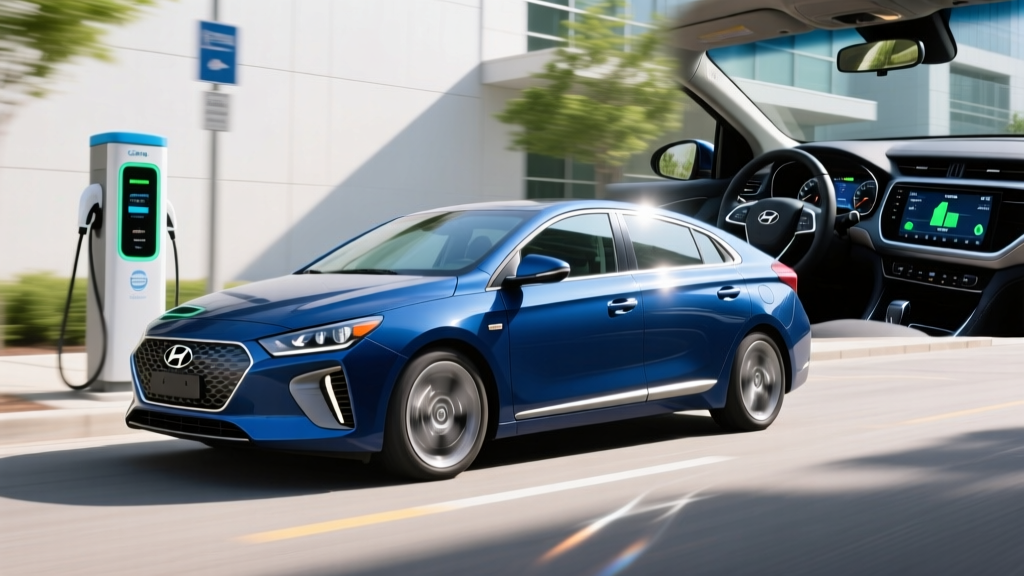
If you're researching the 2019 Hyundai Ioniq Hybrid Blue in 2026, you're likely hunting for a used fuel-sipper that can slash your commute costs without plugging in. The Blue trim is the range-topping efficiency variant of the first-generation Ioniq lineup, and its EPA-rated 58 MPG combined remains among the highest of any conventional hybrid ever sold in the United States. Even seven years after its model year, this car deserves serious attention from cost-conscious buyers who want hybrid reliability without EV charging complexity.
But real-world fuel economy, long-term battery health, and used-market pricing all matter just as much as the sticker spec. This guide covers every number you need before signing on a used Ioniq Hybrid Blue.
HEV vs PHEV vs EV: Where the Ioniq Hybrid Blue Fits
Hyundai sold the Ioniq in three distinct powertrains for 2019. Confusing them is easy — and costly — so let's separate them clearly:
| Variant | Type | Plug In? | Electric-Only Range | EPA Combined |
|---|---|---|---|---|
| Ioniq Hybrid Blue | Conventional HEV | No | ~1 mi (low-speed creep) | 58 MPG |
| Ioniq Hybrid (SEL/Limited) | Conventional HEV | No | ~1 mi (low-speed creep) | 55 MPG |
| Ioniq Plug-In Hybrid | PHEV | Yes (Level 2) | 29 mi electric-only | 119 MPGe / 52 MPG gas |
| Ioniq Electric | BEV | Yes (DC + L2) | 124 mi total range | 136 MPGe |
The 2019 Hyundai Ioniq Hybrid Blue is a conventional hybrid (HEV). It generates all its electricity from the gasoline engine and regenerative braking. There is no plug, no charging cable, and no electric-only highway driving. You fuel it like any gas car and let the hybrid system optimize the rest. The Blue trim achieves its 58 MPG edge through lower-weight 15-inch wheels, low-rolling-resistance tires, and the absence of heavier luxury features found on the Limited trim.
Fuel Economy: EPA Ratings vs Real-World MPG
The headline number is why this car exists. Here's the full EPA breakdown per fueleconomy.gov:
| Metric | EPA Rating | Real-World Expectation |
|---|---|---|
| City | 57 MPG | 55–62 MPG (hybrids excel in stop-and-go) |
| Highway | 59 MPG | 50–56 MPG (aero drag at 75+ mph hurts) |
| Combined | 58 MPG | 52–58 MPG depending on terrain and climate |
| Fuel tank | 11.9 gallons | ~620–690 mi real-world range per fill-up |
| Annual fuel cost* | ~$850 | Varies with local gas prices and mileage |
*Based on 15,000 mi/yr at $3.40/gal regular unleaded (2026 estimate).
Why real-world often beats EPA in the city: Conventional hybrids recapture kinetic energy through regenerative braking every time you slow for a light. Stop-and-go traffic, which destroys a gas car's mileage, actually helps the Ioniq Hybrid Blue's electric motor do more of the low-speed work. On the highway, however, sustained 75-80 mph speeds push the 1.6L Atkinson-cycle engine harder, and expect closer to 50-54 MPG on flat interstates. In cold weather (below 35°F), the engine runs more frequently to maintain cabin heat and battery temperature, dropping observed economy by roughly 5-10%.
Powertrain Specs: What Moves the Ioniq Hybrid Blue
| Specification | Value |
|---|---|
| Gas engine | 1.6L 4-cyl Atkinson-cycle (GDI) |
| Engine output | 104 HP / 109 lb-ft torque |
| Electric motor | 32 kW (43 HP) permanent-magnet synchronous |
| Combined system output | 139 HP / 195 lb-ft torque |
| Transmission | 6-speed dual-clutch automatic (DCT) |
| Hybrid battery | 1.56 kWh lithium-ion polymer |
| Drivetrain | Front-wheel drive |
| 0–60 mph | ~9.5 seconds |
| Curb weight | ~3,031 lbs (Blue trim) |
| Emissions | SULEV (Super Ultra Low Emission Vehicle) |
The 6-speed dual-clutch transmission is a defining feature. Unlike the Toyota Prius's eCVT (planetary gearset), Hyundai uses a traditional stepped gearbox. The result: more natural, linear acceleration feel and none of the "rubber-band" drone that some hybrid buyers dislike. The trade-off is that shifts are occasionally perceptible at low speeds — a minor quirk, not a dealbreaker.
Battery Health, Warranty, and Replacement Costs
The 1.56 kWh lithium-ion polymer battery in the Ioniq Hybrid Blue is small by EV standards, but it's doing constant charge-discharge cycles. Here's what 2026 buyers need to know about longevity:
Hyundai Hybrid Battery Warranty
- Original coverage: 10 years / 100,000 miles (whichever comes first)
- Transferable to second owner: Yes — but drops to 10 yr/100,000 mi from original in-service date regardless of ownership changes in most states
- Capacity threshold: Hyundai replaces or reconditions if the pack falls below ~70% of original capacity
- Emissions components: 8 years / 80,000 miles federal emissions warranty
Real-world degradation data: The Ioniq Hybrid's battery management system is conservative — it uses only a fraction of the 1.56 kWh total capacity (roughly 40-60% state-of-charge window) to minimize stress. Owners on Ioniq forums and Hyundai owner networks report minimal noticeable degradation at 100,000+ miles. The battery's small size means replacement is far cheaper than an EV pack: expect $2,000–$3,500 for a refurbished or new replacement from a Hyundai dealer, with aftermarket options potentially lower.
Used-buying tip for 2026: A 2019 model year vehicle's original 10-year/100,000-mile hybrid battery warranty expires in 2029 or at 100,000 miles. If the car you're evaluating has under 80,000 miles, meaningful factory coverage likely remains. Request a Hyundai dealer battery health diagnostic (State of Health / SoH report) before purchase — it takes about 15 minutes and gives you a definitive capacity percentage.
Reliability Track Record and Common Issues
The first-generation Ioniq (2017–2022) has a strong reliability record. The 1.6L Kappa engine and 6-speed DCT powertrain have been widely used across Hyundai/Kia models. Key observations from IIHS safety testing and owner surveys:
- IIHS rating: Good in all crashworthiness tests; Superior front crash prevention (with optional SmartSense)
- DCT clutch wear: Some owners report shuddering at low-speed takeoff around 60,000–80,000 miles; covered under powertrain warranty (5yr/60,000mi new, may have expired on used examples)
- 12V auxiliary battery: The Ioniq uses a traditional 12V lead-acid battery separate from the hybrid pack — it can die if the car sits for weeks; a standard jump-start or battery tender resolves this
- Infotainment: The 2019 base Blue trim has a 5-inch touchscreen with Apple CarPlay and Android Auto — functional but dated by 2026 standards
- Brakes: Regenerative braking handles most deceleration, so physical brake pads often last 80,000–100,000+ miles
Used Pricing and Tax Credit Eligibility in 2026
The 2019 Ioniq Hybrid Blue is long out of production, so you'll find it on the used market only. Here's what the financial picture looks like:
| Cost Factor | Detail |
|---|---|
| Original MSRP (2019) | ~$23,400 (Blue trim, before destination) |
| Used market range (2026) | $13,000–$18,500 depending on mileage and condition |
| Federal §30D new EV/PHEV credit | Not applicable — HEVs do not qualify |
| Federal used clean vehicle credit (§25E) | Not applicable — HEVs do not qualify (PHEV and BEV only, up to $4,000) |
| State incentives | Varies; most state rebates target PHEVs/BEVs, not HEVs |
| Insurance (avg annual) | ~$1,200–$1,500 (varies by state, age, driving record) |
Important tax credit clarification: Under current IRS §25E rules, the federal used clean vehicle credit (up to $4,000 or 30% of sale price) applies only to qualified plug-in electric vehicles and fuel cell vehicles. The conventional Ioniq Hybrid Blue, which has no plug and no meaningful electric-only range, does not qualify. If you want a used Ioniq that may be eligible for the used credit, look at the Ioniq Plug-In Hybrid or Ioniq Electric variants instead — both have plugs and meet the battery-capacity threshold.
Who Should Buy This Hybrid — And Who Shouldn't
Choose the Ioniq Hybrid Blue If:
- You commute 30+ miles daily and want the lowest possible fuel cost without plug-in infrastructure
- You live in an apartment or lack access to home/work charging — no plug needed
- You want a proven, low-risk used hybrid with strong warranty transferability
- You prioritize fuel economy over performance (9.5-sec 0-60 is adequate, not quick)
- You want to spend under $18,000 on a reliable daily driver
Look Elsewhere If:
- You want electric-only driving for short trips (consider the PHEV variant or a full EV)
- You need cargo space — the Ioniq's fastback trunk is 26.5 cu ft, smaller than a Prius or crossover
- You regularly drive mountain passes at highway speed (the 139 HP combined output strains on long grades)
- You want the latest infotainment and ADAS tech (2019 Blue trim is basic)
- You qualify for the $7,500 new EV credit (§30D) and could afford a new Ioniq 5 or similar BEV
HEV vs PHEV vs EV — Which Fits You?
- HEV (this car): No plug, lowest upfront cost, 50+ MPG everywhere. Best for renters, high-mileage commuters, and charging-desert areas.
- PHEV (Ioniq PHEV / RAV4 Prime): 25-42 mi electric-only for daily errands, gas engine for road trips. Best for homeowners with Level 2 access who want EV-like daily driving with road-trip flexibility.
- BEV (Ioniq 5 / Model 3): 250-350+ mi range, lowest per-mile fuel cost, highest upfront price. Best for homeowners with charging who drive under 300 mi/day and want the lowest operating cost.
Frequently Asked Questions
How many MPG does the 2019 Hyundai Ioniq Hybrid Blue get?
The EPA rates it at 57 city / 59 highway / 58 combined MPG. In real-world driving, most owners report 52-58 MPG combined, with city driving often exceeding the EPA estimate thanks to regenerative braking, and sustained highway speeds above 70 mph pulling economy down to 50-54 MPG.
Does the Ioniq Hybrid Blue need to be plugged in?
No. It is a conventional hybrid (HEV), not a plug-in hybrid (PHEV). The 1.56 kWh battery charges entirely through the gasoline engine and regenerative braking. You never plug it in — you simply fill up with gas like any conventional car.
Is the hybrid battery reliable, and what does replacement cost?
Hyundai's hybrid batteries have a strong longevity record, with the conservative battery management system limiting charge cycles to a narrow window to reduce wear. The original warranty is 10 years / 100,000 miles and is transferable to second owners. Out-of-warranty replacement runs approximately $2,000–$3,500 for the 1.56 kWh pack — significantly cheaper than an EV battery replacement.
Does the 2019 Ioniq Hybrid Blue qualify for any tax credit?
No. Federal tax credits under §30D (new vehicles) and §25E (used clean vehicles) require a plug-in electric vehicle with minimum battery capacity. The conventional HEV Ioniq Hybrid Blue has no plug and does not qualify. The Ioniq Plug-In Hybrid and Ioniq Electric variants may qualify for the used clean vehicle credit (up to $4,000) if income and price caps are met.
How does the Ioniq Hybrid Blue compare to a Toyota Prius?
The 2019 Prius Eco rates at 56 MPG combined (one MPG less than the Ioniq Blue), but offers more cargo space (50.7 cu ft vs 26.5 cu ft) and available AWD. The Ioniq's 6-speed DCT gives a more traditional driving feel versus the Prius's eCVT. On the used market, the Ioniq typically sells for $1,000–$3,000 less than an equivalent Prius, making it a value play.
What's the difference between the Blue trim and other Ioniq Hybrid trims?
The Blue trim uses lighter 15-inch wheels with low-rolling-resistance tires and omits heavier features (power seats, larger infotainment, sunroof) to maximize fuel economy. The SEL and Limited trims rate at 55 MPG combined — a 3 MPG penalty for the added comfort and technology.