Quick Verdict: The 2019 Honda Insight Is a Used-Hybrid Bargain
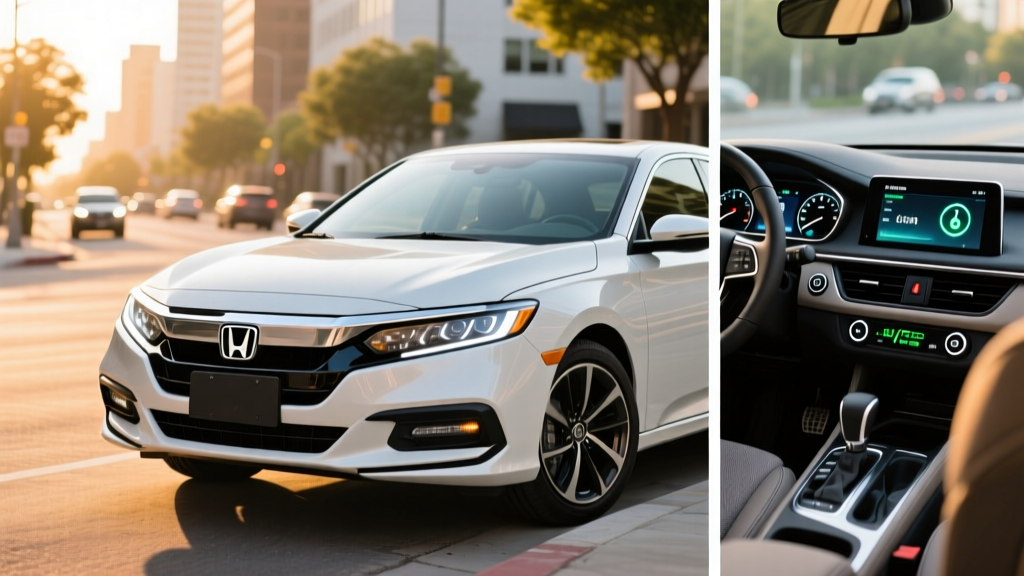
The 2019 Honda Insight is a conventional hybrid electric vehicle (HEV) — not a plug-in. It pairs a 1.5-liter Atkinson-cycle four-cylinder with a two-motor hybrid system to deliver an EPA-estimated 52 MPG city and 45 MPG highway (55 city/49 highway on the base LX trim). Honda discontinued the Insight after the 2022 model year, replacing its role with the Civic Hybrid. That means every Insight on the market today is a used purchase — and at 2026 used prices ranging roughly from $14,000 to $22,000 depending on mileage and trim, it represents one of the most fuel-efficient sedans you can buy without plugging in.
This guide covers everything a 2026 used-car buyer needs: exact EPA fuel economy by trim, real-world MPG expectations, the hybrid battery warranty and replacement cost, powertrain specs, and whether the Insight fits your needs versus a PHEV or full EV.
HEV vs PHEV: Where the Insight Fits
Before we get into the numbers, it's critical to understand what the Insight is — and what it isn't.
Conventional Hybrid (HEV) — Honda Insight
- Plug in? No. The battery charges via regenerative braking and the gasoline engine.
- Battery size: 1.2 kWh lithium-ion (very small — assists the engine, doesn't drive the car solo for meaningful distance).
- Electric-only driving: Brief low-speed EV mode (under ~1 mile at very low speeds). Not a practical electric commute.
- Fuel economy: 52 MPG combined (EX/Touring), 55 combined (LX).
- Tax credit: None. The federal §30D credit applies only to new plug-in EVs and PHEVs with sufficient battery capacity.
Plug-In Hybrid (PHEV) — e.g., Toyota Prius Prime
- Plug in? Yes — Level 1 or Level 2 charging.
- Battery size: Typically 8–18 kWh.
- Electric-only range: 25–45 miles on most current PHEVs.
- Tax credit: May qualify for up to $7,500 under §30D if battery and sourcing requirements are met (new purchases only).
The Insight is firmly in the HEV camp. You never plug it in, you never worry about charging infrastructure, and you simply fill up at any gas station. The trade-off is that you're always burning gasoline — there's no electric-only commute mode.
Fuel Economy: EPA Numbers and Real-World MPG
The 2019 Insight comes in three trims, and the wheel size difference between the base LX and the higher EX/Touring trims changes the EPA rating slightly:
| Trim | City MPG | Highway MPG | Combined MPG | Fuel Tank | EPA Est. Range |
|---|---|---|---|---|---|
| LX (16" wheels) | 55 | 49 | 52 | 10.6 gal | ~551 miles |
| EX (17" wheels) | 51 | 45 | 48 | 10.6 gal | ~509 miles |
| Touring (17" wheels) | 51 | 45 | 48 | 10.6 gal | ~509 miles |
Source: EPA Fuel Economy
Real-World MPG: What Owners Actually See
Honda's hybrid system excels in city driving, where regenerative braking and low-speed electric assist do the heavy lifting. In real-world ownership, many drivers report exceeding the EPA city estimate on the LX trim — 56–58 MPG is common in stop-and-go urban traffic during mild weather.
Highway driving is a different story. At sustained speeds above 70 mph, expect 40–44 MPG on the EX/Touring trims. Cold weather (below 35°F) drops fuel economy by roughly 5–10% because the engine runs more often to provide cabin heat and the battery is less efficient at low temperatures.
Real-world fuel economy summary: Expect 46–52 MPG combined in mixed driving during warm months. Winter combined figures drop to 42–47 MPG. If your commute is mostly highway at 75+ mph, plan on 38–42 MPG.
Powertrain Specs: How the Insight's Hybrid System Works
The 2019 Insight uses Honda's two-motor hybrid system, which is fundamentally different from Toyota's planetary-gear Hybrid Synergy Drive. Here, the electric traction motor does most of the driving, while the gasoline engine primarily acts as a generator — only connecting directly to the wheels via a lock-up clutch at steady highway cruising speeds.
| Specification | Value |
|---|---|
| Engine | 1.5L Atkinson-cycle inline-4 |
| Engine HP / Torque | 107 HP / 97 lb-ft |
| Electric Traction Motor | 129 HP / 195 lb-ft |
| Combined System Output | 151 HP |
| Hybrid Battery | 1.2 kWh lithium-ion (behind rear seat) |
| Transmission | Direct-drive (no traditional CVT or gears) |
| 0–60 mph | ~7.7 seconds |
| Curb Weight | ~3,078 lbs (LX) |
| Drivetrain | Front-wheel drive |
The result is a sedan that feels more like an EV in city driving — smooth, quiet, and torque-rich from a stop — while the gasoline engine seamlessly takes over at higher loads. The 1.2 kWh battery is small by design: it buffers energy from regenerative braking and provides short bursts of electric assist, but it doesn't provide meaningful electric-only range.
Battery Warranty, Reliability, and Replacement Cost
For used hybrid buyers, the traction battery is the single biggest concern. Here's what you need to know about the 2019 Insight's hybrid battery:
Honda Hybrid Battery Warranty
- Original coverage: 8 years / 100,000 miles (10 years / 150,000 miles in CARB states including California, New York, Massachusetts, and others).
- 2026 status for a 2019 model: The 8-year/100k federal warranty has expired by calendar year (2019 + 8 = 2027, so most 2019 models still have partial original warranty remaining if under 100,000 miles). The CARB-state 10-year warranty remains active through 2029.
- What's covered: Battery capacity loss below approximately 70% of original capacity, or any cell/module failure.
Reliability Track Record
Honda's two-motor hybrid system has proven durable. The Insight shares its powertrain architecture with the Accord Hybrid and CR-V Hybrid, which have accumulated millions of fleet miles. Common issues reported by owners and tracked by NHTSA are minimal — most center on 12V auxiliary battery drain (a shared problem across all modern cars) rather than the hybrid traction battery itself.
The 2019 Insight earned an IIHS Top Safety Pick+ rating when equipped with Honda Sensing (standard on all trims) and LED headlights (EX/Touring). IIHS 2019 Insight ratings confirm top marks in all crashworthiness categories.
Battery Replacement Cost
If the hybrid battery fails outside of warranty, expect a replacement cost of $2,000 to $4,000 depending on whether you source a new OEM unit, a refurbished pack, or a used unit from a salvage yard. Independent hybrid-specialist shops can often refurbish the existing pack by replacing individual cells for $1,000–$2,000. Given the small 1.2 kWh capacity, this is significantly cheaper than replacing a full EV battery.
Pricing, Trims, and Tax Credit Eligibility
The 2019 Insight was sold in three trims. Here's the original MSRP and approximate 2026 used-market pricing:
| Trim | 2019 MSRP | 2026 Used Price (est.) | Key Features |
|---|---|---|---|
| LX | $23,725 | $14,000–$17,000 | Honda Sensing, Apple CarPlay/Android Auto, 16" wheels, 55/49 MPG |
| EX | $25,635 | $16,000–$19,500 | 8" Display Audio, remote start, smart entry, 17" wheels |
| Touring | $29,085 | $18,500–$22,000 | Leather, navigation, premium audio, heated rear seats, LED headlights |
Tax Credit Reality for the 2019 Insight
The 2019 Honda Insight does not qualify for any federal tax credit. Under IRS §30D, the federal clean vehicle credit requires a plug-in electric vehicle with a battery capacity of at least 7 kWh. The Insight's 1.2 kWh battery doesn't meet this threshold — and even if it did, the credit applies only to new vehicle purchases, not used.
Some states offer modest used-hybrid or used-EV rebates (for example, certain utility companies offer $250–$500 for purchasing a used hybrid), but these vary by jurisdiction. Check your state energy office or local utility for current programs. For federal rules, always consult IRS clean vehicle credit guidelines.
Who Should Buy the Insight — and Who Shouldn't
Choose the 2019 Insight If:
- You want 50+ MPG without changing your fueling habits (no plugging in, no charging apps).
- Your budget is $14K–$22K and you want a reliable, safe, efficient sedan.
- Your commute is city-heavy or mixed, where the hybrid system shines.
- You want Honda Sensing ADAS (adaptive cruise, lane-keeping, automatic emergency braking) as standard equipment.
- You value a conventional trunk (15.1 cu ft) with no battery hump eating cargo space.
Look Elsewhere If:
- You want electric-only driving for a zero-emission commute — consider a PHEV like the Prius Prime or a full EV.
- You drive mostly highway at 75+ mph — the Insight's efficiency advantage narrows, and a diesel or efficient turbo gas car may match it.
- You need all-wheel drive — the Insight is FWD only. Look at the Toyota RAV4 Hybrid or Honda CR-V Hybrid instead.
- You want the latest infotainment — the 2019 Insight's system is functional but dated compared to 2024+ vehicles.
- You need the federal $7,500 tax credit — that requires a new plug-in vehicle meeting §30D sourcing and income requirements.
Insight vs Full EV vs PHEV: Decision Framework
Choose the Insight (HEV) if you lack home charging access, want zero behavior change, and drive 10,000–15,000 miles/year in mixed conditions. Annual fuel cost at 12,000 miles and $3.40/gallon: approximately $785.
Choose a PHEV if you can charge at home (Level 1 is sufficient for most PHEVs) and your daily commute is under 30 miles. You'll drive most days on electricity and still have a gas engine for road trips.
Choose a full EV if you have reliable home Level 2 charging, want the lowest per-mile fuel cost (~$0.04/mile on home electricity vs ~$0.07/mile in the Insight), and are eligible for the §30D federal tax credit on a new purchase.
Frequently Asked Questions
How many MPG does the 2019 Honda Insight get?
The EPA rates the 2019 Insight LX at 55 city / 49 highway / 52 combined MPG. The EX and Touring trims are rated at 51 city / 45 highway / 48 combined. Real-world city driving often exceeds the EPA estimate, while sustained highway driving above 70 mph typically returns 40–44 MPG.
Does the Honda Insight need to be plugged in?
No. The 2019 Insight is a conventional hybrid (HEV). Its 1.2 kWh battery charges automatically through regenerative braking and the gasoline engine. You never plug it in — you only fill the 10.6-gallon gas tank.
How far can the Insight drive on electric only?
Less than one mile at very low speeds (under ~25 mph). The Insight's EV mode is designed for brief low-load situations like creeping through a parking lot, not for commuting. If electric-only range matters to you, a PHEV with 25–45 miles of electric range is the right choice.
Is the 2019 Insight reliable?
Yes. Honda's two-motor hybrid system is well-proven across the Accord Hybrid and CR-V Hybrid lineups. The 2019 Insight earned IIHS Top Safety Pick+ status. The hybrid battery is warrantied for 8 years/100,000 miles (10 years/150,000 miles in CARB states), and many Honda hybrid batteries have exceeded 150,000 miles without significant degradation.
What does a replacement hybrid battery cost?
Out-of-warranty replacement runs $2,000–$4,000 for a new OEM battery, or $1,000–$2,000 for a refurbished pack from an independent hybrid specialist. The Insight's small 1.2 kWh battery is significantly cheaper to replace than a full EV battery.
Does the 2019 Honda Insight qualify for any tax credit?
No federal tax credit applies. The §30D clean vehicle credit requires a plug-in vehicle with at least 7 kWh of battery capacity, and only applies to new purchases. The Insight has a 1.2 kWh battery and is now only available used. Check your state and local utility for possible small rebates on used hybrid purchases.
Is the Insight better than a Toyota Prius?
It depends on priorities. The 2019 Prius offers slightly better combined MPG (52–56 depending on trim) and available AWD (on the Eco and LE trims), but the Insight provides a more conventional driving feel, a quieter cabin, and a more traditional sedan design. Both are excellent used hybrid choices. The Prius has a larger battery (1.31 kWh for the standard model) and a longer production history, which can mean easier parts sourcing.