Quick Verdict: The 2019 CR-V Hybrid Still Holds Up in 2026
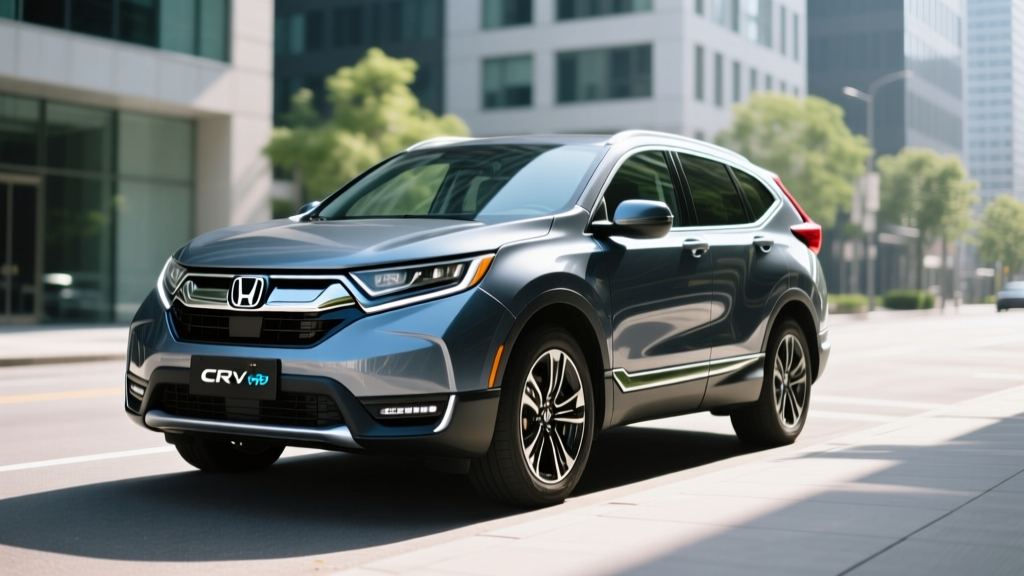
The 2019 Honda CR-V Hybrid was Honda's first serious entry into the compact hybrid SUV segment in the United States, and it remains a compelling used purchase. With an EPA-estimated 40 MPG combined, a 212-horsepower two-motor hybrid system, and Honda's reputation for powertrain durability, this is a pragmatic choice for buyers who want SUV utility without the charging demands of a full EV or plug-in hybrid. As a conventional hybrid (HEV), it never needs to be plugged in — the gasoline engine and regenerative braking handle all battery charging automatically.
Seven years on, the 2019 CR-V Hybrid's powertrain architecture still competes favorably against newer rivals. However, used buyers need to understand what they're getting: no electric-only driving mode, no plug, and no federal tax credit eligibility. Here's every number that matters.
HEV vs PHEV: What the 2019 CR-V Hybrid Actually Is
A common source of confusion for shoppers entering the electrified-vehicle market is the difference between a conventional hybrid and a plug-in hybrid. The 2019 Honda CR-V is strictly a conventional hybrid (HEV). It has no plug, no electric-only range, and no external charging capability.
Conventional Hybrid (HEV) — 2019 CR-V Hybrid
- Battery: ~1.4 kWh lithium-ion (small, recharged by engine and regen)
- Plug-in charging: No — never needs to be plugged in
- Electric-only range: None (motor assists engine at low speeds but cannot drive independently for meaningful distance)
- Refueling: Gasoline only, like any conventional car
- Federal tax credit: Not eligible under IRS §30D (that credit applies only to plug-in vehicles with ≥7 kWh battery capacity)
Plug-In Hybrid (PHEV) — For Comparison
- Battery: Typically 12–20+ kWh
- Plug-in charging: Yes — Level 1 (120V) or Level 2 (240V)
- Electric-only range: 25–50 miles depending on model
- Federal tax credit: May qualify for up to $7,500 under §30D if new (subject to MSRP caps, income limits, and battery-sourcing rules — see IRS guidance)
The 2019 CR-V Hybrid falls squarely in the HEV camp. Honda did not offer a PHEV version of this generation CR-V in the US market. If electric-only commuting is a priority, you'd need to look at vehicles like the Toyota RAV4 Prime (PHEV, 42 miles electric) or a full BEV.
Fuel Economy: EPA Numbers and Real-World MPG
Fuel economy is the primary reason buyers choose the CR-V Hybrid over the standard gasoline model. The EPA rates the 2019 CR-V Hybrid as follows:
| Metric | EPA Estimate |
|---|---|
| City MPG | 40 MPG |
| Highway MPG | 35 MPG |
| Combined MPG | 38 MPG |
Source: fueleconomy.gov
Note that the city figure actually exceeds the highway figure — this is characteristic of Honda's i-MMD (Intelligent Multi-Mode Drive) hybrid system, which runs primarily on the electric motor at low speeds, with the gasoline engine acting as a generator. At highway speeds, the engine clutches directly to the wheels for efficiency, but aerodynamic drag reduces the advantage.
Real-World MPG: What Owners Actually See
Real-world fuel economy for the 2019 CR-V Hybrid tends to cluster around 34–39 MPG combined, depending on driving conditions. City-heavy commutes with frequent stops play to the hybrid system's strengths and can yield 40+ MPG. Sustained highway driving at 75+ MPH typically drops to 32–34 MPG. Cold-weather operation (below 40°F) can reduce fuel economy by 5–10% due to increased engine running time for cabin heating and battery conditioning.
Compared to the non-hybrid 2019 CR-V with its 1.5L turbo (EPA 30 MPG combined, AWD), the hybrid delivers roughly a 25–30% fuel economy improvement in mixed driving. That translates to approximately 80–100 fewer gallons per year at 12,000 miles driven, or roughly $250–$400 in annual fuel savings depending on local gas prices.
Powertrain Specs: 212 HP Two-Motor System
| Specification | Value |
|---|---|
| Engine | 2.0L Atkinson-cycle inline-4 |
| Engine HP / Torque | 143 HP / 129 lb-ft |
| Drive Motor HP / Torque | 181 HP / 232 lb-ft |
| Combined System Output | 212 HP |
| Transmission | Electronic CVT (e-CVT, no traditional gears) |
| Drivetrain | AWD standard (real-time AWD with rear motor assist) |
| 0–60 MPH (est.) | ~7.5 seconds |
| Hybrid Battery | ~1.4 kWh lithium-ion, located under cargo floor |
| Towing Capacity | 1,500 lbs |
Honda's i-MMD system operates in three modes:
- EV Drive: Battery powers the drive motor alone (short distances at low speed, such as parking-lot maneuvering)
- Hybrid Drive: Engine generates electricity to power the drive motor; excess energy charges the battery
- Engine Drive: At highway cruising speeds, a lock-up clutch connects the engine directly to the front wheels for maximum efficiency
The result is seamless acceleration with no gear-hunting, since the e-CVT doesn't use physical gear ratios. The 232 lb-ft of electric torque is available from a standstill, giving the CR-V Hybrid surprisingly strong off-the-line response for a family SUV.
Pricing, Trims, and Tax Credit Eligibility
The 2019 CR-V Hybrid was offered in three trims. Original MSRP figures (including destination):
- EX: $28,770
- EX-L: $31,270
- Touring: $34,270
Federal Tax Credit Status
The 2019 Honda CR-V Hybrid does not qualify for the federal §30D Clean Vehicle Credit. Under IRS rules, the credit applies only to plug-in electric vehicles (BEVs and PHEVs) with battery capacities of at least 7 kWh. The CR-V Hybrid's ~1.4 kWh battery falls far below this threshold. This applies whether purchasing new (when it was available) or used.
For used-buyers in 2026, the §25E used clean vehicle credit (up to $4,000 or 30% of sale price, whichever is less) also does not apply to conventional hybrids — only to used BEVs and PHEVs that meet battery-capacity and price requirements. See the IRS used vehicle credit page for current eligibility rules.
Used Market Pricing (2026 Estimates)
As of early 2026, expect to pay approximately $18,000–$24,000 for a 2019 CR-V Hybrid depending on mileage, condition, and trim level. EX models with 70,000–90,000 miles cluster near the lower end; low-mileage Touring examples command the upper range. Hybrid variants generally hold a $1,500–$2,500 premium over equivalent non-hybrid trims on the used market, reflecting sustained demand for fuel-efficient SUVs.
Hybrid Battery Warranty, Lifespan, and Replacement Cost
2019 Honda CR-V Hybrid — Battery Warranty
- Federal emissions/hybrid battery warranty: 8 years / 80,000 miles (mandatory minimum in all 50 states)
- CARB-state extended warranty: 10 years / 150,000 miles in California and states adopting CARB standards (Colorado, Connecticut, Maine, Maryland, Massachusetts, New Jersey, New York, Oregon, Rhode Island, Vermont, Washington, and others)
- Hybrid system components warranty: 8 years / 80,000 miles (covers inverter, motor, control units)
How Long Do Honda Hybrid Batteries Last?
Honda's IMA and i-MMD hybrid systems have demonstrated strong long-term durability. The lithium-ion pack in the 2019 CR-V Hybrid is relatively small (~1.4 kWh) and operates within a narrow state-of-charge window — the system never fully charges or fully depletes the battery, which dramatically reduces degradation stress. Based on owner reports and fleet data from earlier Honda hybrid models, these batteries routinely exceed 150,000–200,000 miles before requiring service.
Battery Replacement Cost
If the hybrid battery does eventually require replacement outside of warranty coverage, expect to pay approximately $2,000–$4,000 for a refurbished or aftermarket pack, or $4,000–$6,000 for a new OEM unit including labor. Independent hybrid-specialty shops often offer refurbishment services at lower cost. This is significantly less expensive than EV traction battery replacements, which can exceed $10,000–$20,000, because the CR-V Hybrid's battery is physically small.
Overall Reliability
The 2019 CR-V Hybrid benefits from Honda's well-established hybrid powertrain architecture, which has been refined across multiple generations of the Accord Hybrid and Insight. The 2.0L Atkinson-cycle engine is naturally aspirated (no turbocharger), reducing mechanical complexity and long-term failure risk. The e-CVT has no traditional transmission fluid, bands, or clutch packs to wear out. According to NHTSA records, the 2019 CR-V Hybrid has no major recurring safety recalls specific to its hybrid system.
Who Should Buy the 2019 CR-V Hybrid vs. an EV or Gas Model?
Pros
- 40 MPG city — excellent for urban and suburban commutes
- No plug required — works with existing gas-station infrastructure
- AWD standard on all trims
- Strong low-end electric torque for confident merging
- Proven Honda reliability with robust hybrid warranty
- Lower used-market cost than comparable PHEV or BEV SUVs
Cons
- No electric-only driving mode — always burns some gasoline
- No federal tax credit (new or used)
- Highway MPG (35) is less impressive than city (40)
- 1,500-lb towing capacity is modest for the class
- Infotainment system lacks wireless CarPlay/Android Auto
- Cabin noise under hard acceleration (engine drones as generator)
Decision Framework
Choose the 2019 CR-V Hybrid if: You want a fuel-efficient compact SUV but lack access to home or workplace charging. If you live in an apartment without charging infrastructure, drive long rural routes, or simply want zero lifestyle change from your gas car, a conventional hybrid is the correct electrified choice. The 2019 CR-V Hybrid delivers meaningful fuel savings with no behavioral adaptation required.
Choose a PHEV (like the RAV4 Prime or newer CR-V PHEV in other markets) if: You have reliable Level 2 charging at home and your daily commute is under 40 miles. A PHEV lets you drive most days on electricity alone while retaining a gas engine for road trips. The trade-off is higher purchase price and charging logistics.
Choose a full BEV (like the Hyundai Ioniq 5 or Tesla Model Y) if: You have home charging, your daily driving is predictable, and you want to eliminate gasoline entirely. BEVs offer lower per-mile energy costs, stronger performance, and access to federal tax credits — but require commitment to charging infrastructure and acceptance of range limitations on long trips.
Choose the non-hybrid 2019 CR-V (1.5T gas) if: Your budget is tight and your annual mileage is low (under 8,000 miles/year). At low mileage, the hybrid's fuel savings may not offset the $2,000–$3,000 used-market premium within a reasonable ownership period.
Frequently Asked Questions
How many MPG does the 2019 Honda CR-V Hybrid get?
The EPA rates it at 40 MPG city, 35 MPG highway, and 38 MPG combined. Real-world combined driving typically yields 34–39 MPG, with city-heavy routes achieving the higher end and sustained highway driving the lower end.
Does the 2019 CR-V Hybrid need to be plugged in?
No. It is a conventional hybrid (HEV), not a plug-in hybrid. The battery recharges automatically through the gasoline engine and regenerative braking. You refuel it exactly like any gasoline vehicle.
How far can the 2019 CR-V Hybrid drive on electric power alone?
Effectively zero miles in practical terms. The hybrid system can propel the vehicle on electric motor alone at very low speeds (parking lots, brief stop-and-go creeping) for fractions of a mile, but it cannot sustain electric-only driving at normal road speeds. This is fundamentally different from a PHEV, which can drive 25–50 miles on electricity alone.
Does the 2019 Honda CR-V Hybrid qualify for any tax credit?
No. The federal §30D Clean Vehicle Credit and the §25E Used Clean Vehicle Credit both require plug-in capability and minimum battery capacity (7 kWh for §30D, 7 kWh for §25E). The CR-V Hybrid's ~1.4 kWh battery and lack of a plug disqualify it from both. Some states may offer minor hybrid incentives — check your state's energy office or department of revenue for current programs.
Is the hybrid battery reliable and what does replacement cost?
Yes. Honda's i-MMD hybrid battery is small, conservatively managed, and proven durable. Most packs last 150,000–200,000+ miles. The battery is covered by an 8-year/80,000-mile warranty (10 years/150,000 miles in CARB states). Out-of-warranty replacement runs $2,000–$6,000 depending on whether you choose refurbished or new OEM — far less than EV battery replacement.
How does the 2019 CR-V Hybrid compare to the Toyota RAV4 Hybrid?
The 2019 Toyota RAV4 Hybrid (EPA 41 MPG combined) edges out the CR-V Hybrid by 3 MPG combined and offers a slightly larger battery for more low-speed electric assist. However, the CR-V Hybrid has a more refined ride quality, a more intuitive infotainment interface, and comparable cargo space. Both are strong used-market picks; the choice often comes down to brand preference and which specific vehicle you find in better condition locally.
Is AWD standard on the 2019 CR-V Hybrid?
Yes. All three trims (EX, EX-L, Touring) come with Honda's Real-Time AWD system as standard equipment. This is a notable advantage over the non-hybrid CR-V, where the base LX trim was front-wheel drive only.