Why the 2019 Accord Hybrid Still Matters in 2026
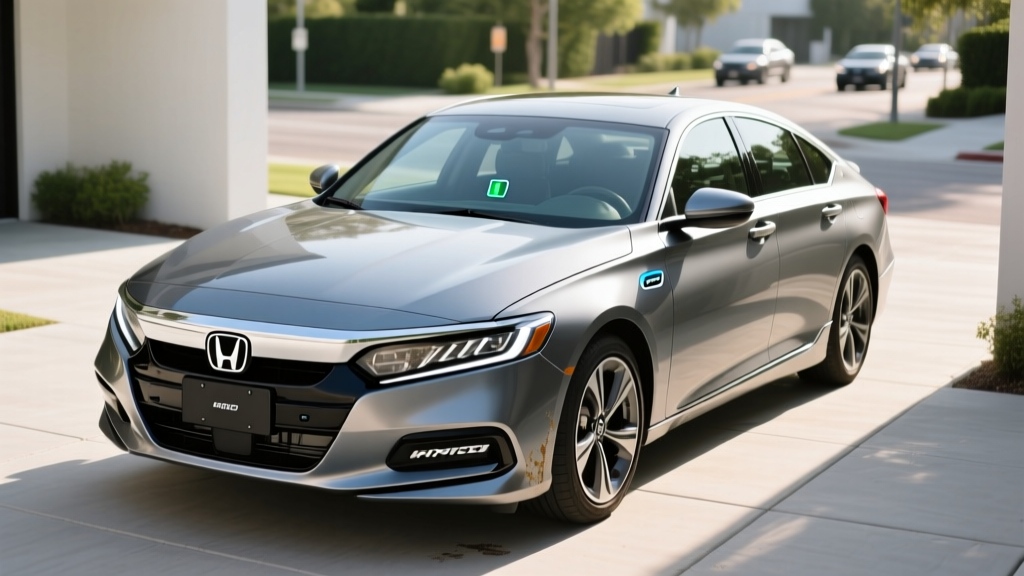
The 2019 Honda Accord Hybrid was one of the most efficient midsize sedans on the road when it launched, and it remains a popular used-vehicle target for buyers who want hybrid efficiency without plug-in complexity. But as these cars age past the six-year mark, a growing number of owners are searching for 2019 Honda Accord Hybrid common problems — and the answers matter if you are considering one as a daily driver or evaluating your current ownership costs.
This guide covers every reliability concern documented by owners, the National Highway Traffic Safety Administration (NHTSA), and major repair-tracking databases. We will also reconcile the EPA fuel-economy sticker with real-world MPG, explain the hybrid battery warranty and replacement economics, and help you decide whether a used 2019 Accord Hybrid, a newer PHEV, or a full BEV is the right move for your situation.
HEV vs. PHEV: What the 2019 Accord Hybrid Actually Is
Before diagnosing problems, it is essential to be precise about what this car is — and is not. The 2019 Accord Hybrid is a conventional hybrid electric vehicle (HEV). It has no plug, no electric-only driving range to speak of, and no eligibility for the federal §30D new-vehicle tax credit.
| Attribute | HEV (Accord Hybrid) | PHEV (e.g., Toyota Prius Prime) | BEV (e.g., Tesla Model 3) |
|---|---|---|---|
| Plug-in charging | No | Yes | Yes |
| Electric-only range | ~1 mi at low speed | 25–44 mi typical | 250–360+ mi |
| Battery size | 1.3 kWh (gross) | 13–18 kWh | 50–82+ kWh |
| Federal tax credit (new) | None | Up to $7,500 (§30D) | Up to $7,500 (§30D) |
| Used-vehicle credit | Up to $4,000 (§25E) | Up to $4,000 (§25E) | Up to $4,000 (§25E) |
| Regenerative braking | Yes | Yes | Yes |
Honda's system uses a 2.0-liter Atkinson-cycle four-cylinder engine paired with a two-motor hybrid system. One motor primarily generates electricity; the other drives the wheels. At highway speeds, the engine can mechanically connect to the wheels through a lockup clutch, which is different from Toyota's planetary-gear Hybrid Synergy Drive. This architecture is efficient but introduces its own set of maintenance considerations as the vehicle ages.
2019 Honda Accord Hybrid Common Problems: What the Data Shows
Based on owner reports filed with NHTSA, service bulletins, and aggregated repair data, here are the most frequently cited issues for the 2019 Accord Hybrid:
1. 12-Volt Battery Drain and Premature Failure
The single most common complaint among 2019 Accord Hybrid owners is 12-volt auxiliary battery failure. Unlike the high-voltage traction battery, the 12V battery powers the electronics, infotainment, and vehicle computers. Owners report needing replacements as early as 18–24 months. Symptoms include no-start conditions, dashboard error messages, and infotainment reboots. This is not unique to the hybrid — the gas Accord shares the issue — but hybrid owners sometimes confuse a dead 12V battery with a traction-battery problem. Replacement cost for the 12V battery runs $180–$280 at a dealer.
2. Infotainment System Glitches and Display Freezing
The 8-inch touchscreen in the 2019 Accord (both hybrid and gas) is a known frustration point. Reported issues include Apple CarPlay and Android Auto disconnections, screen freezing, phantom touch inputs, and slow response times. Honda issued software updates that partially addressed these issues, but some owners on later firmware versions still report intermittent problems. The head unit itself rarely needs hardware replacement; most issues are software-related and can be mitigated with a factory reset or dealer reflash.
3. Brake Actuator and Regenerative Braking Transition
A smaller but more expensive cluster of complaints involves the brake actuator assembly. The Accord Hybrid blends regenerative braking with friction braking, and the actuator manages that transition. Some owners report a grinding noise, a firm brake pedal, or an illuminated brake-system warning light. Honda issued Technical Service Bulletin (TSB) 19-076 addressing brake system noise in certain 2018–2019 Accord Hybrids. If the actuator fails out of warranty, replacement costs range from $1,200 to $2,000 including parts and labor. This is the most financially significant common problem on this list.
4. Air Conditioning Compressor Noise
Several owners have reported an audible whining or buzzing from the AC compressor, particularly at low speeds or idle. In most cases this is cosmetic and does not affect cooling performance. However, in a small number of cases the compressor has required replacement ($800–$1,400). Honda's electric AC compressor is driven by the high-voltage system, not a belt, so the noise profile differs from a gas-only vehicle.
5. Transmission-Related Concerns (e-CVT)
The Accord Hybrid does not use a traditional belt-and-pulley CVT. Its "e-CVT" is actually a fixed-ratio gearset with the two electric motors managing the effective ratio. This design is inherently more robust than a mechanical CVT. Reported transmission issues are rare for the 2019 model year, but a handful of owners have noted a slight shudder during the engine-to-electric transition at low speeds. This is generally considered normal operation of the two-motor system rather than a defect.
Fuel Economy: EPA Sticker vs. Real-World MPG
Fuel efficiency is the Accord Hybrid's headline feature. Here is how the EPA rates it and what owners actually see.
| Trim | City MPG | Highway MPG | Combined MPG |
|---|---|---|---|
| LX / EX / EX-L | 48 | 47 | 48 |
| Sport / Touring (19" wheels) | 46 | 43 | 45 |
Source: fueleconomy.gov
Hybrids typically exceed their EPA city rating in stop-and-go traffic because regenerative braking recovers more energy. Owners on Fuelly and similar tracking platforms report lifetime averages of 44–50 MPG combined, with city-heavy drivers occasionally seeing 52+ MPG. Highway-only driving at 75+ MPH tends to drop to 38–42 MPG — hybrids lose their advantage at sustained high speed because the electric motor contributes less and aerodynamic drag dominates. In cold weather (below 30°F), expect a 5–10% efficiency reduction as the engine runs more frequently to provide cabin heat.
With a 12.8-gallon fuel tank, the Accord Hybrid LX/EX delivers a real-world range of approximately 560–640 miles per tank under mixed driving conditions. That is genuinely exceptional for a midsize sedan and a key reason this car remains popular for high-mileage commuters.
Hybrid Battery Longevity, Warranty, and Replacement Cost
The high-voltage battery is the component that worries used-hybrid buyers most. Let us address it directly.
| Component | Coverage |
|---|---|
| Hybrid battery (IMA system) | 8 years / 100,000 miles (10 yr / 150,000 mi in CARB states) |
| Hybrid system components | 8 years / 100,000 miles |
| Powertrain (engine, e-CVT) | 5 years / 60,000 miles |
| Bumper-to-bumper | 3 years / 36,000 miles |
The 2019 Accord Hybrid uses a 1.3 kWh lithium-ion traction battery. This is a small pack by modern standards — roughly the size of a single module in a long-range BEV — but it is sized appropriately for an HEV that never depletes below about 40% or charges above about 80% state of charge. This shallow cycling is the key to longevity.
How long do these batteries actually last? Honda's IMA (Integrated Motor Assist) lineage stretches back to the 2000 Insight. The lithium-ion pack in the 10th-generation Accord Hybrid is significantly more robust than the early nickel-metal-hydride packs. Based on fleet data and owner reports, degradation is minimal: most 2019 Accord Hybrids at 80,000–120,000 miles show no meaningful loss in fuel economy, which is the practical indicator of battery health. Full battery failures before 150,000 miles are uncommon.
Replacement cost if it does fail: A new OEM hybrid battery from Honda runs approximately $2,000–$3,500 for the part alone, with labor adding $300–$600. Third-party refurbished or reconditioned packs are available for $1,200–$2,000. Given the car's age, many 2019 models are now outside the standard 8-year/100,000-mile warranty window unless they are registered in a CARB-emissions state (California, New York, Massachusetts, and others), where the 10-year/150,000-mile coverage may still apply in 2026.
Powertrain Specs and Performance
| Specification | Value |
|---|---|
| Engine | 2.0L Atkinson-cycle 4-cylinder |
| Engine output | 143 hp / 129 lb-ft torque |
| Electric motor output | 181 hp / 232 lb-ft torque |
| Combined system output | 212 hp |
| 0–60 mph | ~7.1 seconds |
| Drivetrain | Front-wheel drive |
| Transmission | e-CVT (two-motor fixed gearset) |
| Hybrid battery | 1.3 kWh lithium-ion |
| Curb weight | ~3,300 lbs |
| Cargo volume | 16.7 cu ft |
| Original MSRP (LX) | $25,320 |
| Original MSRP (Touring) | $34,990 |
The two-motor system is the Accord Hybrid's engineering highlight. In most city driving, the gasoline engine acts as a generator while the electric motor drives the wheels — effectively making it a series hybrid. Only at steady highway cruising does the lockup clutch engage, creating a direct mechanical connection. This gives the Accord Hybrid strong low-end torque (232 lb-ft from the motor is available from near-zero RPM) and a driving feel that is more responsive than most competitors, including the Toyota Camry Hybrid.
Tax Credit and Incentive Eligibility
Because the 2019 Accord Hybrid is a conventional HEV with no plug, it does not qualify for the federal §30D Clean Vehicle Credit, which requires plug-in capability and minimum battery capacity. It also does not qualify for most state EV rebates that target PHEVs and BEVs.
However, if you are purchasing a used 2019 Accord Hybrid in 2026, the §25E Previously Owned Clean Vehicle Credit may apply — but with an important caveat: the §25E credit also requires the vehicle to be a qualified plug-in electric vehicle or fuel cell vehicle. Since the Accord Hybrid is a conventional HEV, it is not eligible for the used-vehicle credit either.
- §30D New Vehicle Credit: Not eligible (HEV, no plug)
- §25E Used Vehicle Credit: Not eligible (HEV, no plug)
- State/local incentives: Varies — some states offer small rebates for any hybrid; check your state energy office
- Insurance discounts: Some carriers (e.g., Liberty Mutual, Farmers) offer 5–10% hybrid/EV discounts
If tax-credit eligibility is a priority, you would need to look at a PHEV like the Toyota Prius Prime (up to $7,500 §30D credit when purchased new, subject to income and MSRP caps per IRS guidelines) or a BEV like the Hyundai Ioniq 6.
Who Should Choose the 2019 Accord Hybrid vs. a PHEV or BEV?
- You drive 15,000+ miles per year and want maximum fuel savings without any charging logistics
- You live in an apartment or lack home-charging access
- You want a proven, low-risk used purchase under $20,000
- Your commute is highway-heavy where PHEV electric-only range offers limited benefit
- You value the Accord's interior space, ride quality, and Honda Sensing safety suite
- You have home charging and a commute under 40 miles (PHEV can cover it on electricity alone)
- You want to qualify for federal or state tax credits
- You want to minimize or eliminate gasoline use entirely
- You drive primarily in the city where electric-only operation cuts fuel cost dramatically
- You want access to HOV lane stickers (available for PHEVs/BEVs in many states, not for HEVs)
The 2019 Accord Hybrid occupies a specific niche: it is the optimal choice for high-mileage drivers who cannot charge at home. If you can install a Level 2 charger and your daily driving stays under 35–40 miles, a PHEV like the 2025 Toyota RAV4 Prime or the Chrysler Pacifica Hybrid will deliver lower per-mile operating costs. If you are ready to go fully electric, a used Tesla Model 3 or Chevrolet Bolt EV can be found in the same price range and will eliminate fuel costs entirely — provided you have charging access.
Maintenance Costs and Ownership Economics
One of the Accord Hybrid's strongest selling points is low operating cost. Here is what ownership looks like in 2026 for a car with 60,000–90,000 miles:
- Oil changes: Every 7,500–10,000 miles (the engine runs less than a gas car, so oil degrades more slowly). Cost: $40–$70 per change.
- Brake pads: Regenerative braking significantly reduces pad wear. Many owners report original brake pads lasting 80,000+ miles.
- Tires: The Accord Hybrid is not especially heavy (~3,300 lbs), so tire wear is comparable to a gas midsize sedan. Expect 40,000–50,000 miles from a set of all-season tires.
- Coolant: Honda specifies a coolant replacement at 120,000 miles (or 10 years), then every 60,000 miles thereafter.
- Hybrid system: No routine maintenance required. The inverter and electric motors are sealed units.
Annual fuel cost at 15,000 miles and $3.40/gallon (national average as of early 2026): approximately $1,063 for the Accord Hybrid LX (48 MPG combined), versus $1,700 for the gas Accord 1.5T (33 MPG combined). That is a savings of roughly $637 per year, or about $3,185 over five years — meaningful, though not as dramatic as the savings from a BEV charged at residential electricity rates.
Frequently Asked Questions
How many MPG does the 2019 Honda Accord Hybrid actually get?
The EPA rates the LX/EX/EX-L trims at 48 city / 47 highway / 48 combined. Sport and Touring trims with 19-inch wheels are rated at 46/43/45. Real-world owner averages cluster between 44 and 50 MPG combined, with city-heavy drivers often exceeding the EPA city number and highway-heavy drivers falling slightly below.
Is the 2019 Accord Hybrid reliable?
Overall, yes. The powertrain is proven and the hybrid battery has a strong longevity record. The most common issues — 12V battery failure, infotainment glitches, and occasional brake-actuator noise — are manageable and generally not catastrophic. The brake actuator is the most expensive potential repair at $1,200–$2,000, but failure rates are low.
What does a hybrid battery replacement cost?
An OEM replacement from Honda costs approximately $2,000–$3,500 for the battery, plus $300–$600 in labor. Refurbished third-party packs are available for $1,200–$2,000. However, most 2019 Accord Hybrid batteries are lasting well beyond 150,000 miles with minimal degradation.
Does the 2019 Accord Hybrid qualify for any tax credit?
No. As a conventional hybrid (HEV) with no plug-in capability, the Accord Hybrid does not qualify for the federal §30D new-vehicle credit or the §25E used-vehicle credit. Some states offer minor hybrid incentives, but these vary by jurisdiction.
How does the Accord Hybrid compare to the Toyota Camry Hybrid?
The Camry Hybrid LE is EPA-rated at 52 combined MPG (vs. 48 for the Accord Hybrid LX), giving Toyota a slight efficiency edge. However, the Accord Hybrid offers more horsepower (212 vs. 208), a larger trunk (16.7 vs. 15.1 cu ft), and a more engaging driving experience. The Camry Hybrid uses Toyota's proven planetary-gear system, which has an even longer track record. Both are strong choices; the Accord wins on performance and space, the Camry on fuel economy and historical reliability data.
Can I tow with the 2019 Accord Hybrid?
Honda does not recommend towing with the Accord Hybrid. The owner's manual specifies that the vehicle is not designed to tow a trailer. If towing capacity is a priority, consider a hybrid SUV like the Toyota Highlander Hybrid (3,500-lb towing capacity).
Sources: EPA fueleconomy.gov, NHTSA.gov, IRS §30D guidelines, Honda owner's manual and TSB records.