The 2019 Chevrolet Malibu Hybrid at a Glance
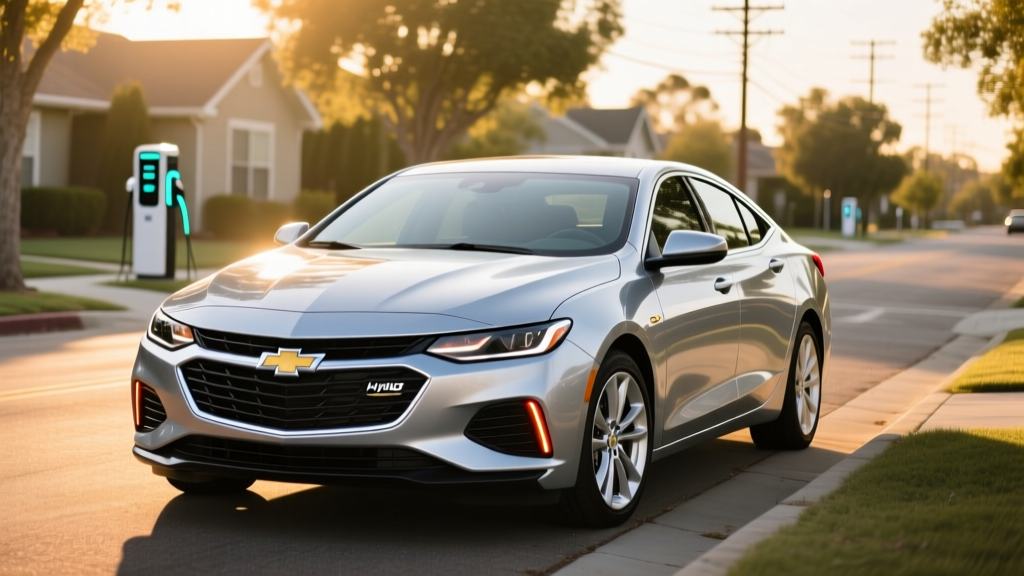
The 2019 Chevrolet Malibu Hybrid occupies a specific niche: a midsize sedan that squeezes maximum efficiency from a conventional hybrid (HEV) powertrain without requiring a plug, a charging routine, or any change in driving habits. Chevrolet paired a 1.8-liter four-cylinder engine with a two-motor hybrid system derived from the Volt's Voltec architecture, producing a combined 182 horsepower and delivering an EPA-estimated 49 MPG combined. For used-car shoppers in 2026 evaluating efficient sedans, the Malibu Hybrid remains a compelling value proposition — particularly because it was discontinued after the 2019 model year, meaning depreciation has already done its work.
This guide breaks down the exact fuel economy numbers, the hybrid battery's longevity outlook, real-world efficiency expectations, and whether this HEV still makes sense against today's newer hybrids, PHEVs, and full EVs.
EPA Fuel Economy and Real-World MPG
| Driving Cycle | EPA Estimate | Real-World Expectation |
|---|---|---|
| City | 49 MPG | 47–52 MPG (hybrids often beat EPA in stop-and-go) |
| Highway | 43 MPG | 39–44 MPG (electric assist diminishes at sustained speed) |
| Combined | 49 MPG | 44–49 MPG depending on driving mix |
The 2019 Malibu Hybrid's 49/43/49 MPG city/highway/combined rating, as published by fueleconomy.gov, is unusual: the city figure matches or exceeds the combined figure. This is a hallmark of conventional hybrids. Regenerative braking recaptures energy in stop-and-go traffic, and the electric motor handles low-speed propulsion where gasoline engines are least efficient. On the highway, the gasoline engine does most of the work, and aerodynamic drag dominates.
With a 13.2-gallon fuel tank, total range sits around 647 miles at the combined EPA figure — enough for most drivers to visit the gas station once every two weeks or less.
HEV vs. PHEV vs. EV: Where the Malibu Hybrid Fits
A common source of confusion is the difference between a conventional hybrid (HEV) like the Malibu Hybrid and a plug-in hybrid (PHEV). The distinction matters for your daily routine, your fuel budget, and your eligibility for tax incentives.
Conventional Hybrid (HEV)
- No plug — charges via regen and engine
- Small battery (~1.5 kWh usable)
- Electric motor assists at low speeds
- No electric-only driving range
- No federal tax credit
- Example: 2019 Malibu Hybrid
Plug-In Hybrid (PHEV)
- Plugs in to charge (Level 1 or 2)
- Larger battery (8–20+ kWh)
- 20–50 miles electric-only range
- Gas engine kicks in after battery depletes
- May qualify for §30D credit (if new, eligible)
- Example: Toyota Prius Prime
Battery Electric (BEV)
- Plugs in — no gasoline at all
- Large battery (50–100+ kWh)
- 200–400+ miles of range
- Requires charging access (home or public)
- Eligible for up to $7,500 §30D credit (new)
- Example: Tesla Model 3, Hyundai Ioniq 6
The Malibu Hybrid is a conventional HEV. You never plug it in. The 1.5 kWh lithium-ion battery recharges through regenerative braking and the gasoline engine. There is no electric-only driving mode that covers meaningful distance — the electric motors assist the engine and enable brief low-speed electric creeping, but the engine is always the primary power source.
Powertrain Specifications
| Specification | Value |
|---|---|
| Engine | 1.8L direct-injected 4-cylinder |
| Engine Power | 122 hp @ 5,000 rpm |
| Electric Motors | Two-motor hybrid drive unit |
| Combined System Power | 182 hp |
| Hybrid Battery | 1.5 kWh lithium-ion (usable) |
| Transmission | Continuously variable (eCVT) |
| 0–60 mph | ~7.5 seconds (est.) |
| Drivetrain | Front-wheel drive |
| Fuel Tank | 13.2 gallons |
| Curb Weight | ~3,465 lbs |
The two-motor hybrid system is borrowed from the second-generation Chevrolet Volt's Voltec platform, though adapted for HEV duty rather than plug-in operation. One motor primarily functions as a generator, while the other drives the wheels. The eCVT isn't a traditional belt-and-pulley CVT — it's a planetary gearset that blends engine and motor power seamlessly, similar to Toyota's Hybrid Synergy Drive.
The 182 combined horsepower figure is competitive for the midsize hybrid sedan segment. Acceleration is adequate for merging and passing, though the Malibu Hybrid prioritizes smoothness and efficiency over sportiness. The electric motor's instant torque fills in the low-end gap that turbocharged or naturally aspirated four-cylinders often exhibit before the engine reaches its power band.
Hybrid Battery Longevity, Warranty, and Replacement Cost
For a used 2019 Malibu Hybrid purchased in 2026, the original 8-year/100,000-mile warranty is expiring or has already expired for most vehicles (a 2019 model year vehicle's 8-year window closes in calendar year 2027). If the vehicle was originally sold and registered in a CARB state — California, Colorado, Connecticut, Maine, Maryland, Massachusetts, New Jersey, New York, Oregon, Rhode Island, Vermont, Washington — the 10-year/150,000-mile coverage may still be in effect.
How Long Do Malibu Hybrid Batteries Last?
GM's lithium-ion hybrid battery packs have demonstrated strong longevity in practice. The 1.5 kWh pack in the Malibu Hybrid operates within a relatively narrow state-of-charge window (roughly 20%–80% SoC), which significantly reduces cell stress compared to a full BEV battery that cycles through wider ranges. Based on data from the Volt's larger pack and Toyota's hybrid fleet, hybrid battery packs commonly last 150,000–200,000+ miles before significant degradation.
Common failure modes are individual cell imbalance rather than total pack death. Some owners report hybrid battery warnings at 120,000–150,000 miles, but many vehicles exceed 200,000 miles on the original pack.
Battery Replacement Cost
If the hybrid battery does fail out of warranty, expect the following cost ranges:
- New OEM replacement (dealer): $2,500–$3,800 including parts and labor
- Refurbished/remanufactured pack: $1,500–$2,500 installed
- Individual cell module replacement (specialist shop): $500–$1,200
These costs are significantly lower than full BEV battery replacements ($7,000–$20,000+) because the Malibu Hybrid's pack is small (1.5 kWh). The hybrid system will still function with modest degradation — you'll see slightly reduced fuel economy and less electric assist, but the car won't become undrivable the way a severely degraded BEV battery reduces range.
Used Pricing and Tax Credit Eligibility
The 2019 Malibu Hybrid was discontinued after that model year. Chevrolet shifted its midsize strategy toward the crossover-heavy Equinox and Blazer lineup, and the Malibu nameplate was ultimately retired. This means every 2019 Malibu Hybrid on the market today is a used vehicle.
Used Market Pricing (2026 Estimates)
- 60,000–80,000 miles, clean title: $13,000–$16,000
- 80,000–120,000 miles: $10,500–$13,500
- 120,000+ miles: $8,000–$10,500
Original MSRP for the 2019 Malibu Hybrid was approximately $28,995 (single Hybrid trim level, before destination). Depreciation has been steep, which benefits used buyers.
Tax Credit Status
The 2019 Malibu Hybrid does not qualify for the federal §30D clean vehicle tax credit, for two reasons:
- It is a conventional hybrid (HEV), not a plug-in electric vehicle. The §30D credit requires a minimum battery capacity of 4 kWh and plug-in charging capability.
- Even if it were eligible as a new vehicle, the Malibu Hybrid was discontinued and is no longer sold new.
The used EV credit (§25E) also does not apply, as that credit covers used BEVs and PHEVs with at least 4 kWh of battery capacity — conventional hybrids are excluded. For current federal incentive rules, consult the IRS clean vehicle credit page.
Some states offer modest incentives for used hybrid purchases, but these vary widely by jurisdiction and change frequently. Check your state's energy or environmental agency for current programs.
Who Should Buy the 2019 Malibu Hybrid?
Choose the 2019 Malibu Hybrid If:
- You want 45–50 MPG without changing any habits — no plugging in, no range planning
- Your commute is a mix of city and highway driving
- You want a spacious midsize sedan (15.8 cu ft trunk) at a sub-$16,000 used price
- You lack access to home or workplace charging, ruling out PHEVs and BEVs
- You prioritize low fuel cost and don't want the complexity of a plug-in vehicle
Look Elsewhere If:
- You want electric-only driving for short commutes — consider a PHEV like the Prius Prime or RAV4 Prime
- You want zero tailpipe emissions and have home charging — a used BEV like a Bolt EV or Model 3 may suit
- You need AWD — the Malibu Hybrid is FWD only (consider a Prius AWD or RAV4 Hybrid)
- You want the latest infotainment and ADAS — a 2019 model shows its age in tech features
Pros and Cons
Pros
- 49 MPG combined EPA — among the best in its class
- No plug required; zero lifestyle change from a gas car
- Spacious interior and generous trunk for a hybrid sedan
- Smooth, quiet hybrid powertrain with adequate power
- Strong depreciation = excellent used value
- Small hybrid battery = low replacement cost if needed
Cons
- Discontinued — no new examples available, limited future parts support
- FWD only; no AWD option
- Infotainment and driver-assist tech feel dated for 2026
- Original hybrid battery warranty expiring on most examples
- No tax credit eligibility (new or used)
- Sedan body style losing market favor to crossovers
Reliability and Ownership Costs
The 2019 Malibu Hybrid's reliability record is generally solid. The Voltec-derived hybrid system has proven durable across GM's fleet (Volt, Malibu Hybrid, Cadillac CT6 PHEV). The primary concerns on higher-mileage examples are typical wear items — suspension components, brake actuators, and the 12V auxiliary battery — rather than hybrid-specific failures.
One maintenance advantage of any hybrid: regenerative braking significantly reduces brake pad and rotor wear. Many hybrid owners report original brake pads lasting 80,000–100,000+ miles.
Insurance costs for the Malibu Hybrid are typically in line with or slightly below the midsize sedan average, since used values are low and repair costs are moderate. Expect annual insurance in the $1,100–$1,600 range depending on your profile and state.
For safety ratings, the 2019 Malibu earned a 5-star overall rating from NHTSA and was an IIHS Top Safety Pick when equipped with optional front crash prevention.
Frequently Asked Questions
How many MPG does the 2019 Chevrolet Malibu Hybrid get?
The EPA rates it at 49 MPG city, 43 MPG highway, and 49 MPG combined. In real-world driving, city-heavy commuters often see 50–53 MPG, while highway-dominant drivers should expect 39–44 MPG.
Does the Malibu Hybrid need to be plugged in?
No. The 2019 Malibu Hybrid is a conventional hybrid (HEV). Its 1.5 kWh battery charges entirely through regenerative braking and the gasoline engine. There is no plug and no electric-only driving range of any meaningful distance.
How far can it go on electric only?
Essentially zero miles in pure electric mode. The electric motors assist the gasoline engine at low speeds and during acceleration, but the Malibu Hybrid cannot drive on electricity alone for any measurable distance. If electric-only commuting is your goal, you need a PHEV (20–50 electric miles) or a BEV (200–400+ miles).
Is the 2019 Malibu Hybrid reliable?
Yes, overall reliability is good. The Voltec-derived hybrid system has a strong track record. The main risk on used examples is hybrid battery degradation as vehicles age past 8 years, but replacement costs are relatively low ($1,500–$3,800) compared to BEV batteries.
What is the hybrid battery replacement cost?
A new OEM replacement runs $2,500–$3,800 installed at a dealer. Refurbished packs cost $1,500–$2,500, and individual cell module repairs at specialist shops can cost $500–$1,200. The small 1.5 kWh pack keeps costs manageable.
Does the 2019 Malibu Hybrid qualify for any tax credit?
No. As a conventional hybrid (HEV), it does not qualify for the federal §30D new clean vehicle credit or the §25E used clean vehicle credit. Both credits require plug-in capability and a minimum battery capacity of 4 kWh (for §25E) or 7 kWh (for §30D). Some states may offer minor incentives for efficient vehicles — check your state's energy office.
How does it compare to the Toyota Camry Hybrid?
The 2019 Camry Hybrid (LE) achieves 52/53/52 MPG EPA — slightly better than the Malibu Hybrid — and benefits from Toyota's long-running hybrid reputation and ongoing production (parts availability). However, used Camry Hybrids command a significant price premium ($18,000–$24,000 for comparable mileage). The Malibu Hybrid offers nearly identical real-world efficiency at a lower entry price, trading off brand cachet and slightly higher long-term parts risk due to discontinuation.