Quick Verdict: Performance Hybrid for the Three-Row Crowd
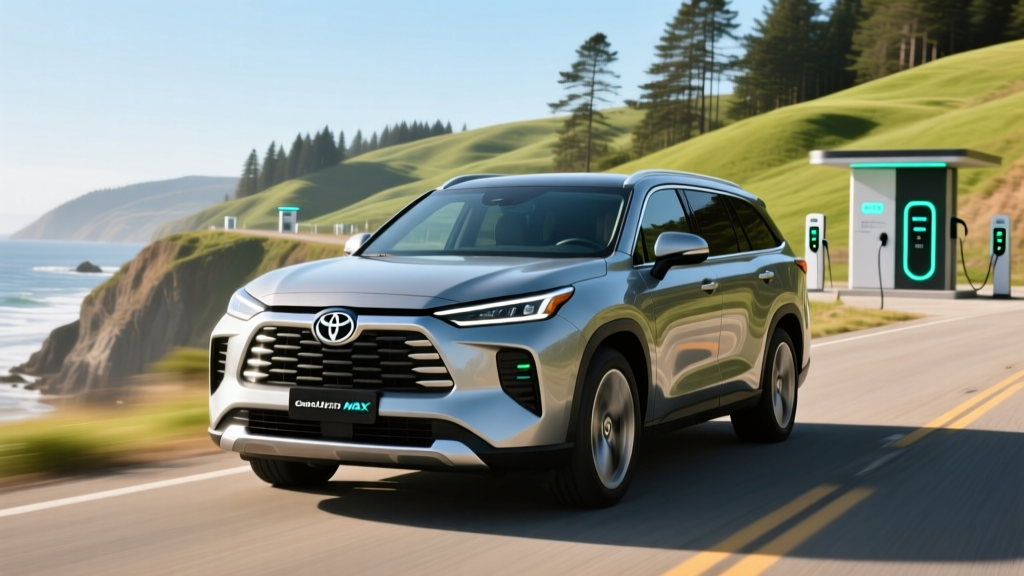
The Toyota Grand Highlander Hybrid MAX occupies a narrow but compelling lane: a three-row family hauler that trades a few MPG for substantially more power than the standard hybrid. With 362 combined horsepower and a turbocharged 2.4-liter four-cylinder paired with Toyota's Hybrid MAX powertrain, this SUV hits 60 mph in roughly 5.5 seconds — a figure that would have been unthinkable in a vehicle of this size just five years ago. The trade-off is fuel economy that drops to 27 MPG combined versus the standard Grand Highlander Hybrid's 35 MPG combined.
This is a conventional hybrid (HEV), not a plug-in hybrid (PHEV). You never plug it in. The 1.87 kWh nickel-metal hydride (NiMH) battery charges exclusively through regenerative braking and the gasoline engine. That distinction matters because it affects everything from your daily routine to your tax-credit eligibility.
| Spec | Value |
|---|---|
| Powertrain | 2.4L turbo I-4 + electric motor (Hybrid MAX) |
| Combined Horsepower | 362 hp / 400 lb-ft torque |
| 0-60 mph | ~5.5 seconds |
| EPA MPG (City / Hwy / Combined) | 26 / 27 / 27 |
| Fuel Tank | 17.9 gallons |
| Total Range | ~483 miles |
| Drivetrain | AWD (standard on Hybrid MAX) |
| Towing Capacity | 5,000 lbs |
| Hybrid Battery | 1.87 kWh NiMH |
| Hybrid Battery Warranty | 10 years / 150,000 miles |
| Starting MSRP | ~$54,040 (Limited trim) |
HEV vs PHEV vs EV: Where the Hybrid MAX Fits
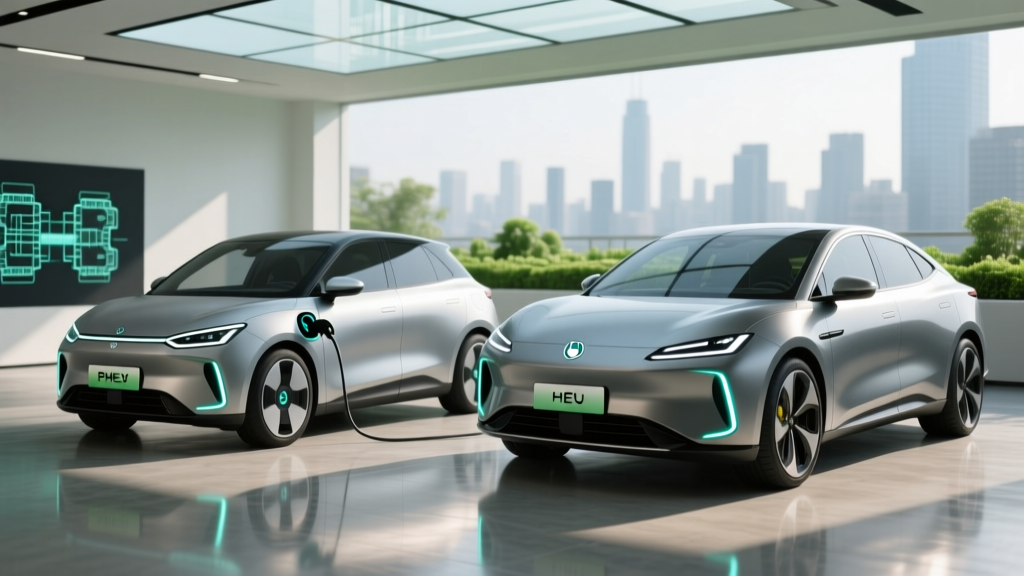
Before diving deeper, it's worth clarifying the three electrified powertrain types, because Toyota offers multiple Grand Highlander variants and the naming can confuse shoppers.
| Feature | Hybrid (HEV) | Hybrid MAX (HEV) | Gas (Turbo) |
|---|---|---|---|
| Plug-in Required? | No | No | No |
| Combined HP | 245 hp | 362 hp | 265 hp |
| EPA Combined MPG | 35 MPG | 27 MPG | 24 MPG |
| Electric-Only Driving | Low-speed only (~1 mi) | Low-speed only (~1 mi) | None |
| 0-60 mph | ~8.0 sec | ~5.5 sec | ~6.8 sec |
| AWD Standard? | Optional | Yes | Yes |
| Towing | 3,500 lbs | 5,000 lbs | 5,000 lbs |
Conventional Hybrid (HEV): The standard Grand Highlander Hybrid uses a 2.5-liter four-cylinder with two electric motors. It never plugs in. The battery is small (1.6 kWh) and provides brief electric-only assist at low speeds — think parking lots and stop-and-go traffic. It recharges through regenerative braking and the engine. This is the efficiency champion at 35 MPG combined.
Hybrid MAX (HEV): Also a conventional hybrid that never plugs in, but with a turbocharged 2.4-liter engine and a more powerful electric motor integrated into a six-speed automatic transaxle (rather than the e-CVT used in the standard hybrid). The result is sharper acceleration, more towing capacity, and a sportier feel — at the cost of 8 MPG combined.
Why not a PHEV or full EV? Toyota does not currently offer a Grand Highlander plug-in hybrid in the US market. If you need electric-only commuting range (25-40 miles typical for PHEVs) and want to plug in at home, you'd need to look at competitors like the Chrysler Pacifica Hybrid or consider a full EV like the Kia EV9. The Hybrid MAX is designed for buyers who want hybrid efficiency gains without any change to their fueling routine.
Fuel Economy: EPA Numbers vs Real-World MPG
| Driving Condition | EPA Estimate | Real-World Expectation |
|---|---|---|
| City | 26 MPG | 25-28 MPG (hybrids often beat EPA in stop-and-go) |
| Highway | 27 MPG | 25-27 MPG (turbo engine works harder at speed) |
| Combined | 27 MPG | 25-28 MPG depending on driving mix |
The Hybrid MAX's EPA ratings are unusually close between city and highway — 26 city, 27 highway. That's because the turbocharged engine is less able to shut off in city driving compared to the naturally aspirated 2.5L in the standard hybrid. In the standard hybrid, you'll see the engine shut down frequently at stoplights and in parking lots. In the Hybrid MAX, the turbo four stays active more often to maintain boost readiness, which narrows the city-highway MPG gap.
In real-world driving, hybrid owners frequently report exceeding EPA city estimates because regenerative braking recovers more energy in stop-and-go traffic. Highway driving is where hybrids tend to underperform relative to their sticker — aerodynamic drag dominates at 70+ mph, and the electric motor provides minimal assist at sustained speed. Expect 25-28 MPG in mixed driving, with the lower end during winter months when the engine runs more frequently for cabin heat and battery conditioning.
For context, the gas-only Grand Highlander turbo AWD returns 24 MPG combined. The Hybrid MAX saves roughly 2-3 MPG over that, which translates to about 50-75 fewer gallons per year at 15,000 miles driven annually — roughly $175-$260 in fuel savings at $3.50/gallon. The standard hybrid, at 35 MPG combined, saves approximately 170 gallons and $595 per year versus the gas model.
Powertrain Deep Dive: How Hybrid MAX Works
The Hybrid MAX system pairs a 2.4-liter turbocharged inline-four (producing 271 hp and 317 lb-ft on its own) with an electric motor integrated into a direct-shift six-speed automatic transmission. Combined output reaches 362 hp and 400 lb-ft of torque. Unlike the standard hybrid's e-CVT, which uses a planetary gearset for seamless power blending, the six-speed automatic in the Hybrid MAX delivers traditional gear shifts — a deliberate choice for drivers who prefer a more conventional, sporty driving feel.
The electric motor fills in torque at low RPM before the turbo spools up, effectively eliminating turbo lag. This is where the hybrid system earns its keep beyond fuel economy: the electric motor's instant torque delivery makes the Hybrid MAX feel substantially quicker than its 0-60 time alone suggests in everyday driving. Around-town acceleration from 20-50 mph is where you'll notice the difference most.
AWD is standard on all Hybrid MAX trims. Toyota uses an electronic AWD system with a rear-mounted electric motor that can send up to 80% of available torque to the rear axle when needed. There's no mechanical driveshaft connecting the front and rear axles — the system responds in milliseconds to slip detection. Towing capacity is rated at 5,000 pounds, matching the gas turbo model and exceeding the standard hybrid's 3,500-pound limit.
Pricing, Trims, and Tax Credit Eligibility
The 2025 Toyota Grand Highlander Hybrid MAX is available in two trims:
- Limited: Starting at approximately $54,040 MSRP (including destination). Includes leather-trimmed seats, heated and ventilated front seats, 12.3-inch infotainment, JBL audio, and Toyota Safety Sense 3.0.
- Platinum: Starting at approximately $58,175 MSRP. Adds panoramic roof, head-up display, 360-degree camera, heated second-row seats, and premium interior trim.
Federal Tax Credit: The Grand Highlander Hybrid MAX does not qualify for the federal §30D clean vehicle tax credit. That credit applies exclusively to plug-in electric vehicles (BEVs and PHEVs) with battery capacity of at least 7 kWh. Since the Hybrid MAX is a conventional hybrid with a 1.87 kWh battery and no plug-in capability, it is ineligible. This is a common point of confusion — many shoppers assume any "hybrid" qualifies. Per current IRS §30D rules, only vehicles that can be plugged in to charge are eligible.
Some states offer their own incentives for conventional hybrids, though these are increasingly rare as state programs shift focus to plug-in vehicles. Check your state's energy office or department of environmental quality for current programs.
Reliability and Battery Warranty: What to Expect
Toyota Hybrid Battery Warranty: 10 years or 150,000 miles (whichever comes first) for all 2020-and-later Toyota hybrids, including the Grand Highlander Hybrid MAX. This covers the hybrid battery pack and all hybrid-system components (inverter, electric motor, control module).
Toyota's hybrid system reliability is among the best-documented in the automotive industry. The Prius has accumulated over two decades of real-world data, and the Hybrid MAX system shares core architecture with the Toyota Crown and Lexus RX 500h F Sport Performance. The 2.4-liter turbo engine (T24A-FTS) is also used in the Tacoma and has been in production since 2022.
The NiMH battery in the Hybrid MAX is relatively small (1.87 kWh) and operates within a narrow state-of-charge window — Toyota's hybrid management system rarely allows the battery to drop below 40% or charge above 80%, which significantly reduces degradation stress. Based on historical Toyota hybrid data, battery replacement outside of warranty is uncommon before 150,000-200,000 miles.
Should replacement be needed after warranty expiration, a new Toyota hybrid battery for a vehicle of this class typically costs between $3,000 and $5,000 installed. Third-party refurbished batteries are available for $1,500-$2,500. This is substantially less than a full EV battery replacement, which can run $10,000-$20,000+, because the hybrid battery is much smaller.
For reliability data, the National Highway Traffic Safety Administration (NHTSA) and Insurance Institute for Highway Safety (IIHS) are the authoritative sources for safety ratings as they become available for the Grand Highlander platform.
Who Should Choose the Hybrid MAX?
Choose the Hybrid MAX if:
- You need three rows and want the quickest acceleration in the Grand Highlander lineup
- You tow a boat, camper, or trailer up to 5,000 lbs and want hybrid efficiency gains
- You want AWD standard without the fuel penalty of the gas-only turbo
- You have no access to plug-in charging (apartment, street parking) and don't want to change your fueling routine
Choose the standard Grand Highlander Hybrid if:
- Maximum fuel economy is your top priority (35 vs 27 MPG)
- You don't need the extra horsepower or towing capacity
- You want a lower starting price (standard hybrid starts around $46,000)
Consider a full EV (Kia EV9, Tesla Model X) if:
- You have reliable home Level 2 charging and want zero tailpipe emissions
- You want to qualify for the $7,500 federal tax credit (subject to income, MSRP, and sourcing rules)
- Your daily driving is under 250 miles and you road-trip infrequently
Pros and Cons
Pros
- 362 hp and 5.5-second 0-60 in a three-row SUV
- 5,000-lb towing with AWD standard
- No plug-in required — fuel like a gas car
- 10-year / 150,000-mile hybrid battery warranty
- Toyota Safety Sense 3.0 standard
- Third row fits adults on short trips
Cons
- 27 MPG combined is only 3 MPG better than the gas turbo
- No federal tax credit eligibility
- Starts above $54,000 — premium pricing
- Only available in Limited and Platinum trims
- Turbo engine requires premium fuel for max output
- No electric-only commuting capability
Frequently Asked Questions
How many MPG does the Toyota Grand Highlander Hybrid MAX get?
The EPA rates the Hybrid MAX at 26 city / 27 highway / 27 combined MPG. Real-world results typically fall between 25-28 MPG combined depending on driving conditions, with city driving sometimes yielding slightly higher numbers thanks to regenerative braking.
Does the Hybrid MAX need to be plugged in?
No. The Grand Highlander Hybrid MAX is a conventional hybrid (HEV). The battery charges exclusively through regenerative braking and the gasoline engine. You fuel it exactly like a gas car — there is no plug, no charging cable, and no electric-only range to manage.
Does the Toyota Grand Highlander Hybrid MAX qualify for a tax credit?
Not the federal §30D clean vehicle credit, which is limited to plug-in vehicles (BEVs and PHEVs). The Hybrid MAX is a conventional hybrid and does not qualify. Some states may offer separate hybrid incentives, but these are increasingly uncommon. Consult a tax professional and check IRS guidelines for current rules.
How long will the hybrid battery last and what does replacement cost?
Toyota covers the hybrid battery for 10 years or 150,000 miles. Based on historical Toyota hybrid data, batteries commonly last 150,000-200,000+ miles before significant degradation. Out-of-warranty replacement runs $3,000-$5,000 for a new OEM battery, or $1,500-$2,500 for a refurbished unit.
What's the difference between the standard Grand Highlander Hybrid and the Hybrid MAX?
The standard hybrid uses a 2.5L naturally aspirated engine with an e-CVT, makes 245 hp, and gets 35 MPG combined. The Hybrid MAX uses a 2.4L turbo with a six-speed automatic, makes 362 hp, gets 27 MPG combined, and tows 5,000 lbs (vs. 3,500). Both are conventional hybrids that never plug in.
Is the Hybrid MAX reliable?
Toyota's hybrid systems have over 25 years of proven reliability across millions of vehicles. The Hybrid MAX architecture shares components with the Lexus RX 500h and Toyota Crown. The 10-year/150,000-mile hybrid warranty provides strong coverage, and the system has fewer wear items than a conventional gas powertrain (no traditional starter motor, no alternator, regenerative braking reduces brake pad wear).