Quick Verdict: The Used Hybrid That Still Makes Sense in 2026
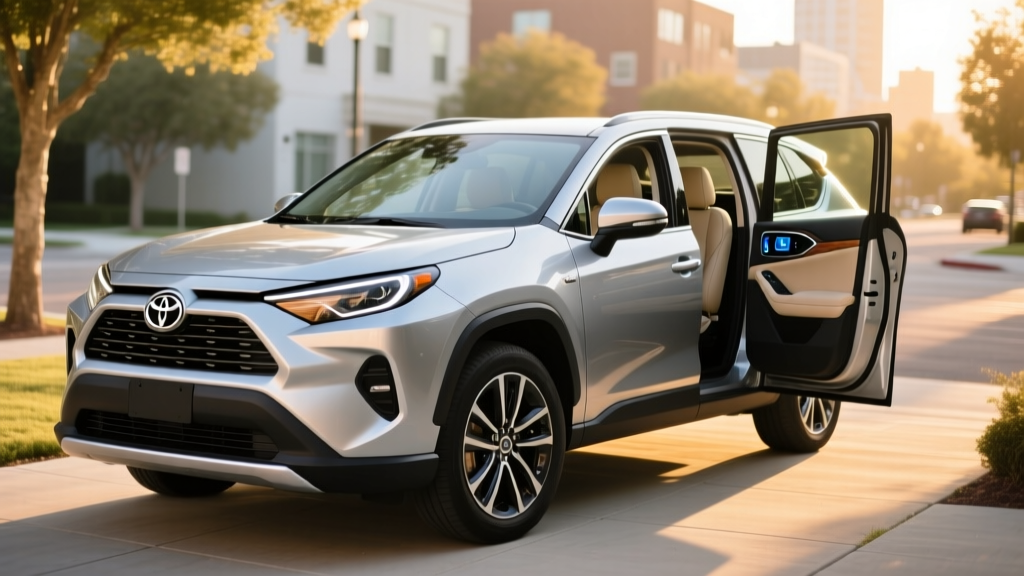
The 2018 Toyota RAV4 Hybrid SUV occupies a specific niche in today's used market: it's a proven, non-plug-in hybrid compact crossover that delivers consistent fuel economy without requiring any change in driving habits. You never plug it in. You never think about charging. You just drive it and watch the trip computer hover around 32–34 MPG combined — sometimes better in city traffic where the electric motor does the heavy lifting.
For buyers in 2026 weighing a used hybrid against a newer plug-in hybrid (PHEV) or a full battery-electric vehicle (BEV), the 2018 RAV4 Hybrid remains compelling if your priority is simplicity, low running costs, and Toyota's long-standing hybrid reliability. But it's not for everyone. Let's break down the exact numbers.
HEV vs PHEV: What the 2018 RAV4 Hybrid Actually Is
Conventional Hybrid (HEV) — This vehicle: The 2018 RAV4 Hybrid is a self-charging hybrid. A 2.5-liter four-cylinder engine works alongside two electric motors (one driving the front wheels, one the rear via Toyota's E-Four AWD system). A small 1.6 kWh nickel-metal hydride (NiMH) battery stores energy captured from regenerative braking and engine excess. You never plug it in. It has no electric-only driving range to speak of — the EV mode operates at very low speeds for less than a mile.
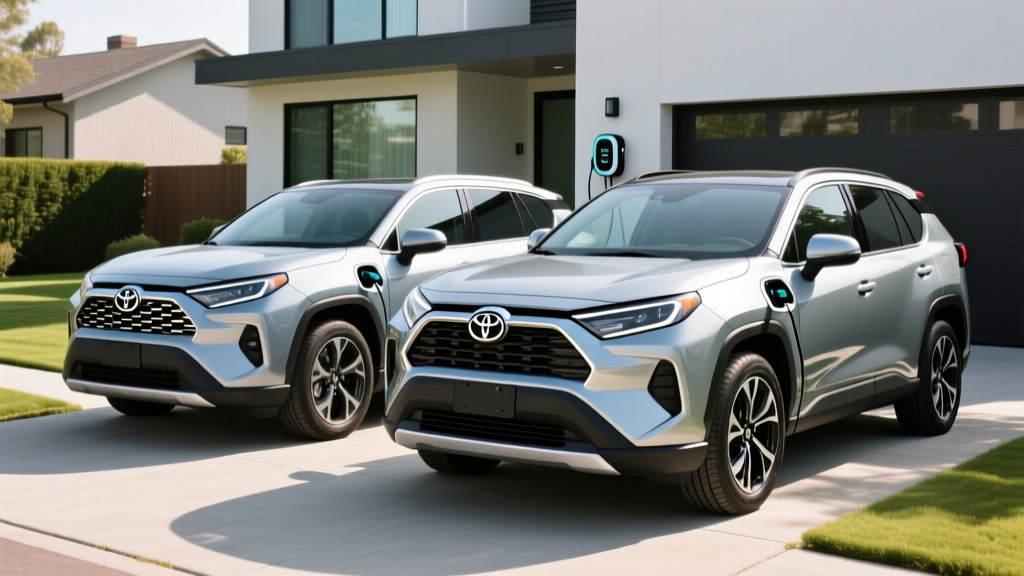
Plug-in Hybrid (PHEV) — Not this vehicle: Toyota introduced the RAV4 Prime (PHEV) for the 2021 model year on the next-generation platform. The RAV4 Prime carries an 18.1 kWh lithium-ion battery, delivers 42 miles of EPA electric-only range, and produces 302 combined horsepower. If you want a plug-in RAV4, you need 2021 or newer.
This distinction matters because used-car listings sometimes blur these categories. The 2018 model is strictly an HEV. No charging cable, no EV range, no federal tax credit eligibility.
Fuel Economy: EPA Numbers and Real-World MPG
| Metric | EPA Estimate | Real-World Expectation |
|---|---|---|
| City MPG | 34 MPG | 34–37 MPG (hybrids excel in stop-and-go) |
| Highway MPG | 30 MPG | 28–31 MPG (less electric assist at sustained speed) |
| Combined MPG | 32 MPG | 31–34 MPG depending on driving mix |
Source: EPA Fuel Economy (2018 Toyota RAV4 Hybrid AWD).
The 2018 RAV4 Hybrid's city MPG actually exceeds its highway number — a hallmark of Toyota's Hybrid Synergy Drive system. In urban driving, the electric motor handles launches and low-speed cruising while regenerative braking recaptures energy at every stoplight. On the highway, the gasoline engine carries most of the load, which is why the highway figure drops to 30 MPG.
In real-world ownership, many drivers report beating the EPA combined estimate in warm weather with mixed suburban driving. Cold weather (below 30°F) typically knocks 2–4 MPG off combined figures due to increased engine runtime for cabin heat and reduced battery efficiency. If your commute is mostly city, expect to see 35+ MPG regularly. If it's 90% highway at 75+ mph, expect closer to 28.
Powertrain, Performance, and Drivetrain Specs
| Specification | 2018 RAV4 Hybrid |
|---|---|
| Engine | 2.5L inline-4 (Atkinson cycle) |
| Engine Output | 150 hp / 152 lb-ft torque |
| Front Electric Motor | 105 kW (141 hp) |
| Rear Electric Motor (E-Four AWD) | 50 kW (67 hp) |
| Combined System Horsepower | 194 hp |
| Hybrid Battery | 1.6 kWh NiMH (204V) |
| Transmission | eCVT (electronically controlled) |
| Drivetrain | AWD (E-Four electronic) |
| 0–60 mph | ~7.8 seconds (est.) |
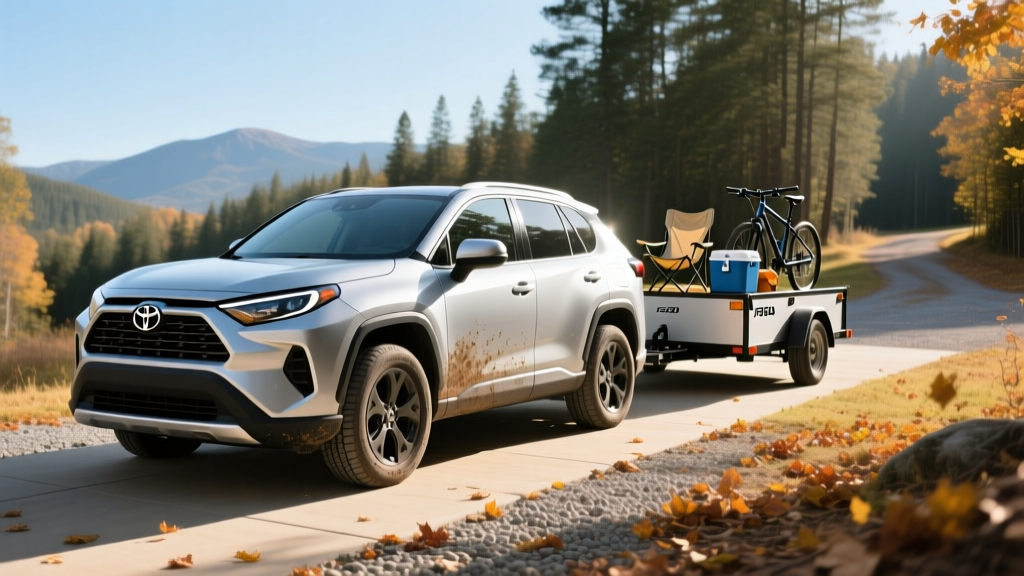
| Towing Capacity | 1,750 lbs |
| Cargo Volume (behind rear seats) | 35.6 cu ft |
The 194 combined horsepower figure comes from Toyota's specific method of adding peak engine and motor outputs at the RPM points where they overlap — not a simple sum of all peak numbers. The eCVT is not a belt-and-pulley CVT like those in some competitors; it uses a planetary gearset to blend engine and motor power, which is mechanically simpler and more durable.
The E-Four AWD system engages the rear electric motor only when the front wheels lose traction or under hard acceleration. There is no mechanical driveshaft connecting the front and rear axles. This means the rear wheels receive power only in short bursts — adequate for snow, rain, and light off-road situations, but not a substitute for a dedicated AWD system in severe conditions.
Battery Warranty, Lifespan, and Replacement Cost
Hybrid Battery Warranty (Original): 8 years / 100,000 miles (10 years / 150,000 miles in California and states adopting CARB emissions standards).
Current Status for 2018 Models in 2026: The 8-year/100,000-mile federal warranty has expired for most 2018 RAV4 Hybrids unless the vehicle was purchased late in the model year and remains under 100,000 miles. California/CARB-state 10-year coverage may still apply through 2028 for low-mileage examples.
Toyota's NiMH hybrid batteries have an exceptionally strong longevity track record. Data from fleet operators and long-term owners shows the 1.6 kWh NiMH pack in this generation typically retains 85–90% of original capacity at 150,000 miles. Failures before 200,000 miles are uncommon when the vehicle is driven regularly (the battery benefits from consistent charge cycling).
Replacement Cost (2026 estimates):
- New OEM Toyota battery pack: $3,000–$4,000 installed at a dealership
- Remanufactured battery pack: $1,500–$2,500 installed at an independent hybrid specialist
- Individual module replacement (if only one or two cells degrade): $500–$1,200
Before purchasing a used 2018 RAV4 Hybrid, ask for a hybrid battery health check. A Toyota dealer can pull the battery's State of Health (SoH) via the Techstream diagnostic tool. Look for internal resistance readings within factory spec and no history of "Check Hybrid System" warning codes. A pre-purchase inspection at a hybrid-experienced shop ($100–$200) is money well spent.
Used Pricing and Tax Credit Reality
As of early 2026, used 2018 Toyota RAV4 Hybrid SUVs trade in the following ranges depending on mileage, condition, and trim:
- LE trim (base): $18,000–$22,000 (60,000–90,000 miles)
- XLE trim: $20,000–$24,000 (50,000–80,000 miles)
- Limited trim: $23,000–$28,000 (40,000–70,000 miles)
Federal Tax Credit: The 2018 RAV4 Hybrid does not qualify for the federal §30D Clean Vehicle Credit. That credit applies only to plug-in electric vehicles (BEVs and PHEVs) meeting battery capacity, sourcing, MSRP, and buyer income requirements. A conventional HEV like this RAV4 Hybrid is ineligible for the $7,500 new-vehicle credit or the $4,000 used-EV credit.
State Incentives: A handful of states offer modest rebates or HOV lane access for hybrids, but most state incentive programs have shifted focus to plug-in vehicles. Check your state's energy office or DMV for current programs. Do not count on any incentive for this purchase.
Who Should Buy This Hybrid vs a PHEV or Full EV?
Choose the 2018 RAV4 Hybrid (HEV) if:
- You cannot charge at home (apartment, street parking, no garage)
- You want maximum simplicity — no plugs, no apps, no charging networks
- Your budget is under $25,000 and you need AWD
- You drive 10,000–15,000 miles/year and want low fuel costs without behavioral change
- You plan to keep the vehicle 5+ years and value Toyota's reliability record
Choose a RAV4 Prime (PHEV, 2021+) if:
- You can install a Level 2 home charger and want 42 miles of electric-only commuting
- You want 94 MPGe on electric power and still have a gas engine for road trips
- Your budget extends to $35,000+ for a used PHEV
Choose a full BEV (e.g., Hyundai Ioniq 5, Tesla Model Y) if:
- You have reliable home charging and your daily drive is under 200 miles
- You want zero tailpipe emissions and minimal maintenance (no oil changes, no spark plugs)
- You want to qualify for the used-EV tax credit ($4,000 on eligible models under $25,000)
Pros and Cons of the 2018 RAV4 Hybrid
Pros
- 32+ MPG combined with no plug-in requirement
- Proven NiMH battery with 200,000+ mile lifespan track record
- Standard AWD (E-Four) at no extra cost vs FWD-only competitors
- Spacious 35.6 cu ft cargo area, practical for families
- Strong resale value; parts and service widely available
- Toyota Safety Sense P standard (AEB, lane departure alert, auto high beams, dynamic radar cruise)
Cons
- No electric-only driving range — this is not a PHEV
- Dated interior materials and infotainment vs 2020+ competitors
- No Apple CarPlay or Android Auto (added in 2019 RAV4 redesign)
- eCVT drone under hard acceleration (common hybrid complaint)
- Towing limited to 1,750 lbs (insufficient for most trailers)
- No federal tax credit eligibility
Frequently Asked Questions
How many MPG does the 2018 Toyota RAV4 Hybrid get?
The EPA rates it at 34 city / 30 highway / 32 combined MPG. Real-world owners typically see 31–34 combined, with city-heavy drivers often exceeding 35 MPG and highway-heavy drivers seeing 28–30 MPG.
Does the 2018 RAV4 Hybrid need to be plugged in?
No. This is a conventional hybrid (HEV). The battery charges itself through regenerative braking and the gasoline engine. There is no plug, no charging cable, and no electric-only range beyond a few hundred feet at very low speed.
Is the hybrid battery reliable and what does replacement cost?
Toyota's NiMH hybrid batteries are among the most durable in the industry, commonly lasting 200,000+ miles. If replacement is needed, expect $3,000–$4,000 for a new OEM pack or $1,500–$2,500 for a remanufactured unit installed at a specialist shop.
Does the 2018 RAV4 Hybrid qualify for any tax credit?
No. Federal §30D credits apply only to plug-in vehicles (BEVs and PHEVs). The conventional RAV4 Hybrid is not eligible for the new or used federal EV tax credit. Check your state for any remaining hybrid incentives, though most have ended.
Should I buy a 2018 RAV4 Hybrid or wait for a newer model?
If your budget is under $25,000 and you want a proven, no-fuss hybrid with AWD, the 2018 model is a sound choice. The 2019+ RAV4 Hybrid (fifth generation) offers a more modern interior, Apple CarPlay/Android Auto, and slightly better fuel economy (41 city / 38 highway EPA on the current-gen platform), but used prices start around $27,000+. The 2018 is the value play.
How does the 2018 RAV4 Hybrid compare to a full EV for daily commuting?
If you can charge at home and your commute is under 200 miles round-trip, a used BEV will cost less per mile to "fuel" (roughly $0.04–$0.06/mile on residential electricity vs $0.10–$0.14/mile on gasoline at 32 MPG). But a BEV requires charging access and a higher upfront investment. The RAV4 Hybrid is the pragmatic choice when charging isn't an option.