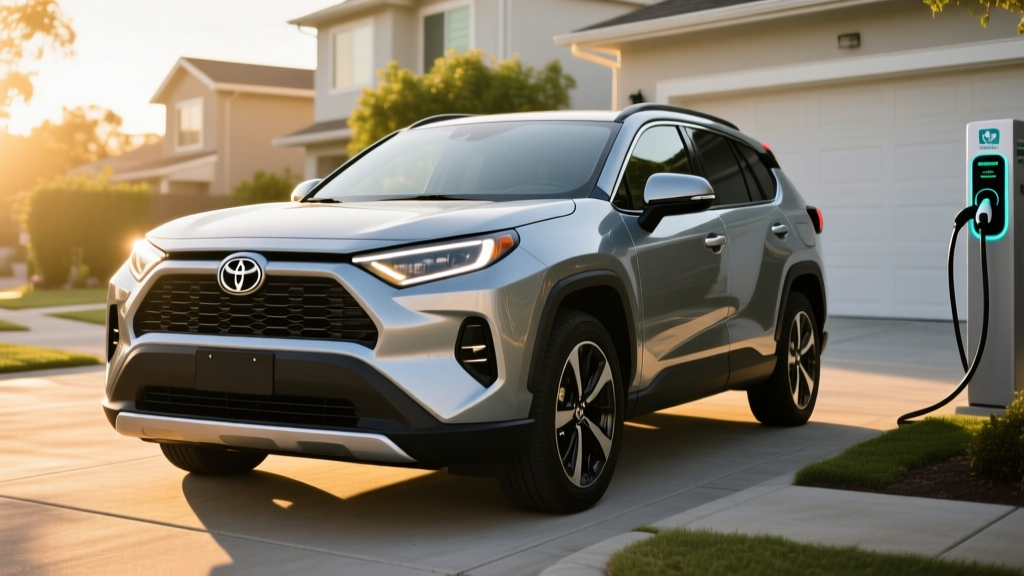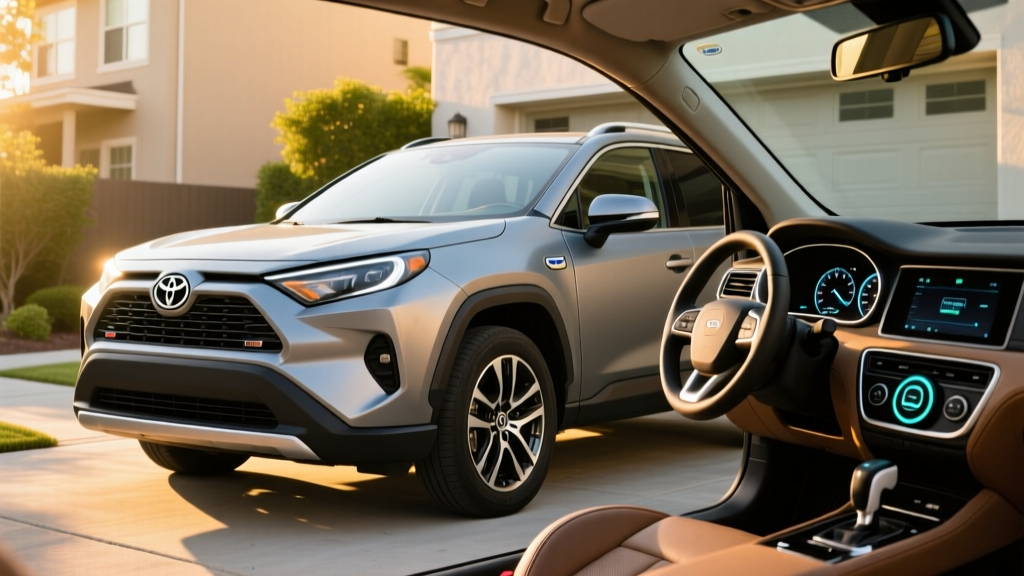
The 2018 Toyota RAV4 Hybrid Limited sits at a crossroads that still matters in 2026: it's one of the last model years of Toyota's third-generation RAV4 Hybrid before the complete redesign arrived for 2019, and it remains one of the most dependable used compact hybrid SUVs on the road. If you're evaluating a pre-owned example today, the questions aren't about whether it was a good car when new — they're about how the hybrid battery holds up after six to eight years, what real-world MPG looks like, and whether this HEV still makes financial sense against newer plug-in hybrids and full EVs.
This guide covers the 2018 RAV4 Hybrid Limited specifically — the top trim of that generation — with exact EPA figures, powertrain data, battery longevity expectations, and a clear-eyed look at what you're actually buying on the used market.
2018 RAV4 Hybrid Limited: Core Specifications at a Glance
| Specification | Value |
|---|---|
| Powertrain Type | Conventional Hybrid (HEV) — no plug-in |
| Gas Engine | 2.5L inline-4 (150 hp, 138 lb-ft) |
| Electric Motor (front) | Permanent-magnet AC synchronous (141 hp, 247 lb-ft) |
| Electric Motor (rear) | Independent rear motor for AWD (67 hp, 103 lb-ft) |
| Net Combined Horsepower | 194 hp |
| Transmission | eCVT (planetary gearset, not belt-driven) |
| Hybrid Battery | 1.6 kWh nickel-metal hydride (NiMH), 204V nominal |
| Drivetrain | Electronic On-Demand AWD (AWD-i) |
| EPA Fuel Economy | 32 city / 28 highway / 30 combined MPG |
| Fuel Tank | 14.8 gallons |
| Total Driving Range | ~444 miles (EPA combined) |
| 0–60 mph | ~7.8 seconds (independent testing) |
| Cargo Volume | 35.6 cu ft (rear seats up) / 70.7 cu ft (folded) |
| Towing Capacity | 1,750 lbs |
| Original MSRP (Limited trim) | $37,110 (before destination) |
A critical point for used shoppers: the 2018 RAV4 Hybrid uses a conventional hybrid (HEV) powertrain, not a plug-in hybrid. The 1.6 kWh battery charges exclusively through regenerative braking and the gas engine. You never plug it in. This distinguishes it from Toyota's later RAV4 Prime (a PHEV introduced for 2021 with an 18.1 kWh battery and 42 miles of electric-only range). If you want plug-in capability, the 2018 model year does not offer it in the RAV4 lineup.
Fuel Economy: EPA Numbers vs. Real-World MPG
| Driving Condition | EPA MPG | Real-World Expectation |
|---|---|---|
| City | 34 MPG | 33–37 MPG (hybrids excel in stop-and-go) |
| Highway | 30 MPG | 27–31 MPG (sustained speeds reduce regen benefit) |
| Combined | 32 MPG | 29–34 MPG depending on driving mix |
The EPA rates the 2018 RAV4 Hybrid at 34 city / 30 highway / 32 combined MPG per fueleconomy.gov. Note that Toyota's hybrid system actually achieves better fuel economy in city driving than on the highway — the opposite of a conventional gas car. This is because frequent braking regenerates energy back into the battery, and the electric motor handles low-speed propulsion where gas engines are least efficient.
In real-world ownership, most drivers report averaging between 29 and 34 MPG combined. The variables that matter most:
- City-heavy commutes push you toward the upper end (34–37 MPG) because regenerative braking keeps the battery charged and the engine off at stops.
- Sustained highway driving above 70 mph drops economy to 27–29 MPG as aerodynamic drag dominates and regen opportunities diminish.
- Cold weather (below 35°F) typically reduces MPG by 10–15% because the engine runs more often to provide cabin heat and warm up the catalytic converter.
- Battery age has minimal effect on MPG — the hybrid system compensates for slight capacity loss by adjusting charge/discharge strategy, but a severely degraded battery can reduce efficiency by 2–4 MPG.
HEV vs. PHEV vs. EV: Where the 2018 RAV4 Hybrid Fits
| Factor | HEV (2018 RAV4 Hybrid) | PHEV (RAV4 Prime, 2021+) | BEV (bZ4X / Tesla Model Y) |
|---|---|---|---|
| Plug-in Required? | No — self-charging | Yes — for EV range | Yes — always |
| Electric-Only Range | ~0.5–1 mi at low speed | 42 mi (EPA) | 220–320 mi (EPA) |
| Total Range | ~444 mi | ~600 mi combined | 220–320 mi |
| Fuel/Energy Cost per Mile | ~$0.11 (gas only) | ~$0.04 (electric) / ~$0.11 (gas) | ~$0.04–$0.06 |
| Federal Tax Credit (new) | None | Up to $7,500 (§30D, if eligible) | Up to $7,500 (§30D, if eligible) |
| Home Charging Needed? | No | Recommended (Level 2) | Essential (Level 2) |
| Used Market Entry Price (2026) | $14,000–$20,000 | $28,000–$38,000 | $22,000–$38,000 |
The 2018 RAV4 Hybrid is the right choice for buyers who want better fuel economy than a gas-only SUV but cannot or will not charge at home. Apartment dwellers, street-parkers, and drivers without garage access benefit from a conventional hybrid because it requires zero infrastructure changes. You simply fuel it like a gas car and the hybrid system handles the rest.
If you have reliable home charging (a 240V outlet or Level 2 charger) and a commute under 40 miles, a PHEV like the RAV4 Prime lets you drive most daily trips on electricity alone, using gas only for longer trips. A full BEV eliminates gas entirely but demands consistent charging access and acceptance of range limitations on road trips.
Limited Trim: What You Get at the Top of the Lineup
The Limited was the highest trim available on the 2018 RAV4 Hybrid, and it came well-equipped even by 2026 standards. Standard features on the Limited that were optional or unavailable on lower XLE and SE trims include:
- SofTex (synthetic leather) heated front seats with driver memory
- 8-inch touchscreen with Entune Audio Plus, navigation, and JBL premium audio (11 speakers)
- Blind Spot Monitor with Rear Cross-Traffic Alert
- Smart Key with push-button start on all doors
- 18-inch alloy wheels (specific to Limited and SE)
- LED headlights and daytime running lights
- Power liftgate
- Toyota Safety Sense P (TSS-P): pre-collision system, lane departure alert with steering assist, automatic high beams, and full-speed-range dynamic radar cruise control
For context, the 2018 model year was the last before Toyota's Safety Sense 2.0 arrived with the 2019 redesign, so the 2018's TSS-P lacks lane-tracing assist (centering in the lane) and road-sign assist. The cruise control works down to 0 mph but does not actively steer the vehicle — this is a basic SAE Level 1 driver-assist system, not a Level 2 hands-on-wheel system like modern Toyota Safety Sense 3.0.
Hybrid Battery Longevity, Warranty & Replacement Costs
The 2018 RAV4 Hybrid uses a 1.6 kWh nickel-metal hydride (NiMH) battery pack — not the lithium-ion chemistry found in newer Toyota hybrids. NiMH is older technology, but it has a proven track record for longevity. Toyota's hybrid batteries in the Camry, Prius, and RAV4 lineages routinely exceed 150,000 miles with gradual capacity loss rather than sudden failure.
What degradation actually looks like in this pack:
- Years 1–5 (0–80,000 miles): Negligible impact on fuel economy. The battery management system maintains a charge window between roughly 40–80% state of charge, avoiding the extremes that accelerate degradation.
- Years 5–10 (80,000–150,000 miles): Capacity may drop 10–20%. The system compensates by running the gas engine slightly more often. Real-world MPG loss is typically 1–3 MPG.
- Beyond 150,000 miles: Some units require cell balancing or individual module replacement. Complete pack failure before 200,000 miles is uncommon but not unheard of.
If you're buying a 2018 RAV4 Hybrid Limited in 2026, the battery is 7–8 years old. Request a hybrid battery health check at a Toyota dealer — they can read the individual module voltages and internal resistance values through Techstream diagnostics. A healthy pack shows module voltage variance under 0.2V. Variance above 0.3V suggests weakening modules.
Replacement cost if needed:
- New OEM battery from Toyota: $3,500–$5,000 installed (varies by region and dealer)
- Refurbished/remanufactured battery: $1,500–$2,500 installed from independent hybrid specialists
- Individual module replacement (if only 1–2 of 34 modules are weak): $400–$800 at a hybrid specialist
The good news: unlike a full EV battery replacement that can exceed $15,000, the RAV4 Hybrid's small NiMH pack is relatively affordable to service. And because the pack is small (1.6 kWh), the total energy throughput over its lifetime is modest, which contributes to its longevity.
Reliability Track Record & Common Issues
The third-generation RAV4 Hybrid (2016–2018) carries a strong reliability reputation, consistent with Toyota's hybrid powertrain history. The eCVT transmission — which is actually a planetary gearset with no belts, clutches, or traditional gears — has proven exceptionally durable and is essentially maintenance-free beyond periodic fluid inspection.
Known issues to check on a used 2018 example:
- Inverter coolant pump: Some 2016–2018 RAV4 Hybrids experienced premature inverter coolant pump failure. Toyota issued a warranty enhancement program for certain VINs. Verify this was addressed or check for coolant reservoir turbulence when the vehicle is in Ready mode — steady bubbling indicates pump function.
- 12V auxiliary battery: Like all hybrids, the RAV4 has a standard 12V battery (located in the rear cargo area) that powers electronics and computers. This battery typically lasts 3–5 years and costs $180–$250 to replace. A dead 12V battery will prevent the car from starting even if the hybrid battery is fully charged.
- Brake actuator: Toyota's regenerative braking system uses an electro-hydraulic brake actuator that can develop issues above 100,000 miles. Symptoms include a firm pedal, warning lights, or unusual pumping sounds. Replacement runs $1,200–$1,800.
- Rear differential (AWD-i models): The independent rear electric motor and its associated reduction gear are generally reliable, but listen for whining or grinding from the rear axle during test drives.
For safety context, the 2018 RAV4 earned a Top Safety Pick rating from the IIHS with Good ratings in all crashworthiness tests. The NHTSA awarded it 5 stars overall.
Used Market Pricing & Tax Credit Reality
As of early 2026, a used 2018 Toyota RAV4 Hybrid Limited typically lists between $16,000 and $22,000 depending on mileage, condition, and region. Lower-mileage examples (under 60,000 miles) in clean condition command the upper end of that range, while higher-mileage units (90,000+ miles) or those with reported accidents sit at the lower end.
Some states offer their own incentives for used hybrid purchases, but these vary widely and change frequently. Check your state's energy or environmental agency website for current programs.
Who Should Buy the 2018 RAV4 Hybrid Limited in 2026?
Choose the 2018 RAV4 Hybrid Limited if:
- You want a proven, reliable compact SUV with 30+ MPG and no charging requirement
- You rent, live in an apartment, or lack access to home/workplace charging
- Your budget is $16,000–$22,000 and you want Toyota reliability with AWD
- You drive a mix of city and highway and want fuel savings without behavioral changes
- You value the Limited's safety tech (TSS-P), JBL audio, and heated seats at a used-car price
Look elsewhere if:
- You want electric-only daily commuting — consider a RAV4 Prime (PHEV) or a full EV
- You need modern Level 2 driver-assist (lane centering, stop-and-go steering assist)
- You want the latest infotainment (wireless CarPlay/Android Auto, larger screens)
- You want to claim a federal tax credit — only plug-in vehicles qualify under current §30D and §25E rules
- You tow frequently — the 1,750-lb capacity is light-duty only
- Proven 32 MPG combined with real-world upside in city driving
- Standard AWD (AWD-i) with no fuel-economy penalty vs. FWD
- Exceptional powertrain reliability; eCVT is virtually maintenance-free
- Affordable hybrid battery replacement ($1,500–$5,000) vs. full EVs
- No charging infrastructure needed — fuel and go
- Top Safety Pick (IIHS) and 5-star NHTSA rating
- Limited trim well-equipped with TSS-P, JBL, navigation
- Highway MPG (30) trails some newer turbo-gas compact SUVs
- No electric-only driving range — always uses some gasoline
- No federal tax credit eligibility (HEV, not PHEV/BEV)
- 2018 infotainment feels dated — no Apple CarPlay or Android Auto
- TSS-P lacks lane-centering assist (Level 1 only)
- Hybrid battery likely out of warranty on most examples
- Cargo floor slightly higher than gas RAV4 due to battery placement
Frequently Asked Questions
How many MPG does the 2018 RAV4 Hybrid Limited actually get?
The EPA rates it at 34 city / 30 highway / 32 combined MPG. Real-world owners typically see 29–34 MPG combined, with city-heavy drivers often exceeding 34 MPG and highway-dominant drivers seeing 27–29 MPG. Cold weather reduces these figures by 10–15%.
Does the 2018 RAV4 Hybrid need to be plugged in?
No. This is a conventional hybrid (HEV), not a plug-in hybrid. The 1.6 kWh battery charges itself through regenerative braking and the gas engine. You never plug it in. If you want plug-in electric driving range, you'd need the 2021+ RAV4 Prime (PHEV).
Is the 2018 RAV4 Hybrid reliable after 100,000 miles?
Yes — this powertrain has a strong track record beyond 150,000 miles. The eCVT transmission and hybrid system are among Toyota's most durable components. The main concerns at higher mileage are the brake actuator ($1,200–$1,800 if it fails), the 12V auxiliary battery (routine replacement every 3–5 years), and gradual hybrid battery degradation. A pre-purchase hybrid health check at a Toyota dealer is strongly recommended.
What does it cost to replace the hybrid battery?
A new OEM battery from Toyota runs $3,500–$5,000 installed. Refurbished batteries from hybrid specialists cost $1,500–$2,500 installed. If only a few modules within the pack are weak, individual module replacement can cost as little as $400–$800. The NiMH pack in this generation has proven to last 150,000–200,000+ miles in most cases.
Does the 2018 RAV4 Hybrid qualify for any tax credit?
No federal tax credit is available. The IRS §25E used clean vehicle credit and §30D new vehicle credit apply only to plug-in vehicles (BEVs and PHEVs). A conventional hybrid with a 1.6 kWh battery and no plug does not qualify. Some states may offer separate incentives — check your state's energy office for current programs.
How does the 2018 RAV4 Hybrid compare to a full EV like the Tesla Model Y?
The RAV4 Hybrid uses about $1,600/year in gasoline (15,000 miles at 32 MPG and $3.40/gal). A Model Y Long Range uses about $550–$750/year in electricity at the national average rate. However, the used RAV4 Hybrid costs $16,000–$22,000 with no charging setup needed, while a used Model Y starts around $25,000–$32,000 and requires home Level 2 charging for practical ownership. The RAV4 Hybrid is the better choice for buyers without charging access; the Model Y wins on per-mile energy cost for those who can charge at home.
What should I check before buying a used 2018 RAV4 Hybrid?
Prioritize a hybrid battery health check (module voltage variance under 0.2V), verify the inverter coolant pump warranty enhancement was performed, check brake actuator function, confirm the 12V battery age, and review maintenance records for transmission fluid and engine oil changes. A pre-purchase inspection at a Toyota dealership or hybrid specialist is worth the $150–$250 cost.