Quick Verdict: The 2018 Prius Still Sets the Hybrid Benchmark
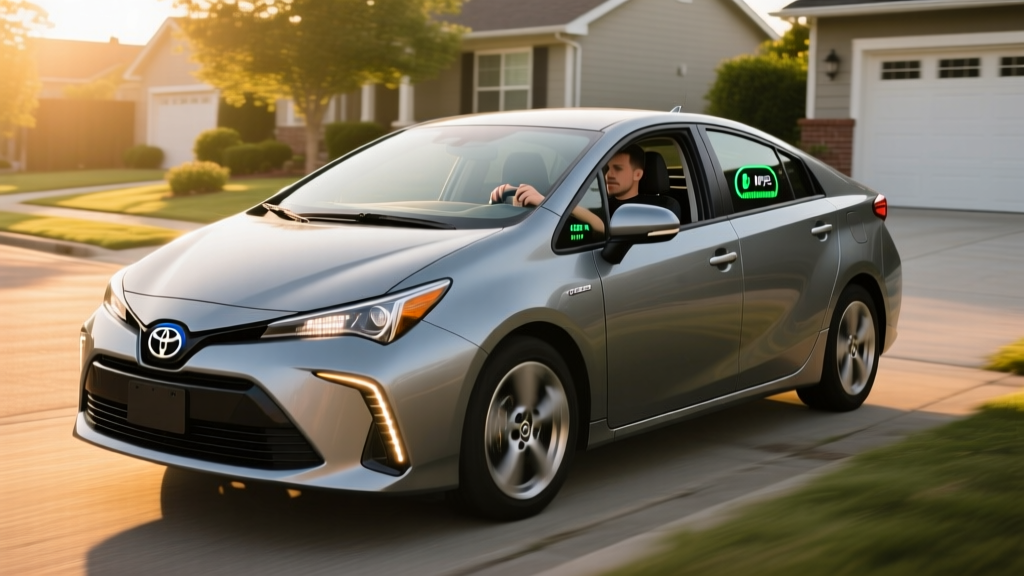
If you're researching the hybrid Toyota Prius 2018 model year as a used purchase in 2026, you're looking at one of the most proven, efficient, and reliable hybrid vehicles ever sold. Eight years after its debut, the fourth-generation Prius (XW50 chassis) remains a compelling choice for buyers who want maximum fuel economy without plugging in, worrying about charging infrastructure, or paying EV premiums.
The 2018 Prius delivers an EPA-estimated 54 MPG combined in its Eco trim — a figure that few vehicles, even newer ones, can match. Its 1.8-liter Atkinson-cycle engine paired with Toyota's Hybrid Synergy Drive is battle-tested across millions of miles globally. For used-car shoppers weighing a hybrid against a plug-in hybrid (PHEV) or a full battery-electric vehicle (BEV), this guide covers every number you need.
HEV vs. PHEV: Where the 2018 Prius Fits
Before diving into specs, it's essential to understand what the 2018 Prius is — and isn't.
Conventional Hybrid (HEV) — 2018 Toyota Prius: The standard 2018 Prius is a self-charging hybrid. It uses a small nickel-metal hydride (NiMH) battery pack charged entirely by regenerative braking and the gasoline engine. You never plug it in. There is no electric-only driving range of practical length; the electric motor assists the gas engine and enables brief low-speed EV mode, but the car always relies on gasoline for sustained travel.
Plug-In Hybrid (PHEV) — 2018 Toyota Prius Prime: Toyota also sold the Prius Prime in 2018, which is a fundamentally different vehicle. The Prime has a larger 8.8 kWh lithium-ion battery, an electric-only range of 25 miles (EPA), and a standard J1772 charge port for Level 1 and Level 2 charging. If you want plug-in capability, you're looking for the Prius Prime, not the standard Prius. We cover the Prime briefly in our FAQ section below.
This review focuses on the conventional 2018 Toyota Prius HEV. We'll flag Prius Prime differences where relevant.
Fuel Economy: EPA Ratings and Real-World MPG
Fuel economy is the Prius's reason for existing. Here's the full EPA breakdown by trim, sourced from fueleconomy.gov:
| Trim | City MPG | Highway MPG | Combined MPG |
|---|---|---|---|
| Prius Two / Two Eco | 54 | 50 | 52–54* |
| Prius Three / Four / Touring | 54 | 50 | 52 |
| Prius AWD-e (not available in 2018)** | 52 | 48 | 50 |
*The Eco trim achieves 58 city / 53 highway / 56 combined due to lighter weight and low-rolling-resistance tires.
**AWD-e was introduced for the 2019 model year and is not available on the 2018 Prius.
Real-World MPG: What Owners Actually See
The 2018 Prius is one of those rare vehicles where real-world fuel economy often exceeds EPA estimates in city driving, thanks to frequent regenerative braking and low-speed electric-motor assist. In mixed driving, most owners report 48–55 MPG depending on conditions:
- City-dominant driving: 52–58 MPG. Stop-and-go traffic maximizes regen and electric assist.
- Highway-dominant driving (70–80 mph): 44–48 MPG. Aerodynamic drag reduces efficiency at sustained speed — a trait common to all vehicles but more noticeable in a car optimized for city efficiency.
- Cold weather (below 32°F): Expect a 5–12% reduction, dropping to roughly 44–50 MPG combined. The engine runs longer to heat the cabin and bring the catalytic converter to operating temperature.
- Warm weather, moderate speeds: 55+ MPG is achievable on back roads at 45–55 mph.
For a buyer in 2026 considering a used 2018 Prius with 70,000–100,000 miles, these figures hold up well. The hybrid system does not meaningfully degrade in efficiency over time — the battery may lose some capacity, but the engine compensates, and fuel economy remains within 1–2 MPG of original figures.
Powertrain and Performance Specifications
| Specification | 2018 Toyota Prius (HEV) |
|---|---|
| Engine | 1.8L 4-cylinder Atkinson-cycle (96 hp / 105 lb-ft) |
| Electric Motor | Permanent-magnet AC synchronous (71 hp / 120 lb-ft) |
| Combined Net Horsepower | 121 hp |
| Transmission | Continuously Variable (eCVT — planetary gearset) |
| Hybrid Battery | NiMH, ~1.3 kWh (nominal) |
| Drivetrain | Front-wheel drive (FWD) |
| 0–60 mph | ~10.5 seconds |
| Curb Weight | 3,042–3,108 lbs (varies by trim) |
| Fuel Tank | 11.4 gallons |
| Total Driving Range | ~600+ miles (at 52 MPG combined) |
The 121 combined horsepower figure sounds modest — and it is. The 2018 Prius is not quick. The 10.5-second 0–60 time places it firmly in the "adequate for commuting" category. However, the eCVT planetary gearset delivers smooth, seamless power delivery without the rubber-band feel of traditional belt-driven CVTs. Around town, the electric motor's instant torque makes the car feel more responsive than the horsepower number suggests.
Hybrid Battery Warranty, Lifespan, and Replacement Cost
Original Factory Warranty: Toyota covered the 2018 Prius hybrid battery for 8 years / 100,000 miles (10 years / 150,000 miles in California and states that follow CARB emissions standards). As of 2026, most 2018 Prius vehicles have aged out of the 8-year warranty but may still have coverage under the 10-year CARB extension if registered in an eligible state.
How Long Does the Prius Hybrid Battery Actually Last?
The 2018 Prius uses a nickel-metal hydride (NiMH) battery pack — a chemistry Toyota has refined over two decades. Real-world data from fleet operators, taxi services, and high-mileage owners shows these packs regularly last 150,000–200,000+ miles before requiring replacement. Unlike the larger lithium-ion packs in full EVs, the Prius NiMH pack is small (~1.3 kWh), operates within a narrow state-of-charge window (roughly 40–80%), and is never deeply cycled — all factors that dramatically extend lifespan.
For a 2018 Prius with 80,000–120,000 miles in 2026, the hybrid battery likely has substantial remaining life. However, buyers should check for these warning signs:
- Frequent engine running at stop (battery can't hold sufficient charge)
- Noticeable drop in fuel economy (more than 5 MPG below expected)
- Hybrid system warning light on the dashboard
- Rapid state-of-charge fluctuation on the energy monitor display
Battery Replacement Cost
If the hybrid battery does fail, replacement costs in 2026 are:
- New OEM Toyota battery: $2,000–$2,500 (part only), $2,800–$3,600 installed at a dealership
- Refurbished/remanufactured battery: $1,000–$1,600 installed (from companies like Green Bean Battery or Dorman)
- Individual module replacement: $200–$500 if only one or two modules are weak (requires a hybrid-savvy technician)
Compared to EV battery replacements ($5,000–$20,000+), the Prius hybrid battery is relatively affordable to replace — and far less likely to need it.
Used Pricing in 2026 and Tax Credit Eligibility
The 2018 Prius was originally sold at an MSRP of $23,475 (base Two trim) to $30,060 (Four Touring). In the 2026 used market, expect these price ranges depending on mileage and condition:
- 60,000–80,000 miles: $14,000–$17,500
- 80,000–120,000 miles: $11,000–$15,000
- 120,000–160,000 miles: $8,500–$12,000
Does the 2018 Prius Qualify for Any Tax Credit?
Federal tax credit: The 2018 Prius conventional hybrid (HEV) does not qualify for the federal §30D clean vehicle credit. That credit is reserved for plug-in vehicles (BEVs and PHEVs) with sufficient battery capacity. The standard Prius's ~1.3 kWh NiMH pack is far below the threshold. Additionally, even if it were eligible as a used vehicle under the §25E used clean vehicle credit, that provision applies only to plug-in EVs and fuel cell vehicles — not conventional hybrids.
The 2018 Prius Prime (PHEV), however, originally qualified for a federal tax credit of up to $4,502 when new. For used purchases in 2026, the §25E used clean vehicle credit allows up to $4,000 or 30% of the sale price (whichever is less) on eligible used plug-in vehicles priced at $25,000 or less, subject to buyer income caps. A used Prius Prime may qualify — consult the IRS §25E guidelines and a tax professional to confirm eligibility for your specific situation.
State incentives: Some states offer rebates or HOV lane access for hybrids or PHEVs. These vary by jurisdiction and change frequently — check your state's energy office or DMV for current programs.
Who Should Buy the 2018 Prius vs. a PHEV or Full EV?
Choose the 2018 Prius (HEV) If:
- You want maximum MPG without ever plugging in
- You lack access to home or workplace charging
- Your budget is $9,000–$17,000 for a reliable used car
- You drive mostly in city or suburban conditions
- You want proven, low-risk hybrid technology with cheap battery replacement
- You drive 15,000+ miles/year and want fuel savings without upfront EV cost
Consider a PHEV or Full EV Instead If:
- You have home Level 2 charging and a short commute (a PHEV like the Prius Prime covers 25 miles on electricity alone)
- You want zero tailpipe emissions for daily driving (a BEV like the Chevy Bolt or Nissan Leaf)
- You want access to federal or state tax credits (available only for plug-in vehicles)
- You prioritize acceleration — the Prius's 10.5-second 0–60 is leisurely
- You want modern infotainment (the 2018 Prius lacks Apple CarPlay/Android Auto on most trims)
Ownership Costs: Fuel Savings vs. a Comparable Gas Car
Here's a practical comparison. Assume 15,000 miles/year, $3.40/gallon regular unleaded (2026 national average), and EPA combined MPG:
| Vehicle | Combined MPG | Annual Fuel Cost | 5-Year Fuel Cost |
|---|---|---|---|
| 2018 Toyota Prius (HEV) | 52 | $981 | $4,904 |
| 2018 Toyota Corolla (gas) | 32 | $1,594 | $7,969 |
| 2018 Honda Civic (gas) | 35 | $1,457 | $7,286 |
The Prius saves approximately $600–$620 per year in fuel compared to a typical compact gas car, or roughly $3,000–$3,100 over five years at 15,000 miles annually. At higher mileage (20,000+ miles/year), savings scale proportionally. These savings often offset the used-purchase premium the Prius commands over a similarly aged Corolla or Civic.
Frequently Asked Questions
How many MPG does the 2018 Toyota Prius hybrid get?
The EPA rates the 2018 Prius at 54 city / 50 highway / 52 combined for most trims, and up to 58 city / 53 highway / 56 combined for the Eco trim. In real-world driving, expect 48–55 MPG combined depending on conditions, with city driving often yielding the highest numbers due to regenerative braking.
Does the 2018 Prius need to be plugged in?
No. The standard 2018 Toyota Prius is a conventional hybrid (HEV). It charges its small battery entirely through regenerative braking and the gasoline engine. You never plug it in. If you want a plug-in Prius, look for the 2018 Prius Prime (PHEV).
How far can the 2018 Prius Prime go on electric only?
The 2018 Prius Prime (PHEV — a separate model) has an EPA-rated 25 miles of electric-only range from its 8.8 kWh lithium-ion battery. After that, it operates as a conventional hybrid achieving 54 MPG combined. Total range exceeds 600 miles. The Prime charges via J1772 at Level 1 (120V, ~5.5 hours) or Level 2 (240V, ~2 hours). It does not support DC fast charging.
Is the 2018 Prius reliable, and what does a hybrid battery replacement cost?
Yes — the 2018 Prius is among the most reliable vehicles Toyota has ever built. The hybrid system has been refined over 20+ years. The NiMH hybrid battery typically lasts 150,000–200,000+ miles. If replacement is needed, expect $2,800–$3,600 for a new OEM battery installed, or $1,000–$1,600 for a refurbished unit. According to NHTSA, the 2018 Prius earned a 5-star overall safety rating.
Does the 2018 Toyota Prius qualify for any tax credit in 2026?
The conventional 2018 Prius (HEV) does not qualify for any federal tax credit — neither the §30D new vehicle credit nor the §25E used vehicle credit, as both require a plug-in vehicle. The 2018 Prius Prime (PHEV) may qualify for the §25E used clean vehicle credit of up to $4,000 if purchased from a dealer for $25,000 or less and the buyer meets income caps ($75,000 single / $150,000 joint). Always verify with a tax professional and the IRS used vehicle credit page.
What should I check before buying a used 2018 Prius?
Before purchasing, verify: (1) hybrid battery health — ask for a "health check" printout from a Toyota dealer or use an OBD2 reader with the Dr. Prius or Hybrid Assistant app; (2) maintenance records — the engine still needs regular oil changes; (3) brake condition — regenerative braking extends pad life, but rotors can corrode in salt-belt states; (4) 12V auxiliary battery age — the small 12V battery in the trunk typically lasts 4–6 years and costs ~$200 to replace; (5) inverter coolant level — low coolant can signal a leak that's expensive to repair.