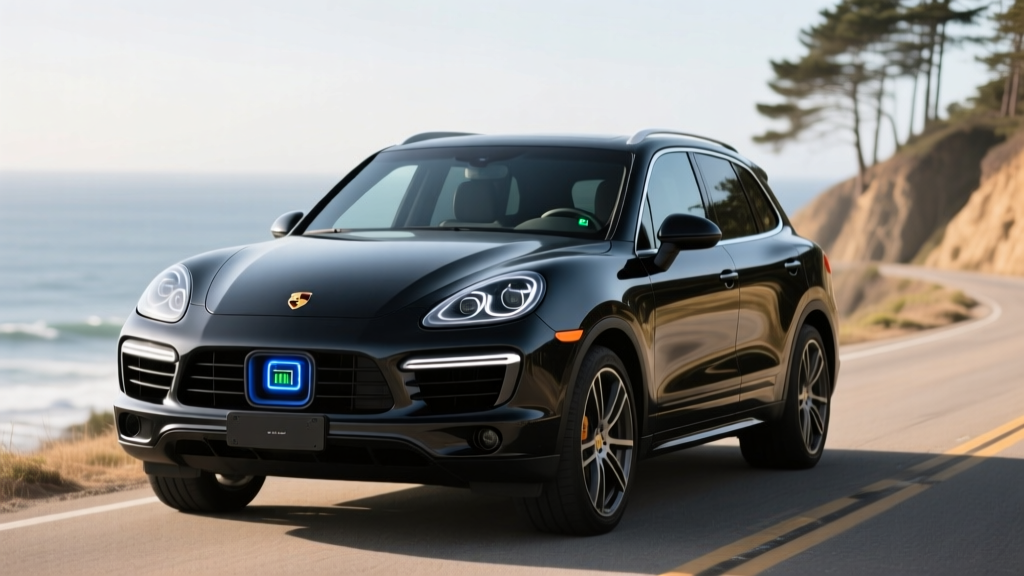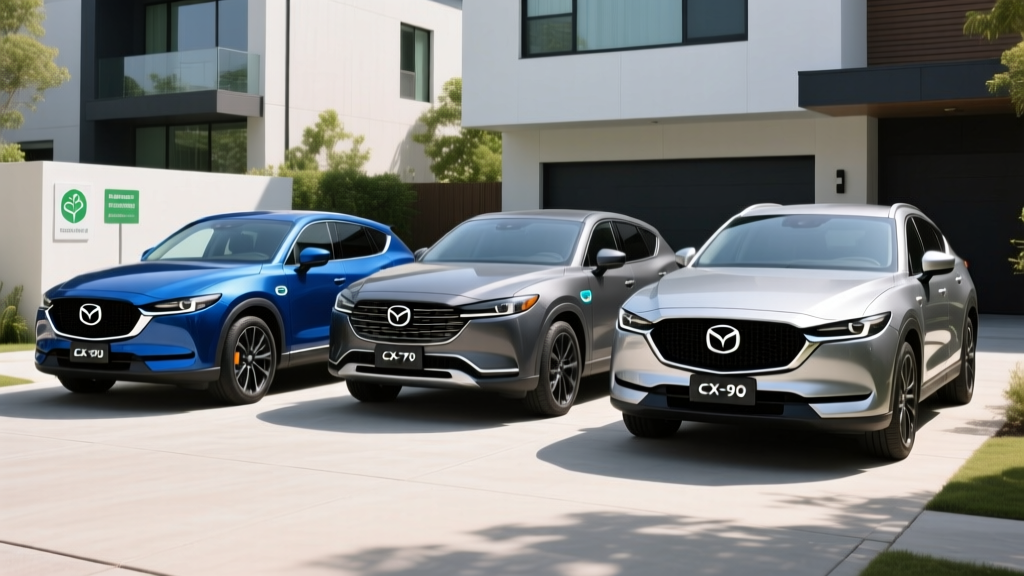
Mazda has never been a brand that rushes into electrification. While competitors flooded the market with dedicated EV platforms, Mazda took a measured approach, introducing hybrid and plug-in hybrid powertrains into its existing crossover lineup. For 2026, the result is a lineup of Mazda hybrids that spans conventional HEVs and PHEVs across three popular SUVs: the compact CX-50 Hybrid, the midsize CX-70 PHEV, and the three-row CX-90 PHEV.
This guide breaks down every Mazda hybrid currently on sale with exact EPA figures, battery specifications, real-world efficiency data, pricing, and tax credit eligibility — so you can decide which powertrain actually fits your driving habits and budget.
Mazda's Hybrid Strategy: HEV vs. PHEV Explained
Before diving into individual models, it is essential to understand the two distinct hybrid architectures Mazda uses, because they serve fundamentally different purposes and have different ownership implications.
Conventional Hybrid (HEV)
A conventional hybrid like the CX-50 Hybrid pairs a gasoline engine with a small electric motor and a compact battery (typically 1–2 kWh). You never plug it in. The system recovers energy during braking and uses the electric motor to assist acceleration and enable brief low-speed electric driving. The primary benefit is improved fuel economy — especially in city driving — without any change to your fueling routine.
Plug-In Hybrid (PHEV)
A plug-in hybrid like the CX-70 PHEV and CX-90 PHEV uses a much larger battery (17.8 kWh usable) that you can charge from a wall outlet or Level 2 charger. This enables 26–28 miles of electric-only driving before the gasoline engine engages. PHEVs are designed for drivers who can charge at home and want EV-like daily commuting with gasoline backup for longer trips.
The 2026 Mazda Hybrid Lineup at a Glance
| Specification | CX-50 Hybrid | CX-70 PHEV | CX-90 PHEV |
|---|---|---|---|
| Powertrain Type | HEV (conventional) | PHEV (plug-in) | PHEV (plug-in) |
| Engine | 2.5L 4-cyl + electric motor | 2.5L 4-cyl + electric motor | 2.5L 4-cyl + electric motor |
| Combined Horsepower | 219 hp | 327 hp / 369 lb-ft | 327 hp / 369 lb-ft |
| Battery Capacity | ~1.1 kWh (NiMH) | 17.8 kWh (lithium-ion) | 17.8 kWh (lithium-ion) |
| EPA Electric-Only Range | N/A (not plug-in) | 26 miles | 26 miles |
| EPA Combined MPG (gas) | 38 MPG combined | 56 MPGe combined | 56 MPGe combined |
| MPG After Battery Depletes | 38 MPG combined | ~25 MPG combined | ~25 MPG combined |
| Level 2 Charge Time (0–100%) | N/A | ~2.5 hours (7 kW onboard) | ~2.5 hours (7 kW onboard) |
| DC Fast Charging | No | No | No |
| 0–60 mph | ~7.8 sec | ~6.3 sec | ~6.5 sec |
| Starting MSRP | ~$35,395 | ~$55,875 | ~$51,275 |
| Federal Tax Credit (§30D) | Not eligible | Up to $3,750* | Up to $3,750* |
*Tax credit amounts reflect 2026 IRS §30D rules and are subject to income, MSRP cap, battery sourcing, and point-of-sale transfer requirements. See the tax credit section below for full eligibility details.
CX-50 Hybrid: Real-World Fuel Economy and Efficiency
The CX-50 Hybrid uses Toyota's well-proven hybrid synergy drive system — the result of a collaboration between Mazda and Toyota. This matters because it means the CX-50 Hybrid benefits from one of the most thoroughly validated hybrid powertrains on the market.
| Driving Condition | EPA Estimate | Real-World Expectation |
|---|---|---|
| City | 39 MPG | 38–42 MPG (hybrids often exceed EPA in city) |
| Highway | 34 MPG | 31–35 MPG (less regen benefit at sustained speed) |
| Combined | 38 MPG | 35–39 MPG depending on driving mix |
Conventional hybrids like the CX-50 Hybrid tend to deliver better real-world results in city driving than the EPA sticker suggests, because stop-and-go traffic maximizes regenerative braking opportunities. Highway driving is the opposite — sustained speeds offer fewer regen cycles, so expect MPG to dip slightly below the combined rating on long interstate runs.
For a 15,000-mile/year driver averaging the EPA combined 38 MPG, the CX-50 Hybrid would consume roughly 395 gallons annually. At $3.50/gallon, that is approximately $1,380 per year in fuel — a meaningful savings over the non-hybrid CX-50, which returns around 27 MPG combined and would cost roughly $1,940 per year under the same conditions.
CX-70 PHEV and CX-90 PHEV: Electric-Only Range and Charging
Both the CX-70 PHEV and CX-90 PHEV share the same 17.8 kWh lithium-ion battery pack and powertrain. The CX-70 is a two-row midsize SUV; the CX-90 adds a third row. Despite the size difference, EPA electric-only range is identical at 26 miles.
Real-World Electric Range: The EPA-rated 26 miles assumes moderate temperatures and mixed driving. In practice, expect 22–26 miles of electric-only range in mild weather. In cold conditions (below 35°F), battery efficiency drops and cabin heating draws power — expect 18–22 miles before the gasoline engine engages. Highway-speed electric-only driving also reduces range to roughly 20–23 miles due to higher energy consumption at speed.
Charging the PHEVs is straightforward but limited. Both models feature a 7.0 kW onboard charger and accept Level 2 (240V) AC charging. A full 0–100% charge takes approximately 2.5 hours on a Level 2 home charger. Neither model supports DC fast charging — a notable omission if you were hoping to top up at public fast-charging stations during road trips. For PHEV use cases, this is rarely a problem: most charging happens at home overnight, and the battery is small enough that Level 2 is adequate.
On a standard 120V household outlet (Level 1), expect a full charge to take roughly 10–12 hours — feasible for overnight charging if you have a dedicated circuit, but slow for mid-day top-ups.
MPG After the Battery Depletes
Once the 26 miles of electric range are used, both PHEVs operate as conventional hybrids. The EPA does not publish a separate "charge-depleted" MPG figure for these models, but in real-world testing and owner reports, expect approximately 24–26 MPG combined once the engine takes over full-time. This is respectable for a 4,500+ lb SUV with 327 horsepower, but it is not class-leading among hybrids. If you regularly drive more than 30–40 miles per day without charging in between, a conventional hybrid like the CX-50 may actually use less fuel.
Pricing, Trims, and Federal Tax Credit Eligibility
Here is where the math gets interesting — and where many buyers get tripped up by evolving rules.
CX-50 Hybrid pricing starts at approximately $35,395 for the Preferred Hybrid trim and climbs to around $42,000 for the Premium Plus. As a conventional hybrid, it does not qualify for the federal §30D new clean vehicle tax credit, which is reserved for plug-in vehicles (PHEVs and BEVs) meeting battery sourcing and MSRP requirements.
CX-70 PHEV starts at approximately $55,875 and can reach over $61,000 in Premium Plus trim. CX-90 PHEV starts at approximately $51,275 and tops out around $60,000.
§30D Federal Tax Credit Checklist for Mazda PHEVs (2026)
- MSRP Cap: SUVs must have an MSRP at or below $80,000. Both CX-70 PHEV and CX-90 PHEV trims clear this threshold.
- Buyer Income Cap: Modified adjusted gross income must not exceed $300,000 (married filing jointly), $225,000 (head of household), or $150,000 (single filers).
- Battery Sourcing: The credit is split into two halves — $3,750 for critical minerals and $3,750 for battery component manufacturing. Mazda PHEVs currently qualify for the $3,750 critical minerals half, bringing the maximum credit to $3,750. (The battery component requirement has tightened under 2026 rules, disqualifying vehicles with battery components from certain foreign entities of concern.)
- Point-of-Sale Transfer: Under current IRS rules, you can transfer the credit to the dealer at purchase, reducing your out-of-pocket cost immediately rather than waiting to claim it on your tax return.
- Verification: Always confirm eligibility on the EPA/DOE fueleconomy.gov tax credit page and consult a tax professional before relying on credit amounts.
Many states and utilities offer additional rebates for PHEVs. California, Colorado, New York, and Massachusetts have state-level incentives that can stack with the federal credit. Check your state energy office or utility provider for current programs.
Battery Warranty, Reliability, and Replacement Costs
Hybrid battery longevity is consistently one of the top concerns for buyers considering their first hybrid or PHEV. Here is what Mazda covers and what the data shows.
Mazda Hybrid/PHEV Battery Warranty
Coverage: 8 years / 100,000 miles (whichever comes first) for the hybrid battery pack and related components. In states that follow California Air Resources Board (CARB) emissions warranty rules (including CA, NY, MA, NJ, and several others), the warranty extends to 10 years / 150,000 miles.
What's Covered: Defects in materials or workmanship, and battery capacity loss below a defined threshold (typically 60–70% of original capacity, per warranty documentation).
The CX-50 Hybrid's Toyota-sourced hybrid system has an extensive reliability track record spanning millions of vehicles (Prius, RAV4 Hybrid, Camry Hybrid). Failures before 150,000 miles are uncommon, and replacement costs for the smaller HEV battery typically range from $2,000 to $3,500 if needed out of warranty.
For the CX-70 and CX-90 PHEV, the 17.8 kWh lithium-ion pack is a newer design. PHEV battery replacement costs are significantly higher — estimated at $6,000 to $9,000 out of warranty, given the larger capacity. However, lithium-ion PHEV packs are engineered for daily cycling and include thermal management systems that should support well over 100,000 miles before significant degradation.
Who Should Buy a Mazda Hybrid — And Who Should Look Elsewhere
Pros
- CX-50 Hybrid delivers excellent city MPG (39 EPA) with no plug-in requirement
- PHEV models offer 327 hp — genuinely quick for family SUVs
- Premium interior quality that rivals luxury brands at similar price points
- Toyota hybrid system in CX-50 has proven long-term reliability
- Standard AWD across all hybrid trims
- PHEV models eligible for up to $3,750 federal tax credit
Cons
- PHEV electric-only range (26 miles) trails competitors like the RAV4 Prime (42 mi)
- No DC fast charging on PHEV models
- Charge-depleted MPG (~25) is unremarkable for the class
- CX-70/CX-90 PHEV pricing starts above $51,000
- Third row in CX-90 is tight for adults
- PHEV tax credit limited to $3,750 (not the full $7,500) under 2026 sourcing rules
Hybrid vs. PHEV vs. Full EV: Which Fits Your Life?
The right choice depends almost entirely on your daily mileage, charging access, and trip patterns.
Choose the CX-50 Hybrid (HEV) if: You drive 30–50 miles per day, do not have reliable access to home or workplace charging, take frequent road trips, or want maximum fuel savings with zero behavioral change. The CX-50 Hybrid is the lowest-friction entry into electrification — you just drive it and it uses less fuel.
Choose the CX-70 or CX-90 PHEV if: You can install a Level 2 charger at home, your daily commute is under 25 miles round-trip (so you can drive mostly on electricity), and you still want the option of 400+ mile gasoline road trips without planning charging stops. The PHEV makes the most financial sense when you charge daily and use gasoline sparingly.
Choose a full EV instead if: Your daily driving is under 250 miles, you have reliable home charging, you rarely take long road trips (or are willing to plan DC fast-charging stops), and you want to eliminate gasoline entirely. A full EV like the Tesla Model Y, Hyundai Ioniq 5, or Ford Mustang Mach-E will have lower per-mile energy costs, less maintenance, and higher federal tax credits (up to $7,500 for qualifying models).
Frequently Asked Questions About Mazda Hybrids
How many MPG do Mazda hybrids get?
The CX-50 Hybrid achieves an EPA-rated 39 city / 34 highway / 38 combined MPG. The CX-70 PHEV and CX-90 PHEV are rated at 56 MPGe combined when operating on both battery and gasoline, and approximately 24–26 MPG combined after the battery is depleted. Verify current EPA ratings on fueleconomy.gov.
How far can the Mazda PHEVs go on electric only?
Both the CX-70 PHEV and CX-90 PHEV have an EPA-rated electric-only range of 26 miles. In real-world driving, expect 22–26 miles in mild weather and 18–22 miles in cold conditions. This is shorter than the Toyota RAV4 Prime's 42 miles but comparable to the Hyundai Tucson PHEV's 33 miles.
Do Mazda hybrids need to be plugged in?
The CX-50 Hybrid is a conventional hybrid and never needs to be plugged in — it charges its small battery through regenerative braking and the gasoline engine. The CX-70 PHEV and CX-90 PHEV should be plugged in to take advantage of their 26-mile electric range, but they will still operate as conventional hybrids if you never charge them.
Are Mazda hybrids reliable, and what does battery replacement cost?
The CX-50 Hybrid uses a Toyota-sourced hybrid system with an extensive reliability record spanning decades and millions of vehicles. The CX-70/CX-90 PHEV powertrain is newer but benefits from Mazda's engineering standards. All hybrid batteries carry an 8-year/100,000-mile warranty (10 years/150,000 miles in CARB states). Out-of-warranty replacement costs are estimated at $2,000–$3,500 for the CX-50 HEV battery and $6,000–$9,000 for the PHEV battery pack.
Do Mazda PHEVs qualify for any tax credits?
The CX-70 PHEV and CX-90 PHEV may qualify for up to $3,750 under the federal §30D clean vehicle credit, subject to buyer income limits, MSRP caps, and battery sourcing requirements. The CX-50 Hybrid (conventional HEV) does not qualify for the federal credit. State and utility incentives may provide additional savings. Always verify on irs.gov and consult a tax professional.
Can I DC fast charge a Mazda PHEV?
No. Neither the CX-70 PHEV nor the CX-90 PHEV supports DC fast charging. They accept up to 7.0 kW on Level 2 (240V) AC charging, completing a full charge in approximately 2.5 hours. Level 1 (120V) charging takes roughly 10–12 hours.