Quick Verdict: A 680-HP Plug-In Hybrid Flagship
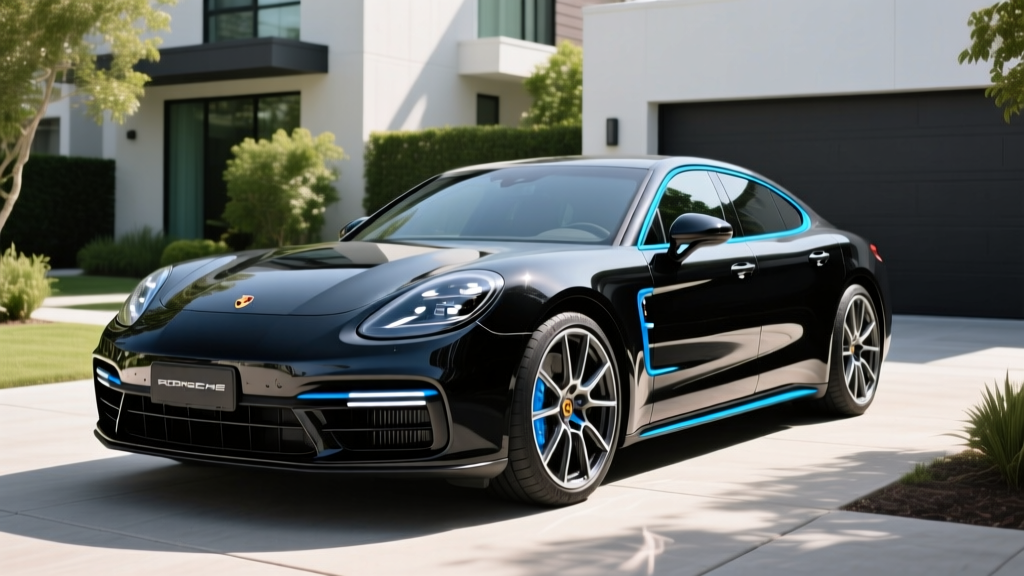
The 2018 Porsche Panamera Turbo S E-Hybrid was, at launch, the most powerful Panamera ever built — and one of the most powerful plug-in hybrid production cars on the road. Pairing a twin-turbo 4.0-liter V8 with an electric motor integrated into the 8-speed PDK transmission, Porsche delivered a 4-door sedan that could silently cruise on electric power for short commutes, then unleash 680 combined horsepower when you buried the throttle.
As a used-car prospect in 2026, the Panamera Turbo S E-Hybrid occupies a specific niche: buyers who want supercar-rivaling performance, daily-drivable comfort, and the ability to handle short zero-emission commutes — without the full range commitment of a battery-electric vehicle. But the real-world electric range is modest, the battery is aging, and maintenance costs remain Porsche-tier. Here's everything you need to know before buying one.
| Spec | Value |
|---|---|
| Combined Horsepower | 680 hp (550 lb-ft torque) |
| Gas Engine | 4.0L twin-turbo V8, 550 hp |
| Electric Motor | 136 hp (100 kW), integrated in PDK |
| Battery Capacity | 14.1 kWh (liquid-cooled lithium-ion) |
| EPA Electric-Only Range | 14 miles |
| EPA Combined MPGe | 46 MPGe |
| EPA MPG (gas only, combined) | 21 MPG |
| 0–60 mph | 3.2 seconds |
| Top Speed | 192 mph |
| Transmission | 8-speed PDK dual-clutch |
| Drivetrain | All-wheel drive |
| Level 2 Charge Time (full) | ~3.0 hours at 3.6 kW; ~5.8 hours at 1.9 kW |
| DC Fast Charging | Not supported |
| Original MSRP | $185,550 (sedan); $189,150 (Sport Turismo) |
| Battery Warranty (original) | 8 years / 100,000 miles |
HEV vs PHEV: Where the Panamera Turbo S E-Hybrid Fits
Understanding the distinction between a conventional hybrid (HEV) and a plug-in hybrid (PHEV) is essential before evaluating this car.
| Feature | Conventional Hybrid (HEV) | Plug-In Hybrid (PHEV) |
|---|---|---|
| Plug-in charging | No — charges via regen and engine | Yes — plugs into Level 1 or Level 2 |
| Electric-only range | 1–2 miles at very low speed | 10–50+ miles depending on model |
| Battery size | ~1–2 kWh | ~9–40 kWh |
| Fuel economy advantage | Best in stop-and-go city driving | Best when daily driving is within EV range |
| Example | Toyota Prius | Porsche Panamera Turbo S E-Hybrid |
The 2018 Panamera Turbo S E-Hybrid is firmly a PHEV. Its 14.1 kWh battery is large enough to provide meaningful electric-only driving for short commutes, and it must be plugged in to realize its full efficiency benefit. If you never plug it in, you're hauling around 600+ pounds of battery and electric motor hardware while getting roughly 21 MPG combined — worse than many conventional hybrid sedans and far below what a modern PHEV like the Toyota RAV4 Prime achieves.
Fuel Economy and Electric Range: The Real Numbers
| Mode | City | Highway | Combined |
|---|---|---|---|
| Charge-depleting (EV + gas) | 46 MPGe | ||
| Charge-sustaining (gas only) | 18 MPG | 25 MPG | 21 MPG |
The EPA rates the Panamera Turbo S E-Hybrid at 14 miles of electric-only range. In real-world driving, expect 11–13 miles in moderate temperatures with gentle acceleration. Highway-speed electric driving drains the battery faster — at 70 mph, you may see as little as 9–10 miles before the V8 fires up. In cold weather (below 40°F), battery performance drops and cabin heating draws additional energy, reducing electric range by 15–25%.
The total combined range — electric plus the 23.7-gallon fuel tank — is approximately 510–530 miles, depending on driving style and how much of your trip is covered on electric power.
Once the battery is depleted, the car operates as a conventional hybrid with regenerative braking recapturing small amounts of energy. The gas-only 21 MPG combined figure is unremarkable for a 5,200-pound luxury sedan with a twin-turbo V8, but it's important context: this is not a fuel-economy car once the battery is empty. According to fueleconomy.gov, the combined annual fuel cost (assuming 15,000 miles and regular use of electric mode) was estimated around $2,650 at 2018 fuel prices.
Powertrain Deep Dive: How 680 HP Comes Together
The Panamera Turbo S E-Hybrid's powertrain is a masterclass in combining internal combustion and electric propulsion:
- Gas engine: The 4.0-liter twin-turbo V8 produces 550 hp and 567 lb-ft of torque on its own — identical to the standard Panamera Turbo.
- Electric motor: A 136-hp (100 kW) electric motor is sandwiched between the engine and the 8-speed PDK transmission, connected via a decoupler that allows pure electric, pure gas, or blended operation.
- Combined output: 680 hp and 626 lb-ft of torque — the system doesn't simply add the two power sources because peak outputs occur at different RPMs.
- Drive modes: E-Power (electric only), Hybrid Auto (system decides), Sport and Sport Plus (full power, aggressive battery deployment and regen).
The result is a 0–60 mph sprint in 3.2 seconds — faster than many dedicated sports cars. The electric motor fills in the torque gap while the turbos spool up, eliminating turbo lag entirely. In Sport Plus mode, the system pre-charges the battery to ensure maximum electric boost is always available.
The 14.1 kWh lithium-ion battery pack is liquid-cooled and mounted behind the rear axle. Porsche uses an NMC (nickel manganese cobalt) chemistry typical of 2018-era performance PHEVs, chosen for its high energy density and discharge capability rather than longevity maximization.
Charging: Level 2 Only, No DC Fast Charge
The Panamera Turbo S E-Hybrid supports Level 1 (120V) and Level 2 (240V) AC charging only. DC fast charging is not supported — this is standard for PHEVs of this era, whose smaller batteries don't warrant the cost and weight of DC fast-charge hardware.
| Charging Level | Power | Time (0–100%) | Connector |
|---|---|---|---|
| Level 1 (120V outlet) | ~1.9 kW | ~8 hours | Standard J1772 |
| Level 2 (240V, 16A) | 3.6 kW | ~3 hours | J1772 |
| DC Fast Charge | Not available | ||
For most owners, overnight Level 2 charging at home is the practical solution. A full charge in roughly 3 hours at 3.6 kW means you can easily top up during the workday if you have access to a Level 2 outlet. The onboard charger maxes out at 3.6 kW — even if you plug into a 7.2 kW or 11.5 kW Level 2 station, the car will only draw 3.6 kW. Installing a dedicated 240V/20A circuit for a Level 2 home charger typically costs $500–$1,500 depending on your electrical panel's capacity and the run length to your garage or parking spot.
Reliability, Battery Health, and Warranty
For a 2018 model year vehicle in 2026, the high-voltage battery is now 8 years old — approaching or at the boundary of its original warranty coverage.
Real-world degradation data: PHEV batteries from this era typically lose 10–20% of capacity over 8 years, depending on climate, charging habits, and how frequently the battery is cycled to low states of charge. Owners on Porsche forums have reported electric range dropping from the original 14 miles to 11–12 miles after 60,000–80,000 miles — a modest but noticeable decline. The liquid-cooling system helps mitigate degradation compared to passively cooled packs.
Battery replacement cost: If the battery fails out of warranty, replacement is expensive. Industry estimates for the Panamera Turbo S E-Hybrid battery pack replacement range from $8,000 to $14,000 including parts and labor at a Porsche dealership. Independent EV specialists may offer refurbished packs for less, but availability for this specific model is limited. This is a critical cost factor for used buyers — budget for it or seek a vehicle with recent battery health documentation.
General reliability: The Panamera Turbo S E-Hybrid is mechanically complex — twin-turbo V8, electric motor, high-voltage system, air suspension, active anti-roll bars, and the PDK transmission all represent potential service items. Porsche's build quality is excellent, but maintenance costs are commensurate with a $185,000 German luxury sedan. Expect annual maintenance of $2,000–$4,000 once the factory warranty expires. The NHTSA lists a small number of recalls for the 2018 model year — verify all recall work has been completed before purchase.
Pricing, Tax Credits, and Ownership Costs
The 2018 Panamera Turbo S E-Hybrid carried an original MSRP of $185,550 for the sedan and $189,150 for the Sport Turismo wagon body style. Well-optioned examples easily exceeded $210,000 with features like rear-axle steering, ceramic composite brakes, Burmester audio, and the Sport Chrono package.
As a used vehicle in 2026, expect pricing in the $65,000–$95,000 range depending on mileage, condition, and options. The steep depreciation curve typical of high-end German luxury cars works in the used buyer's favor.
Federal tax credit status: The Panamera Turbo S E-Hybrid originally qualified for a partial federal tax credit under the pre-2023 rules based on its battery capacity. However, under current IRS §30D rules (effective 2023 onward), this vehicle does not qualify for the new clean vehicle credit because:
- It exceeds the MSRP cap ($55,000 for sedans)
- Its battery components and critical minerals do not meet current domestic sourcing requirements
- It is no longer available as a new vehicle purchase
However, if purchased from a dealer as a used vehicle for $25,000 or less, the Used Clean Vehicle Credit (§25E) could theoretically apply — but at current market prices of $65,000+, this credit is not accessible for this model. Bottom line: plan your purchase budget without counting on any federal tax incentive.
Who Should Buy This PHEV vs a Full EV or Gas Car?
- You want 680-hp supercar performance in a 4-door luxury sedan
- Your daily commute is under 12 miles and you can charge at home
- You frequently take long road trips where EV charging infrastructure is a concern
- You value Porsche driving dynamics, air suspension comfort, and build quality
- You accept high maintenance costs as the price of admission
- You want zero tailpipe emissions and no gasoline engine maintenance
- Your daily driving exceeds 20 miles and you want to avoid burning gas
- You want lower per-mile "fuel" costs (electricity vs premium gasoline)
- You prefer the latest infotainment and driver-assistance technology
- You cannot charge at home or work
- You want lower purchase price and maintenance costs
- You don't need 680 hp and prioritize fuel efficiency over performance
Pros
- 680 hp delivers genuine supercar acceleration (3.2s to 60)
- 14-mile EV range covers most short commutes emission-free
- Air suspension and rear-axle steering provide exceptional ride and handling
- Total range of 500+ miles eliminates road-trip range anxiety
- Massive depreciation makes it attainable on the used market
- Porsche build quality and interior materials are first-rate
Cons
- 14-mile electric range is short even by 2018 PHEV standards
- Only 21 MPG combined once the battery is depleted
- No DC fast charging capability
- Battery replacement cost of $8,000–$14,000 out of warranty
- Complex powertrain = expensive maintenance as the car ages
- No federal tax credit available on used purchase at current prices
- Infotainment and ADAS tech is dated compared to 2026 vehicles
Frequently Asked Questions
How many MPG does the 2018 Panamera Turbo S E-Hybrid get?
The EPA rates it at 46 MPGe when using both electric and gas power, and 21 MPG combined (18 city / 25 highway) when running on gasoline alone after the battery is depleted. Real-world MPG depends heavily on how much of your driving falls within the 14-mile electric range. Owners with short commutes and regular charging report effective fuel economy of 30–40 MPGe over a tank. Those who rarely plug in see 19–22 MPG.
How far can it go on electric only?
The EPA-rated electric-only range is 14 miles. Real-world range is typically 11–13 miles in moderate conditions, dropping to 9–11 miles at highway speeds or in cold weather. This covers most short commutes but isn't enough for longer daily drives without engaging the gas engine.
Hybrid vs PHEV vs EV — which is right for me?
A conventional hybrid (HEV) like a Toyota Prius never plugs in and offers 50+ MPG but no meaningful electric-only range. A PHEV like this Panamera plugs in for 10–15 miles of electric driving, then operates as a hybrid — ideal if your commute is short and you road-trip often. A full EV (like a Porsche Taycan) offers 200+ miles of range, zero tailpipe emissions, and no gas engine to maintain, but requires reliable charging access. If you can charge at home and drive under 14 miles daily, the Panamera PHEV lets you commute on electricity while keeping a gas engine for weekend trips.
Is this hybrid reliable and what does battery replacement cost?
The powertrain is well-engineered but mechanically complex. Porsche's build quality is strong, but the combination of a twin-turbo V8, electric motor, high-voltage battery, air suspension, and PDK transmission means many expensive components that can require service as the car ages. The high-voltage battery replacement costs $8,000–$14,000 out of warranty. Before buying, request a pre-purchase inspection from a Porsche specialist and ask for a battery state-of-health report showing current capacity percentage.
Does it qualify for any tax credit?
Not under current rules. The original federal tax credit is no longer available since the vehicle is not sold new. The Used Clean Vehicle Credit (§25E) requires a sale price of $25,000 or less, and current market prices for this model are $65,000–$95,000. Some states may offer their own incentives for used PHEV purchases — check your state's energy or environmental agency for current programs, but don't count on them in your budget.
Can I charge it at a Tesla Supercharger?
No. The Panamera Turbo S E-Hybrid uses a J1772 connector for AC Level 2 charging and does not support DC fast charging at all. Tesla Superchargers provide DC fast charge only (and use NACS connectors), so they are incompatible with this vehicle regardless of adapter availability.
What's the difference between the sedan and Sport Turismo?
The Sport Turismo is a wagon/estate body style with a slightly longer roofline, larger cargo area (~18.3 cu ft vs ~17.6 cu ft for the sedan), and a standard rear seat that accommodates three passengers across (vs the sedan's available 4-seat configuration). The powertrain, battery, electric range, and performance figures are virtually identical. The Sport Turismo carried a ~$3,600 price premium when new.