Quick Verdict: A Performance PHEV Ahead of Its Time
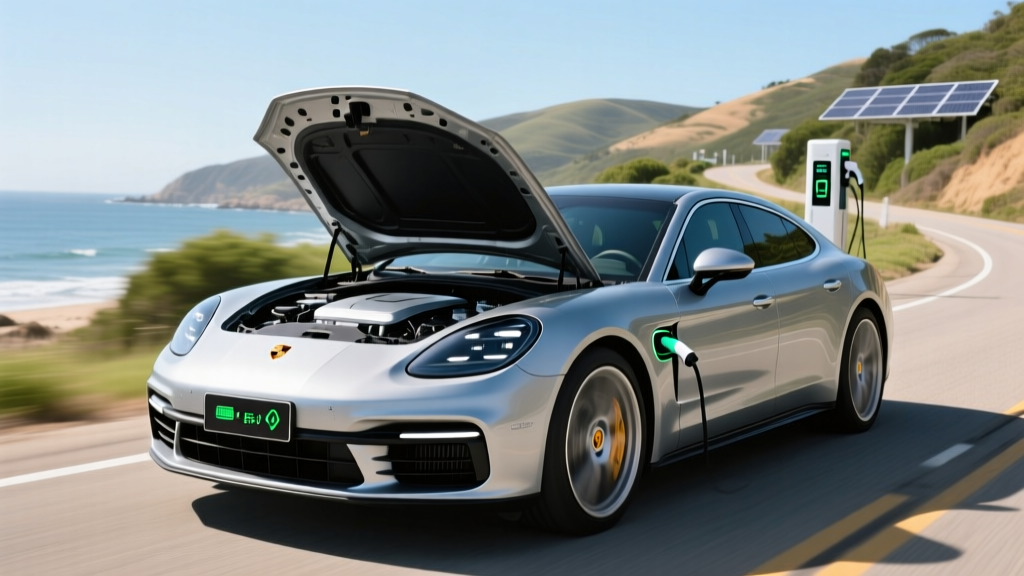
The 2018 Porsche Panamera 4 E-Hybrid was Porsche's second-generation plug-in luxury sedan, pairing a twin-turbo V6 with an electric motor for a combined 462 horsepower. In 2026, it remains one of the most compelling used PHEV buys in the luxury performance segment — if you understand what its 16-mile electric-only range and aging 14.1 kWh battery actually mean for daily driving. This is not a commuter EV substitute; it's a 5,000-pound executive express that happens to sip less fuel in stop-and-go traffic and can glide silently through your neighborhood on electric power alone.
| Specification | Value |
|---|---|
| Powertrain | 2.9L Twin-Turbo V6 + Electric Motor |
| Combined Output | 462 HP / 516 lb-ft torque |
| Battery (Usable) | 14.1 kWh (liquid-cooled lithium-ion) |
| EPA Electric-Only Range | 16 miles |
| EPA Total Range | ~430 miles (gas + electric) |
| EPA MPGe (Electric + Gas) | 46 MPGe |
| EPA MPG (Gas Only, Charge-Depleted) | 23 city / 29 hwy / 25 combined |
| 0–60 mph | 4.4 seconds |
| Top Speed | 172 mph |
| Level 2 Charge Time (240V, 3.6 kW) | ~3.0 hours (0–100%) |
| DC Fast Charging | Not supported |
| Original MSRP (Base) | $103,800 |
| Typical 2026 Used Price | $38,000–$58,000 depending on mileage/condition |
HEV vs PHEV: Where the Panamera 4 E-Hybrid Fits
Before evaluating this car, it's critical to understand the difference between a conventional hybrid (HEV) and a plug-in hybrid (PHEV):
- Conventional Hybrid (HEV): Charges its small battery (~1–2 kWh) solely through regenerative braking and the gas engine. You never plug it in. Think Toyota Prius. Electric-only range is typically under 1 mile.
- Plug-In Hybrid (PHEV): Carries a larger battery (14.1 kWh in the Panamera) that you charge by plugging into a wall outlet or Level 2 charger. This grants meaningful electric-only range (16 miles EPA here) before the gas engine takes over. Once the battery is depleted, it operates like a conventional hybrid.
The 2018 Panamera 4 E-Hybrid is firmly a PHEV. If you don't plug it in regularly, you're hauling 500+ extra pounds of battery dead weight and achieving roughly 25 MPG combined — respectable for a 462-HP luxury sedan, but far from the efficiency the car was designed to deliver.
Electric-Only Range and Efficiency: The 16-Mile Reality
The EPA rates the 2018 Panamera 4 E-Hybrid at 16 miles of electric-only range and 46 MPGe when combining electric and gasoline operation. Those numbers reflect 2017-era PHEV technology — Porsche used a 14.1 kWh lithium-ion pack mounted under the rear cargo floor, with roughly 11–12 kWh usable after the buffer reserves.
- EPA electric-only: 16 miles
- Real-world (moderate temps, city/suburban): 12–15 miles
- Real-world (highway, 70+ mph): 9–11 miles
- Cold weather (below 35°F): 8–11 miles
- 2026 used battery (estimated 85–92% SoH): 10–14 miles on a full charge
Bottom line: this battery was sized for short neighborhood errands and zero-emission zone compliance in 2018, not for EV commuting. In 2026, with typical lithium-ion degradation of 8–15% over eight years, expect closer to 12–14 miles on a good day.
Once the battery depletes, the 2.9L twin-turbo V6 takes over. Here's what the EPA says and what you'll actually see:
| Driving Scenario | EPA Estimate | Real-World Expectation |
|---|---|---|
| City (charge-depleted) | 23 MPG | 22–25 MPG (hybrids often match or beat EPA in city) |
| Highway (charge-depleted) | 29 MPG | 25–27 MPG (aero drag + weight at speed) |
| Combined (charge-depleted) | 25 MPG | 23–26 MPG |
| Combined (daily plug-in, short commute) | 46 MPGe | Highly variable — 35–55 MPGe depending on electric miles ratio |
The critical insight: your MPGe depends entirely on how often you plug in and how short your trips are. A 10-mile round-trip commute, plugged in nightly, might yield 80+ MPGe effectively. A 60-mile highway commute with no charging? You're at 24 MPG and burning premium fuel.
Powertrain Deep Dive: 462 HP from V6 + Electric
The Panamera 4 E-Hybrid's powertrain is a marvel of engineering integration:
- Gas engine: 2.9-liter twin-turbocharged V6 producing 330 HP and 331 lb-ft of torque
- Electric motor: Integrated into the 8-speed PDK dual-clutch transmission, producing 136 HP and 295 lb-ft
- Combined system output: 462 HP and 516 lb-ft (not a simple sum — Porsche manages overlap)
- Drivetrain: All-wheel drive (the "4" in 4 E-Hybrid)
- Transmission: 8-speed PDK dual-clutch automatic
The electric motor fills the torque gap during turbo spool-up, delivering instantaneous thrust off the line. The 0–60 mph time of 4.4 seconds feels even quicker because electric torque is available at 0 RPM. In E-Power mode, the car defaults to electric-only and only engages the V6 when you floor the throttle or exceed ~84 mph.
Driving modes include E-Power (electric-priority), Hybrid Auto (system decides), Sport, and Sport Plus. In Sport Plus, the engine runs continuously and charges the battery aggressively — useful if you want a full battery for an electric-only arrival at your destination.
Charging: Level 2 Only, No DC Fast Charging
The 2018 Panamera 4 E-Hybrid uses a SAE J1772 connector for AC charging and does not support DC fast charging. This is typical of PHEVs from this era — the battery is too small to benefit from DCFC infrastructure.
| Charging Level | Power | Time (0–100%) | Notes |
|---|---|---|---|
| Level 1 (120V household) | ~1.4 kW | ~8–10 hours | Trickle charge; sufficient for overnight top-up |
| Level 2 (240V, standard) | 3.6 kW | ~3.0 hours | Recommended daily charging method |
| DC Fast Charge | N/A | N/A | Not supported — J1772 AC only |
Home charging setup: A standard 120V outlet will replenish the battery overnight if you drive fewer than 15 electric miles per day. For faster turnaround, a 240V Level 2 station (like a ChargePoint Home Flex or Emporia Vue) cuts charging to about 3 hours — useful if you need to recharge between a morning and evening commute. Installation costs typically range from $500 to $2,000 depending on panel capacity and wiring distance, per U.S. Department of Energy guidance.
Battery Health, Warranty, and Replacement Costs
- Original warranty: 8 years / 100,000 miles (whichever comes first) against capacity loss below 70%
- 2026 status: Most 2018 examples are now outside or approaching the end of the 8-year window
- Estimated battery replacement cost: $12,000–$18,000 (parts + labor at a Porsche dealer or independent EV specialist)
- Typical degradation at 8 years: 8–15% capacity loss, meaning ~12–14 miles of electric range remaining vs. 16 new
The 14.1 kWh pack uses lithium-ion cells with liquid thermal management, which helps longevity compared to passively cooled packs. Porsche's battery management system maintains conservative charge buffers (roughly 2 kWh reserved at top and bottom), reducing stress on the cells.
Is the Panamera 4 E-Hybrid reliable? The powertrain itself — V6, PDK, and electric motor — has proven robust in owner forums and reliability surveys. The main concerns for 2026 used buyers are:
- Battery degradation: Moderate and expected, but replacement is costly if cells fail outright
- PDK transmission: Generally reliable but expensive to service ($4,000–$8,000 if major work is needed)
- Air suspension: Standard on E-Hybrid trims; strut replacement runs $1,500–$2,500 per corner
- Electronics: PCM infotainment and hybrid control modules can develop faults; pre-purchase inspection is essential
Before buying, request a pre-purchase inspection (PPI) at a Porsche specialist that includes a high-voltage battery State of Health (SoH) readout via the OBD-II diagnostic port. This tells you the exact remaining capacity percentage.
Tax Credits and Incentives in 2026
When new, the 2018 Panamera 4 E-Hybrid qualified for a $6,793 federal tax credit under the old §30D rules. However, under the current IRS §30D clean vehicle credit rules, used PHEVs can qualify for up to $4,000 or 30% of the sale price (whichever is lower) under the previously-owned clean vehicle credit (§25E), subject to these requirements:
- Vehicle must be at least 2 model years old (2018 qualifies in 2026)
- Sale price must be $25,000 or below — this is the challenge, as most Panamera 4 E-Hybrids list between $38,000–$58,000
- Buyer income caps: $75,000 single / $112,500 head of household / $150,000 joint
- Must be purchased from a licensed dealer
- First-time transfer since August 16, 2022
The practical reality: At typical 2026 used prices above $25,000, the Panamera 4 E-Hybrid does not qualify for the federal used-EV credit. You would need to find an exceptionally high-mileage or distressed example under $25,000 to benefit. Some states offer additional incentives — check AFDC's state incentive database for current local programs.
Panamera 4 E-Hybrid vs. Full EV vs. Gas: Who Should Choose What?
Choose the 2018 Panamera 4 E-Hybrid if:
- You want a luxury performance sedan with all-wheel drive and Porsche cachet
- Your daily commute is under 15 miles and you can charge at home nightly
- You take regular road trips where EV charging infrastructure is sparse
- You value the 462-HP performance envelope and PDK transmission
- You're comfortable with $2,000–$4,000/year maintenance costs typical of German luxury cars
Choose a full EV (e.g., Porsche Taycan, Tesla Model S) if:
- You want 200+ miles of range and DC fast charging for road trips
- You have reliable home Level 2 charging and want to eliminate oil changes and gas stops entirely
- You prefer lower ongoing maintenance (no engine, no transmission fluid, fewer moving parts)
Choose a gas-only Panamera if:
- You cannot charge at home or work
- You want lower upfront cost and simpler maintenance (no high-voltage system)
- You drive primarily highway miles where PHEV efficiency advantages disappear
- 462 HP with smooth, instant electric torque fill
- 4.4-second 0–60 in a luxury sedan with rear seats
- All-wheel drive standard for all-weather capability
- 16-mile electric range covers short errands zero-emission
- Porsche build quality, interior materials, and ride comfort
- Significant depreciation from $103K MSRP makes it a value used buy
- 16-mile EV range is minimal by 2026 PHEV standards (newer PHEVs achieve 30–50 miles)
- No DC fast charging capability
- Battery replacement cost of $12K–$18K if cells fail out of warranty
- Likely no federal tax credit eligibility at current used prices
- Premium fuel required; 25 MPG combined when battery is depleted
- Cargo space reduced by battery pack (17.6 cu ft vs 21.4 cu ft in gas Panamera)
- Air suspension and PDK repairs are expensive
Frequently Asked Questions
How many MPG does the 2018 Porsche Panamera 4 E-Hybrid get?
The EPA rates it at 23 city / 29 highway / 25 combined MPG when operating on gasoline alone (battery depleted). When factoring in electric-only driving, the combined rating is 46 MPGe. Real-world results depend heavily on charging habits — plug in nightly for short commutes and you'll rarely visit a gas station; drive 50 highway miles daily without charging and expect 24–26 MPG on premium fuel.
How far can the Panamera 4 E-Hybrid go on electric only?
The EPA rates it at 16 miles electric-only when new. In 2026, with typical battery degradation of 8–15%, expect 10–14 miles of real-world electric range depending on temperature, driving style, and battery condition. Highway driving and cold weather reduce this further to 8–11 miles.
Is the Panamera 4 E-Hybrid reliable?
The hybrid powertrain is generally robust, with the V6 and electric motor proving durable. The main risk areas are the high-voltage battery ($12,000–$18,000 replacement), air suspension components, and PDK transmission service costs. A pre-purchase inspection with battery SoH readout is essential. According to NHTSA, the 2018 Panamera has no major safety recalls specific to the hybrid system.
What is the battery replacement cost?
A full high-voltage battery replacement runs approximately $12,000–$18,000 at a Porsche dealership or qualified independent shop. Individual module replacement (if only certain cells have failed) may be possible for $4,000–$8,000. The original 8-year/100,000-mile battery warranty has expired or is expiring for most 2018 examples in 2026.
Does the 2018 Panamera 4 E-Hybrid qualify for any tax credit?
Under current IRS §25E previously-owned clean vehicle credit rules, it could qualify for up to $4,000 — but only if the sale price is $25,000 or less, which is below the typical market price of $38,000–$58,000 in 2026. Buyer income caps also apply ($75K single / $150K joint). Consult a tax professional and verify eligibility at IRS.gov before counting on the credit.
Can I DC fast charge the Panamera 4 E-Hybrid?
No. The 2018 Panamera 4 E-Hybrid only supports AC charging via a J1772 connector at up to 3.6 kW (Level 2). DC fast charging is not available on this model. A full charge from empty takes about 3 hours on Level 2 or 8–10 hours on a standard 120V outlet.
Should I buy the Panamera 4 E-Hybrid or a newer PHEV?
If budget allows, newer PHEVs like the 2024+ BMW 750e xDrive (35 miles EV range) or Mercedes S 580e (30+ miles) offer dramatically more electric range and modern infotainment. The Panamera 4 E-Hybrid makes sense if you specifically want the Porsche driving experience, all-wheel drive, and can accept the short electric range as a trade-off for a sub-$50,000 luxury performance sedan.