Quick Verdict: The 2018 Malibu Hybrid in 2026
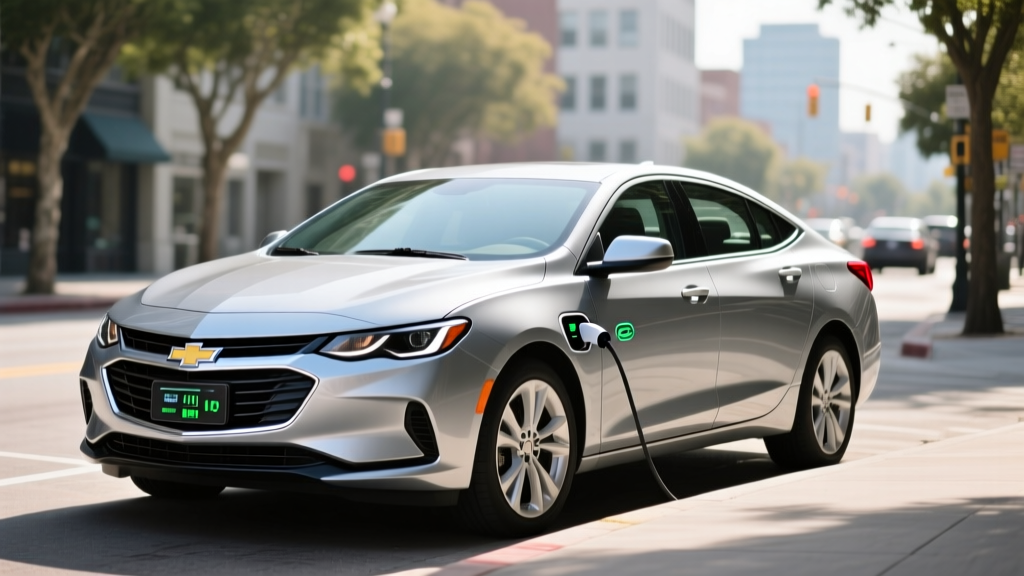
The 2018 Chevrolet Malibu Hybrid is a conventional hybrid electric vehicle (HEV) — not a plug-in. It pairs a 1.8-liter four-cylinder engine with a two-motor electric drive system to achieve an EPA-estimated 49 MPG city, 43 MPG highway, and 46 MPG combined. In 2026, it remains one of the more efficient midsize sedans on the used market, competing with the Toyota Camry Hybrid and Honda Accord Hybrid from the same era.
Chevrolet discontinued the Malibu Hybrid after the 2019 model year, so every example on the market today is pre-owned. If you're shopping for one, this guide covers what you need to know about real-world fuel economy, battery longevity, ownership costs, and whether a used HEV still makes sense versus a modern PHEV or full EV.
| Specification | 2018 Chevrolet Malibu Hybrid |
|---|---|
| Powertrain Type | Conventional Hybrid (HEV) — no plug |
| Engine | 1.8L 4-cylinder + 2 electric motors |
| Combined Horsepower | 182 hp |
| Transmission | ECVT (electronically variable) |
| EPA City MPG | 49 |
| EPA Highway MPG | 43 |
| EPA Combined MPG | 46 |
| Hybrid Battery | 1.5 kWh lithium-ion (80-cell) |
| Fuel Tank | 13.0 gallons |
| Total Driving Range | ~598 miles (EPA estimate) |
| 0–60 mph | ~7.5 seconds (est.) |
| Original MSRP (base) | $28,965 (2018) |
| Typical Used Price (2026) | $12,000–$18,000 depending on mileage |
| Battery Warranty (original) | 8 years / 100,000 miles |
HEV vs. PHEV: Why the Malibu Hybrid Does Not Plug In
A common source of confusion among used-car shoppers is the difference between a conventional hybrid (HEV) and a plug-in hybrid (PHEV). The 2018 Malibu Hybrid is strictly an HEV. It has no charge port, no electric-only driving mode of meaningful distance, and requires zero behavioral change from a standard gas car. You simply fill it with gasoline and drive.
| Feature | HEV (Malibu Hybrid) | PHEV (e.g., Prius Prime) | BEV (e.g., Tesla Model 3) |
|---|---|---|---|
| Plugs in to charge? | No | Yes | Yes |
| Electric-only range | ~1 mile at low speed | 25–44 miles typical | 250–360 miles typical |
| Battery size | 1.5 kWh | 13–18 kWh | 50–82 kWh |
| Gas engine? | Yes (primary) | Yes (backup) | No |
| Home charging needed? | No | Recommended | Essential |
| Federal tax credit (new) | None | Up to $7,500 (§30D) | Up to $7,500 (§30D) |
| Tailpipe emissions | Yes (reduced) | Yes (when engine runs) | None |
The Malibu Hybrid's 1.5 kWh lithium-ion battery is small by design. It captures energy from regenerative braking and the engine to assist during acceleration and enable brief low-speed electric creep — but it cannot propel the car on electric power alone for more than about a mile at parking-lot speeds. This is fundamentally different from a PHEV like the Toyota Prius Prime, which carries a 13.6 kWh battery (2018 model year) and can drive roughly 25 miles on electricity before the gas engine engages.
Fuel Economy: EPA Numbers vs. Real-World MPG
| Driving Condition | EPA Estimate | Real-World Expectation |
|---|---|---|
| City | 49 MPG | 45–52 MPG (hybrids often beat EPA in stop-and-go) |
| Highway | 43 MPG | 38–44 MPG (less regen benefit at sustained speed) |
| Combined | 46 MPG | 41–48 MPG |
| Cold weather (below 32°F) | N/A | 36–42 MPG combined (engine runs more for cabin heat) |
According to fueleconomy.gov, the 2018 Malibu Hybrid earns a 46 MPG combined rating. Owner-reported data on Fuelly and similar tracking platforms shows many drivers averaging 42–48 MPG in mixed driving, which aligns closely with the EPA figure.
Hybrids tend to outperform their EPA city ratings in real-world stop-and-go traffic because regenerative braking recovers energy that a gas car would waste as heat. Conversely, highway driving offers fewer braking events, so the engine does more of the work — expect highway MPG to dip closer to 38–40 on long, flat interstate runs at 75+ mph.
Cold weather hits all hybrids. When temperatures drop below freezing, the engine runs more frequently to generate cabin heat and maintain battery temperature. Expect a 10–15% fuel economy penalty in winter months, bringing combined MPG into the mid-to-high 30s in northern climates.
For comparison, the 2018 Toyota Camry Hybrid LE achieves 51/53/52 MPG EPA, and the 2018 Honda Accord Hybrid earns 47/47/47 MPG. The Malibu Hybrid sits between them — competitive but not class-leading.
Powertrain and Driving Impressions
The Malibu Hybrid uses a powertrain derived from the second-generation Chevrolet Volt's Voltec architecture, albeit without the plug. The 1.8-liter direct-injected four-cylinder produces 122 hp on its own, supplemented by two electric motor-generators integrated into the ECVT transaxle. Combined system output is 182 horsepower.
This setup delivers smooth, linear acceleration from a stop — the electric motors fill in torque before the engine reaches its power band. The transition between electric assist and engine power is well-managed; most drivers won't notice the handoff. The ECVT avoids the rubber-band feeling common in older Toyota hybrid systems, though it lacks the engagement of a geared transmission.
At 182 hp, the Malibu Hybrid is adequate for daily commuting and highway merging but not quick. The 0–60 mph time of approximately 7.5 seconds trails the turbocharged gas Malibu (163 hp 1.5T: ~7.1 sec) and feels leisurely when fully loaded with passengers. Passing power at highway speed is confident enough, thanks to the electric motors' instant torque.
Regenerative braking is moderate. Unlike a full EV with aggressive one-pedal driving, the Malibu Hybrid's regen blends naturally with the friction brakes. You won't come to a complete stop using regen alone, but the brake pedal feel is progressive and predictable — a common complaint in early hybrids that GM addressed well here.
Battery Longevity, Warranty, and Replacement Cost
Original hybrid battery warranty: 8 years / 100,000 miles (whichever comes first), covering defects and capacity loss below a functional threshold. This warranty transfers to subsequent owners.
Current status (2026): A 2018 model is now 8 years old. If the vehicle has under 100,000 miles and was purchased new, the original battery warranty may still be active through mid-to-late 2026 depending on the in-service date. Verify with a Chevrolet dealer using the VIN.
The 1.5 kWh lithium-ion battery pack in the Malibu Hybrid is relatively small and operates within a conservative state-of-charge window — GM doesn't allow the battery to fully charge or fully deplete, which reduces degradation stress. Based on owner reports and the track record of similar GM hybrid systems (Volt, Malibu Hybrid), significant battery degradation is uncommon before 150,000 miles.
If the hybrid battery does fail out of warranty, replacement costs in 2026 typically range from $2,000 to $3,500 for a refurbished or aftermarket pack, or $3,500 to $5,000 for a new OEM unit plus labor at a dealership. Independent hybrid-battery specialists often offer reconditioned packs at lower cost with 1–3 year warranties.
For context, this is significantly cheaper than a full EV battery replacement. The small battery in a conventional hybrid simply doesn't carry the same replacement-cost risk as a 75 kWh BEV pack.
Beyond the hybrid battery, the 12-volt auxiliary battery (which powers electronics and starts the system) will need replacement every 4–6 years like any car. Budget $150–$250 for this routine maintenance item.
Pricing, Value, and Tax Credit Eligibility
The 2018 Malibu Hybrid originally started at $28,965 (including destination). In the 2026 used market, expect to pay:
- $12,000–$14,000: Examples with 90,000+ miles, fair condition
- $14,000–$16,000: Examples with 60,000–90,000 miles, good condition
- $16,000–$18,000: Examples under 60,000 miles, excellent condition, clean title
Does the 2018 Malibu Hybrid qualify for any tax credit? No. As a conventional hybrid (HEV), it has never qualified for the federal §30D new clean vehicle credit. That credit applies only to plug-in vehicles (PHEVs and BEVs) meeting battery sourcing, MSRP, and buyer income requirements per IRS guidelines. There is also no federal used-EV credit for HEVs — the §25E used clean vehicle credit of up to $4,000 applies exclusively to used PHEVs and BEVs.
Some states historically offered hybrid purchase incentives, but most have phased these out or redirected funds toward plug-in vehicles. Check your state's energy office or AFDC state incentive database for any remaining local programs.
From a pure value standpoint, the Malibu Hybrid's used pricing makes it competitive. A 2018 Camry Hybrid commands $14,000–$20,000 on the used market (Toyota's reliability premium), while the Accord Hybrid sits in a similar range. The Malibu Hybrid often undercuts both by $1,000–$3,000 at equivalent mileage, making it a value play for MPG-conscious buyers.
Ownership Costs: Fuel Savings vs. Gas Malibu
At an average gas price of $3.25/gallon (2026 national average) and 12,000 miles driven annually:
| Vehicle | Combined MPG | Annual Fuel Cost | 5-Year Fuel Cost |
|---|---|---|---|
| 2018 Malibu Hybrid | 46 | ~$848 | ~$4,240 |
| 2018 Malibu 1.5T (gas) | 30 | ~$1,300 | ~$6,500 |
| 2018 Camry Hybrid LE | 52 | ~$750 | ~$3,750 |
The hybrid saves approximately $450 per year in fuel compared to the gas-only Malibu — or about $2,260 over five years. That's meaningful, but the used-market price premium for the hybrid trim (roughly $1,000–$2,000 over a gas Malibu at similar mileage) means the fuel savings pay back the purchase premium in roughly 2–4 years depending on your driving volume.
Insurance costs for the Malibu Hybrid are comparable to the gas model — insurers don't significantly surcharge conventional hybrids the way they sometimes do for EVs. Maintenance is also similar: oil changes, tire rotations, and brake service (brakes often last longer on hybrids due to regen reducing friction-brake wear).
Who Should Choose the 2018 Malibu Hybrid?
Choose the 2018 Malibu Hybrid if:
- You want better fuel economy without changing your driving or fueling habits
- You lack access to home or workplace charging (no plug needed)
- You drive 12,000+ miles per year, especially in city/stop-and-go traffic
- You want a comfortable midsize sedan under $18,000
- You're not ready to commit to a plug-in vehicle
Look at a PHEV or full EV instead if:
- You have reliable Level 2 home charging and a short commute (PHEV covers it on electricity)
- You want to qualify for the federal used-EV tax credit (up to $4,000 under §25E for eligible used PHEVs/BEVs)
- You want to minimize or eliminate tailpipe emissions
- You drive under 10,000 miles per year (fuel savings won't offset the hybrid premium quickly)
The Malibu Hybrid occupies a specific niche: maximum efficiency with zero lifestyle adjustment. For apartment dwellers without charging access, rural drivers far from public chargers, or anyone who simply wants to spend less at the gas station without thinking about it, a used HEV like this remains a practical choice in 2026.
Pros
- 46 MPG combined — strong real-world fuel savings
- No plug-in charging required
- Smooth, quiet powertrain with seamless engine/motor transitions
- Competitive used pricing vs. Camry and Accord Hybrids
- Comfortable ride and spacious rear seat
- Hybrid battery warranty may still be active on low-mileage examples
Cons
- Discontinued after 2019 — limited long-term parts support concerns
- Not class-leading MPG (Camry Hybrid LE: 52 combined)
- No federal or state tax credits available
- Modest 182 hp — adequate but not engaging
- Infotainment system dated by 2026 standards
- Highway MPG drops noticeably at 75+ mph
Frequently Asked Questions
How many MPG does the 2018 Malibu Hybrid get?
The EPA rates it at 49 MPG city, 43 MPG highway, and 46 MPG combined. Real-world owners typically report 42–48 MPG in mixed driving, with city-heavy commutes sometimes exceeding 49 MPG thanks to regenerative braking.
Is the 2018 Malibu Hybrid a plug-in?
No. It is a conventional hybrid (HEV) with no charge port. The 1.5 kWh battery charges exclusively through regenerative braking and the gasoline engine. You never plug it in.
How far can it drive on electric power alone?
Effectively zero meaningful distance. The electric motors assist the engine and enable very low-speed creep (under ~20 mph for brief stretches), but the Malibu Hybrid cannot sustain electric-only driving like a PHEV. The gas engine is always the primary power source.
Is the 2018 Malibu Hybrid reliable?
GM's two-motor hybrid system has proven durable. The Voltec-derived powertrain shares architecture with the Chevrolet Volt, which demonstrated strong long-term reliability across hundreds of thousands of fleet and owner miles. Common non-hybrid issues (infotainment glitches, minor electrical gremlins) are consistent with the broader Malibu lineup. Check NHTSA for any open recalls on a specific VIN before purchasing.
What does a hybrid battery replacement cost?
Expect $2,000–$3,500 for a refurbished replacement or $3,500–$5,000 for a new OEM battery plus labor. Given the 1.5 kWh pack size, this is substantially cheaper than an EV battery replacement. Many hybrid batteries last 150,000+ miles without significant degradation.
Does the 2018 Malibu Hybrid qualify for any tax credit?
No. Federal clean vehicle credits (§30D for new, §25E for used) apply only to plug-in vehicles — PHEVs and BEVs. Conventional hybrids like the Malibu Hybrid are not eligible. Some state programs previously offered hybrid incentives, but most have ended.
Hybrid vs. PHEV vs. EV — which should I buy?
It depends on your charging access and driving pattern. If you cannot charge at home, a conventional hybrid like the Malibu Hybrid gives you fuel savings with no infrastructure needed. If you have Level 2 home charging and a commute under 30–40 miles, a used PHEV (like a Volt or Prius Prime) lets you drive mostly on electricity while keeping a gas engine for longer trips. If you have home charging and want to eliminate gas entirely, a used EV (like a Bolt EV or Model 3) offers the lowest per-mile energy cost and qualifies for the up-to-$4,000 used clean vehicle credit.
Should I worry about buying a discontinued model?
The Malibu Hybrid was discontinued after 2019, but the gas Malibu continued through 2024, so body panels, suspension components, and interior parts remain widely available. The hybrid-specific components (battery, inverter, motor-generators) share lineage with the Volt, which has an active aftermarket and specialist repair network. Parts availability is not a major concern for the near term, but long-term (10+ years out) hybrid-specific parts may become harder to source.