Quick Verdict: A Luxury Hybrid Sedan Built for City Commutes
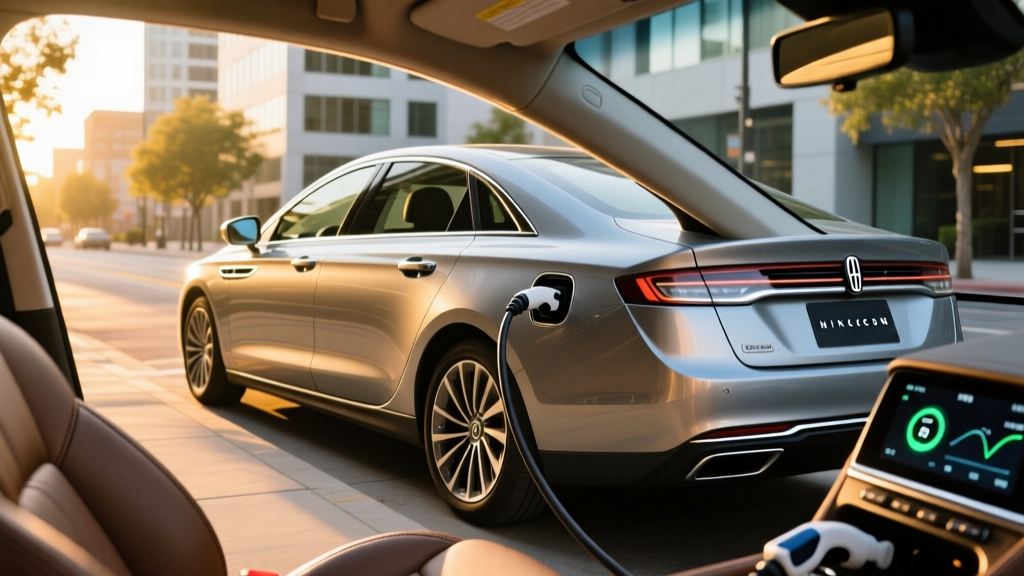
The 2018 Lincoln MKZ Hybrid pairs Ford's proven 2.0-liter Atkinson-cycle hybrid system with a premium midsize sedan package. With an EPA-estimated 42 MPG combined and no plug-in requirement, it remains a compelling used luxury hybrid in 2026 for buyers who want fuel efficiency without range anxiety or charging infrastructure dependence.
This is a conventional hybrid (HEV), not a plug-in hybrid (PHEV). It generates all its electricity internally through regenerative braking and the gasoline engine — you never plug it in. If you're looking for electric-only driving, the MKZ was never offered as a PHEV in the U.S. market. Lincoln discontinued the MKZ entirely after the 2020 model year, making the 2018 a mid-cycle example with updated styling and the second-generation hybrid powertrain.
| Spec | Value |
|---|---|
| EPA Fuel Economy (Combined) | 42 MPG |
| EPA City / Highway | 42 city / 39 highway MPG |
| Powertrain | 2.0L Atkinson I4 + electric motor |
| Combined Horsepower | 188 hp (net system) |
| Transmission | eCVT (planetary gearset) |
| Drivetrain | Front-wheel drive (FWD only) |
| Hybrid Battery | 1.4 kWh lithium-ion (sealed, non-plug-in) |
| 0–60 mph | ~8.5 seconds |
| Fuel Tank | 13.5 gallons |
| Total Range | ~567 miles (EPA est.) |
| Original MSRP (Base Hybrid) | $42,230 |
| 2026 Used Price Range (est.) | $14,000–$20,000 |
| Hybrid Battery Warranty | 8 years / 100,000 miles |
EPA MPG and Real-World Fuel Economy
The EPA rates the 2018 Lincoln MKZ Hybrid at 42 MPG city, 39 MPG highway, and 42 MPG combined. That city-equal-to-combined figure is a hallmark of hybrid powertrains: the electric motor does heavy lifting at low speeds, and regenerative braking recovers energy that a conventional car wastes as heat.
| Driving Condition | EPA Sticker | Real-World Expectation |
|---|---|---|
| City | 42 MPG | 40–46 MPG (hybrids often beat EPA in stop-and-go) |
| Highway (70 mph) | 39 MPG | 35–38 MPG (aero drag reduces hybrid advantage) |
| Combined | 42 MPG | 38–43 MPG |
| Cold Weather (below 30°F) | — | 34–38 MPG (engine runs more for cabin heat) |
In real-world driving, MKZ Hybrid owners frequently report exceeding the EPA city estimate in warm-weather stop-and-go traffic — 44–46 MPG is achievable on flat urban routes. Highway efficiency drops because the electric motor contributes less at sustained high speeds, and the 2.0L engine carries the load. Expect 35–38 MPG at 70–75 mph. In cold climates, the engine runs more frequently to provide cabin heat and maintain battery temperature, reducing economy by roughly 10–15%.
Compared to the non-hybrid 2018 MKZ with the 2.0L EcoBoost (24 city / 34 highway / 27 combined), the hybrid delivers a 55% improvement in city driving. Over 15,000 miles per year at $3.20/gallon, that translates to roughly $600–$800 in annual fuel savings versus the turbocharged gas model.
HEV vs PHEV vs EV: Where Does the MKZ Hybrid Fit?
The MKZ Hybrid is a conventional HEV. Understanding the distinction matters for your purchase decision and daily routine.
| Feature | HEV (MKZ Hybrid) | PHEV (e.g., Toyota RAV4 Prime) | BEV (e.g., Tesla Model 3) |
|---|---|---|---|
| Plug-in Charging? | No | Yes (Level 1 or 2) | Yes (Level 1, 2, or DC fast) |
| Electric-Only Range | ~0.5 mi at low speed | 25–42 mi typical | 250–360 mi typical |
| Total Range | ~567 mi | 450–600 mi combined | 250–360 mi |
| Gas Required? | Yes | Yes (after battery depletes) | No |
| Home Charging Needed? | No | Recommended | Essential |
| Federal Tax Credit (new) | None | Up to $7,500 (§30D) | Up to $7,500 (§30D) |
Choose the MKZ Hybrid if: You lack access to home or workplace charging, you drive a mix of city and highway miles, you want luxury features with low fuel costs, and you don't want to change your refueling habits at all.
Consider a PHEV if: You can install a Level 2 charger at home, your daily commute is under 35 miles round-trip (covering most trips on electricity), and you still want gas-engine flexibility for road trips.
Consider a full BEV if: You have reliable home charging, your daily driving is within the vehicle's range, you want zero tailpipe emissions, and you're ready to plan around DC fast charging on road trips.
Powertrain Details: 2.0L Atkinson + Electric Motor
The 2018 MKZ Hybrid uses Ford's third-generation hybrid system, shared with the Ford Fusion Hybrid. The gasoline engine is a 2.0-liter inline-four running the Atkinson cycle — a combustion strategy that sacrifices some peak power for significantly higher thermal efficiency. The engine produces 141 hp on its own, supplemented by a 120-hp electric motor integrated into the transaxle. Combined net system output is 188 hp.
The eCVT is not a belt-and-cone continuously variable transmission like those in some competitors. It uses a planetary gearset that seamlessly blends engine and motor torque without the rubber-band acceleration feel that plagues lesser CVTs. Acceleration to 60 mph takes approximately 8.5 seconds — adequate for merging and passing but not sporty. This is a comfort-oriented sedan, and the powertrain tuning prioritizes smoothness and efficiency over urgency.
The 1.4 kWh lithium-ion hybrid battery is small by PHEV or BEV standards because it doesn't need to store energy for plug-in driving. It buffers energy recovered from regenerative braking and supplies the electric motor for short low-speed EV mode bursts (typically under 1 mile at speeds below 25 mph). The battery is sealed, air-cooled, and located behind the rear seats, which reduces trunk capacity to approximately 11.1 cubic feet compared to 15.4 cubic feet in the gas-only MKZ.
Battery Warranty, Lifespan, and Replacement Cost
Hybrid Battery Warranty
Lincoln covered the 2018 MKZ Hybrid's high-voltage battery for 8 years or 100,000 miles (whichever comes first) in most states. In California Air Resources Board (CARB) states — including California, New York, Massachusetts, and several others — the warranty extends to 10 years or 150,000 miles.
For a 2018 model in 2026, the standard 8-year warranty has expired unless the vehicle was first sold very late in the model year. CARB-state 10-year warranties may still have residual coverage depending on the in-service date and current mileage.
Hybrid battery longevity is one of the most common concerns for used-hybrid buyers. Ford's Gen 3 hybrid system has a strong track record: the lithium-ion pack is conservatively managed with a generous buffer — the system never fully charges or fully depletes the battery, keeping it in a longevity-friendly state of charge window. Real-world data from Ford Fusion Hybrids (same powertrain) shows most batteries lasting well beyond 150,000 miles with minimal capacity loss.
If replacement becomes necessary, expect the following costs in 2026:
- OEM new battery (Lincoln/Ford dealer): $2,800–$3,800 including labor
- Refurbished/remanufactured battery: $1,500–$2,500 including labor
- Independent hybrid specialist: $1,800–$2,800 for reconditioning or cell-level repair
Given the 2018 MKZ Hybrid's current used market value of $14,000–$20,000, a battery replacement represents a meaningful but not catastrophic expense — especially compared to an engine or transmission replacement in a conventional car at similar mileage.
Pricing, Tax Credits, and Used Ownership Economics
The 2018 Lincoln MKZ Hybrid originally started at $42,230 for the base Premiere trim, climbing to $48,000+ for the Reserve and Black Label trims. In the 2026 used market, expect to pay:
- Premiere (base): $14,000–$16,500 (80,000–100,000 miles)
- Reserve: $16,000–$19,000 (60,000–90,000 miles)
- Black Label: $18,000–$22,000 (50,000–80,000 miles, well-maintained)
Tax credit eligibility: Conventional hybrids like the MKZ Hybrid do not qualify for the federal §30D Clean Vehicle Credit. That credit applies only to plug-in electric vehicles (PHEVs and BEVs) meeting battery sourcing, MSRP, and buyer income requirements. Some states previously offered hybrid purchase incentives, but most have expired or shifted focus to plug-in vehicles. Check your state's energy office for any remaining programs.
However, the MKZ Hybrid's ownership economics remain strong. At 42 MPG combined versus a comparable luxury gas sedan averaging 25 MPG, and with 15,000 miles driven annually at $3.20/gallon:
- MKZ Hybrid annual fuel cost: ~$1,143
- Gas-only luxury sedan annual fuel cost: ~$1,920
- Annual savings: ~$777
- 5-year savings: ~$3,885
Insurance costs for the MKZ Hybrid are typically 5–10% lower than for the 2.0L EcoBoost AWD model, reflecting lower performance and a driver profile that tends toward conservative driving. Expect annual premiums of $1,200–$1,800 depending on your state, driving record, and coverage level.
Reliability, Safety, and Common Issues
The MKZ Hybrid's powertrain — shared extensively with the Ford Fusion Hybrid — ranks among the most reliable hybrid systems Ford has produced. The eCVT planetary gearset has no belts, clutches, or friction materials to wear out, and the Atkinson-cycle engine runs under less stress than a conventional Otto-cycle engine. Common trouble spots are largely unrelated to the hybrid system:
- Infotainment (SYNC 3): Generally reliable but some units experience touchscreen digitizer failures around 80,000–100,000 miles ($400–$800 repair)
- Climate control blend doors: Occasional actuator failures causing uneven cabin temperatures ($200–$500 repair)
- Suspension bushings: Standard wear items for any 8-year-old sedan; front lower control arm bushings may need replacement ($300–$600 per side)
- 12V auxiliary battery: Like all modern cars, the MKZ uses a conventional 12V battery for electronics; expect replacement every 4–5 years ($180–$250)
The NHTSA awarded the 2018 MKZ an overall 5-star safety rating. The IIHS rated it "Good" in most crashworthiness tests, though headlight ratings varied by trim. Standard safety equipment includes forward collision warning with automatic emergency braking, lane-keeping assist, and a rearview camera. Lincoln's Co-Pilot360 suite (blind-spot monitoring, rear cross-traffic alert) was available on Reserve and standard on Black Label.
Pros
- 42 MPG combined with no behavior change — just fill up and drive
- Proven, reliable Ford Gen 3 hybrid powertrain
- Premium cabin materials, quiet ride, comfortable seats
- Lower maintenance costs than turbocharged gas MKZ (no turbo, simpler transmission)
- Strong city fuel economy; ideal for stop-and-go commuters
- No charging infrastructure required
Cons
- Modest 188 hp — not a performance sedan
- Trunk reduced to 11.1 cu ft due to battery placement
- FWD only — no all-wheel-drive option for snow-belt buyers
- Discontinued after 2020 — long-term parts availability may narrow
- Infotainment showing its age vs. 2026 competitors
- No federal tax credit eligibility (new or used EV credits don't apply to HEVs)
Who Should Buy the 2018 MKZ Hybrid in 2026?
Decision Framework
Buy the MKZ Hybrid if:
- You commute 20–60 miles daily in mixed city/highway driving
- You cannot install a home charger (apartment, street parking, no garage)
- You want a luxury sedan experience under $20,000 with low fuel costs
- You drive in a warm or moderate climate (cold-weather MPG penalty applies)
- You prioritize comfort and quietness over sporty handling
Look elsewhere if:
- You need AWD — consider a used Lexus ES 300h (also FWD) or look at AWD PHEV SUVs
- You want electric-only commuting — a used PHEV like the Chevrolet Volt or BMW 330e may fit better
- You regularly haul cargo — the reduced trunk limits utility
- You want the latest ADAS technology — the 2018 MKZ predates modern Level 2+ systems like BlueCruise
Frequently Asked Questions
How many MPG does the 2018 Lincoln MKZ Hybrid get?
The EPA rates it at 42 city / 39 highway / 42 combined. In real-world driving, city commuters often see 40–46 MPG, while sustained highway driving at 70+ mph yields 35–38 MPG. Cold weather reduces economy by roughly 10–15%.
Does the 2018 MKZ Hybrid need to be plugged in?
No. This is a conventional hybrid (HEV), not a plug-in hybrid. It charges its own small 1.4 kWh battery through regenerative braking and the gasoline engine. You refuel it at any gas station, exactly like a conventional car.
Can I get the 2018 MKZ as a plug-in hybrid (PHEV)?
No. Lincoln never offered a plug-in hybrid version of the MKZ in the U.S. market. The Ford Fusion Energi was the plug-in counterpart in the Ford lineup, but Lincoln kept the MKZ as a conventional hybrid only.
How long will the hybrid battery last?
Ford's Gen 3 hybrid batteries commonly exceed 150,000 miles with conservative state-of-charge management. The original warranty was 8 years/100,000 miles (10 years/150,000 miles in CARB states). For a 2018 model in 2026, most standard warranties have expired, but the batteries typically outlast the warranty by a wide margin.
What does a replacement hybrid battery cost?
Expect $2,800–$3,800 for a new OEM battery at a dealer, or $1,500–$2,500 for a refurbished unit from an independent hybrid specialist. Given the vehicle's $14,000–$20,000 used value, it's a significant but manageable repair.
Does the 2018 MKZ Hybrid qualify for any tax credit?
No. The federal §30D Clean Vehicle Credit applies only to plug-in electric vehicles (PHEVs and BEVs). Conventional hybrids like the MKZ Hybrid are not eligible for federal purchase incentives. The previously available used EV credit (§25E) also requires a plug-in vehicle. Check your state energy office for any remaining hybrid-specific incentives, though most have expired.
Is the 2018 MKZ Hybrid reliable?
Yes. The Ford Gen 3 hybrid system is one of the most proven hybrid powertrains on the road, shared with the Fusion Hybrid and Escape Hybrid. The eCVT planetary gearset is mechanically simple and durable. Most reliability concerns involve standard aging components (infotainment, suspension bushings) rather than the hybrid system itself.
How does it compare to the Lexus ES 300h?
The 2018 Lexus ES 300h is rated at 40 MPG combined (slightly lower than the MKZ's 42) but commands a $3,000–$5,000 premium on the used market due to Lexus's resale-value reputation. The MKZ offers more standard technology features at a lower price point, while the Lexus edges ahead in long-term reliability perception and interior build quality. Both are FWD-only luxury hybrids with similar power outputs.