Quick Verdict: A Spacious, Practical PHEV That Still Holds Up
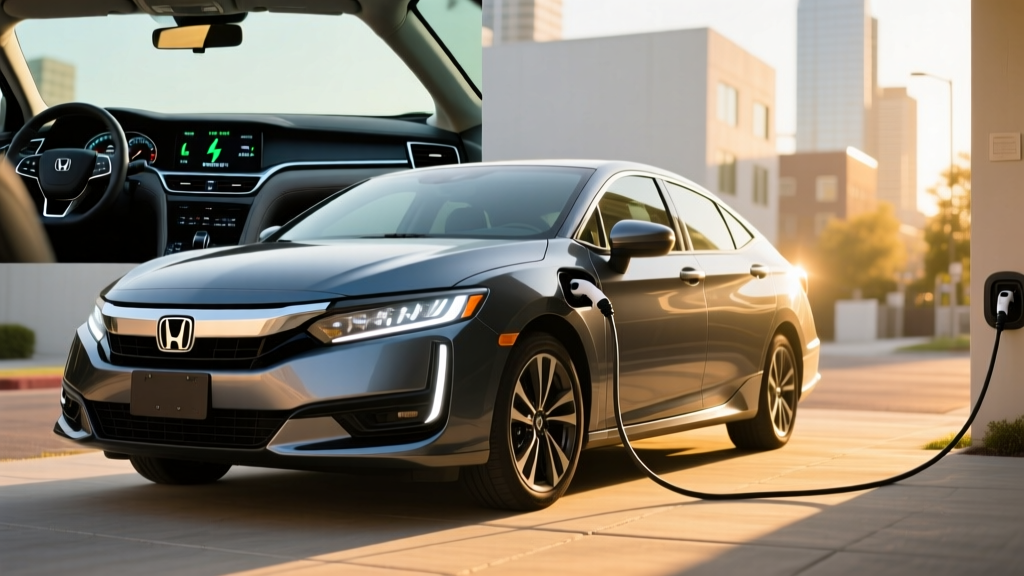
Honda discontinued the Clarity lineup after the 2021 model year, but the 2018 Honda Clarity Plug-In Hybrid remains one of the most compelling used PHEVs on the market. With an EPA-rated 47 miles of electric-only driving, a combined 42 MPG once the battery depletes, and a genuinely roomy five-passenger cabin, it occupies a sweet spot between a conventional hybrid and a full battery-electric vehicle. For buyers who want electric commuting without range anxiety on longer trips, the Clarity PHEV is a strong candidate — provided you check battery health before purchasing.
| Specification | 2018 Honda Clarity Plug-In Hybrid |
|---|---|
| EPA Electric-Only Range | 47 miles |
| Total Combined Range | ~340 miles (EV + gas) |
| EPA MPG (Gas-Only, Combined) | 42 MPG (44 city / 40 highway) |
| MPGe (Electric + Gas Combined) | 110 MPGe |
| Battery Capacity (Gross / Usable) | 17.0 kWh / ~14.0 kWh usable |
| Battery Chemistry | Lithium-Ion (NMC) |
| Combined System Horsepower | 212 hp |
| Engine | 1.5L Atkinson-cycle 4-cylinder |
| Electric Motor | 181 hp / 232 lb-ft torque |
| Level 1 Charging (120V) | ~12 hours (full charge) |
| Level 2 Charging (240V, 32A) | ~2.5 hours (full charge) |
| DC Fast Charging | Not available |
| 0–60 mph | ~7.5 seconds |
| Cargo Volume | 15.5 cu ft |
| Original MSRP (Base / Touring) | $33,400 / $37,400 |
| Powertrain Warranty (Original) | 5 yr / 60,000 mi |
| Hybrid Battery Warranty (Original) | 8 yr / 100,000 mi (10 yr / 150,000 mi in CARB states) |
HEV vs. PHEV: What the Clarity Plug-In Hybrid Actually Is
Before diving into specs, it's worth clarifying the distinction between a conventional hybrid (HEV) and a plug-in hybrid (PHEV), since Honda sold both versions of the Clarity.
| Feature | Conventional Hybrid (HEV) | Plug-In Hybrid (PHEV) |
|---|---|---|
| Plugs in to charge? | No — charges via regenerative braking and engine | Yes — plugs in for full electric range |
| Electric-only range | 0–2 miles at low speed | 47 miles (Clarity PHEV) |
| Battery size | ~1.0–1.5 kWh | 17.0 kWh (Clarity PHEV) |
| Gas-only operation | Primary mode always | After battery depletes, operates as hybrid |
| Federal tax credit (new) | None | Up to $7,500 (when eligible, now expired for Clarity) |
| Ideal for | Drivers who can't charge at home | Drivers with home/work charging who want electric commutes |
The 2018 Honda Clarity was sold in three variants: a conventional hybrid, a plug-in hybrid, and a hydrogen fuel-cell version (lease-only in California). This guide focuses exclusively on the Clarity Plug-In Hybrid, which is the variant most buyers search for due to its exceptional 47-mile EV range — the longest of any PHEV sedan available in 2018 outside of luxury models.
Electric-Only Range and Real-World Efficiency
The EPA rates the 2018 Clarity PHEV at 47 miles of electric-only range, which was class-leading for a mainstream PHEV at launch. That figure is derived from the 17.0 kWh gross battery pack (approximately 14.0 kWh usable, as Honda reserves a buffer to protect long-term battery health).
EPA Rated: 47 miles electric-only
Real-World (Mild Weather, Mixed Driving): 40–45 miles
Highway-Heavy (70+ mph): 33–38 miles
Cold Weather (Below 32°F): 30–35 miles (cabin heating draws from battery)
With Preconditioning While Plugged In: Closer to EPA estimate, even in cold
In practice, owners who charge nightly at home report completing daily commutes of 30–40 miles entirely on electricity, rarely touching the gas tank during the work week. Once the battery depletes, the Clarity seamlessly transitions to hybrid mode, where the 1.5L Atkinson-cycle engine and electric motor work together to deliver an EPA-rated 42 MPG combined (44 city / 40 highway).
| Driving Mode | EPA Rating | Real-World Expectation |
|---|---|---|
| Electric-Only Range | 47 miles | 35–45 miles (weather/terrain dependent) |
| Gas-Only City | 44 MPG | 42–48 MPG (hybrids often exceed EPA in city) |
| Gas-Only Highway | 40 MPG | 36–40 MPG |
| Gas-Only Combined | 42 MPG | 38–44 MPG |
| Combined MPGe (EV + Gas) | 110 MPGe | Varies based on charging frequency |
A key advantage of the Clarity's hybrid mode is its behavior in city driving. Like most Honda hybrids using the i-MMD (Intelligent Multi-Mode Drive) system, the electric motor handles most low-speed propulsion while the engine acts primarily as a generator. This means city MPG often exceeds the EPA estimate — a pattern we see across Honda and Toyota hybrids.
Charging: What You Need to Know
The 2018 Clarity PHEV uses a standard J1772 connector for AC charging. It does not support DC fast charging — a limitation worth understanding if you plan to rely on public charging infrastructure.
| Charging Level | Power (kW) | Time to Full Charge | Miles of Range Added Per Hour |
|---|---|---|---|
| Level 1 (120V, 12A) | ~1.4 kW | ~12 hours | ~4 miles/hour |
| Level 2 (240V, 16A) | ~3.8 kW | ~4.5 hours | ~10 miles/hour |
| Level 2 (240V, 32A) | ~7.2 kW (onboard max) | ~2.5 hours | ~19 miles/hour |
| DC Fast Charge | N/A | N/A | N/A |
The Clarity's onboard charger maxes out at 7.2 kW, meaning even if you plug into a 48-amp Level 2 station, the car will only draw 32 amps. For most PHEV owners, this is perfectly adequate — a 2.5-hour Level 2 charge replenishes the entire battery, and overnight Level 1 charging from a standard 120V outlet is sufficient for daily top-ups if your commute is under 40 miles.
Practical tip: The Clarity comes with a dual-voltage portable charging cord (120V/240V). If you have access to a 240V NEMA 14-50 outlet (common for dryers or RV hookups), you can cut charge time roughly in half without installing a dedicated Level 2 wallbox.
Powertrain and Driving Experience
Honda's two-motor hybrid system in the Clarity is one of the more sophisticated setups in the PHEV segment. Here's how the power flows:
- EV Mode: The 181-hp electric motor drives the front wheels exclusively, drawing from the 17.0 kWh battery. The gas engine stays off unless you floor the accelerator or the battery depletes.
- Hybrid Mode: The 1.5L engine primarily acts as a generator, producing electricity to feed the drive motor. This series-hybrid behavior feels smooth and linear, similar to driving an EV.
- Engine Direct-Drive Mode: At steady highway speeds (roughly 45–80 mph), a lock-up clutch connects the engine directly to the wheels for improved efficiency — the only time the engine mechanically drives the wheels.
Combined system output is 212 horsepower, which is more than adequate for merging and passing. The 0–60 mph time of approximately 7.5 seconds is respectable for a 4,000-pound sedan. Electric-mode acceleration is particularly strong off the line thanks to the motor's 232 lb-ft of instant torque.
Ride quality is tuned toward comfort rather than sportiness. The Clarity absorbs highway imperfections well, and cabin noise is low in EV mode. When the engine activates, it's more audible than in some competitors (the Toyota Prius Prime, for instance), but it's never intrusive. The regenerative braking system offers adjustable levels via steering-wheel paddles, allowing you to increase regen for near-one-pedal driving in city traffic — though it doesn't come to a complete stop without using the brake pedal.
Used Pricing and Tax Credit Reality in 2026
As a discontinued model (Honda ended Clarity production after 2021), the 2018 Clarity PHEV is only available on the used market. Here's what to expect in 2026:
Base trim (good condition, 60K–80K miles): $16,000–$19,000
Touring trim (good condition, 50K–70K miles): $18,500–$22,000
Low-mileage examples (under 40K miles): $21,000–$25,000
Federal tax credit status: The Clarity PHEV originally qualified for the full $7,500 federal tax credit under the pre-2023 IRS §30D rules, as Honda had not yet hit the manufacturer cap. However, under the Inflation Reduction Act's revised rules effective January 2023, the Clarity no longer qualifies for the new-vehicle credit (it's discontinued), and as a used EV/PHEV, it may qualify for the up-to-$4,000 used clean vehicle credit (IRS §25E) if the following conditions are met:
- Sale price is $25,000 or less
- Buyer's adjusted gross income is below $75,000 (single) / $112,500 (head of household) / $150,000 (joint)
- Vehicle is at least 2 model years old (2018 qualifies)
- Purchased from a licensed dealer (private-party sales don't qualify)
- The credit is 30% of the sale price, capped at $4,000
So a $19,000 used Clarity PHEV could yield a $4,000 tax credit (30% of $19,000 = $5,700, but capped at $4,000), effectively bringing the net cost to around $15,000 for income-eligible buyers. Always verify current rules at IRS.gov and consult a tax professional before relying on credit eligibility.
Battery Health, Warranty, and Replacement Cost
Battery longevity is the top concern for any used PHEV buyer. Here's what you need to know about the Clarity's pack:
Federal (non-CARB states): 8 years / 100,000 miles
CARB states (CA, NY, MA, and others): 10 years / 150,000 miles
Warranty Threshold: Honda covers the battery if capacity drops below approximately 70% of original capacity during the warranty period.
2026 Status for 2018 Models: The 8-year/100K warranty has expired for most 2018 models (coverage started from the original in-service date). However, vehicles originally sold in CARB states with 10-year coverage may still have active warranty through 2028 if mileage is under 150,000.
Degradation data: Based on owner reports and fleet data through 2025, the Clarity PHEV's lithium-ion battery shows moderate degradation of approximately 8–12% over the first 5–7 years of typical use. A 2018 model in 2026 might realistically deliver 38–42 miles of electric range instead of the original 47 — still very usable for most commutes. Honda's conservative buffer strategy (keeping roughly 3 kWh in reserve at the bottom of the pack) helps protect long-term cell health.
Battery replacement cost: If the battery fails outside of warranty, a replacement pack from Honda runs approximately $4,000–$6,000 including parts and labor. Third-party rebuilt or refurbished packs may be available for $2,500–$4,000. This is a meaningful expense, but the Clarity's battery has proven more durable than early-generation PHEV packs from other manufacturers.
Before buying used, check:
- Ask the seller or dealer to show the battery's State of Health (SoH) via the dashboard display or a Honda diagnostic scan.
- Check the vehicle's original in-service date to determine if any CARB-state extended warranty remains.
- Look for consistent charging habits in the vehicle history — frequent DC fast charging isn't a concern here (the Clarity doesn't support it), but prolonged storage at 0% or 100% SoC can accelerate degradation.
According to fueleconomy.gov, the Clarity PHEV's efficiency ratings have held up well compared to segment peers, and Honda's hybrid system reliability is well-documented across the Accord Hybrid and Insight lineages.
Who Should Buy the 2018 Clarity PHEV (And Who Shouldn't)
- Your daily commute is under 40 miles round-trip and you can charge at home
- You want a comfortable, spacious five-seat sedan with a real trunk
- You take road trips and don't want to plan around charging stations
- You're buying on a budget ($16K–$22K) and want to minimize fuel costs
- You live in an area with limited DC fast-charging infrastructure
- You want zero gas-engine maintenance (no oil changes, spark plugs, or coolant flushes)
- You have reliable home charging and rarely drive more than 200 miles in a day
- You want access to newer ADAS features (the 2018 Clarity's Honda Sensing suite is basic by 2026 standards)
- You cannot charge at home or at work
- You want the simplicity of never plugging in
- Your driving is mostly highway, where PHEV electric-range advantage diminishes
- 47-mile EV range covers most commutes entirely on electricity
- 42 MPG combined in hybrid mode — excellent for a midsize sedan
- Spacious rear seat and 15.5 cu-ft trunk
- Smooth, quiet EV-mode driving
- Strong low-end torque from electric motor (232 lb-ft)
- Honda Sensing safety suite standard (AEB, lane-keeping, adaptive cruise)
- Used pricing makes it one of the best-value PHEVs available
- No DC fast charging — public charging options limited to Level 2
- Discontinued model — no new-vehicle warranty or support updates
- Infotainment system feels dated (no wireless CarPlay, small screen)
- Engine noise is noticeable under hard acceleration in hybrid mode
- Battery warranty likely expired on most 2018 examples
- Only available used — condition and history vary significantly
- Honda Sensing is Level 2 driver-assist only — not autonomous
Clarity PHEV vs. the Used PHEV Competition
If you're cross-shopping the 2018 Clarity PHEV, here's how it stacks up against other used PHEV sedans from the same era:
| Model | EV Range | Gas MPG | DC Fast Charge | Used Price (2026) |
|---|---|---|---|---|
| 2018 Honda Clarity PHEV | 47 mi | 42 MPG | No | $16K–$22K |
| 2018 Toyota Prius Prime | 25 mi | 54 MPG | No | $18K–$24K |
| 2018 Chevrolet Volt | 53 mi | 42 MPG | No | $14K–$19K |
| 2018 Hyundai Ioniq PHEV | 29 mi | 52 MPG | No | $14K–$18K |
| 2018 Ford Fusion Energi | 21 mi | 42 MPG | No | $12K–$16K |
The Clarity's 47-mile EV range is second only to the Chevrolet Volt (53 miles) among 2018 PHEVs, but the Clarity offers significantly more rear-seat and cargo space than the Volt's cramped hatchback. The Prius Prime delivers better gas MPG but only half the EV range. The Hyundai Ioniq PHEV is efficient but has a smaller battery and shorter electric range. For a family sedan that maximizes electric commuting, the Clarity is hard to beat in this price bracket.
Frequently Asked Questions
How many MPG does the 2018 Honda Clarity Plug-In Hybrid get?
Once the battery is depleted, the Clarity PHEV operates as a conventional hybrid and achieves an EPA-rated 42 MPG combined (44 city / 40 highway). In real-world city driving, many owners report 44–48 MPG thanks to the electric motor's heavy role at low speeds. Highway driving typically yields 36–40 MPG.
How far can the 2018 Clarity PHEV go on electric only?
The EPA rates it at 47 miles of electric-only range. In real-world conditions, expect 35–45 miles depending on temperature, terrain, and driving style. Cold weather (below freezing) can reduce EV range to 30–35 miles due to cabin heating demands and reduced battery efficiency.
Does the 2018 Clarity PHEV qualify for any tax credit?
As a new vehicle, the Clarity PHEV previously qualified for up to $7,500 in federal tax credits, but this is no longer applicable since the model is discontinued. However, as a used vehicle purchased from a dealer in 2026, it may qualify for the up-to-$4,000 used clean vehicle credit (IRS §25E) if the sale price is $25,000 or less and the buyer meets income requirements. Check IRS.gov for current eligibility rules.
Is the 2018 Clarity PHEV reliable, and what does a battery replacement cost?
Honda's hybrid powertrain has an excellent reliability track record, and the Clarity's i-MMD system shares architecture with the well-regarded Accord Hybrid. The lithium-ion battery shows moderate degradation (~8–12% over 5–7 years based on owner data). A replacement battery costs approximately $4,000–$6,000 from Honda, or $2,500–$4,000 for a refurbished unit. The original 8-year/100,000-mile battery warranty has likely expired on most 2018 examples, though CARB-state vehicles may retain 10-year/150,000-mile coverage.
Can the Clarity PHEV use DC fast chargers?
No. The 2018 Clarity Plug-In Hybrid does not support DC fast charging. It charges exclusively via AC Level 1 (120V) or Level 2 (240V) using a J1772 connector. A full Level 2 charge takes approximately 2.5 hours at the car's 7.2 kW onboard charger maximum.
Hybrid vs. PHEV vs. EV — which should I choose?
A conventional hybrid (HEV) is best if you can't charge at home and want maximum simplicity. A plug-in hybrid (PHEV) like the Clarity is ideal if you have home charging and want electric-only commuting with gas-engine flexibility for road trips. A full EV (BEV) makes sense if you charge at home, rarely exceed 250 miles in a day, and want zero engine maintenance. The Clarity PHEV sits in the middle — offering the best of both worlds for drivers who can charge regularly but don't want to commit fully to electric.
What should I check before buying a used 2018 Clarity PHEV?
Prioritize these items: (1) Battery State of Health via Honda diagnostic scan, (2) remaining battery warranty (especially in CARB states), (3) service history showing regular maintenance, (4) tire condition (the Clarity uses low-rolling-resistance tires that can be pricey to replace), and (5) a pre-purchase inspection by a Honda-certified technician familiar with the i-MMD hybrid system.