The 2018 Ford Fusion Hybrid at a Glance
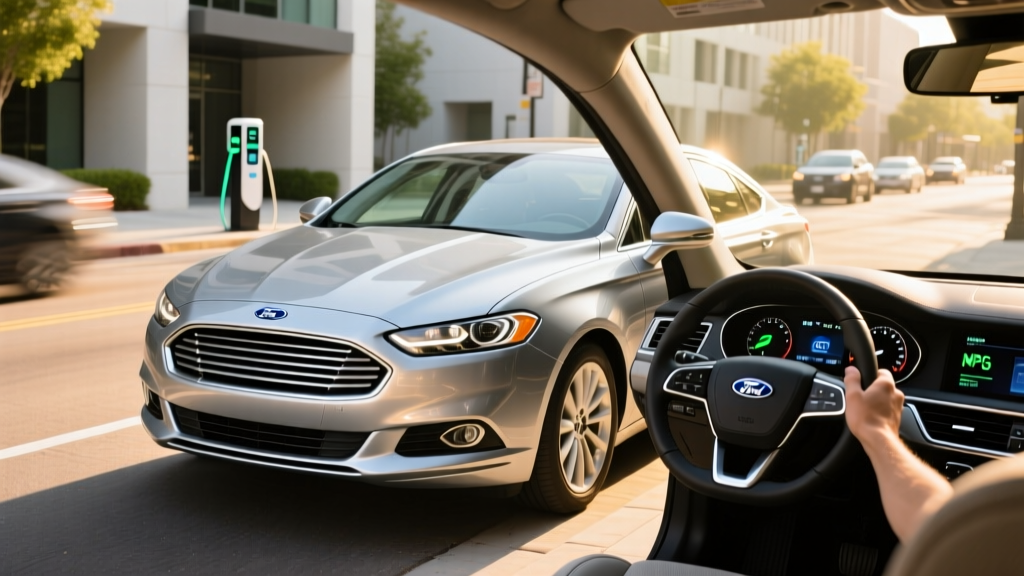
The Ford Fusion Hybrid was discontinued after the 2020 model year, but the 2018 variant remains one of the most popular used midsize hybrids on the market. If you're researching 2018 Ford Fusion Hybrid problems before buying one used, you're asking the right questions. This was the final generation of Ford's hybrid sedan, and while it earned strong EPA ratings and a comfortable ride, it isn't without known issues — particularly around its high-voltage battery, inverter coolant system, and 12V electrical gremlins.
Below, we cover every major reliability concern, the real fuel economy you can expect, battery warranty and replacement costs, and how this used hybrid stacks up against buying a newer PHEV or full EV in 2026.
EPA MPG and Real-World Fuel Economy
| Metric | Fusion Hybrid (HEV) | Fusion Energi (PHEV) |
|---|---|---|
| City MPG | 43 MPG | 43 MPG (charge-sustaining) |
| Highway MPG | 41 MPG | 41 MPG (charge-sustaining) |
| Combined MPG | 42 MPG | 42 MPG (gas only) |
| Electric-Only Range | N/A | 21 miles (EPA) |
| MPGe (PHEV combined) | N/A | 97 MPGe |
| Total Range | ~620 miles | ~550 miles (gas + electric) |
| Fuel Tank | 13.5 gal | 9.0 gal |
Source: fueleconomy.gov — 2018 Ford Fusion Hybrid
Real-World MPG: What Owners Actually Report
The Fusion Hybrid's EPA rating of 42 MPG combined is one area where real-world results often exceed the sticker — at least in city driving. Because conventional hybrids recapture the most energy during stop-and-go braking, many owners report 44–47 MPG on urban commutes. Highway driving is a different story: sustained speeds above 70 mph reduce regenerative opportunities and increase aerodynamic drag, pulling real-world highway economy down to roughly 37–39 MPG.
In mixed driving (about 60% city, 40% highway), expect a realistic average of 40–43 MPG. Cold weather (below 35°F) can reduce this by 5–8 MPG due to increased engine idling for cabin heat and reduced battery efficiency.
Common 2018 Ford Fusion Hybrid Problems
Based on NHTSA complaint data, owner forums, and mechanic reports, here are the most frequently documented issues with the 2018 Fusion Hybrid:
1. High-Voltage Battery Degradation and Failure
The Fusion Hybrid uses a 1.4 kWh lithium-ion traction battery (supplied by LG Chem). While smaller than a full EV battery, it still manages all energy buffering for the hybrid system. The most serious — and most expensive — reported problem is premature capacity loss or cell failure, typically surfacing between 80,000 and 120,000 miles.
Symptoms include:
- Noticeable drop in fuel economy (3–8 MPG loss)
- "Stop Safely Now" warning on the dash
- Reduced regenerative braking feel
- The gasoline engine running more frequently and at higher RPMs
Not every 2018 Fusion Hybrid will experience this. Battery failure rates are estimated at roughly 3–5% of vehicles by 100,000 miles based on owner community data, but it's the single costliest repair to watch for.
2. Inverter Coolant Pump Failure
The hybrid system's power inverter has its own dedicated coolant loop. The electric coolant pump on this loop can fail, leading to inverter overheating warnings and, in worst cases, a shutdown of the hybrid system. This issue was significant enough that Ford issued Technical Service Bulletin (TSB) 18-2219 addressing inverter coolant pump diagnostics. If the pump fails and isn't caught early, it can damage the inverter itself — a repair exceeding $2,500.
3. 12V Battery Drain and Electrical Gremlins
Like many hybrids, the Fusion relies on a conventional 12V lead-acid battery to boot up its computers before the high-voltage system engages. Owners report the 12V battery dying prematurely (every 2–3 years instead of the typical 4–5), causing no-start conditions and throwing multiple fault codes. The root cause is often parasitic draw from the telematics module (FordPass Connect) and the SYNC infotainment system failing to enter sleep mode properly.
4. Transmission Shudder (eCVT)
The Fusion Hybrid uses an electronically controlled continuously variable transmission (eCVT) — not a belt-driven CVT like Nissan's, but a planetary gearset design similar to Toyota's Hybrid Synergy Drive. While generally robust, some owners report a low-speed shudder or vibration between 20–40 mph, particularly when the engine is transitioning on and off. In most cases this is a software calibration issue addressable via a PCM update, but in higher-mileage examples it can indicate wear in the motor-generator coupling.
5. Brake Actuator and Regenerative Braking Complaints
The Fusion Hybrid blends regenerative braking with its hydraulic friction brakes. Some owners report a spongy or inconsistent brake pedal feel, particularly in the transition zone where regen hands off to the friction brakes. NHTSA complaint records show a modest number of reports related to brake feel, though no large-scale recall was issued specifically for the 2018 model year on this point.
Battery Warranty, Lifespan, and Replacement Cost
For a 2018 model in 2026: The original 8-year/100k-mile warranty is expiring or has already expired for most vehicles, depending on purchase date and mileage. If you're buying used, verify warranty status with a Ford dealer using the VIN before purchase.
Hybrid Battery Replacement Cost
If the high-voltage battery fails out of warranty, here's what to budget:
| Option | Estimated Cost | Notes |
|---|---|---|
| New OEM battery (Ford dealer) | $3,500 – $5,000 | Full pack replacement; includes programming |
| Refurbished/remanufactured battery | $1,800 – $2,800 | Replaced cells in original casing; 1–3 year warranty typical |
| Individual cell/module replacement | $600 – $1,200 | Only viable if 1–2 modules are bad; requires specialized hybrid shop |
| Used/salvage yard battery | $800 – $1,500 | High risk — unknown SoH; not recommended |
Labor typically adds $500–$900 depending on shop rates. The good news: the Fusion Hybrid's 1.4 kWh pack is significantly cheaper to replace than a full EV battery ($8,000–$20,000+). Most hybrid-specialty independent shops can handle the replacement in 3–5 hours.
Powertrain and Performance Specifications
| Specification | Value |
|---|---|
| Engine | 2.0L Atkinson-cycle I-4 |
| Engine horsepower | 141 hp @ 6,000 rpm |
| Electric motor | Permanent-magnet AC synchronous |
| Motor horsepower | 120 hp (88 kW) |
| Combined system output | 188 hp |
| Transmission | eCVT (planetary gearset) |
| Drivetrain | Front-wheel drive |
| High-voltage battery | 1.4 kWh lithium-ion (LG Chem) |
| 0–60 mph | ~7.8 seconds |
| Curb weight | ~3,630 lbs |
| Cargo volume | 12.0 cu ft (trunk) |
The 2.0L Atkinson-cycle engine sacrifices some peak power for thermal efficiency, while the electric motor fills in low-end torque. The result is smooth, adequate acceleration — not quick, but perfectly suited for commuting. The eCVT is gearless and avoids the "rubber-band" feel of belt-driven CVTs.
Fusion Energi (PHEV) Powertrain Differences
The 2018 Fusion Energi uses the same 2.0L engine and eCVT but pairs them with a larger 7.6 kWh lithium-ion battery, enabling 21 miles of EPA-rated electric-only driving. Total combined range is approximately 550 miles (electric + 9-gallon fuel tank). Charging is Level 2 only (no DC fast charging): a full charge takes about 2.5 hours on a 240V Level 2 charger or roughly 7 hours on a standard 120V Level 1 outlet. The Energi is heavier (~3,900 lbs), which reduces its charge-sustaining fuel economy slightly versus the HEV.
Pricing and Tax Credit Eligibility in 2026
Used Market Pricing
As of early 2026, the 2018 Ford Fusion Hybrid trades in the used market at approximately:
- SE trim: $12,000 – $15,000 (60k–90k miles)
- Platinum (formerly Titanium) trim: $14,000 – $18,000 (50k–80k miles)
- Energi (PHEV) Platinum: $14,500 – $19,000 (50k–85k miles)
These ranges vary by region, condition, and mileage. Hybrid battery health should be the primary price negotiation lever — request a state-of-health (SoH) readout from a Ford dealer or hybrid specialist before finalizing a purchase.
Does the 2018 Fusion Hybrid Qualify for a Tax Credit?
No — not for the standard hybrid (HEV). Conventional hybrids have never qualified for the federal §30D Clean Vehicle Credit, which applies only to plug-in electric vehicles (BEVs and PHEVs).
For the Fusion Energi (PHEV), bought used: The IRS Previously-Owned Clean Vehicle Credit (IRC §25E) allows eligible buyers to claim up to $4,000 or 30% of the sale price (whichever is less) on a qualifying used PHEV. Key requirements:
- Sale price must be $25,000 or less (the Fusion Energi qualifies)
- Buyer income caps: $75,000 single / $112,500 head of household / $150,000 joint (modified AGI)
- The vehicle must be purchased from a licensed dealer (private-party sales don't qualify)
- You cannot have claimed this credit on another vehicle in the prior 3 years
- The vehicle must be for personal use, primarily in the United States
At typical used Energi prices of $15,000–$19,000, the 30% calculation yields a credit of $4,500–$5,700, but the cap limits it to $4,000 maximum. This credit can be transferred to the dealer at point of sale as an immediate price reduction. Confirm eligibility with a tax professional and verify current IRS rules, as provisions may change.
Who Should Buy the 2018 Fusion Hybrid — and Who Shouldn't
- You want 40+ MPG without ever plugging in
- Your budget is $12,000–$18,000 for a used sedan
- You drive mostly city/suburban (where regen shines)
- You want a proven, non-turbo powertrain with low maintenance costs
- You don't have access to home or workplace charging
- You can charge at home (Level 1 or Level 2)
- Your daily commute is under 20 miles (full electric coverage)
- You want to qualify for up to $4,000 in used-EV tax credits
- You want EV-like daily driving with a gas backup for road trips
- You need AWD (Fusion Hybrid is FWD only — consider a RAV4 Hybrid)
- You want a full EV experience (consider a used Bolt EV or Model 3)
- You need more than 12 cu ft of trunk space (the battery intrudes)
- You want current-model-year safety tech (2018 lacks standard AEB on base trims)
Pre-Purchase Checklist: What to Inspect
If you're seriously considering a 2018 Fusion Hybrid, take these steps before handing over cash:
- Get a hybrid battery SoH report. A Ford dealer or hybrid-specialty shop can read the battery's state of health via OBD-II. Look for capacity above 85% — anything below 75% is a negotiation point or walk-away.
- Check for inverter coolant pump TSBs. Verify whether TSB 18-2219 (or any subsequent inverter-related service action) was performed. Ask for service records.
- Test the 12V battery age. If it's over 3 years old, factor in a $180–$250 replacement.
- Drive in EV mode and engine-on mode. Listen for unusual shudder during the engine start/stop transition at 20–40 mph.
- Verify brake feel. The regen-to-friction handoff should be smooth. Any grinding, pulsation, or excessive pedal travel warrants a brake system inspection.
- Pull a vehicle history report. Check for salvage titles, flood damage (especially problematic for hybrid electronics), and accident history via Carfax or AutoCheck.
Frequently Asked Questions
How many MPG does the 2018 Ford Fusion Hybrid actually get?
The EPA rates it at 43 city / 41 highway / 42 combined. In real-world driving, city-heavy commuters often see 44–47 MPG, while sustained highway driving drops to 37–39 MPG. Expect 40–43 MPG in mixed driving.
How far can the Fusion Energi go on electric only?
The 2018 Fusion Energi has an EPA-rated 21 miles of electric-only range. Real-world range depends on temperature and driving style — expect 17–19 miles in cold weather or at highway speeds, and up to 23–24 miles in mild city driving.
Is the 2018 Fusion Hybrid reliable?
Moderately. The powertrain (engine + eCVT) is generally durable past 150,000 miles with regular maintenance. The main risk areas are the high-voltage battery (3–5% failure rate by 100k miles), inverter coolant pump, and 12V electrical system. Overall reliability is comparable to the Toyota Camry Hybrid of the same era, though Toyota's hybrid battery track record is slightly stronger.
How much does it cost to replace the hybrid battery?
A new OEM battery runs $3,500–$5,000 installed. Refurbished packs cost $1,800–$2,800. Individual module replacement (if only one or two cells fail) can be as low as $600–$1,200 at a hybrid-specialty shop.
Does the 2018 Fusion Hybrid qualify for any tax credit?
The standard hybrid (HEV) does not qualify for any federal tax credit. The Fusion Energi (PHEV), when purchased used from a dealer for $25,000 or less, may qualify for the IRS §25E Previously-Owned Clean Vehicle Credit of up to $4,000, subject to buyer income limits. Consult IRS.gov or a tax professional for your specific situation.
Can the Fusion Energi DC fast charge?
No. The 2018 Fusion Energi supports only Level 1 (120V) and Level 2 (240V) AC charging. A full Level 2 charge takes approximately 2.5 hours. There is no DC fast charging capability.
Hybrid vs PHEV vs EV — which should I choose?
HEV (Fusion Hybrid): Best if you can't charge at home, drive mostly city, and want maximum simplicity with no plug. Lowest upfront cost, no range anxiety, 40+ MPG.
PHEV (Fusion Energi): Best if you can charge at home and commute under 20 miles daily. You get EV-like daily driving with gas backup for long trips. Eligible for used-EV tax credits.
Full EV (e.g., used Chevy Bolt, Tesla Model 3): Best if you have reliable home charging, want zero tailpipe emissions, and your daily driving is under 200 miles. Lowest per-mile "fuel" cost but higher upfront price and requires charging infrastructure planning.
Safety note: The 2018 Fusion Hybrid earned a 5-star overall rating from NHTSA and was an IIHS Top Safety Pick when equipped with optional forward-collision warning. Verify that the specific VIN you're considering includes these features, as they were not standard on all trims.