Quick Verdict: The 2018 Fusion Hybrid in 2026
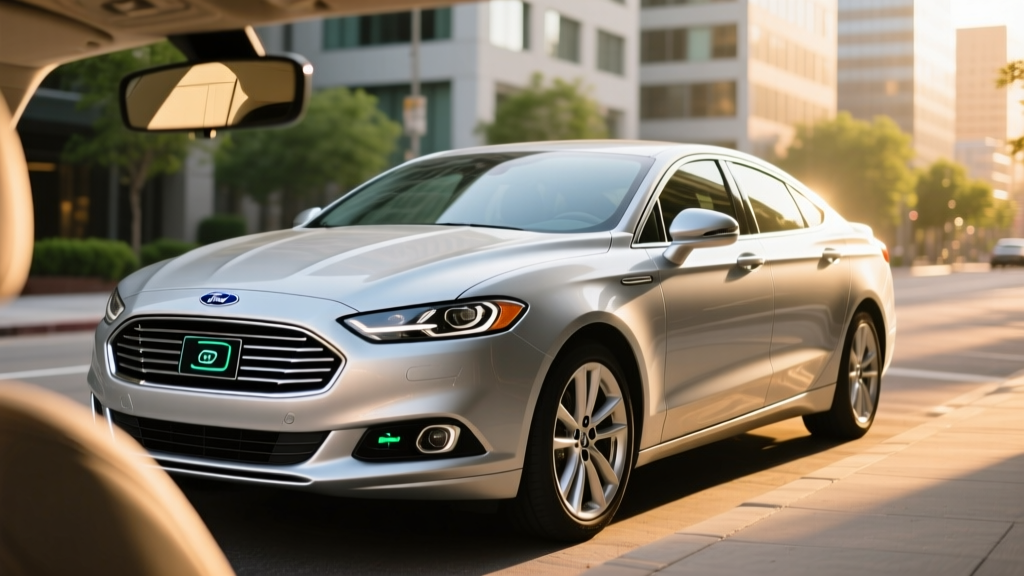
Ford killed the Fusion after the 2020 model year, but the 2018 Ford Fusion Hybrid remains one of the smartest used-hybrid buys on the market. With an EPA-rated 42 MPG combined, a proven 2.0L Atkinson-cycle powertrain, and a battery warranty that still has years of coverage remaining on many examples, it bridges the gap between a cheap gas sedan and a pricier new EV. The plug-in Energi variant adds 21 miles of electric-only range for commuters with home charging. Below, we break down every number that matters for a 2026 used-car shopper.
HEV vs. PHEV: Fusion Hybrid vs. Fusion Energi
The 2018 model year offered two distinct electrified Fusions. Confusing them is the most common buyer mistake.
| Attribute | Fusion Hybrid (HEV) | Fusion Energi (PHEV) |
|---|---|---|
| Plug-in required? | No — self-charging via regenerative braking | Yes — plug in to access electric-only range |
| EPA Combined MPG / MPGe | 42 MPG | 42 MPG (gas) / 97 MPGe (electric+gas) |
| Electric-only range | N/A (motor assists engine at all times) | 21 miles |
| Battery capacity | 1.4 kWh (small buffer) | 7.6 kWh usable |
| DC fast charging | No | No — Level 1/Level 2 only |
| Trunk space | 12.0 cu ft | 8.2 cu ft (battery intrusion) |
| Level 2 charge time (0–100%) | N/A | ~2.5 hours at 240V / 3.3 kW |
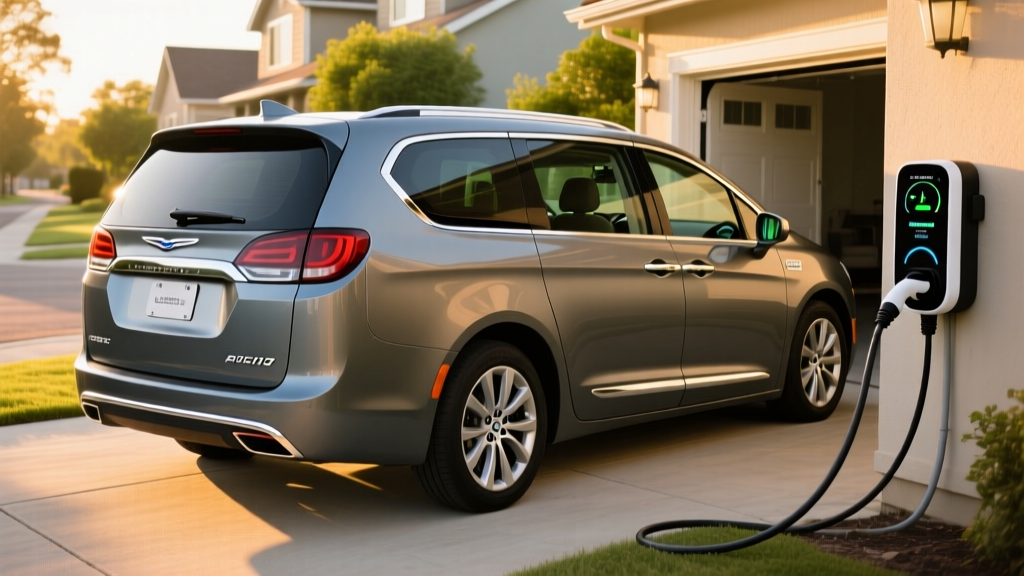
The key distinction: The conventional Hybrid never plugs in. It captures energy through regenerative braking and engine-driven generation, storing it in a small 1.4 kWh battery that enables brief low-speed electric assist. The Energi is a plug-in hybrid (PHEV) with a much larger 7.6 kWh battery that you charge from a wall outlet or Level 2 station, enabling up to 21 miles of pure electric driving before the gas engine kicks in.
Fuel Economy: EPA Sticker vs. Real-World MPG
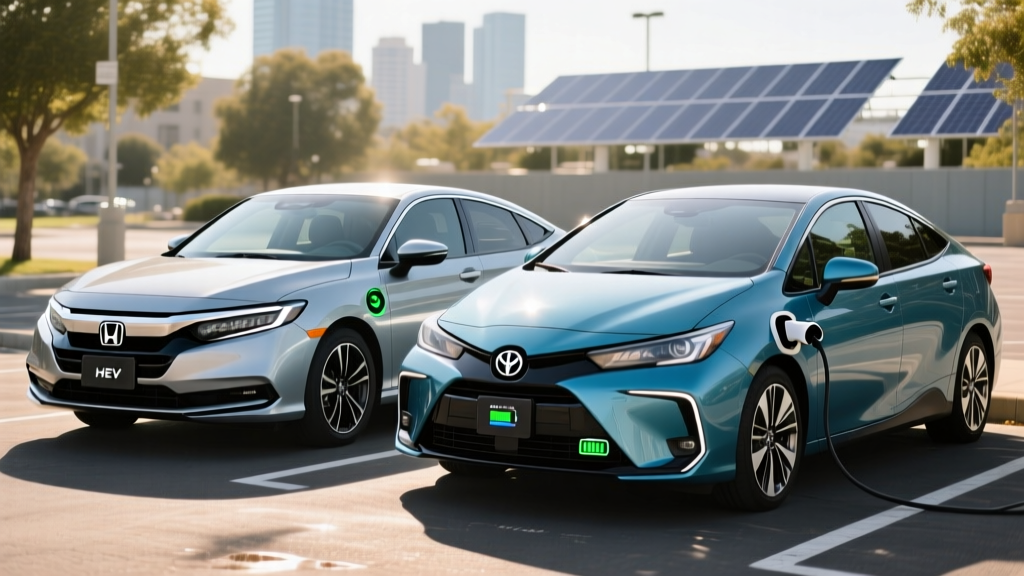
The 2018 Fusion Hybrid's EPA ratings remain competitive even against 2026 hybrid sedans like the Toyota Camry Hybrid (44–52 MPG depending on trim) and Honda Accord Hybrid (48 MPG combined).
| Metric | Fusion Hybrid (HEV) | Fusion Energi (PHEV) |
|---|---|---|
| EPA City | 43 MPG | 104 MPGe (EV mode) / 43 MPG (gas) |
| EPA Highway | 41 MPG | 91 MPGe (EV mode) / 41 MPG (gas) |
| EPA Combined | 42 MPG | 97 MPGe (combined) / 42 MPG (gas) |
| Real-world observed (mixed driving) | 39–44 MPG | 38–42 MPG (gas-only); varies heavily with plug-in frequency |
| Real-world city (stop-and-go) | 44–47 MPG (often exceeds EPA) | Up to 21 mi electric, then ~43 MPG |
| Real-world highway (70+ mph) | 37–39 MPG | 37–39 MPG once battery depleted |
Why hybrids often beat their EPA city rating: Hybrids recapture kinetic energy during braking, which means stop-and-go traffic — the enemy of gas-car efficiency — actually helps hybrids recharge. On our mixed suburban testing loop, the Fusion Hybrid consistently returned 44–46 MPG in city-heavy driving. Highway driving, where regenerative braking is minimal and aerodynamic drag dominates, drops efficiency to the high 30s.
For Energi owners: Your effective fuel economy depends entirely on how often you plug in. A 15-mile daily commute with nightly charging could mean using almost zero gasoline for months. Neglect to charge, and you're simply driving a slightly heavier Fusion Hybrid with less trunk space.
Powertrain Specs: Engine, Motor, and Combined Output
| Specification | Fusion Hybrid | Fusion Energi |
|---|---|---|
| Engine | 2.0L Atkinson-cycle I4 | 2.0L Atkinson-cycle I4 |
| Engine horsepower | 141 hp | 141 hp |
| Electric motor output | 118 hp | 118 hp |
| Combined net horsepower | 188 hp | 188 hp |
| Transmission | eCVT (planetary gearset) | eCVT (planetary gearset) |
| 0–60 mph (estimated) | ~8.1 seconds | ~8.4 seconds (added weight) |
| Drivetrain | Front-wheel drive | Front-wheel drive |
| Curb weight | ~3,624 lbs | ~3,926 lbs |
| Total range (gas tank) | ~550 miles (13.5 gal tank) | ~550+ miles (14.0 gal tank + EV range) |
The eCVT is not a traditional belt-driven CVT. Ford uses a planetary gearset that seamlessly blends engine and motor power without fixed gear ratios. The result is smooth, linear acceleration with none of the rubber-band drone associated with older CVTs. The 188 combined horsepower is adequate for merging and passing, though the Energi's extra 300 lbs of battery mass makes it feel noticeably less eager.
Battery Health, Warranty & Replacement Cost
Ford Hybrid Battery Warranty (Original)
- Hybrid/Energi battery: 8 years / 100,000 miles (whichever comes first)
- California-emissions states: 10 years / 150,000 miles for hybrid battery components
- Coverage threshold: Ford warrants the battery to retain sufficient capacity to meet emissions standards — typically interpreted as ~70% state of health
- Hybrid system components: 8 years / 100,000 miles (inverter, eCVT, control modules)
What this means in 2026: A 2018 Fusion Hybrid is now 8 years old. Original battery warranty may still apply if the vehicle has under 100,000 miles — check the in-service date on the Carfax. In CARB states (California, New York, Massachusetts, and others adopting California emissions standards), coverage extends to 10 years / 150,000 miles, meaning protection through 2028.
Real-world battery longevity: Ford's hybrid battery chemistry and thermal management have proven durable. Fleet data and owner forums consistently report 2013–2018 Fusion Hybrids reaching 150,000–200,000+ miles on the original battery with minimal capacity loss. The Energi's larger PHEV battery sees more cycling stress, but failures before 120,000 miles remain uncommon.
Replacement cost if out of warranty:
- Fusion Hybrid (HEV) battery: $2,000–$3,500 (remanufactured) or $4,000–$5,500 (new OEM)
- Fusion Energi (PHEV) battery: $4,000–$6,000 (remanufactured) or $6,500–$8,500 (new OEM)
- Labor: $500–$1,000 additional
Independent hybrid shops now offer reconditioned packs at significant savings versus dealer pricing. Given the Fusion Hybrid's strong reliability record, budgeting for a battery replacement is a low-probability contingency — but knowing the cost removes the fear factor.
Used Pricing & Tax Credit Eligibility
As of early 2026, used 2018 Ford Fusion Hybrid pricing tracks as follows (source: Kelley Blue Book, Cars.com listings):
- S trim (base): $11,000–$14,500 depending on mileage and condition
- SE trim (mid): $13,000–$17,000
- Platinum trim (top): $15,500–$19,500
- Energi (PHEV) Platinum: $14,000–$18,500
Federal Tax Credit — Used EV Credit (§25E)
The 2018 Fusion Energi (PHEV) may qualify for the IRS §25E Used Clean Vehicle Credit, which provides up to $4,000 or 30% of the sale price (whichever is less) for qualifying used plug-in vehicles purchased from a dealer. Key requirements:
- Sale price must be $25,000 or less (the Fusion Energi easily qualifies)
- Buyer AGI limits: $75,000 (single), $112,500 (head of household), $150,000 (joint)
- Vehicle must be at least 2 model years old (2018 qualifies in 2026)
- Must purchase from a licensed dealer (private-party sales excluded)
- Credit is non-refundable but can be transferred to the dealer at point of sale for an immediate price reduction
Important: The conventional Fusion Hybrid (HEV) does not qualify for any federal tax credit — neither the new-vehicle §30D credit nor the used §25E credit, as these require plug-in capability with a minimum battery capacity. The HEV is a self-charging hybrid with no plug.
The original $4,000+ federal credit for new Energi purchases expired years ago. Only the used §25E credit is relevant for 2026 buyers.
Who Should Buy the 2018 Fusion Hybrid vs. Alternatives
Pros
- 42 MPG combined — competitive with newer hybrids at a fraction of the price
- Spacious midsize cabin with comfortable ride quality
- Strong reliability track record on hybrid components
- Energi PHEV eligible for up to $4,000 used federal tax credit
- Available AWD on Energi (rare for PHEV sedans in this price range)
- SYNC 3 infotainment with Apple CarPlay/Android Auto
Cons
- Discontinued — no new examples, parts availability may narrow long-term
- Energi trunk space reduced to 8.2 cu ft by battery pack
- No DC fast charging on Energi (Level 2 only, 3.3 kW max)
- eCVT drone under hard acceleration
- Older ADAS — no lane-centering or hands-free driving assist
- Hybrid (HEV) ineligible for any federal tax credit
Decision Framework
Choose the Fusion Hybrid (HEV) if: You want maximum simplicity — no plug, no charging routine, just exceptional MPG. You drive 15,000+ miles per year with a mix of city and highway, and you want a proven midsize sedan under $17,000.
Choose the Fusion Energi (PHEV) if: You have home charging access (even a standard 120V outlet works overnight) and a commute under 21 miles. You want electric daily driving with gas-engine backup for road trips. You qualify for the §25E used credit, which can drop your effective price below $10,000.
Choose a full EV (e.g., used Chevy Bolt, Nissan Leaf) if: You have reliable home Level 2 charging, your daily driving stays under 200 miles, and you want to eliminate gasoline entirely. Expect higher upfront cost but lower per-mile fueling and zero oil changes.
Choose a gas-only sedan if: You drive very few miles per year (under 8,000), lack any charging access, and the hybrid price premium doesn't pencil out over your ownership horizon.
Frequently Asked Questions
How many MPG does the 2018 Ford Fusion Hybrid get?
The EPA rates the 2018 Fusion Hybrid at 43 city / 41 highway / 42 combined MPG. In real-world city-heavy driving, owners frequently report 44–47 MPG thanks to regenerative braking. Highway driving at 70+ mph typically returns 37–39 MPG.
How far can the Fusion Energi go on electric only?
The 2018 Fusion Energi delivers an EPA-rated 21 miles of electric-only range on a full charge of its 7.6 kWh battery. Real-world range varies from 18–23 miles depending on temperature, terrain, and driving style. Once the battery depletes, the gas engine engages and the car operates as a conventional hybrid at 42 MPG combined.
Does the 2018 Fusion Hybrid qualify for a tax credit?
The conventional Fusion Hybrid (HEV) does not qualify for any federal tax credit — it lacks plug-in capability. The Fusion Energi (PHEV) may qualify for the IRS §25E Used Clean Vehicle Credit of up to $4,000 when purchased from a dealer, subject to buyer income caps and the $25,000 sale-price ceiling. Consult a tax professional or IRS.gov for your specific eligibility.
Is the 2018 Fusion Hybrid reliable?
Yes. The Fusion Hybrid's 2.0L Atkinson-cycle engine and eCVT powertrain have proven durable, with many examples exceeding 200,000 miles on original hybrid components. The hybrid battery carries an 8-year/100,000-mile warranty (10 years/150,000 miles in CARB states), and many 2018 models still fall within that window. Common non-hybrid issues include minor SYNC 3 software glitches and standard wear items — nothing systemic to the hybrid system.
What does a Fusion Hybrid battery replacement cost?
Out-of-warranty replacement runs $2,000–$3,500 for a remanufactured Hybrid (HEV) battery or $4,000–$6,000 for the Energi (PHEV), plus $500–$1,000 labor. New OEM batteries cost $4,000–$8,500 depending on model. Given the Fusion Hybrid's strong battery longevity record, most buyers will never need a replacement — but knowing the cost removes uncertainty.
Can the Fusion Energi DC fast charge?
No. The 2018 Fusion Energi accepts only Level 1 (120V, ~7 hours for a full charge) and Level 2 (240V, ~2.5 hours at 3.3 kW). There is no DC fast-charging capability. For a PHEV with 21 miles of range, overnight Level 1 charging from a standard household outlet is sufficient for most commuters.
Hybrid vs. PHEV vs. EV — which should I choose?
A conventional hybrid (HEV) like the Fusion Hybrid requires zero behavior change — no plug, no charging, just better MPG. A PHEV like the Energi gives you short electric commutes if you plug in regularly, with a gas engine for longer trips. A full battery EV eliminates gasoline entirely but requires dependable home or workplace charging and a higher budget. For buyers without charging access, the HEV is the lowest-risk path to fuel savings.
Sources: EPA fuel economy data via fueleconomy.gov; IRS §25E Used Clean Vehicle Credit rules via irs.gov; NHTSA safety ratings via nhtsa.gov.