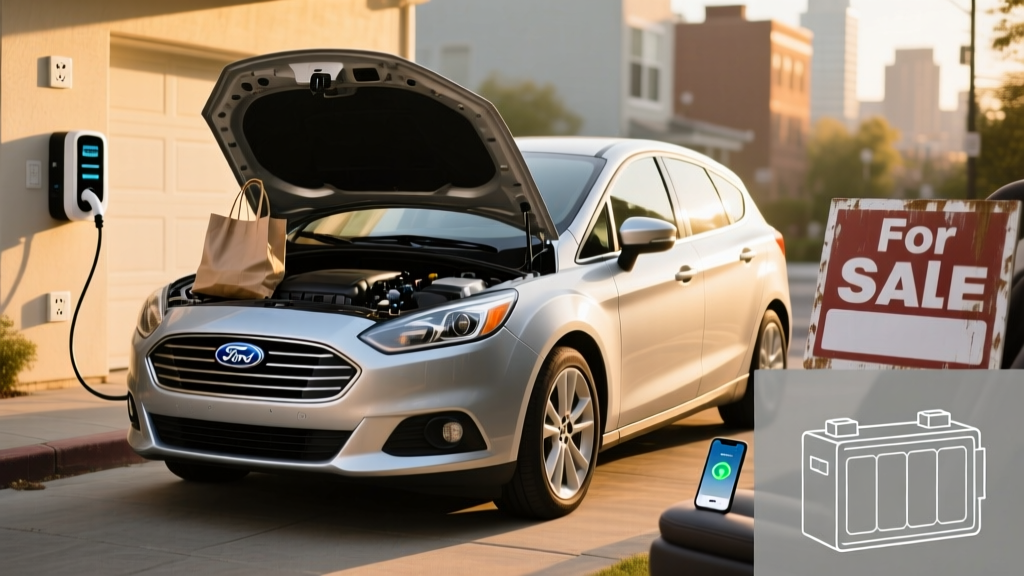
The 2018 Ford C-Max Hybrid was the final model year for Ford's compact hybrid hatchback, ending a six-year production run that positioned it as a practical, fuel-efficient alternative to the Toyota Prius. If you're shopping the used market today, the C-Max Hybrid remains a compelling option: it delivers strong city fuel economy, offers surprising cargo versatility, and avoids the range-planning demands of a full battery-electric vehicle. But with Ford having discontinued the model, prospective buyers need to understand battery longevity, real-world efficiency, and what ownership looks like in 2026.
This guide breaks down everything you need to know about the 2018 Ford C-Max Hybrid — from its EPA fuel economy ratings and powertrain specs to battery replacement costs and how it stacks up against modern hybrids and plug-in hybrids.
2018 Ford C-Max Hybrid: Quick Specs at a Glance
| Specification | 2018 Ford C-Max Hybrid |
|---|---|
| Powertrain Type | Conventional Hybrid (HEV) — no plug-in |
| Engine | 2.0L Atkinson-cycle inline-4 |
| Electric Motor | Permanent-magnet AC synchronous |
| Combined Horsepower | 188 hp |
| Transmission | Electronic CVT (eCVT) |
| Hybrid Battery | 1.4 kWh lithium-ion (usable ~1.0 kWh) |
| EPA MPG (City / Hwy / Combined) | 42 / 38 / 40 |
| Fuel Tank Capacity | 13.5 gallons |
| Total Driving Range | ~540 miles |
| 0–60 mph | ~8.1 seconds |
| Cargo Volume (behind rear seats) | 24.5 cu ft |
| Cargo Volume (seats folded) | 52.6 cu ft |
| Original MSRP (SE trim) | $24,120 |
| Original MSRP (Titanium trim) | $29,170 |
| Battery Warranty (original) | 8 years / 100,000 miles |
Fuel Economy: EPA Ratings vs. Real-World MPG
The 2018 Ford C-Max Hybrid carries EPA ratings of 42 MPG city, 38 MPG highway, and 40 MPG combined, according to fueleconomy.gov. These figures were revised downward from the 2013–2017 model years (which initially claimed 47 MPG combined) after Ford corrected its testing methodology in 2014.
How Many MPG Does the 2018 C-Max Hybrid Actually Get?
Real-world fuel economy varies based on driving style, climate, and route composition. Here's what owners and independent testers typically report:
- City driving: 40–45 MPG. Like most hybrids, the C-Max excels in stop-and-go traffic where regenerative braking recaptures energy and the electric motor handles low-speed propulsion. Many owners report exceeding the EPA city estimate in moderate-temperature urban driving.
- Highway driving: 35–39 MPG. At sustained speeds above 65 mph, the gasoline engine does most of the work. Aerodynamic drag and the relatively modest battery capacity reduce efficiency compared to city use.
- Cold weather penalty: Expect a 5–10% reduction in fuel economy during winter months. The engine runs more frequently to provide cabin heat and maintain battery temperature, reducing electric-only operation.
- Combined real-world average: Most owners report 38–42 MPG in mixed driving, aligning closely with the EPA combined rating.
HEV vs. PHEV: Understanding What the C-Max Hybrid Is (and Isn't)
A common point of confusion stems from the fact that Ford sold two versions of the C-Max: the C-Max Hybrid (HEV) and the C-Max Energi (PHEV). These are fundamentally different powertrains, and it's critical to know which one you're looking at on a used-car lot.
| Feature | C-Max Hybrid (HEV) | C-Max Energi (PHEV) |
|---|---|---|
| Plug-in Charging | No — self-charging via engine & regen | Yes — Level 1 (120V) or Level 2 (240V) |
| Battery Capacity | 1.4 kWh | 7.6 kWh (usable) |
| Electric-Only Range | ~1 mile at low speed | ~19 miles (EPA) |
| EPA Combined MPG/MPGe | 40 MPG | 95 MPGe (electric) / 38 MPG (gas-only) |
| Total Range | ~540 miles | ~520 miles |
| DC Fast Charging | No | No |
| Federal Tax Credit (when new) | None | Up to $4,007 (expired) |
The 2018 Ford C-Max Hybrid discussed in this review is the conventional HEV. It never plugs in. Its small 1.4 kWh battery charges entirely through regenerative braking and the gasoline engine. You simply fill it with gasoline and drive — exactly like a conventional car, but with significantly better fuel economy.
The C-Max Energi (the PHEV variant) was also discontinued after 2017 in most markets and 2018 in limited availability. If you want plug-in electric driving from a Ford of this era, the Energi offered roughly 19 miles of electric-only range — enough for short commutes but modest by today's PHEV standards (the 2026 Toyota RAV4 Prime delivers 42 miles electric).
Powertrain Deep Dive: 188 HP Hybrid System
The 2018 C-Max Hybrid pairs a 2.0-liter Atkinson-cycle four-cylinder engine producing 141 hp and 129 lb-ft of torque with a permanent-magnet electric motor contributing additional output. Combined system horsepower is 188 hp, routed through Ford's electronically controlled continuously variable transmission (eCVT).
The Atkinson cycle sacrifices some low-end torque for greater thermal efficiency — a hallmark of hybrid-optimized engines. The electric motor fills in the torque gap during acceleration, giving the C-Max Hybrid surprisingly responsive off-the-line performance. The 0–60 mph time of approximately 8.1 seconds is respectable for a fuel-economy-focused vehicle and noticeably quicker than the contemporary Prius.
The eCVT isn't a traditional belt-driven CVT. It's a planetary gearset that blends engine and motor power seamlessly — there are no belts to wear out, which contributes to long-term reliability.
Hybrid Battery: Warranty, Lifespan, and Replacement Cost
How Long Does the C-Max Hybrid Battery Last?
The 1.4 kWh lithium-ion battery in the C-Max Hybrid is far smaller than a full EV battery, and it operates within a narrow state-of-charge window (typically 40–60% SoC) managed by the vehicle's battery management system. This shallow cycling is gentler on cells than the deep discharge cycles in a BEV, which is why hybrid batteries routinely last well beyond their warranty periods.
Based on owner reports and fleet data from similar Ford hybrid systems:
- Expected lifespan: 150,000–200,000+ miles before significant degradation
- Degradation pattern: Gradual capacity loss rather than sudden failure. You may notice slightly reduced electric-assist operation and a small MPG decline over time, but the vehicle remains fully drivable.
- Failure rate: Low. Complete hybrid battery failure on the C-Max is uncommon based on owner forums and repair databases.
Battery Replacement Cost
If the hybrid battery does require replacement out of warranty:
- New OEM battery from Ford: $2,500–$3,500 (parts) + $500–$800 labor = $3,000–$4,300 total
- Refurbished/remanufactured battery: $1,500–$2,500 installed
- Individual cell/module replacement: Some independent hybrid specialists can replace only the degraded modules for $800–$1,500, though this requires specialized diagnostics.
For context, the smaller hybrid battery is significantly cheaper to replace than a full EV traction battery (which can run $8,000–$20,000+). This cost advantage is one reason conventional hybrids appeal to budget-conscious buyers who want electrified efficiency without the long-term battery cost exposure of a BEV.
Used Market Pricing and Tax Credit Eligibility
The 2018 Ford C-Max Hybrid originally started at $24,120 for the SE trim and $29,170 for the Titanium trim (including destination). On the used market in 2026, typical asking prices range from $11,000 to $17,000 depending on mileage, condition, and trim level.
Does the 2018 C-Max Hybrid Qualify for Any Tax Credit?
No. The 2018 Ford C-Max Hybrid (HEV) never qualified for the federal §30D new clean vehicle tax credit, as conventional hybrids are not eligible — only plug-in hybrids and battery-electric vehicles with sufficient battery capacity qualify. The C-Max Energi (PHEV) did qualify for up to $4,007 when new, but that credit is no longer available for the original purchaser, and the current IRS §30D rules apply only to new vehicle purchases.
For used buyers, the §25E used clean vehicle credit (up to $4,000 or 30% of sale price, whichever is less) is available only for plug-in hybrids and BEVs purchased through a licensed dealer — conventional HEVs like the C-Max Hybrid do not qualify. Check IRS guidance on the used vehicle credit for full eligibility requirements.
Some states offer their own incentives for hybrid purchases, but these vary widely and change frequently. Check your state's energy or environmental agency website for current programs.
Who Should Buy the 2018 C-Max Hybrid?
Choose the C-Max Hybrid If:
- You want strong city MPG without ever plugging in
- Your commute is stop-and-go urban or suburban driving
- You need hatchback cargo space (52.6 cu ft with seats folded)
- You want a proven, simple hybrid system with low maintenance costs
- Your budget is $12,000–$16,000 for a reliable used hybrid
- You lack access to home or workplace charging (no plug needed)
Look Elsewhere If:
- You want electric-only driving (consider a PHEV like the RAV4 Prime or Prius Prime)
- You want zero tailpipe emissions (consider a BEV like the Bolt EV or Model 3)
- Highway MPG is your priority (the C-Max's 38 EPA highway is average; a diesel or efficient gas sedan may match it)
- You want the latest infotainment and driver-assist tech (2018 SYNC 3 is functional but dated vs. 2026 systems)
- You want an active manufacturer warranty (the C-Max is discontinued)
Hybrid vs. PHEV vs. EV — Which Fits Your Situation?
The 2018 C-Max Hybrid occupies a specific niche. Here's how to decide between powertrain types:
- HEV (like the C-Max Hybrid): Best for buyers who want better fuel economy with zero lifestyle change. No plugs, no range planning, no charging infrastructure dependence. Fill up at any gas station. Ideal if you lack reliable charging access.
- PHEV (like the Prius Prime or RAV4 Prime): Best for buyers with home charging who want 25–45 miles of daily electric driving for commutes, plus a gas engine for road trips. You get EV-like daily costs with gas-car flexibility.
- BEV (like the Model Y or Ioniq 5): Best for buyers with home charging who want the lowest per-mile fuel cost, minimal maintenance, and zero tailpipe emissions. Requires planning for longer trips around DC fast charging.
Reliability, Safety, and Ownership Costs
The 2018 C-Max Hybrid benefits from Ford's extensive experience with its hybrid powertrain, which debuted in the 2005 Escape Hybrid and was refined across multiple models. The eCVT planetary gearset is one of the most durable transmissions in the industry — there are no friction bands, belts, or clutch packs to wear out.
According to NHTSA records, the 2018 C-Max Hybrid has no major safety recalls specific to its hybrid system. Standard safety equipment includes electronic stability control, six airbags, and a rearview camera. However, it lacks modern ADAS features like automatic emergency braking or lane-keeping assist that became common in subsequent model years.
Estimated annual ownership costs for a 2018 C-Max Hybrid in 2026:
- Fuel: At 40 MPG combined and $3.20/gallon, driving 12,000 miles/year costs approximately $960 annually
- Insurance: $1,100–$1,500/year (varies by state and driver profile)
- Maintenance: $400–$600/year (oil changes, brake pads last longer due to regen, tire rotations)
- Total estimated annual cost: ~$2,500–$3,000 (excluding depreciation)
Frequently Asked Questions
How many MPG does the 2018 Ford C-Max Hybrid get?
The EPA rates the 2018 C-Max Hybrid at 42 MPG city, 38 MPG highway, and 40 MPG combined. Real-world driving typically yields 38–42 MPG in mixed use, with city-heavy driving pushing toward or above the 42 MPG city rating.
Does the 2018 C-Max Hybrid need to be plugged in?
No. The C-Max Hybrid is a conventional hybrid (HEV). It charges its own small battery through regenerative braking and the gasoline engine. You never plug it in — you simply refuel with gasoline like any conventional car.
How far can the C-Max Hybrid drive on electric only?
Effectively about 1 mile at very low speeds (under 25 mph) on flat ground with a full battery charge. The C-Max Hybrid's 1.4 kWh battery is too small for meaningful electric-only driving. It uses the electric motor to assist the gas engine and enable brief engine-off coasting, not for sustained electric propulsion. If you want electric-only range, you'd need the C-Max Energi PHEV (19 miles electric) or a modern PHEV/BEV.
Is the 2018 C-Max Hybrid reliable?
Yes, generally. Ford's hybrid powertrain has been in production since 2005 and is well-proven. The eCVT transmission is exceptionally durable. The main long-term concern is the hybrid battery, which typically lasts 150,000+ miles but can cost $3,000–$4,300 to replace if it fails out of warranty. Routine maintenance costs are lower than a conventional gas car because regenerative braking extends brake pad life and the engine runs fewer hours.
What is the hybrid battery replacement cost?
A new OEM replacement battery from Ford costs approximately $3,000–$4,300 installed. Refurbished units run $1,500–$2,500 installed. Independent hybrid shops can sometimes replace individual degraded modules for $800–$1,500. Given the typical 150,000–200,000+ mile battery lifespan, most owners will never need this service.
Does the C-Max Hybrid qualify for a tax credit?
No. As a conventional hybrid (HEV), the C-Max Hybrid does not qualify for the federal §30D new clean vehicle credit or the §25E used clean vehicle credit. Only plug-in hybrids and battery-electric vehicles are eligible for federal EV tax incentives. Some states may offer separate hybrid incentives — check your state's energy office for current programs.
Is the C-Max Hybrid still being made?
No. Ford discontinued the C-Max Hybrid and C-Max Energi after the 2018 model year as part of its shift away from car production in North America. All 2018 models on the used market are 6–8 years old as of 2026. For a new Ford hybrid, consider the Escape Hybrid or Maverick Hybrid.