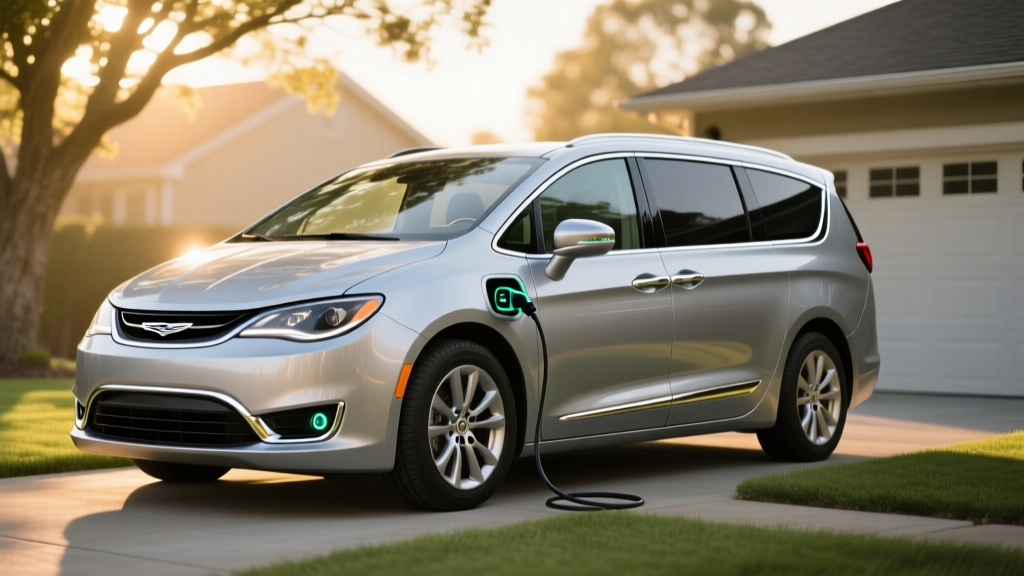
If you are shopping the used family-hauler market, the 2018 Chrysler Pacifica Hybrid minivan occupies a rare niche: it is the only plug-in hybrid (PHEV) minivan from that model year, offering short-distance electric driving without sacrificing the cargo space and sliding-door convenience that define the segment. Nearly a decade after its debut, it remains a compelling option for families who want electric commuting without committing to a full battery-electric vehicle (BEV). But with a used PHEV, the questions shift from brochure specs to battery health, real-world efficiency, and whether the tax-credit math still works in your favor.
This guide breaks down everything a 2026 buyer needs to know about the 2018 Pacifica Hybrid — from its EPA-rated efficiency and electric-only range to battery longevity, replacement costs, and which type of driver benefits most from this powertrain.
HEV vs PHEV: Where the Pacifica Hybrid Fits
Before evaluating the 2018 Pacifica Hybrid, it is essential to distinguish between the two hybrid architectures you will encounter in minivans:
Conventional Hybrid (HEV)
A standard hybrid like the Toyota Sienna Hybrid uses a small battery (typically 1–2 kWh) that recharges through regenerative braking and the gasoline engine. You never plug it in. It delivers strong city MPG but has no meaningful electric-only driving range.
Plug-In Hybrid (PHEV)
The 2018 Chrysler Pacifica Hybrid carries a much larger 16-kWh battery pack that you plug in to recharge (Level 1 or Level 2). It can drive on electricity alone for a rated distance before the gasoline engine engages, functioning as a conventional hybrid afterward.
The Pacifica Hybrid is strictly a PHEV. Chrysler also sold a gas-only Pacifica alongside it, but the Hybrid variant is the one with the plug port on the driver-side front fender. If you see a Pacifica without that charge port, it is the conventional gasoline model — not a hybrid of any kind.
Fuel Economy and Electric Range: EPA Numbers vs Reality
The 2018 Pacifica Hybrid's powertrain pairs a 3.6-liter Atkinson-cycle V6 with a dual-motor electrically variable transmission (eVT) and a 16-kWh lithium-ion battery pack. Here is how the EPA rates it:
| Metric | EPA Rating | Real-World Expectation |
|---|---|---|
| Electric-only range | 32 miles | 24–30 mi (varies with temperature, speed, HVAC load) |
| MPGe (electric + gas combined) | 84 MPGe | 70–84 MPGe if regularly plugged in |
| Gas-only MPG (charge-sustaining) | 32 combined (32 city / 31 hwy) | 27–31 MPG combined in mixed driving |
| Total combined range | 566 miles | 480–540 mi depending on conditions |
One important note on charge-sustaining MPG: once the battery depletes, the Pacifica Hybrid operates as a heavy conventional hybrid. Its 32 MPG EPA rating in this mode is respectable for a 5,000-pound minivan, but do not expect the city-driving advantage that smaller hybrids enjoy. The Atkinson-cycle V6 prioritizes efficiency over power, and the added weight of the battery pack offsets some of the hybrid system's gains on the highway.
Powertrain and Performance Specifications
| Specification | 2018 Pacifica Hybrid |
|---|---|
| Engine | 3.6L Atkinson-cycle V6 |
| Combined system horsepower | 262 hp |
| Transmission | eVT (dual-motor electrically variable) |
| Battery capacity (total / usable) | 16 kWh total / ~13 kWh usable |
| Battery chemistry | NMC (nickel manganese cobalt) |
| 0–60 mph | ~7.4 seconds (electric + gas combined) |
| Drivetrain | Front-wheel drive |
| Curb weight | ~5,050 lbs |
| Cargo volume (behind 3rd row) | 32.3 cu ft (Stow 'n Go not available in 2nd row due to battery) |
The 262 combined horsepower figure is adequate for merging and passing, though the Pacifica Hybrid is not quick off the line in pure electric mode. The eVT transmission provides smooth, gearless acceleration — a characteristic that feels refined around town but can produce a droning sensation under hard acceleration, typical of CVT-style powertrains.
A critical packaging trade-off: the 16-kWh battery pack sits beneath the second-row floor, which means the Pacifica Hybrid loses the Stow 'n Go second-row seats that make the gas Pacifica so versatile. The second-row captain's chairs in the Hybrid are removable but not foldable into the floor. If maximum flat-load cargo flexibility is a dealbreaker, this is a meaningful compromise.
Charging the Pacifica Hybrid: What to Expect
The 2018 Pacifica Hybrid uses a standard J1772 connector for AC charging. It does not support DC fast charging — a limitation common to PHEVs of this era due to their smaller battery packs.
| Charging Level | Power (kW) | 0–Full Time | Notes |
|---|---|---|---|
| Level 1 (120V household) | ~1.4 kW | ~14 hours | Included portable cordset; adequate for overnight if parked 12+ hrs |
| Level 2 (240V) | ~6.6 kW | ~2 hours | Requires home Level 2 station or public Level 2 charger |
| DC Fast Charging | N/A | N/A | Not supported — J1772 AC only |
For most PHEV owners, Level 2 home charging is the practical standard. A 2-hour recharge means you can top off during the workday at a workplace charger or fully replenish overnight with time to spare. The Level 1 cordset that came with the vehicle works in a pinch but is best suited to vehicles parked for extended periods (e.g., overnight at 10+ hours).
According to fueleconomy.gov, the Pacifica Hybrid consumes approximately 37 kWh per 100 miles in electric mode. At the national average residential electricity rate of ~$0.16/kWh (as of early 2026), that works out to roughly $0.06 per mile on electricity — compared to approximately $0.14–$0.17 per mile on gasoline at $3.50/gallon and 32 MPG.
Battery Longevity, Warranty, and Replacement Costs
For a 2018 model purchased in 2026, the original 8-year/100,000-mile federal warranty is approaching or has reached expiration depending on the vehicle's in-service date and mileage. However, if the vehicle was first sold in a CARB state, the extended 10-year/150,000-mile coverage may still apply. Always verify warranty status with a Chrysler dealer using the VIN before purchase.
Degradation reality: NMC battery packs in PHEVs from this era typically experience 10–20% capacity loss over 8–10 years, depending on climate, charging habits, and depth of discharge cycles. A 2018 Pacifica Hybrid with 80,000 miles might realistically deliver 25–28 electric miles instead of the original 32 — still useful for short commutes but noticeably reduced. Chrysler's battery management system (BMS) includes a buffer that reserves some capacity at the top and bottom of the state-of-charge window, which helps slow degradation.
Out-of-warranty replacement cost: If the battery pack requires replacement outside warranty coverage, expect a dealer-installed replacement to cost between $5,500 and $8,000 including parts and labor, based on industry estimates for PHEV packs of this size. Independent EV battery shops may offer refurbished or reconditioned packs at lower cost. This is a critical factor when evaluating high-mileage examples — budget for potential battery replacement as part of your total cost of ownership.
Pricing and Tax Credit Eligibility in 2026
The 2018 Chrysler Pacifica Hybrid was originally offered in three trims — Premium, Platinum, and Limited — with MSRPs ranging from approximately $42,000 to $47,000 before the federal tax credit that was available at the time of original sale.
On the used market in 2026, expect pricing in the following ranges depending on mileage and condition:
- 40,000–60,000 miles: $20,000–$26,000
- 60,000–90,000 miles: $15,000–$21,000
- 90,000+ miles: $11,000–$16,000
Used-EV tax credit (§25E): As of 2026, the IRS offers a Used Clean Vehicle Credit under IRS §25E that provides up to $4,000 or 30% of the sale price (whichever is less) for qualifying used plug-in vehicles purchased from a licensed dealer. Key eligibility requirements include:
- Sale price must be $25,000 or less
- Buyer adjusted gross income: ≤$75,000 (single), ≤$112,500 (head of household), ≤$150,000 (joint)
- Vehicle must be at least 2 model years old (2018 qualifies in 2026)
- Must purchase from a licensed dealer (private-party sales do not qualify)
- Buyer must not have claimed the used-EV credit in the prior 3 years
- Vehicle must have a battery capacity of at least 7 kWh (Pacifica Hybrid's 16 kWh qualifies)
If you find a qualifying 2018 Pacifica Hybrid at a dealer for $22,000 and your income falls within limits, the $4,000 credit could bring your effective cost to $18,000 — a significant value proposition for a PHEV minivan. Consult a tax professional to confirm your eligibility, as rules are subject to change and individual circumstances vary.
Note: The original §30D new vehicle credit that applied at the time of the Pacifica Hybrid's original sale is no longer relevant for used purchases. The §25E used credit is the applicable incentive for 2026 buyers.
Reliability, Safety, and Known Issues
The 2018 Pacifica Hybrid's reliability record has been mixed, which is consistent with Chrysler's brand-wide standing. Key considerations for prospective buyers:
- Recalls: Check the NHTSA recall database using the VIN. The Pacifica Hybrid has had recalls related to the high-voltage battery shutdown procedure and certain electrical system components. Ensure all open recalls have been addressed.
- Common complaints: Owner forums and NHTSA complaint data highlight intermittent issues with the power sliding doors, infotainment system (Uconnect 4) glitches, and occasional transmission shudder during the electric-to-gas transition. None of these are unique to the Hybrid, but the added complexity of the PHEV system introduces additional potential failure points.
- Safety ratings: The 2018 Pacifica earned a Top Safety Pick designation from the IIHS when equipped with optional front crash prevention and specific headlights. The NHTSA awarded it 5 stars overall.
The hybrid powertrain itself — the eVT, electric motors, and power electronics — has proven relatively robust. Most reported issues cluster around the ancillary systems (12V battery, infotainment, power accessories) rather than the high-voltage drivetrain. A pre-purchase inspection by a technician familiar with Chrysler PHEVs is strongly recommended, with particular attention to battery state-of-health diagnostics.
Who Should Choose the 2018 Pacifica Hybrid?
Choose the 2018 Pacifica Hybrid if:
- You have a commute under 30 miles round-trip and can charge at home nightly
- You need minivan cargo space and passenger capacity but want to reduce weekday fuel consumption
- You take occasional long road trips where a full EV's charging logistics would be inconvenient
- You qualify for the §25E used-EV credit, bringing effective cost well below comparable gas minivans
Choose a full EV (e.g., used Tesla Model X or upcoming electric minivans) if:
- You want zero gasoline dependency and have reliable home + destination charging
- Your daily driving exceeds 40+ miles and you want to maximize electric operation
- You prefer minimal powertrain maintenance (no oil changes, no spark plugs)
Choose a conventional hybrid minivan (e.g., Toyota Sienna Hybrid) if:
- You cannot charge at home and do not want to rely on public charging infrastructure
- You want simpler ownership with no plug-in routine or battery degradation concern beyond standard hybrid warranties
- You prioritize Stow 'n Go-style flat-floor cargo flexibility (Sienna does not offer this either, but the trade-off calculus differs)
Pros
- 32 EPA electric miles cover most short commutes gas-free
- Minivan practicality with sliding doors and 3-row seating
- Smooth electric-only driving around town
- Eligible for up to $4,000 used-EV tax credit (§25E)
- Strong combined range (566 mi EPA) eliminates range anxiety
Cons
- No Stow 'n Go second-row seats (battery occupies under-floor space)
- No DC fast charging capability
- Above-average maintenance complexity vs. conventional minivans
- Electric range drops significantly in cold weather
- Out-of-warranty battery replacement is a $5,500–$8,000 risk
Frequently Asked Questions
How many MPG does the 2018 Chrysler Pacifica Hybrid get?
The EPA rates it at 84 MPGe when combining electric and gasoline operation. Once the battery is depleted, it achieves 32 MPG combined (32 city / 31 highway) as a charge-sustaining hybrid. Real-world gas-only MPG typically falls between 27–31 depending on driving style, terrain, and climate.
How far can the 2018 Pacifica Hybrid go on electric only?
The EPA rates it at 32 miles of electric-only range. In real-world conditions, expect 24–30 miles in moderate weather, dropping to 20–25 miles in freezing temperatures or at sustained highway speeds. This is sufficient for many daily commutes and school runs without engaging the gasoline engine.
Does the 2018 Pacifica Hybrid qualify for any tax credit in 2026?
It does not qualify for the new-vehicle §30D credit. However, it may qualify for the IRS §25E Used Clean Vehicle Credit — up to $4,000 or 30% of the sale price (whichever is less) — if purchased from a licensed dealer for $25,000 or less and the buyer meets income requirements. Verify current rules with a tax professional.
Is the 2018 Pacifica Hybrid reliable, and what does battery replacement cost?
The hybrid powertrain itself has been generally reliable, but the Pacifica as a platform carries average-to-below-average reliability ratings for non-drivetrain systems. The 16-kWh battery is warranted for 8 years/100,000 miles (10/150,000 in CARB states). Out-of-warranty replacement runs $5,500–$8,000 at a dealer. Budget accordingly for examples nearing or past warranty expiration.
Can the 2018 Pacifica Hybrid DC fast charge?
No. The 2018 Pacifica Hybrid supports only AC charging via a J1772 connector — Level 1 (120V, ~14 hours to full) or Level 2 (240V, ~2 hours to full). DC fast charging is not available on this model, which is typical for PHEVs with smaller battery packs.
Does the Pacifica Hybrid have Stow 'n Go seating?
No. The second-row seats do not fold into the floor because the 16-kWh battery pack occupies that space. The second-row captain's chairs can be removed entirely, but they cannot be stowed like those in the gas-only Pacifica. Third-row seats still fold flat electronically.