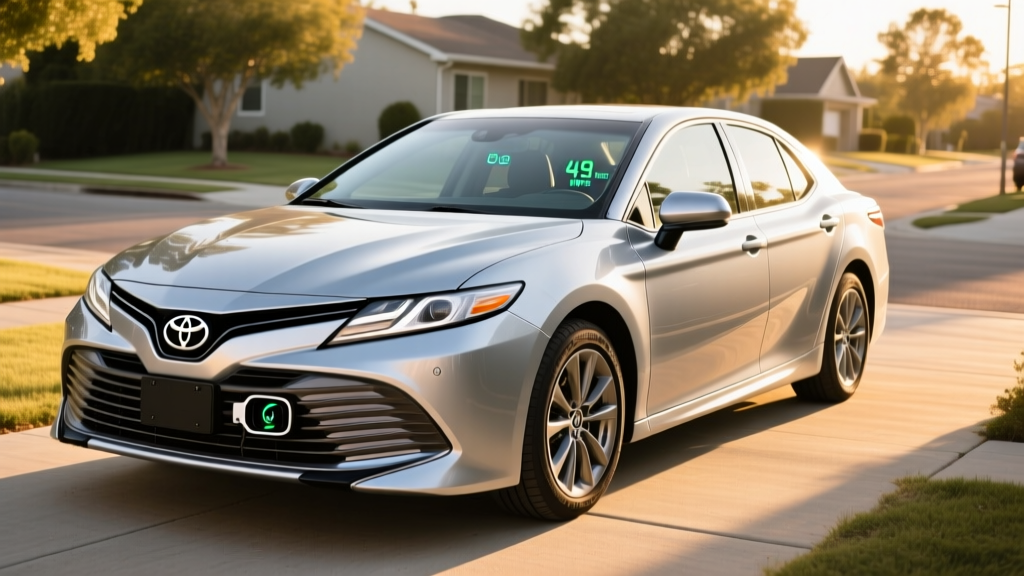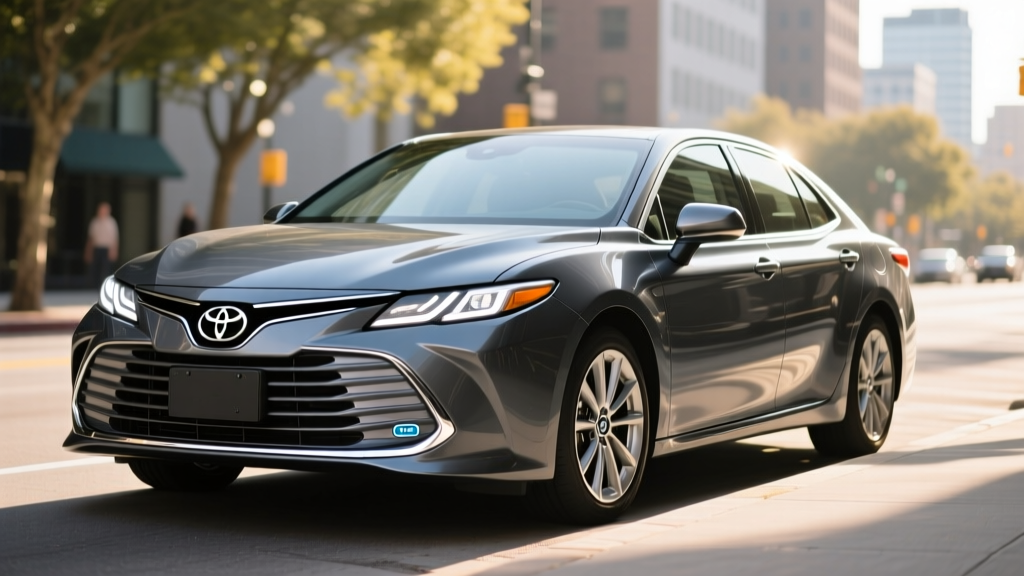
The 2018 Toyota Avalon Hybrid occupies a specific niche in the used-car market: a full-size sedan that sips fuel like a compact while delivering the quiet, highway-biased comfort Toyota's flagship sedan is known for. As the final model year of the fourth-generation Avalon (before the 2019 redesign moved to the TNGA platform), the 2018 model benefits from years of powertrain refinement. For buyers considering a used hybrid in 2026, it remains one of the most dependable options in the large-sedan segment — provided you understand what you're getting.
This guide breaks down the 2018 Avalon Hybrid's real-world fuel economy, battery longevity, ownership costs, and how it stacks up against modern PHEVs and full EVs for today's buyers.
2018 Avalon Hybrid Powertrain and Performance Specs
| Specification | Value |
|---|---|
| Powertrain Type | Conventional Hybrid (HEV) — no plug-in |
| Engine | 2.5L inline-4 Atkinson cycle |
| Electric Motor | Permanent magnet synchronous, integrated into transaxle |
| Combined System Output | 200 hp (net) |
| Transmission | eCVT (planetary gearset, not belt-driven CVT) |
| Hybrid Battery | 1.6 kWh (gross), Nickel-Metal Hydride (NiMH) |
| Drivetrain | Front-wheel drive |
| 0–60 mph | ~8.0 seconds |
| EPA Fuel Economy | 40 city / 39 highway / 40 combined MPG |
| Fuel Tank | 17.0 gallons |
| Total Driving Range | ~680 miles (EPA combined) |
| Original MSRP (2018) | $37,835 (Hybrid XLE Premium) – $43,685 (Hybrid Limited) |
The 2018 Avalon Hybrid pairs Toyota's well-proven 2.5-liter Atkinson-cycle four-cylinder with a compact electric motor and a 1.6 kWh NiMH battery pack located behind the rear seat. Unlike belt-driven CVTs found in some competitors, Toyota's eCVT uses a planetary gearset to seamlessly blend engine and motor power — a design that has demonstrated exceptional durability over millions of vehicles in the Toyota Hybrid System lineage.
Combined output is 200 horsepower, which moves the 3,600-pound sedan adequately but not briskly. This is a comfort-first sedan, not a performance car. The electric motor fills in low-end torque effectively, making city driving feel responsive even though the 0–60 time sits around 8 seconds.
Fuel Economy: EPA Ratings vs. Real-World MPG
| Driving Condition | EPA MPG | Real-World Expectation |
|---|---|---|
| City | 40 MPG | 38–43 MPG (hybrids often exceed EPA in stop-and-go) |
| Highway | 39 MPG | 35–39 MPG (sustained 75+ mph reduces hybrid advantage) |
| Combined | 40 MPG | 37–41 MPG |
According to fueleconomy.gov, the 2018 Avalon Hybrid earns an EPA-estimated 40 MPG combined — a remarkable figure for a sedan of its size. For context, the non-hybrid 2018 Avalon with the 3.5L V6 manages just 24 MPG combined.
The hybrid advantage is most pronounced in city driving, where regenerative braking recaptures kinetic energy and the electric motor handles low-speed propulsion. Owners who do significant stop-and-go commuting frequently report exceeding the 40 MPG city rating, with some seeing 42–43 MPG on urban routes. Highway efficiency is more closely aligned with the EPA sticker, though sustained speeds above 75 mph will push consumption higher — expect 35–37 MPG on long interstate trips at 80 mph.
Cold weather reduces fuel economy modestly in hybrids (typically 5–10% in sub-freezing temperatures) because the engine must run more frequently to provide cabin heat and maintain battery temperature. This is far less dramatic than the 20–30% range loss a full EV experiences in winter, but it's worth noting for buyers in northern climates.
HEV vs. PHEV vs. Full EV: Which Fits Your Driving Pattern?
The 2018 Avalon Hybrid is a conventional hybrid (HEV). It has no plug, no electric-only driving mode of meaningful distance, and no external charging requirement. The small 1.6 kWh NiMH battery charges exclusively through regenerative braking and the gasoline engine. You fuel it at a gas station exactly like any other car — the hybrid system simply makes that fuel go much further.
HEV vs. PHEV vs. BEV — Quick Comparison
| Factor | HEV (Avalon Hybrid) | PHEV (e.g., Prius Prime) | BEV (e.g., Tesla Model 3) |
|---|---|---|---|
| Plug-in Required? | No | Yes (for EV range) | Yes |
| Electric-Only Range | ~1 mile (low-speed creep) | 25–44 miles typical | 250–350+ miles |
| Home Charging Needed? | No | Recommended (Level 2) | Essential |
| Fuel Cost per Mile | ~$0.08–0.10 | ~$0.04 (electric) / $0.09 (gas) | ~$0.04–0.06 |
| Maintenance Complexity | Low (proven system) | Moderate (two full powertrains) | Low (fewer moving parts) |
| Cold-Weather Penalty | 5–10% MPG loss | 20–30% EV range loss | 20–30% range loss |
| Upfront Cost (used, 2026) | $16,000–$24,000 | $22,000–$32,000 | $20,000–$35,000 |
Choose the 2018 Avalon Hybrid (HEV) if: You lack reliable home charging access (apartment, street parking, no garage outlet), you want a large comfortable sedan with minimal behavior change from a gas car, or you want the lowest-risk entry into electrified driving with no charging infrastructure dependency.
Consider a PHEV instead if: You have home Level 2 charging and a commute under 40 miles round-trip — you could drive months without visiting a gas station, while retaining a gas engine for road trips.
Consider a full EV instead if: You have reliable home charging, your daily driving is under 250 miles, and you want the lowest per-mile energy cost and zero tailpipe emissions.
Hybrid Battery Longevity, Warranty, and Replacement Cost
2018 Avalon Hybrid Battery Warranty & Lifespan
Original Warranty: 8 years / 100,000 miles (10 years / 150,000 miles in California and states adopting CARB emissions standards)
Battery Chemistry: Nickel-Metal Hydride (NiMH) — proven, durable, less energy-dense than lithium-ion but highly tolerant of daily shallow cycling
Expected Lifespan: 150,000–200,000+ miles with normal use; many Toyota hybrid batteries exceed 200,000 miles before significant degradation
Replacement Cost (2026): $2,000–$3,500 for a new OEM battery pack installed at a Toyota dealer; $1,200–$2,000 for a refurbished/reconditioned pack from independent hybrid specialists
Battery longevity is the single most common concern among used hybrid buyers, and the 2018 Avalon Hybrid is one of the most reassuring vehicles on this front. Toyota's NiMH hybrid battery packs have an extensive real-world track record spanning two decades (since the 2001 Prius). The chemistry is inherently stable — NiMH cells tolerate the shallow charge-discharge cycles that hybrids impose far better than deep-cycle applications.
For a 2018 model in 2026, the vehicle is approximately 8 years old. If the car has under 100,000 miles and was originally sold outside CARB states, the original hybrid battery warranty may have just expired. In CARB states (California, New York, Massachusetts, and others adopting California emissions standards), the 10-year/150,000-mile warranty may still provide coverage. Always verify warranty status with a Toyota dealer using the VIN before purchasing.
If battery replacement is needed, the cost is manageable compared to full EV battery packs (which can run $8,000–$20,000+). A new OEM NiMH pack for the 2018 Avalon Hybrid runs $2,000–$3,500 installed. Reconditioned packs from hybrid specialists are available for $1,200–$2,000, and individual module replacement (only swapping degraded cells) can sometimes be done for under $500 by experienced technicians.
According to NHTSA records, the 2018 Avalon has very few complaints related to hybrid battery failure, which aligns with Toyota's reputation for hybrid system reliability.
Reliability, Safety Ratings, and Known Issues
The 2018 Avalon Hybrid benefits from being the last model year of a generation that debuted in 2013. By year six of a platform, most engineering issues have been resolved. The hybrid powertrain components (inverter, eCVT, battery management system) share architecture with the Camry Hybrid and Highlander Hybrid, meaning parts availability and technician familiarity are excellent.
The IIHS rated the 2018 Avalon as a Top Safety Pick when equipped with optional LED headlights. Standard Toyota Safety Sense P (TSS-P) includes pre-collision braking with pedestrian detection, lane departure alert with steering assist, automatic high beams, and full-speed-range adaptive cruise control. This is a significant advantage over many used vehicles in this price range that lack modern ADAS features.
Known issues to check before buying:
- Brake actuator recall: Some 2018 Avalon Hybrids were included in a recall for the brake booster assembly. Verify recall completion via the NHTSA VIN lookup tool.
- Dashboard cracking: Some fourth-generation Avalons (2013–2018) have reported dashboard surface cracking in hot climates. Cosmetic but affects resale value.
- 12V auxiliary battery: Like all hybrids, the Avalon has a conventional 12V battery that powers electronics. If the car sat unused for extended periods, this battery may need replacement ($150–$250). This is separate from the hybrid traction battery.
- Infotainment aging: The 2018 model uses Toyota's Entune system with a 7-inch touchscreen. It lacks Apple CarPlay and Android Auto (those arrived with the 2019 redesign), which is a notable tech gap for 2026 buyers.
Used Pricing and Tax Credit Eligibility in 2026
| Trim Level | Original MSRP | Est. Used Price (60k–90k mi) | Est. Used Price (90k–120k mi) |
|---|---|---|---|
| Hybrid XLE Premium | $37,835 | $19,000–$22,000 | $16,000–$18,500 |
| Hybrid XLE Touring | $39,885 | $20,500–$23,500 | $17,000–$20,000 |
| Hybrid Limited | $43,685 | $22,000–$26,000 | $18,500–$22,000 |
Used 2018 Avalon Hybrids in 2026 typically trade between $16,000 and $26,000 depending on trim, mileage, condition, and regional demand. Hybrids command a modest premium over V6 gas models in the used market due to the fuel-economy advantage and Toyota's hybrid reputation.
Federal Tax Credit for Used Hybrids (IRS §25E)
The Used Clean Vehicle Credit (IRS §25E) offers up to $4,000 (30% of sale price, capped at $4,000) for qualified used plug-in electric vehicles. However, conventional hybrids like the 2018 Avalon Hybrid do NOT qualify. The §25E credit applies only to battery electric vehicles (BEVs) and plug-in hybrids (PHEVs) with at least 7 kWh of battery capacity.
The original new-vehicle credit (IRS §30D) also never applied to the Avalon Hybrid, as it is not a plug-in vehicle. There is no federal tax incentive for purchasing a used conventional hybrid.
Some states and municipalities offer registration fee reductions or HOV lane access for hybrids, but these vary by jurisdiction. Check your state's DMV or energy office for current programs.
Ownership Costs: Fuel, Maintenance, and Insurance
At 40 MPG combined and with regular unleaded fuel (no premium required), the 2018 Avalon Hybrid is inexpensive to fuel relative to its size. Assuming 15,000 miles per year and $3.30/gallon (2026 national average), annual fuel cost runs approximately $1,238 — compared to roughly $2,063 for the V6 gas Avalon at 24 MPG combined.
Maintenance costs are modest. Toyota's hybrid system eliminates the conventional starter motor and alternator (the hybrid motor/generator handles both functions), and regenerative braking significantly extends brake pad life — many owners report original brake pads lasting 80,000+ miles. The eCVT has no belts or clutches to replace. Routine maintenance is limited to oil changes (every 10,000 miles with synthetic), cabin air filters, and tire rotations.
Insurance premiums for the 2018 Avalon Hybrid are typically in line with other full-size sedans. Because the vehicle is 8 years old and has modest repair costs, comprehensive/collision premiums are reasonable. Average annual insurance cost: $1,300–$1,700 depending on driver profile and state.
Pros, Cons, and the Verdict for 2026 Buyers
Pros
- 40 MPG combined in a spacious full-size sedan
- Proven Toyota hybrid system with exceptional reliability record
- Low battery replacement cost ($2,000–$3,500) vs. EV packs
- No plug-in charging required — zero infrastructure dependency
- Standard Toyota Safety Sense P (adaptive cruise, pre-collision braking)
- Comfortable, quiet highway cruiser with 680-mile total range
- Regenerative braking extends brake pad life significantly
Cons
- No Apple CarPlay or Android Auto (pre-2019 Entune system)
- 200 hp feels adequate but not quick for a 3,600-lb sedan
- No electric-only driving mode of meaningful distance
- No federal tax credit eligibility (not a plug-in vehicle)
- Trunk space slightly reduced by battery pack placement behind rear seat
- Hybrid battery warranty may have expired (8 years from 2018 = 2026)
- Dated interior design compared to 2019+ redesign
The bottom line: The 2018 Toyota Avalon Hybrid is an excellent used-car pick for buyers who want a comfortable, fuel-efficient full-size sedan with no charging hassle and minimal ownership risk. It won't qualify for any federal tax credits, and its infotainment system shows its age, but the powertrain is one of the most reliable electrified systems ever built. If your priority is proven efficiency, low running costs, and Toyota durability — and you don't need plug-in electric range — the 2018 Avalon Hybrid delivers exactly what it promises.
Frequently Asked Questions
How many MPG does the 2018 Avalon Hybrid get?
The EPA rates the 2018 Avalon Hybrid at 40 MPG city, 39 MPG highway, and 40 MPG combined. In real-world driving, owners typically see 37–43 MPG depending on driving conditions. City driving with frequent stops often yields the best results thanks to regenerative braking.
Does the 2018 Avalon Hybrid need to be plugged in?
No. The 2018 Avalon Hybrid is a conventional hybrid (HEV), not a plug-in hybrid (PHEV). The battery charges through regenerative braking and the gasoline engine. You simply fill it with gas like any other car.
How much does it cost to replace the hybrid battery?
A new OEM hybrid battery for the 2018 Avalon Hybrid costs $2,000–$3,500 installed at a Toyota dealer. Reconditioned packs are available for $1,200–$2,000 from independent hybrid specialists. Many Toyota hybrid batteries last 200,000+ miles before needing replacement.
Does the 2018 Avalon Hybrid qualify for any tax credit?
No. Federal clean vehicle tax credits (IRS §30D for new vehicles and §25E for used vehicles) apply only to plug-in electric vehicles — battery electrics (BEVs) and plug-in hybrids (PHEVs). The Avalon Hybrid is a conventional hybrid and does not qualify for any federal purchase incentive.
Is the 2018 Avalon Hybrid reliable?
Yes. The 2018 model year is the sixth and final year of the fourth-generation Avalon platform, meaning most issues were resolved in earlier years. Toyota's hybrid powertrain has an exceptional reliability record across millions of vehicles. The eCVT design is mechanically simple and durable, and NHTSA complaint data shows very few hybrid-system-related issues.
How does the 2018 Avalon Hybrid compare to a modern PHEV or EV?
The Avalon Hybrid trades electric-only range and per-mile energy cost for simplicity. A modern PHEV like the 2026 Prius Prime offers ~44 miles of electric-only driving but requires home charging to realize that benefit. A full EV like the Tesla Model 3 offers lower per-mile costs but requires charging infrastructure and carries a higher used price. The Avalon Hybrid is the right choice for buyers who want fuel efficiency without changing their refueling behavior.