Quick Verdict: A Tech-Forward Luxury Sedan With Hybrid Efficiency
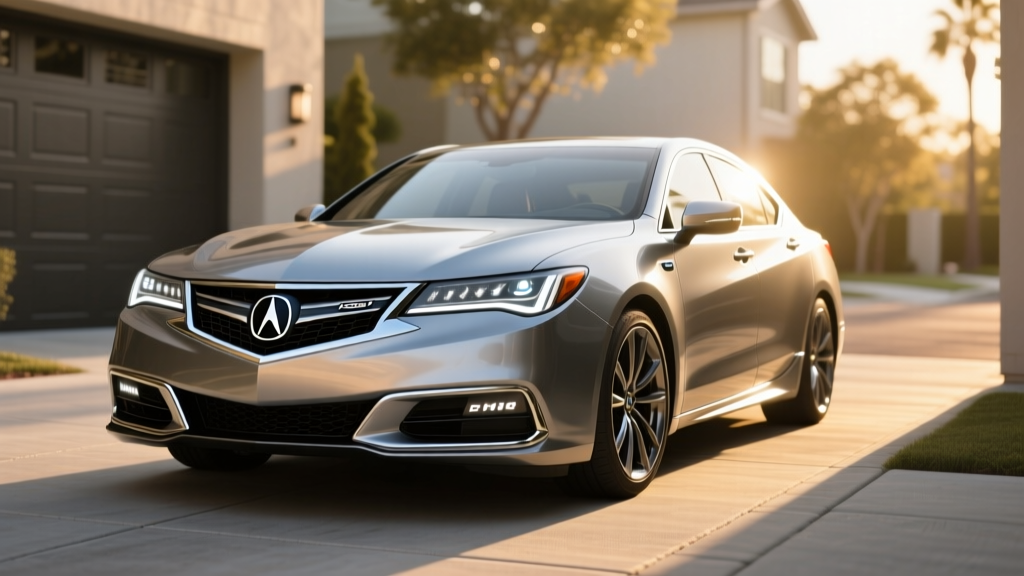
The 2018 Acura RLX Sport Hybrid pairs a 3.5-liter V6 with a three-motor all-wheel-drive system to deliver 377 combined horsepower and an EPA-estimated 28 MPG combined. It's a conventional hybrid (HEV), meaning it never needs to be plugged in — the battery recharges through regenerative braking and engine power. For used-car shoppers in 2026, the RLX Sport Hybrid represents a compelling blend of Honda engineering reliability, genuine fuel savings, and flagship luxury at a fraction of its original $60,000+ MSRP.
But is a seven-year-old hybrid sedan still a smart buy? This guide covers the exact fuel economy figures, powertrain architecture, battery longevity expectations, and what you should inspect before purchasing one on the used market today.
| Specification | 2018 Acura RLX Sport Hybrid |
|---|---|
| Powertrain | 3.5L V6 + 3 electric motors (SH-AWD) |
| Combined Horsepower | 377 hp |
| EPA City MPG | 28 mpg |
| EPA Highway MPG | 29 mpg |
| EPA Combined MPG | 28 mpg |
| Battery Type | Lithium-ion (1.3 kWh approx.) |
| 0-60 mph | ~5.4 seconds |
| Drivetrain | SH-AWD (torque-vectoring rear motors) |
| Original MSRP | $61,900 (Sport Hybrid Tech Pkg) |
| Hybrid Battery Warranty | 8 years / 100,000 miles (10/150k in CARB states) |
HEV vs PHEV: Understanding What the RLX Sport Hybrid Is (and Isn't)
Before going further, it's essential to clarify the RLX Sport Hybrid's place in the electrified vehicle landscape. This is a conventional hybrid (HEV), not a plug-in hybrid (PHEV) or a battery electric vehicle (BEV).
| Feature | HEV (RLX Sport Hybrid) | PHEV (e.g., Chrysler Pacifica Hybrid) | BEV (e.g., Tesla Model S) |
|---|---|---|---|
| Plug-in charging | No | Yes | Yes |
| Electric-only range | None (motor assists engine) | 30-40 miles typical | 250-400 miles |
| Battery size | ~1-2 kWh | 12-18 kWh | 60-100 kWh |
| Gas engine | Primary power source | Backup after EV range | None |
| Fuel economy | 28 MPG combined | 30-32 MPG + MPGe | N/A (electricity) |
| Tax credit (§30D) | Not eligible | Eligible (if new, meets rules) | Eligible (if new, meets rules) |
The RLX Sport Hybrid's lithium-ion battery pack is small — approximately 1.3 kWh — and exists solely to capture energy from braking and supplement the V6 during acceleration. You cannot plug it in, and it has no electric-only driving mode. If you want a plug-in experience, you'd need to look at vehicles like the BMW 530e or the Toyota Prius Prime.
Fuel Economy: EPA Numbers and Real-World MPG
The EPA rates the 2018 Acura RLX Sport Hybrid at 28 mpg city / 29 mpg highway / 28 mpg combined. For context, the non-hybrid RLX with its V6 and front-wheel drive earns 20/29/23 mpg — the Sport Hybrid's all-wheel-drive system and electric motor assist deliver a meaningful 5 mpg combined improvement while adding 82 horsepower and AWD capability.
| Trim | City | Highway | Combined |
|---|---|---|---|
| RLX Sport Hybrid SH-AWD | 28 mpg | 29 mpg | 28 mpg |
| RLX V6 FWD (non-hybrid) | 20 mpg | 29 mpg | 23 mpg |
| BMW 540i xDrive (2018) | 20 mpg | 28 mpg | 23 mpg |
| Mercedes E450 4MATIC (2018) | 20 mpg | 28 mpg | 23 mpg |
Real-World MPG Expectations
Hybrid sedans often exceed their EPA city ratings in stop-and-go traffic because regenerative braking recaptures energy that conventional cars waste as heat. Owners on fuel-tracking platforms like Fuelly report real-world averages between 26-30 mpg combined, with some drivers seeing 31-32 mpg in predominantly urban driving.
Highway driving at sustained 75-80 mph speeds will typically yield 27-29 mpg — close to or slightly below the EPA highway estimate. Cold weather reduces efficiency by roughly 5-8% due to increased engine load for cabin heating and reduced battery efficiency, so expect 25-27 mpg combined in freezing conditions.
The Sport Hybrid Powertrain: How SH-AWD Works
The RLX Sport Hybrid's powertrain is one of the most sophisticated systems Honda/Acura has ever produced. Here's the architecture:
- Front axle: A 3.5-liter SOHC V6 producing 310 hp, paired with a 47-hp electric motor integrated into the 7-speed dual-clutch transmission
- Rear axle: Two independent 36-hp electric motors — one per rear wheel — providing torque-vectoring all-wheel drive
- Combined output: 377 hp (system net, not peak-sum)
- Battery: ~1.3 kWh lithium-ion pack mounted behind the rear seat
Honda calls this system Sport Hybrid SH-AWD (Super Handling All-Wheel Drive). Unlike conventional AWD systems that use a driveshaft and mechanical rear differential, the RLX Sport Hybrid sends power to the rear wheels entirely through electric motors. This means the system can instantly vary torque between the left and right rear wheels — pushing more power to the outside rear wheel during cornering to rotate the car. It's genuinely effective: the RLX Sport Hybrid handles its 4,300-pound curb weight with composure that belies its size.
The 0-60 mph time of approximately 5.4 seconds puts it in the same territory as a BMW 540i xDrive, while delivering significantly better fuel economy.
Hybrid Battery Longevity, Warranty, and Replacement Cost
Battery degradation is the number-one concern for used hybrid buyers, and it deserves direct, data-backed answers.
Original Warranty Coverage
Acura warranted the RLX Sport Hybrid's lithium-ion battery pack for 8 years / 100,000 miles in standard states, and 10 years / 150,000 miles in CARB (California Air Resources Board) states — which include California, New York, Massachusetts, Connecticut, and several others.
For a 2018 model in 2026: The standard 8-year/100k warranty has expired for most vehicles. However, if you're in a CARB state, coverage extends through 2028 or 150,000 miles — meaning many examples may still have active battery warranty.
Real-World Battery Lifespan
Honda's hybrid systems have an excellent longevity track record. The IMA (Integrated Motor Assist) and later Sport Hybrid systems routinely exceed 150,000-200,000 miles before significant capacity loss. The RLX's lithium-ion pack is more robust than the older nickel-metal hydride batteries in early Honda/Acura hybrids.
Key factors that affect battery life in a used RLX Sport Hybrid:
- Mileage and age: At 7-8 years old, expect some capacity reduction (typically 10-15%), but the system is designed to operate effectively even with moderate degradation
- Climate: Extreme heat is harder on lithium-ion cells than cold. Vehicles from Arizona or Texas may show more degradation than those from cooler climates
- Driving patterns: Frequent short trips with constant charge/discharge cycles are actually fine — Honda's battery management system keeps the pack within a safe state-of-charge window (roughly 40-80%) to prevent stress
Battery Replacement Cost
If the hybrid battery does fail outside warranty, expect to pay $2,000-$4,000 for a replacement. A new OEM battery from Acura typically runs $3,000-$3,500 including labor at a dealership. Independent hybrid specialists can often source refurbished or reconditioned packs for $2,000-$2,500 installed. This is considerably less expensive than EV battery replacements and is a straightforward job for a qualified technician.
Pricing in 2026: What a Used RLX Sport Hybrid Costs
The 2018 RLX Sport Hybrid originally started at $61,900 for the Technology Package trim and $65,900 for the Advance Package (which added ventilated seats, surround-view camera, and premium audio).
On the used market in 2026, expect to find examples in the following ranges:
- High mileage (100k+ miles): $18,000-$22,000
- Average mileage (50k-80k miles): $23,000-$30,000
- Low mileage (under 50k miles): $30,000-$36,000
For comparison, a 2018 BMW 540i xDrive with similar mileage typically commands $28,000-$38,000, and the Acura's lower maintenance costs and better fuel economy make it a strong value proposition.
Tax Credit Eligibility
The 2018 Acura RLX Sport Hybrid does not qualify for the federal §30D Clean Vehicle Credit. This is for two reasons: first, the §30D credit applies only to plug-in electric vehicles (PHEVs and BEVs), not conventional hybrids. Second, the credit is available only for new vehicle purchases, not used vehicles.
The used EV credit (§25E) also does not apply — it covers only used BEVs and PHEVs priced under $25,000, not conventional hybrids. Your fuel savings are the financial benefit here: at 28 mpg combined vs. 23 mpg for the non-hybrid RLX, you'll save roughly $500-$700 per year in fuel costs at 15,000 miles driven annually and $3.50/gallon.
Who Should Buy the 2018 RLX Sport Hybrid?
Pros
- 377 hp with 28 MPG — rare combination of power and efficiency
- SH-AWD torque vectoring provides genuine handling advantages
- Honda/Acura reliability reputation; proven hybrid system
- Significant depreciation already absorbed — strong value
- No plug-in charging required; works with existing infrastructure
- CARB-state battery warranty may still be active
Cons
- Discontinued model — Acura ended RLX production after 2020
- Rear seat space tighter than German competitors
- Infotainment system feels dated by 2026 standards
- Trunk space reduced by battery pack placement
- No electric-only driving capability
- Limited dealer network for a discontinued flagship
Choose the RLX Sport Hybrid If:
- You want a luxury AWD sedan with genuine fuel savings but don't have access to plug-in charging
- You prioritize reliability and lower maintenance costs over badge prestige
- You drive 12,000-18,000 miles per year and want to reduce fuel spending without range anxiety
- You appreciate sophisticated engineering — the SH-AWD system is genuinely impressive
Look Elsewhere If:
- You have home charging and want 25-40 miles of electric-only commuting (consider a used BMW 530e or Volvo S90 T8 PHEV)
- You want the latest ADAS technology and infotainment (the RLX's AcuraWatch suite is competent but dated)
- You need maximum rear-seat legroom for family use
- You want a vehicle still in production for easier parts sourcing long-term
Pre-Purchase Inspection Checklist for Used Buyers
Before purchasing any 2018 RLX Sport Hybrid, verify these critical items:
- Hybrid system diagnostic: Have an Acura dealer or qualified hybrid specialist run a full battery state-of-health (SoH) report. This shows remaining capacity percentage — anything above 85% is excellent for a 7-8 year old pack
- SH-AWD motor function: During a test drive, accelerate through a sweeping turn and feel for the torque-vectoring effect. The car should rotate smoothly without hesitation or unusual noises from the rear axle
- 7-speed DCT behavior: The dual-clutch transmission should shift crisply at low speeds. Some early RLX examples had software-related jerkiness — verify the transmission software has been updated to the latest revision
- Service records: Honda's hybrid systems require minimal special maintenance, but verify regular oil changes, brake fluid flushes, and transmission fluid service per the maintenance schedule
- CARB state warranty: If the vehicle was originally sold and registered in a CARB state, confirm whether the 10-year/150,000-mile battery warranty is still active by checking with an Acura dealer using the VIN
Frequently Asked Questions
How many MPG does the 2018 Acura RLX Sport Hybrid get?
The EPA rates it at 28 mpg city, 29 mpg highway, and 28 mpg combined. Real-world owners report 26-30 mpg combined depending on driving conditions, with city-heavy driving often exceeding the EPA estimate thanks to regenerative braking.
Does the RLX Sport Hybrid need to be plugged in?
No. This is a conventional hybrid (HEV), not a plug-in hybrid. The battery charges itself through regenerative braking and the gasoline engine. You fuel it exclusively at gas stations — no charging cable or outlet is needed.
How far can the RLX Sport Hybrid drive on electric power alone?
It cannot drive on electric power alone. The electric motors supplement the V6 engine during acceleration and low-speed maneuvering, but the gasoline engine is always the primary power source. This is by design — the small 1.3 kWh battery isn't meant for standalone propulsion.
Is the 2018 RLX Sport Hybrid reliable?
Yes. Honda/Acura's hybrid systems are among the most proven in the industry, with extensive real-world data showing hybrid battery packs lasting 150,000-200,000+ miles. The RLX's lithium-ion pack and SH-AWD system have no widespread failure patterns. Regular maintenance is straightforward and costs are comparable to a non-hybrid Acura.
What does it cost to replace the hybrid battery?
A new OEM replacement runs approximately $3,000-$3,500 installed at an Acura dealership. Refurbished or reconditioned packs from independent hybrid specialists cost $2,000-$2,500 installed. Most RLX Sport Hybrid batteries will not need replacement during typical ownership.
Does the 2018 RLX Sport Hybrid qualify for any tax credit?
No. Federal tax credits under §30D (new clean vehicles) and §25E (used clean vehicles) apply only to plug-in electric vehicles — PHEVs and BEVs. Conventional hybrids like the RLX Sport Hybrid are not eligible for federal purchase credits. Some states may offer minor incentives for hybrid vehicles, but these vary by jurisdiction.
Hybrid vs PHEV vs EV — which should I choose?
Choose a conventional hybrid (HEV) like the RLX Sport Hybrid if you have no access to plug-in charging, want fuel savings with zero lifestyle change, and drive a mix of city and highway. Choose a PHEV if you can charge at home and want 25-40 miles of electric commuting with a gas backup for road trips. Choose a full EV if you have reliable home charging, drive under 250 miles daily, and want the lowest operating costs and zero tailpipe emissions.