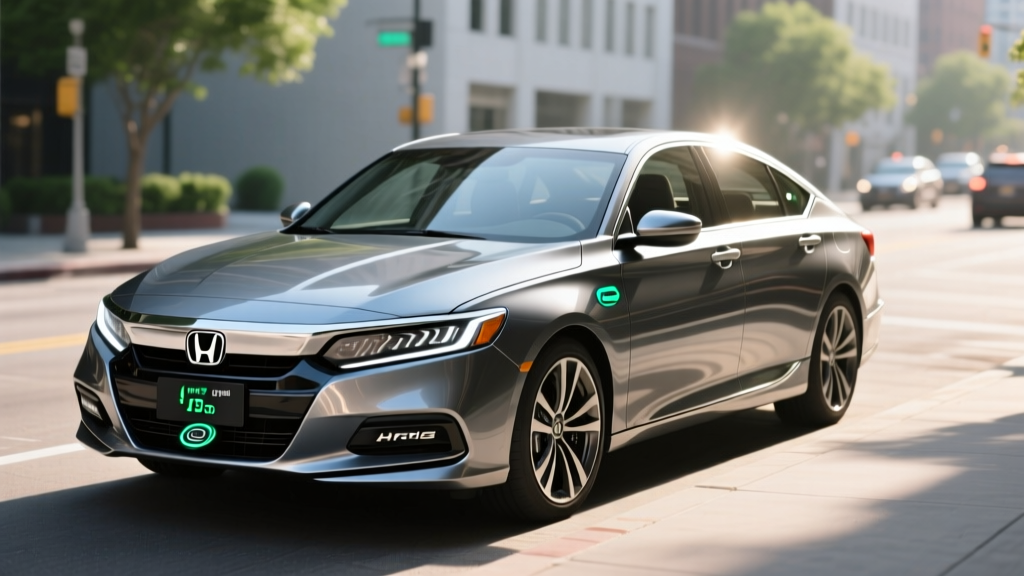
The 2017 Honda Accord Hybrid Touring sedan occupies a specific niche in the used-car market: a midsize hybrid that delivers genuinely impressive fuel economy without requiring any change to your daily routine. No plugs, no charging apps, no range calculations — just a conventional hybrid (HEV) that sips fuel and lets you drive normally. For buyers in 2026 weighing a used hybrid against a newer plug-in hybrid (PHEV) or full battery-electric vehicle (BEV), the Accord Hybrid Touring remains a compelling, data-backed option.
This guide breaks down the exact EPA fuel economy figures, the two-motor powertrain specs, real-world MPG expectations, battery longevity data, and what it actually costs to own one today. We also clarify how this HEV differs from a PHEV or EV so you can match the right electrified powertrain to your driving pattern.
HEV vs PHEV vs EV: Where the Accord Hybrid Fits
Before diving into specs, it is essential to understand what the 2017 Accord Hybrid is — and what it is not. This car is a conventional hybrid electric vehicle (HEV). It cannot be plugged in. It has no electric-only driving range to speak of. It recovers energy through regenerative braking and its gasoline engine, stores that energy in a small lithium-ion battery, and uses it to assist acceleration and enable brief low-speed electric assist.
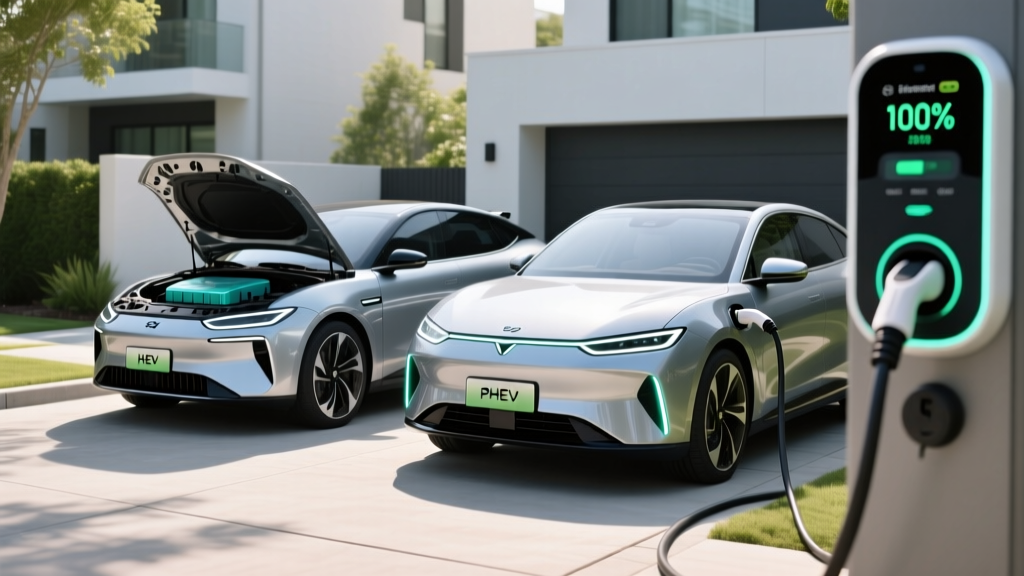
HEV vs PHEV vs BEV — Quick Reference
| Feature | HEV (Accord Hybrid) | PHEV (e.g., Prius Prime) | BEV (e.g., Tesla Model 3) |
|---|---|---|---|
| Plugs in? | No | Yes | Yes |
| Electric-only range | ~1 mi (low-speed assist) | 25–45 mi typical | 250–400 mi |
| Battery size | 1.3 kWh | 8–18 kWh | 50–100 kWh |
| Gas engine? | Yes | Yes | No |
| Federal tax credit (§30D) | No | Up to $7,500 (new) | Up to $7,500 (new/used) |
| Home charging needed? | No | Recommended | Essential |
The Accord Hybrid Touring is purpose-built for drivers who want maximum fuel efficiency with zero infrastructure changes. If you live in an apartment without charging access, or you simply do not want to think about plugging in, an HEV like this one is the pragmatic electrified choice.
Fuel Economy: EPA Ratings and Real-World MPG
The 2017 Honda Accord Hybrid carries EPA ratings that remain competitive even against 2026 model-year hybrids. According to fueleconomy.gov, the official numbers are:
| Cycle | EPA Rating |
|---|---|
| City | 49 MPG |
| Highway | 47 MPG |
| Combined | 48 MPG |
These figures apply to all 2017 Accord Hybrid trims (EX-L and Touring). The Touring's additional weight from premium features costs it nothing at the pump — Honda rated both trims identically.
Real-World MPG: What Owners Actually See
Honda's two-motor hybrid system excels in stop-and-go driving where regenerative braking recaptures the most energy. In real-world use:
- City driving: Many owners report 46–52 MPG, with some exceeding the EPA city estimate in warm-weather, low-speed commuting.
- Highway driving (65–75 mph): Expect 42–46 MPG. Hybrid advantage shrinks at sustained high speed because the gasoline engine does most of the work.
- Cold weather (below 30°F): MPG drops 5–12% due to cabin heating demands and reduced battery efficiency. Winter combined figures of 40–44 MPG are common.
- Combined real-world average: Owner-reported data on Fuelly clusters around 44–47 MPG combined, slightly below the EPA 48 MPG but still exceptional for a midsize sedan.
At 14.8 gallons of tank capacity, 48 MPG combined yields a theoretical range of approximately 710 miles per tank. Real-world range typically lands between 620 and 680 miles before the low-fuel warning.
Powertrain Specs: Honda's Two-Motor Hybrid System
The 2017 Accord Hybrid uses Honda's Sport Hybrid Intelligent Multi-Mode Drive (i-MMD) system, which is fundamentally different from the planetary-gear hybrid systems Toyota popularized. Here are the exact numbers:
| Specification | Value |
|---|---|
| Gasoline engine | 2.0L Atkinson-cycle 4-cylinder |
| Engine power | 143 HP @ 6,200 rpm / 129 lb-ft torque |
| Drive motor | 169 HP / 226 lb-ft torque |
| Combined system output | 212 HP |
| Transmission | No traditional transmission — direct-drive with lock-up clutch |
| Hybrid battery | 1.3 kWh lithium-ion (behind rear seat) |
| 0–60 mph | ~7.1 seconds |
| Drivetrain | Front-wheel drive |
| Curb weight (Touring) | ~3,559 lbs |
The i-MMD system operates in three modes. In EV Drive, the battery powers the drive motor alone at low speeds for very short distances. In Hybrid Drive, the gasoline engine spins a generator motor that feeds electricity to the drive motor — the engine never directly turns the wheels. In Engine Drive, at highway cruising speeds, a lock-up clutch connects the engine directly to the front axle for maximum efficiency. This architecture means the Accord Hybrid drives more like an EV in city conditions than a conventional hybrid.
Touring Trim: What You Get at the Top
The Touring was the range-topping trim for the 2017 Accord Hybrid. It included every available feature, making it the most equipped Accord Honda sold that year. Standard Touring equipment includes:
- Honda Sensing suite (adaptive cruise control, lane-keeping assist, forward collision warning, collision mitigation braking, road departure mitigation)
- LED headlights with auto high-beam
- Navigation system with 8-inch Display Audio touchscreen
- Apple CarPlay and Android Auto
- Heated and ventilated front seats, heated rear seats
- Leather-trimmed interior
- Bluetooth, USB ports, premium audio
- 17-inch alloy wheels
- Power moonroof
- Trunk volume: 13.4 cubic feet (slightly reduced from gas models due to hybrid battery placement)
The Honda Sensing suite is worth highlighting. In 2017, comprehensive ADAS was still uncommon in the midsize sedan segment. The Accord Hybrid Touring's adaptive cruise and lane-keeping represent SAE Level 1–2 driver assistance — it can manage speed and steering on marked highways, but the driver must remain fully engaged at all times.
Battery Longevity, Warranty, and Replacement Cost
Hybrid Battery Warranty
Original coverage: 8 years / 80,000 miles (10 years / 150,000 miles in CARB states including CA, NY, MA, and others)
Capacity threshold: Honda warrants against defects and abnormal degradation. If the battery fails to hold sufficient charge to operate the hybrid system, Honda replaces it under warranty.
For a 2017 model, the original 8-year/80,000-mile warranty has expired in most states by 2025. In CARB states with the 10-year/150,000-mile provision, coverage may extend into 2027. If you are buying used in 2026, verify the vehicle's registration history and whether it qualifies for extended CARB warranty coverage.
How Long Do Accord Hybrid Batteries Last?
Honda's lithium-ion hybrid battery is small (1.3 kWh) and operates within a narrow state-of-charge window — typically between 20% and 80%. This shallow cycling dramatically extends cell life compared to a full BEV battery that cycles through 0–100%. Real-world data shows:
- Most Accord Hybrid batteries function well past 150,000–200,000 miles without requiring replacement.
- Gradual capacity loss of 10–20% over 10 years is normal and does not significantly impact fuel economy because the system adapts.
- Complete battery failure before 100,000 miles is rare and typically covered under the original warranty.
Battery Replacement Cost
If the hybrid battery does need replacement out of warranty:
- OEM replacement (Honda dealer): $2,000–$3,500 including parts and labor.
- Refurbished/remanufactured battery: $1,200–$2,000 from third-party hybrid specialists.
- Individual cell replacement: Some shops replace only failed modules for $500–$1,000, though this is less common for the lithium-ion pack in the 2017 model compared to older NiMH Honda hybrids.
For context, the 12V auxiliary battery (a standard lead-agents unit that powers accessories) will need replacement every 4–6 years at a cost of $150–$250 — this is separate from the hybrid traction battery.
Pricing, Tax Credits, and Used Market Value in 2026
The 2017 Honda Accord Hybrid Touring originally carried an MSRP of approximately $36,805 (including destination). In the 2026 used market, examples with 80,000–120,000 miles typically trade between $13,000 and $18,500 depending on condition, mileage, and region.
Tax Credit Eligibility
The 2017 Accord Hybrid does not qualify for the federal §30D new clean vehicle tax credit — that credit applies only to plug-in vehicles (PHEVs and BEVs) with sufficient battery capacity. Conventional hybrids like this one are excluded under current IRS rules.
However, the used clean vehicle credit (up to $4,000 or 30% of sale price, whichever is less) also applies only to plug-in vehicles. The Accord Hybrid, as an HEV, does not qualify for this either.
Some states offer modest incentives for used hybrid purchases, and certain utility companies provide rebates for any electrified vehicle. Check your state energy office and local utility for current programs.
Who Should Buy the 2017 Accord Hybrid Touring?
Choose This HEV If:
- You drive 12,000–20,000+ miles per year and want maximum fuel savings without plugging in
- You live in an apartment or lack access to home or workplace charging
- You want a proven, reliable midsize sedan with strong safety features
- Your budget is $13,000–$18,000 for a well-equipped used hybrid
- You take frequent long road trips and do not want to plan around charging stations
Look at a PHEV or BEV Instead If:
- You have home charging and a short commute (a PHEV's 25–45 mi electric range covers most daily driving)
- You want to qualify for federal tax credits (up to $7,500 for new PHEVs/BEVs, up to $4,000 for used)
- You want to maximize electric driving and minimize gasoline use
- You are buying new and can access current PHEV/BEV incentives
Pros and Cons at a Glance
✓ Pros
- 48 MPG combined EPA — among the best for any midsize sedan
- No plug-in required — zero infrastructure changes
- 212 HP provides confident acceleration
- Honda Sensing ADAS standard on Touring
- Strong reliability record; hybrid battery typically lasts 150K+ miles
- Spacious interior with premium Touring features
- 700+ mile range per tank
✗ Cons
- No federal tax credit eligibility (HEV, not PHEV/BEV)
- Trunk reduced to 13.4 cu ft (battery placement)
- 2017 model year means original warranty likely expired
- Infotainment system feels dated by 2026 standards
- No all-wheel-drive option
- Rear-seat space slightly compromised by battery hump
Frequently Asked Questions
How many MPG does the 2017 Honda Accord Hybrid Touring get?
The EPA rates it at 49 city / 47 highway / 48 combined MPG. Real-world combined driving typically yields 44–47 MPG, with city driving sometimes exceeding the EPA estimate and highway driving falling a few MPG short. Cold weather reduces efficiency by 5–12%.
Does the 2017 Accord Hybrid need to be plugged in?
No. This is a conventional hybrid (HEV), not a plug-in hybrid (PHEV). It charges its 1.3 kWh battery through regenerative braking and the gasoline engine. You simply fill it with gasoline like any other car.
Is the 2017 Honda Accord Hybrid reliable?
Yes. The Accord Hybrid's i-MMD powertrain has a strong reliability record. The hybrid battery is designed for shallow cycling, which extends its lifespan to 150,000–200,000+ miles in most cases. Honda's hybrid components have fewer moving parts than a conventional automatic transmission (no torque converter, no gear sets), which reduces failure points.
What does a replacement hybrid battery cost?
An OEM replacement at a Honda dealer runs $2,000–$3,500 installed. Refurbished batteries from hybrid specialists cost $1,200–$2,000. Given the battery's typical 150K+ mile lifespan, most owners never face this expense.
Does the 2017 Accord Hybrid qualify for any tax credit?
No. Under IRS §30D rules, the federal clean vehicle tax credit applies only to plug-in electric vehicles (PHEVs and BEVs). Conventional hybrids like the Accord Hybrid do not qualify for either the new-vehicle credit or the used clean vehicle credit.
How does the Accord Hybrid compare to a PHEV like the Toyota Prius Prime?
The Prius Prime (PHEV) offers 25–40 miles of electric-only range when plugged in, making it ideal for short commutes on electricity. However, once its battery depletes, its hybrid-mode MPG (around 50–54 combined) is comparable to the Accord Hybrid's 48 MPG. The Accord Hybrid is larger, more powerful (212 HP vs ~121 HP combined), and more comfortable for long trips. The Prius Prime wins if you can charge at home and want to maximize electric driving; the Accord Hybrid wins for drivers who cannot or do not want to plug in.
What should I check before buying a used 2017 Accord Hybrid?
Request a pre-purchase inspection from a technician familiar with Honda hybrids. Key items: hybrid battery health (a Honda dealer can pull the State of Health data), inverter coolant level and condition, brake pad thickness (regenerative braking reduces wear, so pads can last 80K+ miles but rotors may corrode), and the 12V auxiliary battery age. Also verify whether the car was originally sold in a CARB state, which may extend hybrid battery warranty coverage to 10 years/150,000 miles.