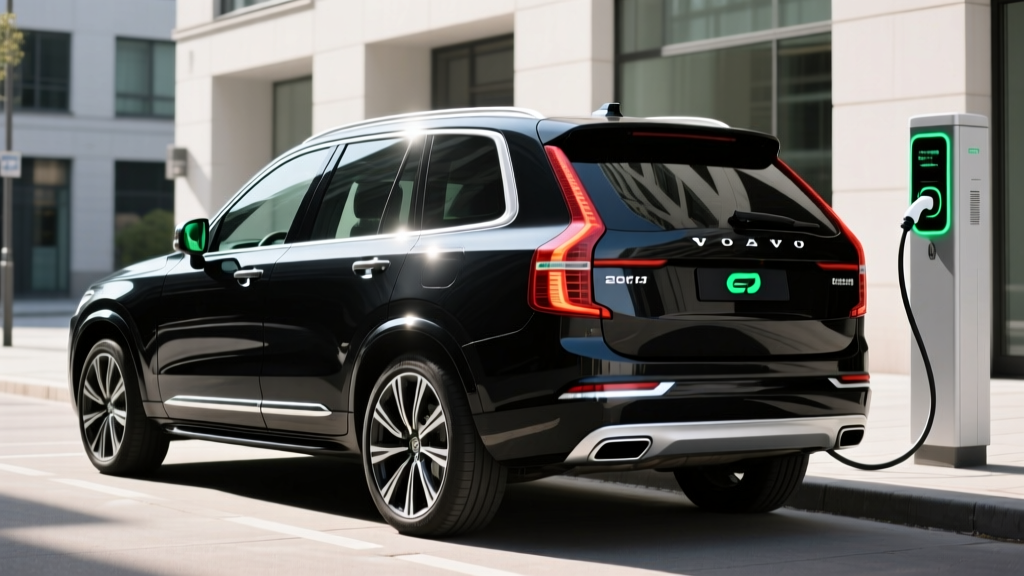
The 2017 Volvo XC90 T8 plug-in hybrid was Volvo's flagship electrified SUV — a luxury three-row family hauler that paired a turbocharged and supercharged four-cylinder engine with an electric motor for a combined 400 horsepower. Nearly a decade later, it remains a popular choice on the used market for buyers who want Scandinavian luxury, all-wheel drive, and a short electric-only commute without committing to a full battery-electric vehicle. But how does this first-generation T8 powertrain hold up in 2026, and what should you expect if you're shopping for one today?
2017 Volvo XC90 T8 Plug-In Hybrid at a Glance
| Specification | Value |
|---|---|
| Powertrain | 2.0L turbo + supercharged I-4 + rear electric motor |
| Combined Horsepower | 400 hp |
| Combined Torque | 472 lb-ft |
| Battery (Gross / Usable) | 10.4 kWh / ~7.6 kWh |
| Battery Chemistry | NMC (nickel manganese cobalt) lithium-ion |
| EPA Electric-Only Range | 14 miles |
| EPA Combined MPGe | 62 MPGe |
| EPA MPG (Gas Only, Combined) | 25 MPG |
| EPA MPG (City / Highway — Gas) | 26 city / 25 highway |
| 0–60 mph | 5.3 seconds |
| Drivetrain | AWD (front wheels engine-driven, rear wheels electric) |
| Level 2 Charge Time (0–100%) | ~2.5 hours at 3.6 kW |
| DC Fast Charging | Not supported |
| Towing Capacity | 5,000 lbs |
| Original MSRP (T8 Inscription) | $68,100 |
| 2026 Used Price Range (est.) | $22,000 – $32,000 |
HEV vs PHEV: Understanding the XC90 T8's Powertrain
Conventional Hybrid (HEV): A standard hybrid like the Toyota Highlander Hybrid uses a small battery (typically 1–2 kWh) that recharges through regenerative braking and the gas engine. You never plug it in. Electric-only driving is limited to brief low-speed moments. Fuel economy is consistent regardless of whether you charge.
Plug-In Hybrid (PHEV) — the XC90 T8: The T8 carries a larger 10.4 kWh battery pack and an onboard charger. You plug it in overnight to unlock its full 14-mile electric-only range. Once the battery depletes, the XC90 T8 operates as a conventional hybrid using its gas engine and regenerative braking, returning roughly 25 MPG combined. If you never plug it in, you lose the electric-range advantage and carry dead battery weight.
The 2017 XC90 T8 uses a unique through-the-road AWD architecture: the 2.0-liter twin-charged engine drives the front wheels via an 8-speed automatic transmission, while an 87-hp electric motor drives the rear axle. There is no mechanical connection between front and rear axles — the car's computer manages torque distribution electronically. This layout is elegant but means rear-axle torque is limited when the battery is depleted.
Fuel Economy and Electric Range: EPA vs Real World
| Driving Scenario | EPA Estimate | Real-World Expectation |
|---|---|---|
| Electric-Only Range | 14 miles | 10–13 miles (highway); 13–16 miles (city, mild weather) |
| Combined MPGe (charge-depleting) | 62 MPGe | 50–60 MPGe (varies with charge frequency) |
| Gas-Only Combined MPG | 25 MPG | 23–27 MPG (city-biased driving favors regen) |
| Gas-Only City MPG | 26 MPG | 24–28 MPG |
| Gas-Only Highway MPG | 25 MPG | 23–26 MPG (aerodynamic drag hurts at 75+ mph) |
| Total Combined Range (gas + electric) | ~330 miles | ~290–340 miles depending on conditions |
The EPA's 14-mile electric range is modest by today's PHEV standards (the 2026 Toyota RAV4 Prime delivers 42 miles). In real-world use, expect 10 to 13 miles of electric driving in mixed conditions, or up to 16 miles on flat city streets in mild weather. Highway speeds above 65 mph drain the small battery rapidly, and cold weather (below 40°F) can cut electric range by 20–30% due to cabin heating demands and reduced lithium-ion efficiency.
Once the battery depletes, the XC90 T8 operates as a conventional hybrid. Owners who charge nightly and commute under 14 miles round-trip report using very little gasoline — some logging months between fill-ups. Those who never plug in should expect roughly 23–25 MPG in mixed driving, which is respectable for a 5,000-pound luxury SUV but not class-leading. According to fueleconomy.gov, the T8's combined gas-only MPG of 25 trails the non-plug-in XC90 T6 (22 MPG combined) by only a small margin — the PHEV's value proposition depends entirely on whether you'll actually plug in.
Charging: Level 1, Level 2, and What to Expect
The 2017 XC90 T8 is equipped with a 3.6 kW onboard charger and uses a standard J1772 connector (the universal North American Level 2 plug). It does not support DC fast charging — there is no CCS or CHAdeMO port. All charging is AC.
| Charging Level | Power | 0–100% Time | Typical Use Case |
|---|---|---|---|
| Level 1 (120V household outlet) | ~1.4 kW | ~5.5–6 hours | Overnight at a standard outlet |
| Level 2 (240V, 16A) | 3.6 kW | ~2.5 hours | Home wallbox or public Level 2 station |
Because the battery is small (10.4 kWh gross, ~7.6 kWh usable), even a standard 120V household outlet can fully recharge the pack overnight. A Level 2 home charger is convenient but not essential for this vehicle — a major advantage for renters or homeowners who don't want to invest in a 240V installation. That said, a Level 2 station ensures a full charge in about 2.5 hours, which is useful if you make multiple short trips throughout the day and want to top up between errands.
Battery Warranty and Longevity
Volvo originally warranted the XC90 T8's high-voltage battery for 8 years or 100,000 miles (whichever comes first), guaranteeing it would retain at least 70% of its original capacity. For a 2017 model, that factory warranty expires in 2025 — meaning most used examples are now out of battery warranty unless covered by an extended plan or a state-specific extension (California and states adopting CARB rules mandate 10 years/150,000 miles for PZEV/AT-PZEV components, which may cover the battery — check your state's rules).
Battery replacement cost: A new OEM replacement battery pack for the XC90 T8 runs approximately $8,000–$12,000 installed at a Volvo dealer. Third-party rebuilt or refurbished packs may be available for $5,000–$7,000 as the aftermarket matures. NMC chemistry in this generation is proven but does experience gradual capacity loss — expect 10–15% degradation over 8–10 years in moderate climates, or roughly 1–2 miles of lost electric range.
Reliability and Common Issues
The 2017 XC90 T8's powertrain is complex: a twin-charged four-cylinder engine, an electric motor, a high-voltage battery, and sophisticated software managing it all. According to owner surveys and reliability trackers, the T8 has been average to slightly below average for the luxury midsize SUV segment. Common reported issues include:
- Software glitches: Infotainment (Sensus) system freezes, instrument cluster reboots, and drive-mode selection errors. Many were addressed via dealer software updates.
- Charge port door mechanism: The motorized charge port door can fail or stick, particularly in cold weather.
- Rear electric motor: Isolated reports of rear e-motor bearing noise or failure above 80,000 miles.
- 12V auxiliary battery drain: Like many modern Volvos, the 12V battery can drain if the car sits for extended periods, preventing the vehicle from starting even with a charged high-voltage pack.
- Air suspension (optional): The four-corner air suspension, available on higher trims, is a known maintenance item with strut replacements costing $1,500–$2,500 per corner.
The high-voltage battery itself has proven relatively durable. Most 2017 T8 owners report modest degradation (10–15% capacity loss) after 80,000–100,000 miles. However, out-of-warranty repair costs for the hybrid system components — inverter, onboard charger, electric motor — can be significant, often $2,000–$5,000 per component.
Pricing and Tax Credit Eligibility in 2026
The 2017 Volvo XC90 T8 originally started at approximately $68,100 for the T8 Inscription trim and could exceed $80,000 with options like the Bowers & Wilkins audio package, air suspension, and the Luxury and Convenience packages. In the 2026 used market, expect to pay:
- $22,000–$26,000: Higher-mileage examples (90,000+ miles), fair condition
- $26,000–$32,000: Well-maintained examples with 50,000–80,000 miles, clean history
- $32,000+: Low-mileage, fully loaded examples under 50,000 miles
Federal tax credit: The IRS §30D clean vehicle credit for used electrified vehicles offers up to $4,000 or 30% of the sale price (whichever is less) for eligible used EVs and PHEVs purchased from a dealer. Key requirements for the used-vehicle credit include:
- Sale price must be $25,000 or below
- Buyer income caps: $75,000 single / $112,500 head of household / $150,000 joint
- Vehicle must be at least 2 model years old (2017 qualifies)
- Vehicle must have a battery capacity of at least 7 kWh (the T8's 10.4 kWh qualifies)
- Must be purchased from a licensed dealer (private-party sales excluded)
- Credit can only be claimed once per vehicle (VIN tracked)
This means a 2017 XC90 T8 priced at $24,500 from a dealer could yield a $4,000 used-vehicle tax credit for income-eligible buyers — effectively bringing the net price to around $20,500. However, many well-maintained examples list above the $25,000 price cap, so negotiation matters. Consult a tax professional to verify your eligibility, as rules can change and individual circumstances vary.
The original $5,000 federal credit available when the XC90 T8 was new is no longer available for new purchases of this model year.
Who Should Choose the XC90 T8 — and Who Shouldn't?
Pros
- 400 hp provides confident passing power and 5.3-second 0–60 times
- True three-row seating for up to seven passengers
- Premium Scandinavian interior with high-quality materials
- Short electric-only range covers many daily commutes gas-free
- 5,000-lb towing capacity rare among PHEVs
- No DC fast-charging dependency — Level 1 is sufficient
- Strong safety ratings (IIHS Top Safety Pick+ when new)
Cons
- 14-mile electric range is short by 2026 PHEV standards
- No DC fast charging — road-trip charging impractical
- Factory battery warranty likely expired on 2017 models
- Complex powertrain = higher out-of-warranty repair risk
- Air suspension (if equipped) is expensive to maintain
- Sensus infotainment feels dated vs. modern systems
- Used prices can exceed the $25,000 cap for the used-EV tax credit
The XC90 T8 Is Right for You If:
- You have a short commute (under 15 miles) and can charge at home nightly
- You need three rows and towing capability but want some electric driving
- You're buying used and want a luxury PHEV at a steep discount from new pricing
- You don't have reliable DC fast-charging infrastructure near you
Consider a Full EV Instead If:
- Your daily driving exceeds 30 miles and you want zero gasoline use
- You want to avoid gas-engine maintenance entirely (oil changes, spark plugs, turbo/supercharger service)
- You have home charging and access to DC fast chargers for road trips
- You want the latest battery technology and a current factory warranty
Consider a Conventional Hybrid (HEV) Instead If:
- You can't charge at home or at work — a PHEV's advantage disappears without plugging in
- You want simpler mechanics with no plug-in charging hardware to maintain
- You prioritize maximum highway fuel economy over electric-only driving
Frequently Asked Questions
How many MPG does the 2017 Volvo XC90 T8 get?
The EPA rates the XC90 T8 at 62 MPGe when operating in combined electric-gas mode, and 25 MPG combined (26 city / 25 highway) once the battery is depleted and it runs as a conventional hybrid. Real-world gas-only MPG typically falls between 23–27 MPG depending on driving style, terrain, and climate. City driving tends to favor the hybrid system thanks to regenerative braking, while sustained highway speeds above 70 mph reduce efficiency.
How far can the 2017 XC90 T8 go on electric only?
The EPA rates it at 14 miles of electric-only range. In real-world conditions, expect 10–13 miles in mixed driving, up to 16 miles in ideal city conditions, and as little as 8–10 miles in cold weather or at highway speeds. The 10.4 kWh battery (7.6 kWh usable) is small by modern standards — the 2026 generation of PHEVs typically offers 30–45 miles of electric range.
Hybrid vs PHEV vs EV — which is right for me?
A conventional hybrid (HEV) like the Toyota Highlander Hybrid is best if you can't charge at home and want better MPG with zero behavior change. A plug-in hybrid (PHEV) like the XC90 T8 works if you have home charging, a short commute, and still need gas-engine range for road trips. A full EV (BEV) like the Tesla Model X or Rivian R1S makes sense if you want zero gas use, have reliable charging access, and want lower ongoing maintenance. The XC90 T8 occupies a middle ground: electric for daily errands, gas for longer hauls.
Is the 2017 XC90 T8 reliable and what does battery replacement cost?
Reliability is average for a complex luxury PHEV. The high-voltage battery has proven durable with 10–15% degradation typical at 80,000–100,000 miles. However, the twin-charged engine, air suspension, and hybrid electronics add repair risk as the vehicle ages. Battery replacement costs approximately $8,000–$12,000 at a Volvo dealer, or $5,000–$7,000 from third-party rebuilders. The original 8-year/100,000-mile battery warranty has expired for most 2017 models (though CARB-state owners may have extended coverage through 10 years/150,000 miles).
Does the 2017 XC90 T8 qualify for any tax credit in 2026?
The new-vehicle federal credit is no longer available for this model year. However, the IRS used clean vehicle credit offers up to $4,000 (or 30% of sale price) if the vehicle sells for $25,000 or less from a licensed dealer and the buyer meets income caps ($75K single / $150K joint). The T8's 10.4 kWh battery meets the 7 kWh minimum. State incentives vary — check your state's energy office or the AFDC state incentive database for local rebates on used PHEVs.
Can the XC90 T8 charge while driving?
Yes. The T8 uses regenerative braking and the gas engine to recharge the battery while driving in "Hold" or "Charge" modes. However, charging via the engine significantly reduces fuel economy and is generally less efficient than plugging in. The "Hold" mode preserves current battery charge for later electric driving (useful before entering a city center), while "Charge" actively replenishes the battery at the cost of higher fuel consumption.
What happens if the high-voltage battery dies completely?
The XC90 T8 can still operate on its gasoline engine alone if the high-voltage battery is fully depleted or fails — the front wheels are mechanically driven by the 2.0L engine. However, you'll lose AWD (the rear axle is electric-only), acceleration will be noticeably slower, and fuel economy will drop. A failed battery should be diagnosed and replaced promptly, as the vehicle's thermal management and hybrid systems depend on a functioning pack.