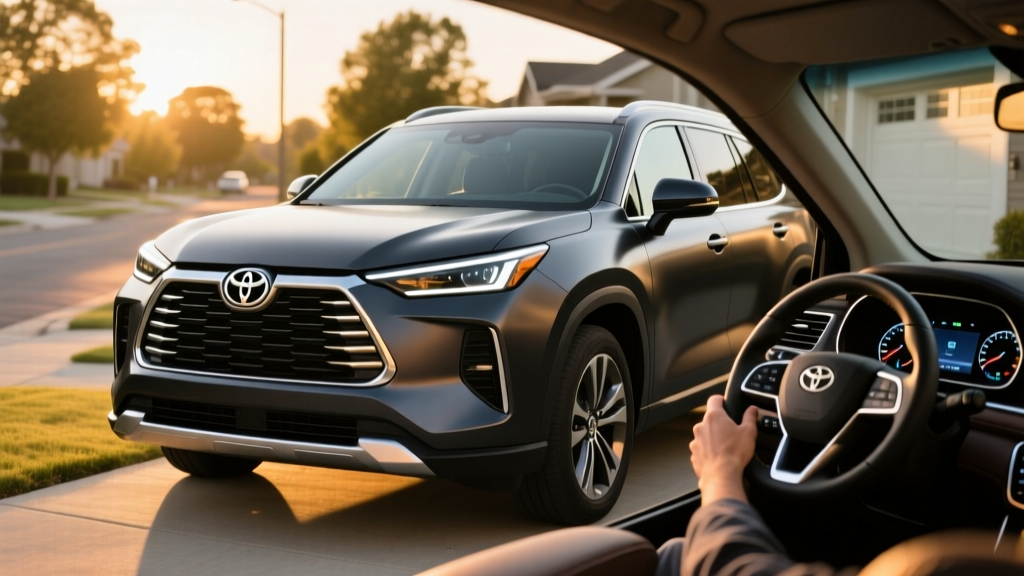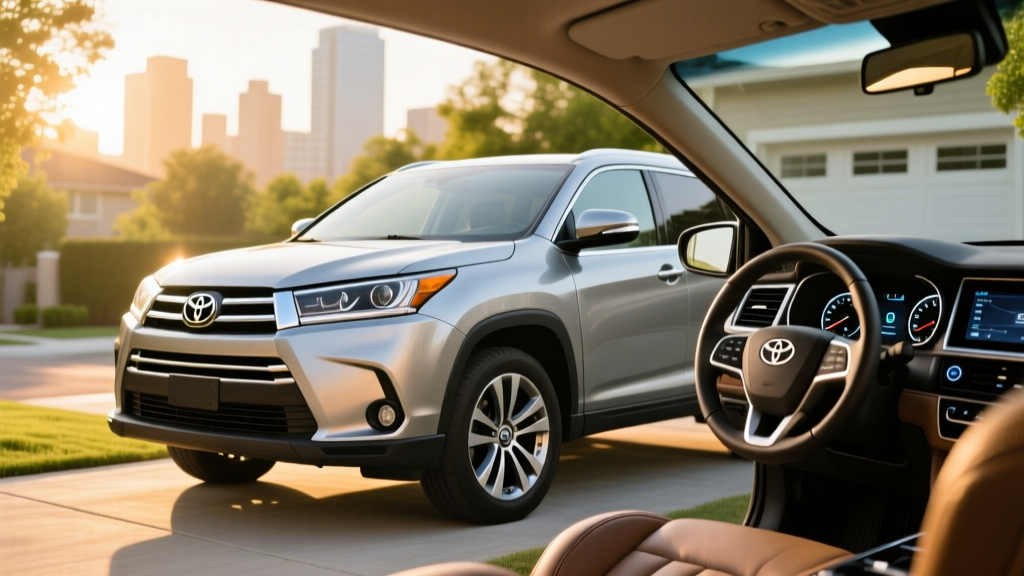
The 2017 Toyota Highlander Hybrid AWD occupies a specific niche in the used-vehicle market: a three-row family hauler with all-wheel drive that sips fuel without requiring a plug, a charging routine, or any change in driving habits. Nearly a decade after its debut, it remains one of the most sought-after used hybrid SUVs, and for good reason — Toyota's hybrid synergy drive system in this generation has proven exceptionally durable. If you're evaluating one in 2026, here's every number that matters.
HEV vs PHEV: What the 2017 Highlander Hybrid Actually Is
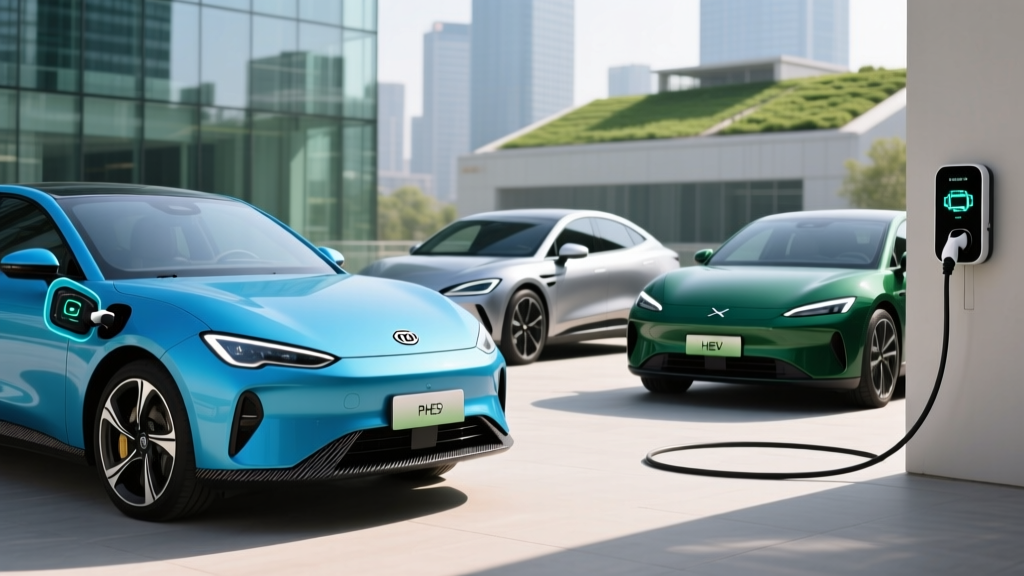
Conventional Hybrid (HEV): The 2017 Highlander Hybrid is a self-charging hybrid. It uses a gasoline engine paired with electric motors and a small nickel-metal hydride (NiMH) traction battery. You never plug it in. The battery recharges through regenerative braking and engine power. Electric-only driving is limited to very low speeds and short distances (typically under 1 mile).
Plug-In Hybrid (PHEV): A PHEV like the current Toyota RAV4 Prime has a larger battery (18.1 kWh), an electric-only range of 42 EPA miles, and requires plugging in to realize its full efficiency benefit. The 2017 Highlander Hybrid was never offered as a PHEV — Toyota did not introduce a plug-in Highlander until the 2026 model year in select markets.
Full EV (BEV): A battery-electric vehicle has no gasoline engine, requires charging infrastructure, and offers 250+ miles of range. The Highlander Hybrid is not an EV and does not qualify for the federal EV tax credit.
This distinction matters because buyers sometimes confuse "hybrid" with "plug-in." The 2017 Highlander Hybrid requires zero behavioral change from a conventional gas car — you fuel it at any gas station and drive normally. The hybrid system operates transparently in the background.
Fuel Economy: EPA Ratings and Real-World MPG
| Metric | EPA Rating | Real-World Expectation |
|---|---|---|
| City MPG | 29 MPG | 28–32 MPG (hybrids often beat EPA in city) |
| Highway MPG | 27 MPG | 24–27 MPG (less regen benefit at sustained speed) |
| Combined MPG | 28 MPG | 26–29 MPG |
| Fuel Tank Capacity | 17.2 gallons | ~450–500 miles total range |
According to fueleconomy.gov, the 2017 Highlander Hybrid AWD earns an EPA-estimated 29 city / 27 highway / 28 combined MPG. That's a meaningful improvement over the gas-only 2017 Highlander AWD V6, which rates at 20 city / 26 highway / 22 combined — a 27% gain in combined efficiency.
Real-world note: Toyota hybrids tend to match or slightly exceed their EPA city ratings because stop-and-go driving maximizes regenerative braking and electric-motor usage. On the highway, where the gasoline engine does most of the work, expect figures closer to 24–27 MPG depending on speed, terrain, and cargo load. Owners tracking fuel-ups on platforms like Fuelly report lifetime averages clustering around 26–28 MPG, which aligns with the EPA combined figure.
In cold weather (below 30°F), expect a 5–10% reduction in fuel economy as the engine runs more frequently to provide cabin heat and maintain battery temperature. This is modest compared to the 20–30% range loss a full EV experiences in freezing conditions.
Powertrain Specs: Engine, Motors, and Horsepower
| Specification | 2017 Highlander Hybrid AWD |
|---|---|
| Engine | 3.5L V6 Atkinson-cycle |
| Engine Horsepower | 206 HP @ 5,800 RPM |
| Engine Torque | 245 lb-ft @ 4,400 RPM |
| Front Electric Motor | 121 kW (162 HP) |
| Rear Electric Motor (AWD) | 50 kW (67 HP) |
| Net Combined System HP | 306 HP |
| Transmission | eCVT (electronically controlled) |
| Drivetrain | AWD-i (electric rear axle, no mechanical driveshaft) |
| 0–60 MPH | ~7.8 seconds |
| Towing Capacity | 3,500 lbs |
| Traction Battery | NiMH, ~1.9 kWh (nominal) |
The 2017 model year brought a significant powertrain update: Toyota replaced the older 3.3L V6 with a more efficient 3.5L Atkinson-cycle V6 and introduced a 6-speed automatic-like eCVT. The result was a 38 HP bump over the previous generation (from 268 to 306 net HP), making this one of the quickest hybrid SUVs of its era.
The AWD-i system is worth understanding. Unlike a conventional AWD system with a mechanical driveshaft connecting front and rear axles, the Highlander Hybrid uses a separate 50 kW rear electric motor that engages the rear wheels only when needed — during acceleration, slippery conditions, or front-wheel slip. This means there's no parasitic drivetrain loss when cruising, which contributes to the strong highway MPG.
Battery Lifespan, Warranty, and Replacement Cost
Original Warranty: Toyota covered the 2017 Highlander Hybrid's traction battery for 8 years / 100,000 miles (10 years / 150,000 miles in California and states adopting CARB emissions standards).
Warranty Status in 2026: The original 8-year/100k warranty has expired for most 2017 models. However, the 10-year/150k CARB-state warranty may still apply to low-mileage examples registered in those states.
Real-World Battery Longevity: Toyota's NiMH hybrid batteries have an exceptional track record. Data from owner communities and repair shops indicates most Highlander Hybrid batteries last 150,000–200,000+ miles before significant degradation. Unlike full EV batteries, the hybrid system's small battery operates in a narrow state-of-charge window (roughly 40–80%), which dramatically reduces stress and extends cycle life.
Replacement Cost: A new OEM replacement NiMH battery from Toyota runs approximately $3,500–$4,500 including labor. Refurbished or reconditioned batteries are available for $1,500–$2,500. Individual cell replacement (a common failure mode — only one or two cells degrade) can cost as little as $500–$1,000 at a hybrid-specialist shop.
This is the number-one concern for used hybrid buyers, and it's where the Highlander Hybrid shines. The NiMH chemistry is less energy-dense than modern lithium-ion but far more tolerant of abuse, temperature extremes, and high cycle counts. Failures before 150,000 miles are uncommon, and when they do occur, the repair is well-documented and straightforward for any hybrid-certified technician.
Used Pricing in 2026 and Tax Credit Eligibility
The 2017 Toyota Highlander Hybrid was originally priced from approximately $47,030 (Limited trim) to over $52,000 (Platinum trim) including destination. In the 2026 used market, expect the following pricing ranges based on mileage and condition:
- 80,000–120,000 miles: $18,000–$24,000
- 50,000–80,000 miles: $24,000–$30,000
- Under 50,000 miles: $28,000–$35,000 (low-supply, high-demand)
Tax credit status: The 2017 Highlander Hybrid does not qualify for the federal §30D new clean vehicle credit — that credit applies only to new plug-in vehicles (BEVs and PHEVs) meeting battery-sourcing and critical-mineral requirements per IRS guidelines. As a conventional HEV, it has no plug and no qualifying battery capacity.
It also does not qualify for the Used Clean Vehicle Credit (up to $4,000 or 30% of sale price, whichever is less), because that credit requires the vehicle to be a qualified plug-in electric vehicle or fuel cell vehicle. Conventional hybrids are excluded from both programs.
Some states may offer their own incentives for used hybrid purchases, but these are uncommon and vary by jurisdiction. Check your state's energy or environmental agency for current programs.
Reliability, Safety, and What to Inspect Before Buying
The 2017 Highlander Hybrid benefits from Toyota's reputation for long-term reliability, and this generation is no exception. The hybrid powertrain has fewer wear items than a conventional vehicle — there's no traditional alternator, no starter motor, and the eCVT has no belts, clutches, or bands to fail. Brake pads often last 80,000+ miles thanks to regenerative braking doing the majority of deceleration work.
Safety ratings were strong. The NHTSA awarded the 2017 Highlander a 5-star overall safety rating. The IIHS named it a Top Safety Pick+ when equipped with the optional front crash prevention system (standard Toyota Safety Sense-P on most trims).
Pre-purchase checklist for a used 2017 Highlander Hybrid:
- Hybrid battery health check: Ask a Toyota dealer or hybrid specialist to run a battery diagnostic showing individual module voltages and internal resistance. Modules should be within 0.2V of each other.
- Inverter coolant: Check that the inverter coolant has been flushed per the maintenance schedule (every 100,000 miles). Neglected coolant can lead to inverter failure, a $2,000+ repair.
- eCVT operation: The transmission should shift smoothly with no shuddering. A whining noise under acceleration is normal for eCVTs, but clunking or hesitation is not.
- Rear motor function: During a test drive, accelerate hard from a stop on a low-traction surface (wet pavement, gravel) and confirm the rear wheels engage. The AWD-i system should activate seamlessly.
- 12V auxiliary battery: Like all hybrids, the Highlander has a standard 12V battery that powers electronics. If it dies, the vehicle won't start even if the hybrid battery is full. Check its age and condition.
Who Should Buy This Hybrid vs a Full EV or Gas SUV
Reasons to Choose the 2017 Highlander Hybrid
- You need three rows and AWD without range anxiety
- You lack access to home or workplace charging
- You want proven long-term reliability with low maintenance costs
- You drive a mix of city and highway and want consistent 27–29 MPG
- You tow occasionally (3,500-lb capacity) and need a gas engine for that
- You want to spend $20K–$30K on a capable family SUV
Reasons to Consider an Alternative
- You have home charging and want to eliminate gas entirely (consider a used Tesla Model X or Rivian R1S)
- You want the latest infotainment and driver-assist tech (2017 tech feels dated)
- You want a plug-in hybrid with electric-only commuting range (no PHEV Highlander existed in 2017)
- You prioritize sporty handling over comfort (the Highlander is tuned for smoothness, not cornering)
- You need more than 3,500 lbs of towing capacity
Choose the 2017 Highlander Hybrid if: You need a no-compromise three-row SUV that will reliably deliver sub-30 MPG for another 100,000+ miles without requiring you to install a charger, plan charging stops, or change any driving habits. It's the pragmatic choice for families in areas with limited charging infrastructure.
Choose a full EV if: You have Level 2 home charging, your daily driving is under 250 miles, and you want to eliminate gasoline costs entirely. A used Model X or the newer Kia EV9 offers more cargo space and modern tech, but at a higher purchase price and with charging logistics to manage on road trips.
Choose a newer PHEV if: You want electric-only commuting (20–45 miles) for daily driving but gas-engine flexibility for road trips. The current Toyota Grand Highlander Hybrid or the Chrysler Pacifica PHEV are modern alternatives, though at significantly higher prices.
Frequently Asked Questions
How many MPG does the 2017 Toyota Highlander Hybrid AWD get?
The EPA rates it at 29 city / 27 highway / 28 combined MPG. Real-world owners typically report 26–29 MPG combined, with city driving sometimes exceeding the EPA estimate thanks to regenerative braking. Over a 15-gallon tank, expect roughly 420–480 miles of range.
Does the 2017 Highlander Hybrid need to be plugged in?
No. This is a conventional hybrid (HEV), not a plug-in hybrid. The battery charges itself through regenerative braking and the gasoline engine. You fuel it exclusively at gas stations.
Is the 2017 Highlander Hybrid reliable, and what does battery replacement cost?
Yes — it's among the most reliable hybrid SUVs ever built. The NiMH traction battery typically lasts 150,000–200,000+ miles. A new OEM replacement costs $3,500–$4,500; refurbished units run $1,500–$2,500. Cell-level repair can cost under $1,000.
Does the 2017 Highlander Hybrid qualify for any federal tax credit?
No. Federal tax credits (§30D new vehicle credit and the used clean vehicle credit) apply only to plug-in electric vehicles and fuel cell vehicles. Conventional hybrids like the Highlander Hybrid do not qualify. Some states may offer minor incentives — check your state's energy office.
How does the AWD system work on this hybrid?
The AWD-i system uses a dedicated 50 kW electric motor powering the rear axle. There is no mechanical driveshaft connecting the front and rear. The rear motor engages automatically during acceleration, low-traction conditions, or when the front wheels slip. This provides confident all-weather capability without the fuel-economy penalty of a traditional mechanical AWD system.
What's the difference between the 2017 Highlander Hybrid and the gas-only version?
The hybrid gets 28 MPG combined vs 22 MPG for the gas V6 AWD — a 27% improvement. It also produces 306 HP vs 295 HP, has a slightly higher towing capacity (3,500 vs 3,500 lbs, same), and costs roughly $5,000–$7,000 more on the used market. The fuel savings typically recoup the price premium within 4–6 years depending on annual mileage.
How much does it cost to maintain a 2017 Highlander Hybrid?
Annual maintenance runs $500–$800 on average — less than a comparable gas SUV because there's no starter, alternator, or traditional transmission to service. Brake pads last longer due to regen. Oil changes are the standard 5,000–10,000 mile interval. The primary long-term cost risk is the hybrid battery, which most owners never need to replace.