Quick Verdict: A Proven Hybrid Workhorse
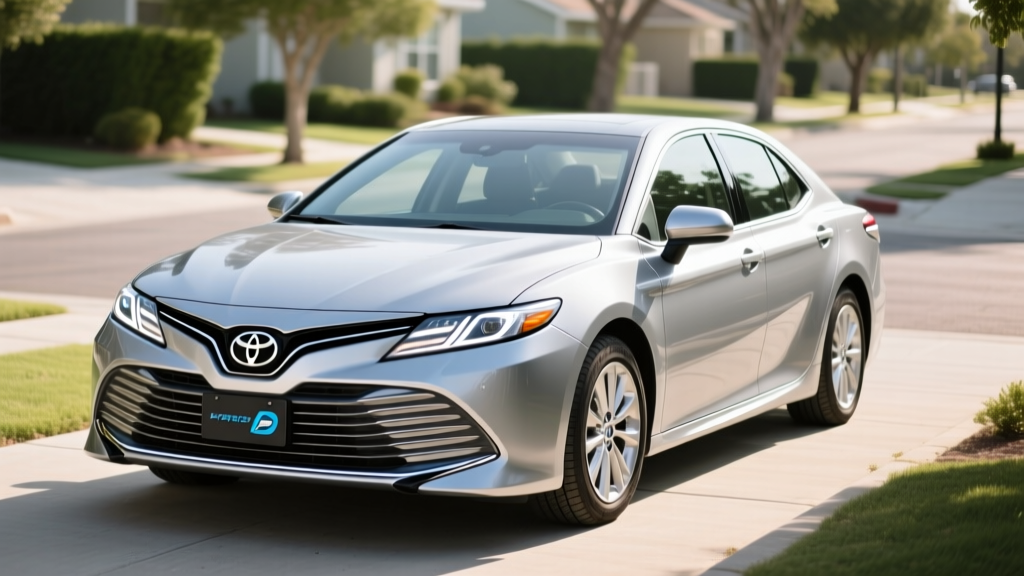
The 2017 Toyota Camry Hybrid sedan occupies a specific niche in today's used-car market: a midsize hybrid that prioritizes fuel savings and long-term reliability over flash. With an EPA-rated 40 MPG combined and a track record of battery longevity that few competitors can match, it remains a pragmatic choice for buyers who want hybrid efficiency without plug-in complexity. It is not a plug-in hybrid (PHEV) and does not qualify for federal EV tax credits — but its low running costs and Toyota's hybrid warranty history make it a compelling used purchase in 2026.
This guide covers everything a prospective used buyer needs: exact EPA and real-world MPG figures, the hybrid battery's expected lifespan and replacement cost, powertrain specs, and how the 2017 Camry Hybrid stacks up against a PHEV or full battery-electric vehicle (BEV) today.
HEV vs. PHEV: Where the 2017 Camry Hybrid Fits
Conventional Hybrid (HEV) — 2017 Camry Hybrid: The gasoline engine and electric motor work together, with the battery recharged exclusively through regenerative braking and the engine. You never plug it in. The battery is small (~1.6 kWh usable), and there is no meaningful electric-only driving range. The benefit is simplicity — no charging infrastructure needed, no range anxiety, and fuel economy that consistently beats the EPA estimate in city driving.
Plug-In Hybrid (PHEV): A PHEV like the Toyota Prius Prime or RAV4 Prime carries a larger battery (typically 13–18 kWh) that can be charged from a wall outlet or public charger, delivering 25–42 miles of electric-only range before the gas engine engages. PHEVs cost more upfront and require charging access to realize their full efficiency benefit.
Battery Electric Vehicle (BEV): No gasoline engine at all. A BEV like the Tesla Model 3 or Hyundai Ioniq 6 runs entirely on electricity, with 250–360+ miles of EPA range. BEVs offer the lowest per-mile fuel cost but require reliable home or public charging access.
The 2017 Camry Hybrid is firmly in the HEV camp. If you lack home charging access or drive in a region with sparse public charging infrastructure, an HEV eliminates that friction entirely. You fuel up at any gas station and let the hybrid system handle efficiency optimization automatically.
Fuel Economy: EPA Ratings and Real-World MPG
The 2017 Camry Hybrid was offered in two trim configurations with slightly different EPA ratings due to wheel size and equipment weight. Here is the official breakdown from fueleconomy.gov:
| Trim / Configuration | City MPG | Highway MPG | Combined MPG |
|---|---|---|---|
| LE (standard) | 42 | 38 | 40 |
| SE / XLE (larger wheels) | 40 | 37 | 39 |
Real-world expectations: Toyota's Hybrid Synergy Drive system excels in stop-and-go city traffic, where the electric motor handles low-speed propulsion and regenerative braking recaptures energy. Many owners report exceeding the EPA city figure — 43–46 MPG is common in warm-weather urban driving. Highway efficiency drops somewhat because the gasoline engine does more work at sustained speeds, and the car's aerodynamics and weight work against it. Expect 36–38 MPG at 70–75 mph on the interstate.
In cold weather (below 35°F), the engine runs more frequently to maintain cabin heat and battery temperature, reducing city MPG to roughly 36–38. This is normal for all hybrids and is less severe than the 20–30% range loss a BEV experiences in winter.
Powertrain Specs: What's Under the Hood
| Specification | 2017 Camry Hybrid |
|---|---|
| Engine | 2.5L inline-4 Atkinson-cycle |
| Engine output | 156 hp / 156 lb-ft torque |
| Electric motor output | 105 kW (141 hp) |
| Net combined system horsepower | 200 hp |
| Transmission | eCVT (planetary gearset) |
| Hybrid battery | 245V Nickel-Metal Hydride (NiMH), ~1.6 kWh |
| 0–60 mph | ~7.6 seconds |
| Drivetrain | Front-wheel drive |
| Curb weight | ~3,510 lbs |
| Fuel tank | 17.2 gallons |
| Total driving range | ~688 miles (at 40 MPG combined) |
The 2.5L Atkinson-cycle engine sacrifices peak power for thermal efficiency — it runs a delayed intake-valve closing cycle that extracts more energy from each combustion event. Combined with the electric motor's instant torque delivery, the result is adequate acceleration for merging and passing, with the eCVT providing seamless ratio changes without the shift shock of a conventional automatic.
Battery Longevity, Warranty, and Replacement Cost
Original hybrid battery warranty: Toyota covered the 2017 Camry Hybrid battery for 8 years / 100,000 miles (10 years / 150,000 miles in California and states that follow CARB emissions standards). For a 2017 model, the federal warranty has expired as of 2025; the CARB-state warranty expires in 2027 or at 150,000 miles, whichever comes first.
Real-world battery lifespan: Toyota's NiMH hybrid batteries have an exceptional longevity record. Data from fleet operators and high-mileage owners consistently shows these batteries lasting 150,000–200,000+ miles before significant capacity loss. Unlike the larger lithium-ion packs in BEVs and PHEVs, the Camry Hybrid's small NiMH battery is never deeply discharged — the hybrid system keeps it in a narrow state-of-charge window (roughly 40–80%), which dramatically reduces degradation.
Battery replacement cost (2026 estimates):
- New OEM Toyota battery: $2,500–$3,500 (parts) plus $500–$800 labor
- Refurbished/remanufactured battery: $1,200–$2,000 installed
- Individual module replacement: Some specialists replace only the failed modules within the pack for $500–$900, extending the pack's life at lower cost
For a used 2017 Camry Hybrid with 80,000–120,000 miles, the hybrid battery likely has significant remaining life. A pre-purchase hybrid battery health check (available at Toyota dealers and independent hybrid specialists) can measure internal resistance and capacity to assess remaining lifespan.
Used Pricing and Tax Credit Eligibility
As of early 2026, used 2017 Camry Hybrid sedans typically trade in the following ranges depending on mileage, condition, and trim:
- LE (80,000–110,000 miles): $14,000–$17,500
- SE / XLE (80,000–110,000 miles): $15,500–$19,000
- Lower-mileage examples (<60,000 miles): $18,000–$22,000
Federal tax credit: The 2017 Camry Hybrid does not qualify for the IRS §30D Clean Vehicle Credit. That credit applies only to plug-in electric vehicles (BEVs and PHEVs) with sufficient battery capacity. Conventional hybrids like this Camry are excluded. There is no federal used-EV credit (§25E) available for HEVs either — that credit is limited to qualifying used plug-in vehicles priced under $25,000.
State incentives: A handful of states offer modest rebates or HOV-lane access for hybrids, but most state incentive programs have shifted exclusively to plug-in vehicles. Check your state's energy or environmental agency website for current programs.
Who Should Choose the 2017 Camry Hybrid vs. a PHEV or EV?
Strengths
- 40+ MPG real-world city driving with zero behavior change required
- No plug-in charging needed — ideal for apartment dwellers or those without garage access
- Proven long-term reliability with NiMH battery lasting 150k–200k+ miles
- Comfortable midsize sedan with 15.4 cu-ft trunk (hybrid battery is packaged under the rear seat, preserving cargo space)
- Low maintenance: no timing belt (chain-driven), regenerative braking extends pad life to 80,000+ miles
- Strong IIHS safety ratings — Good in all crashworthiness tests
Limitations
- No electric-only driving — always burns gasoline
- Dated infotainment by 2026 standards (no Apple CarPlay/Android Auto on most trims, small touchscreen)
- Highway MPG drops to 37–38 at sustained speeds — less impressive on road trips
- No federal or most state tax credits available
- eCVT drone under hard acceleration (common to Toyota hybrids of this era)
- Original hybrid battery warranty has expired or is nearing expiration for most examples
Choose the 2017 Camry Hybrid if: You want 40 MPG without changing your fueling habits, lack access to home or workplace charging, drive primarily in city/suburban conditions, and value long-term reliability over cutting-edge tech.
Choose a used PHEV (e.g., Prius Prime, RAV4 Prime) if: You have reliable Level 2 charging at home and want 25–42 miles of daily electric commuting with gasoline backup for longer trips. Expect higher used pricing ($22,000–$32,000) but lower per-mile fuel costs if most driving is within electric range.
Choose a used BEV (e.g., Model 3, Ioniq 5) if: You have home charging, drive under 300 miles between charging opportunities, and want the lowest per-mile fuel and maintenance costs. Used BEV prices have dropped significantly — a 2021 Model 3 Standard Range can be found for $18,000–$22,000 in 2026, and it may qualify for the $4,000 used-EV credit under §25E if income and price requirements are met.
What to Inspect Before Buying a Used 2017 Camry Hybrid
Beyond a standard pre-purchase inspection, hybrid-specific items deserve attention:
- Hybrid battery health report: Request a Hybrid Battery Health Check from a Toyota dealer. This measures individual module voltages and internal resistance. A spread of more than 0.20V between modules suggests aging.
- Hybrid system cooling fan: Located behind the rear seat, this fan keeps the battery cool. Listen for it cycling on during a test drive. A clogged or failed fan accelerates battery degradation.
- Brake actuator recalls: Some 2017 Camry models were subject to brake system recalls. Verify recall completion at nhtsa.gov/recalls using the VIN.
- Inverter coolant: The hybrid inverter has its own coolant loop. Check for proper fluid level and service history — inverter replacement costs $1,500–$2,500.
- 12V auxiliary battery: Like all hybrids, the Camry has a conventional 12V battery that powers electronics and boots the hybrid system. These typically last 4–5 years and cost $180–$250 to replace.
Frequently Asked Questions
How many MPG does the 2017 Toyota Camry Hybrid actually get?
The EPA rates it at 42 city / 38 highway / 40 combined for the LE trim. In real-world driving, expect 43–46 MPG in warm-weather city conditions, 36–38 MPG on the highway at 70+ mph, and 36–38 MPG in cold weather. Over a mixed-driving year of 15,000 miles at $3.40/gallon, you'd spend roughly $1,275 on fuel — about $600 less per year than a comparable 28-MPG gas-only midsize sedan.
Does the 2017 Camry Hybrid need to be plugged in?
No. It is a conventional hybrid (HEV), not a plug-in hybrid. The battery charges itself through regenerative braking and the gasoline engine. You never plug it in, and there is no electric-only driving range to manage.
How far can it go on electric power alone?
Effectively zero miles in sustained electric-only mode. The hybrid system uses the electric motor to assist the gasoline engine and to propel the car at very low speeds (under ~15 mph for short distances), but the 1.6 kWh NiMH battery is too small for meaningful EV-mode driving. If electric-only commuting is a priority, you need a PHEV or BEV.
Is the hybrid battery reliable, and what does replacement cost?
Toyota's NiMH hybrid batteries are among the most durable in the industry, routinely lasting 150,000–200,000+ miles. A new OEM replacement runs $3,000–$4,300 installed; a refurbished pack costs $1,200–$2,000 installed. Given that most 2017 examples have 80,000–130,000 miles, the original battery likely has years of service remaining.
Does the 2017 Camry Hybrid qualify for any tax credit?
No. Federal tax credits under §30D (new clean vehicles) and §25E (used clean vehicles) apply only to plug-in electric vehicles — BEVs and PHEVs with sufficient battery capacity. Conventional hybrids like the Camry Hybrid are not eligible. Some states may offer minor incentives, but most have shifted programs to plug-in vehicles.
How does it compare to a newer Camry Hybrid?
The 2025+ Camry Hybrid (fifth generation) uses a more efficient lithium-ion battery, delivers 50+ MPG combined, and includes modern safety tech (Toyota Safety Sense 3.0) and infotainment (wireless Apple CarPlay/Android Auto). However, used pricing for newer models starts at $28,000+, making the 2017 generation a strong value proposition at roughly half the cost with similar real-world reliability.