Quick Verdict: A Proven Midsize Hybrid That Prioritizes Efficiency Over Excitement
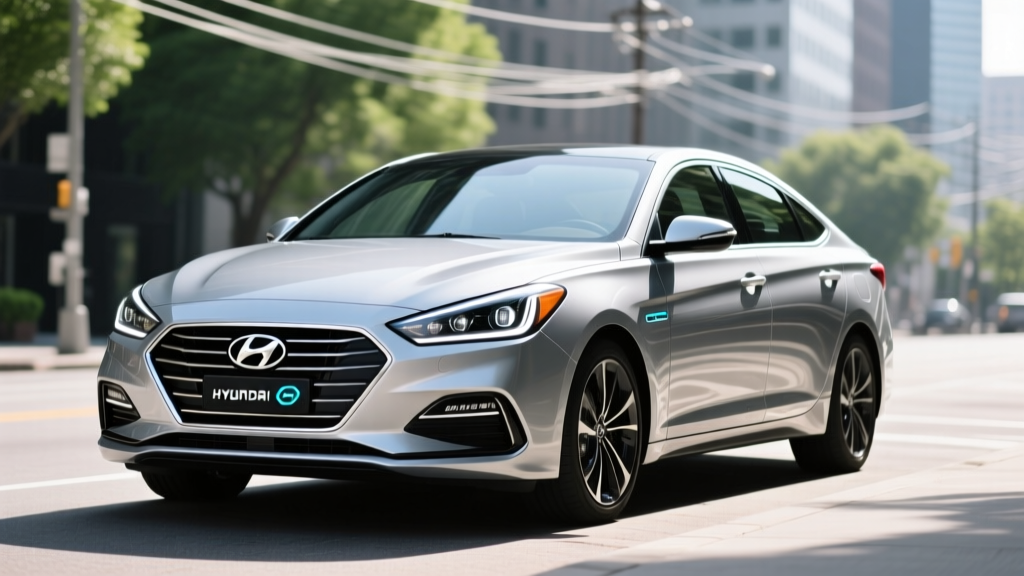
The 2017 Hyundai Sonata Hybrid is a conventional hybrid electric vehicle (HEV) — meaning it never plugs in and generates all its electricity internally through regenerative braking and its gasoline engine. For used-car shoppers in 2026 evaluating midsize hybrid sedans, the 2017 Sonata Hybrid remains a compelling value proposition: strong EPA fuel economy, Hyundai's generous hybrid battery warranty, and a comfortable, tech-forward cabin at a fraction of its original MSRP.
This generation sits in Hyundai's hybrid lineup as a bridge between the older 2011–2014 Sonata Hybrid and the redesigned 2020+ models. It does not offer a plug-in variant for this model year — Hyundai dropped the Sonata Plug-in Hybrid after 2017, making the conventional HEV the sole electrified Sonata option going forward until the Ioniq 6 arrived. If you're shopping specifically for a 2017 Sonata Hybrid, here's every number you need to know.
EPA Fuel Economy and Real-World MPG
The 2017 Sonata Hybrid comes in two trims — base and Limited — and the EPA rates them identically for fuel economy:
| Metric | EPA Rating |
|---|---|
| City MPG | 39 MPG |
| Highway MPG | 43 MPG |
| Combined MPG | 41 MPG |
| Fuel Tank Capacity | 18.5 gallons |
| Total Driving Range | ~758 miles |
Source: fueleconomy.gov
Real-World MPG vs. EPA Sticker
Hyundai's hybrid system uses a 2.0-liter four-cylinder engine paired with an electric motor and a 6-speed automatic transmission — not a CVT. This setup behaves more like a conventional car, which affects real-world efficiency patterns:
- City driving: Many owners report meeting or slightly exceeding the 39 MPG city rating, thanks to frequent regenerative braking and electric-motor assist at low speeds. Expect 37–42 MPG in mixed urban traffic.
- Highway driving: The 43 MPG highway rating is achievable at steady 65–70 mph cruising. At 75–80 mph, expect a drop to roughly 38–40 MPG due to aerodynamic drag.
- Cold weather: In sub-40°F conditions, expect a 5–10% reduction (roughly 36–38 MPG combined) as the engine runs more frequently to provide cabin heat and maintain battery temperature.
Hybrid vs. Plug-In Hybrid: What the 2017 Sonata Hybrid Is (and Isn't)
A common source of confusion: Hyundai sold both a Sonata Hybrid (HEV) and a Sonata Plug-in Hybrid (PHEV) for the 2016–2017 model years. These are fundamentally different vehicles.
| Attribute | Sonata Hybrid (HEV) | Sonata Plug-in Hybrid (PHEV) |
|---|---|---|
| Powertrain Type | Conventional Hybrid | Plug-in Hybrid |
| Plugs In to Charge? | No — self-charging via regen + engine | Yes — Level 1/Level 2 charging |
| Battery Capacity | 1.62 kWh (lithium-ion polymer) | 9.8 kWh (lithium-ion polymer) |
| Electric-Only Range | ~1 mile at very low speed | 27 miles (EPA) |
| Combined MPG / MPGe | 41 MPG | 99 MPGe (electric) / 40 MPG (gas) |
| Total Range | ~758 miles | ~590 miles |
| DC Fast Charging | Not applicable | No — Level 2 only (~2.5 hours) |
| Combined Horsepower | 193 HP | 202 HP |
If you're evaluating a used 2017 Sonata and see "hybrid" in the listing, verify whether it's the HEV or the PHEV. The PHEV has a charge port on the driver-side front fender and a larger battery; the HEV has no external charge port. The conventional 2017 Sonata Hybrid never needs to be plugged in — it charges its small 1.62 kWh battery entirely through regenerative braking and the gasoline engine.
Powertrain Specifications
| Specification | Value |
|---|---|
| Engine | 2.0L 4-cylinder GDI (154 HP, 140 lb-ft) |
| Electric Motor | 38 kW (51 HP), 151 lb-ft |
| Combined System Output | 193 HP |
| Transmission | 6-speed automatic |
| Drivetrain | Front-wheel drive |
| Hybrid Battery | 1.62 kWh lithium-ion polymer |
| 0–60 MPH | ~8.2 seconds |
| Curb Weight | ~3,527 lbs |
| Cargo Volume | 13.3 cu ft (trunk; battery behind rear seat) |
| Original MSRP (Base) | $30,300 |
| Original MSRP (Limited) | $36,100 |
The 2.0L engine runs on the Atkinson cycle for improved thermal efficiency, sacrificing some low-end torque for better fuel economy. The 6-speed automatic — a deliberate choice over the CVTs used in the Toyota Camry Hybrid and Ford Fusion Hybrid — gives the Sonata Hybrid a more natural driving feel, though it sacrifices a few MPG compared to the continuously variable competition.
Battery Warranty, Reliability, and Replacement Cost
For any used hybrid buyer, the traction battery is the single biggest unknown. Here's what you need to know about the 2017 Sonata Hybrid's battery:
Reliability Track Record
The 2017 Sonata Hybrid's powertrain has proven durable in real-world ownership. Hyundai's lithium-ion polymer battery chemistry, while less energy-dense than the NMC cells in modern EVs, has shown modest degradation rates. Most owner reports on forums and Edmunds owner reviews indicate batteries retaining 90%+ capacity well past 100,000 miles.
Common issues reported for this model year include:
- Occasional hybrid system warning lights related to the 12V auxiliary battery (not the traction battery) — an inexpensive fix.
- Brake actuator wear around 80,000–100,000 miles — the regenerative braking system reduces pad wear but the hydraulic actuator can develop issues.
- Infotainment system sluggishness compared to modern standards, though not a mechanical concern.
Battery Replacement Cost
If the hybrid battery fails outside warranty coverage, a replacement from Hyundai typically costs between $2,500 and $4,000 including labor. Third-party rebuilt or refurbished hybrid batteries are available for approximately $1,500 to $2,500. Given the 10-year/100,000-mile warranty, a 2017 model's factory coverage extends through 2027 or 100,000 miles — meaning most examples on the used market in 2026 should still carry at least partial factory battery warranty.
Tax Credits and Used Pricing in 2026
Federal Tax Credit Eligibility
The 2017 Sonata Hybrid does not qualify for the federal §30D new clean vehicle credit (it never did — conventional HEVs have never been eligible for the full $7,500 credit). It also does not qualify for the Used Clean Vehicle Credit (up to $4,000 under IRC §25E) because that credit applies only to used EVs and plug-in hybrids with a battery capacity of at least 7 kWh — the Sonata Hybrid's 1.62 kWh battery falls far short of that threshold.
The 2017 Sonata Plug-in Hybrid, with its 9.8 kWh battery, may qualify for the used EV credit if all IRS §25E requirements are met (sale price under $25,000, buyer income caps, purchased from a licensed dealer). Verify eligibility with a tax professional.
Used Market Pricing (2026)
As of early 2026, used 2017 Sonata Hybrid pricing typically falls in these ranges depending on mileage and condition:
- 60,000–80,000 miles: $13,000–$16,000
- 80,000–110,000 miles: $10,500–$13,500
- 110,000–140,000 miles: $8,500–$11,000
Compared to a 2017 Toyota Camry Hybrid (which commands a used premium of roughly $1,500–$3,000 at similar mileage), the Sonata Hybrid offers better value for budget-conscious buyers willing to accept slightly lower resale retention.
Who Should Choose the 2017 Sonata Hybrid vs. an EV or Gas Car?
- You drive 10,000–18,000 miles per year in mixed city/highway conditions
- You lack access to home Level 2 charging and can't rely on public DC fast chargers
- Your budget is under $16,000 and you want maximum fuel savings without plug-in complexity
- You want a midsize sedan with strong rear-seat room and a comfortable ride
- You plan to keep the car 3–5 years and want remaining factory hybrid warranty coverage
- You have reliable home Level 2 charging
- Your daily commute is under 60 miles round-trip
- You want to eliminate gasoline costs entirely and qualify for the used EV tax credit
- You're willing to budget $18,000–$30,000 for a used EV with 200+ miles of range
- Your annual mileage is under 8,000 miles (fuel savings won't offset the hybrid premium)
- You prioritize low purchase price above all else (a gas 2017 Sonata starts ~$3,000–$5,000 less used)
Pros and Cons
- 41 MPG combined EPA — excellent for a midsize sedan
- 10-year/100,000-mile hybrid battery warranty (verify transferability)
- 6-speed automatic feels more natural than competitor CVTs
- Spacious cabin with competitive rear legroom (35.6 inches)
- Strong value on the used market vs. Camry Hybrid
- No plug-in charging required — zero infrastructure dependency
- Trunk space reduced to 13.3 cu ft due to battery placement
- Acceleration (8.2 sec 0–60) is adequate but not quick
- No DC fast charging (not applicable for HEV, but PHEV variant also lacks it)
- Infotainment feels dated by 2026 standards
- No all-wheel-drive option
- Does not qualify for federal used EV tax credit
Frequently Asked Questions
How many MPG does the 2017 Sonata Hybrid get?
The EPA rates the 2017 Sonata Hybrid at 39 MPG city, 43 MPG highway, and 41 MPG combined. Real-world owners typically see 37–42 MPG in mixed driving. City-heavy commutes often yield the best results because regenerative braking recaptures energy at low speeds.
Does the 2017 Sonata Hybrid need to be plugged in?
No. The 2017 Sonata Hybrid is a conventional HEV — it charges its 1.62 kWh battery entirely through regenerative braking and the gasoline engine. There is no plug or charge port. Only the separate 2017 Sonata Plug-in Hybrid (a different model) requires plugging in.
How far can the 2017 Sonata Plug-in Hybrid go on electric only?
The 2017 Sonata Plug-in Hybrid (PHEV) has an EPA-rated 27 miles of electric-only range on its 9.8 kWh battery. Once that is depleted, it operates as a conventional hybrid at 40 MPG combined. Total range is approximately 590 miles. Note: this is a different vehicle from the standard Sonata Hybrid.
Is the 2017 Sonata Hybrid reliable?
Yes — the 2017 Sonata Hybrid has a strong reliability record. The lithium-ion polymer hybrid battery is covered by Hyundai's 10-year/100,000-mile warranty, and most examples still in service show minimal battery degradation. The most common issues relate to the 12V auxiliary battery and infotainment, not the hybrid system itself.
What does it cost to replace the hybrid battery?
A new OEM hybrid battery from Hyundai costs approximately $2,500–$4,000 installed. Refurbished third-party batteries run $1,500–$2,500. However, most 2017 models should still carry factory battery warranty coverage through 2027 or 100,000 miles.
Does the 2017 Sonata Hybrid qualify for any tax credit?
No. Conventional hybrids (HEVs) do not qualify for the federal §30D new vehicle credit or the §25E used clean vehicle credit. The used EV credit requires a battery capacity of at least 7 kWh — the Sonata Hybrid's 1.62 kWh battery does not meet this threshold. The Sonata Plug-in Hybrid (9.8 kWh) may qualify for the used credit if all IRS requirements are met.
Hybrid vs. PHEV vs. EV — which should I choose?
A conventional hybrid (HEV) like the Sonata Hybrid is best if you lack home charging and want fuel savings with zero behavior change. A plug-in hybrid (PHEV) suits drivers with short commutes and home charging who want electric-only daily driving plus gas-engine range for road trips. A full EV (BEV) makes sense if you have reliable home charging, want to eliminate gas entirely, and can invest in a higher upfront cost for lower long-term operating expenses. For a used budget under $16,000 without home charging, the 2017 Sonata Hybrid is one of the strongest choices available.