If you're researching the 2017 RAV4 Hybrid gas mileage in 2026, you're likely shopping the used market for a proven, efficient compact SUV that doesn't require a plug. Toyota's second-generation hybrid crossover remains one of the most fuel-efficient non-plug-in SUVs of its era, and nearly a decade later, its powertrain reputation has only strengthened. This guide covers the EPA numbers, real-world fuel economy data, hybrid battery longevity, and how this HEV stacks up against modern plug-in hybrids and full EVs.
2017 RAV4 Hybrid MPG: EPA Ratings and Real-World Results
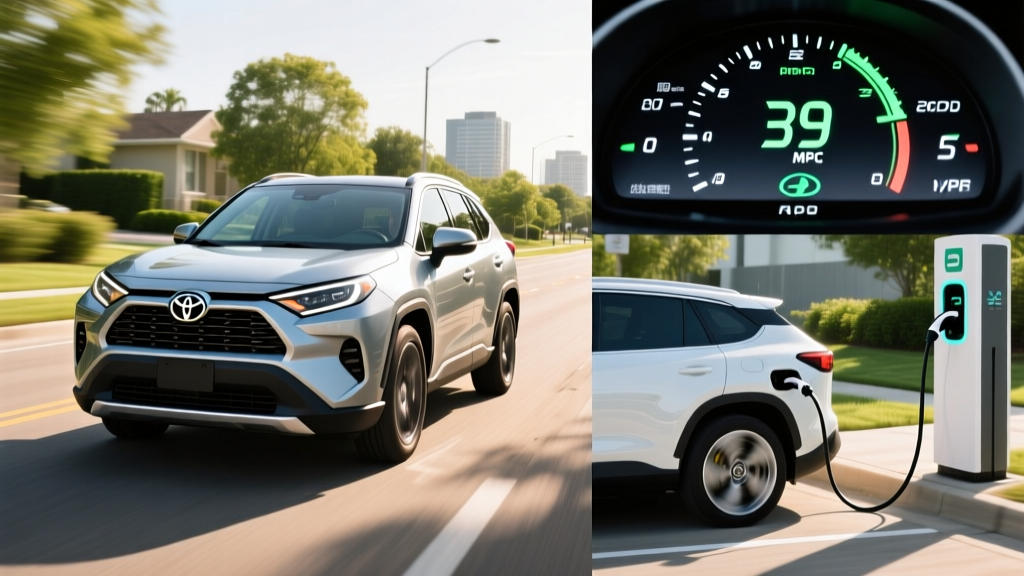
The 2017 Toyota RAV4 Hybrid is a conventional hybrid electric vehicle (HEV) — it generates its own electricity through regenerative braking and its gasoline engine. You never plug it in. Here's the official fuel economy breakdown from fueleconomy.gov:
| Driving Cycle | EPA Rating | Real-World Expectation |
|---|---|---|
| City | 34 MPG | 33–37 MPG (hybrids often beat EPA in stop-and-go) |
| Highway | 30 MPG | 28–31 MPG (electric assist diminishes at sustained speed) |
| Combined | 32 MPG | 30–34 MPG depending on driving mix |
With a 14.5-gallon fuel tank, the 2017 RAV4 Hybrid delivers approximately 435–490 miles of total range per tank — a significant advantage over most EVs for road-trip flexibility, with zero charging infrastructure required.
HEV vs. PHEV: Understanding What the 2017 RAV4 Hybrid Is (and Isn't)
A common source of confusion is the difference between a conventional hybrid (HEV) like the 2017 RAV4 Hybrid and a plug-in hybrid (PHEV) like the current RAV4 Prime. The distinction matters for fuel costs, charging needs, and tax credit eligibility.
| Feature | 2017 RAV4 Hybrid (HEV) | 2026 RAV4 Prime (PHEV) |
|---|---|---|
| Plug-in charging | No — self-charging via engine & regen | Yes — Level 1/Level 2 AC charging |
| Electric-only range | ~0.5–1 mile at very low speed | 42 miles (EPA) |
| Battery capacity | ~1.6 kWh (nickel-metal hydride) | 18.1 kWh (lithium-ion) |
| Combined MPG / MPGe | 32 MPG combined | 94 MPGe (electric) / 38 MPG (gas-only) |
| Combined horsepower | 194 HP | 302 HP |
| Federal tax credit (§30D) | Not eligible | Up to $7,500 (subject to income/MSRP/sourcing rules) |
| 0–60 mph | 7.8 seconds | 5.7 seconds |
The 2017 RAV4 Hybrid is strictly a self-charging HEV. It uses a small battery buffer to assist the gasoline engine during acceleration and to enable brief electric-only crawling in parking lots or heavy traffic. You will never see a charge port on this vehicle. If you want electric-only commuting capability, you need a PHEV or a full BEV — but those require home charging access and a higher purchase price.
Powertrain Specs: What Moves the 2017 RAV4 Hybrid
| Specification | Detail |
|---|---|
| Engine | 2.5L 4-cylinder Atkinson-cycle (150 HP / 135 lb-ft) |
| Front electric motor | 105 kW (141 HP) |
| Rear electric motor (AWD models) | 50 kW (67 HP) — rear axle only, no mechanical driveshaft |
| Net combined system output | 194 HP |
| Transmission | eCVT (planetary gearset, not a belt-driven CVT) |
| Hybrid battery | ~1.6 kWh, nickel-metal hydride (NiMH), 204V |
| Drivetrain | FWD standard; electronic AWD (AWD-i) available |
| 0–60 mph | 7.8 seconds |
| Towing capacity | 1,750 lbs |
Toyota's Hybrid Synergy Drive uses a planetary gearset to seamlessly blend the gas engine and electric motors. The result is smooth, gearless acceleration with no shift shock. The AWD-i system is worth noting: rather than a heavy mechanical driveshaft, the rear axle is powered entirely by a dedicated electric motor that engages only when slip is detected. This keeps weight down and preserves the 32 MPG combined rating even with all-wheel drive — a rarity for AWD SUVs of this era.
Hybrid Battery Longevity, Warranty, and Replacement Cost
The single biggest concern for used hybrid buyers is battery degradation and replacement cost. Here's what the data shows for the 2017 RAV4 Hybrid's NiMH pack:
Real-world degradation data: Toyota's NiMH hybrid batteries have an exceptional track record. Fleet data and owner surveys indicate that RAV4 Hybrid batteries typically retain 85–90% of their original capacity after 150,000 miles. Unlike full EVs where battery capacity directly dictates range, a hybrid's small battery is a buffer — even moderate degradation has minimal impact on fuel economy. The engine simply compensates.
Replacement cost if needed:
- Toyota dealership (new OEM pack): $3,000–$4,500 installed
- Refurbished/remanufactured pack: $1,500–$2,500 installed
- Individual cell module replacement (specialist shops): $500–$1,200
At nearly a decade old, some 2017 RAV4 Hybrids with 120,000+ miles may begin showing hybrid battery warning codes. However, widespread failures before 180,000–200,000 miles remain uncommon. When shopping used, request a hybrid battery health check — many Toyota dealerships can pull the State of Health (SoH) reading via Techstream diagnostics.
Is the 2017 RAV4 Hybrid Reliable? Long-Term Ownership Data
The 2017 RAV4 Hybrid benefits from Toyota's decades-long hybrid refinement. The 2.5L Atkinson-cycle engine (A25A-FXS family) is under-stressed and thermally efficient, contributing to exceptional longevity. Key reliability notes:
- eCVT transmission: Toyota's planetary-gear eCVT has no belts, clutches, or torque converters to wear out. Failures are exceedingly rare and the unit is generally considered lifetime-rated.
- Brake wear: Regenerative braking handles most deceleration, so physical brake pads often last 80,000–100,000+ miles — two to three times longer than a conventional gas vehicle.
- AWD-i rear motor: The rear electric motor is sealed and maintenance-free. No differential fluid changes are required on most model years.
- Common issues: Some owners report 12V auxiliary battery failures (a standard automotive issue, not hybrid-specific) and occasional inverter coolant pump recalls. Check NHTSA recall data for any open campaigns on a specific VIN.
Overall, the 2017 RAV4 Hybrid ranks among the most reliable compact SUVs — hybrid or otherwise — in its model year. Maintenance costs are lower than a comparable gas-only RAV4 due to reduced brake wear, no traditional starter motor, and no alternator to replace.
2017 RAV4 Hybrid Pricing and Tax Credit Eligibility in 2026
As a used vehicle in 2026, the 2017 RAV4 Hybrid does not qualify for the new-vehicle §30D federal tax credit (which applies only to new EVs and PHEVs meeting battery-sourcing and MSRP caps). However, buyers should be aware of the Used Clean Vehicle Credit (§25E):
- Covers 30% of the sale price, up to $4,000 for qualifying used EVs and PHEVs
- The 2017 RAV4 Hybrid is a conventional HEV and does not qualify for §25E — this credit applies only to plug-in vehicles
- No federal tax incentive exists for purchasing a used conventional hybrid in 2026
Current used market pricing (2026 estimates):
| Condition / Mileage | Approximate Price Range |
|---|---|
| 60,000–80,000 miles, clean title | $18,000–$22,000 |
| 80,000–120,000 miles, clean title | $14,500–$18,000 |
| 120,000–160,000 miles, clean title | $11,000–$14,500 |
The hybrid premium over a gas-only 2017 RAV4 has largely depreciated away. At current used prices, the hybrid often costs only $500–$1,500 more than an equivalent gas model — a premium you'll recoup in fuel savings within 12–18 months of average driving.
Who Should Buy the 2017 RAV4 Hybrid vs. a PHEV or Full EV?
Choose the 2017 RAV4 Hybrid (HEV) if:
- You lack access to home or workplace charging (apartment, street parking, no garage)
- Your budget is under $22,000 and you want a proven, reliable compact SUV
- You take frequent long road trips and don't want to plan around charging stops
- You want AWD capability without a fuel-economy penalty
- You prefer the lowest-maintenance electrified option with no charging cables or apps
Choose a PHEV (like the RAV4 Prime) if:
- You can install a Level 2 home charger and your daily commute is under 42 miles
- You want to drive mostly on electricity with gas backup for road trips
- You qualify for the §30D federal tax credit (income and MSRP caps apply — see IRS guidelines)
- You want significantly more power (302 HP vs. 194 HP)
Choose a full EV (like a used Tesla Model Y or Hyundai Ioniq 5) if:
- You have reliable home Level 2 charging
- Your daily driving is under 250 miles and you're comfortable with public DC fast charging for road trips
- You want zero tailpipe emissions and the lowest per-mile fuel cost (~$0.04–$0.06/mile on home electricity vs. ~$0.12–$0.15/mile on gas)
Pros and Cons of the 2017 RAV4 Hybrid in 2026
Pros
- 32 MPG combined — still competitive with newer compact SUVs
- No plug-in charging required; zero infrastructure dependency
- Exceptional long-term reliability; eCVT is virtually bulletproof
- AWD-i available with no MPG penalty vs. FWD
- Lower brake wear thanks to regenerative braking
- Strong cargo space (38.4 cu ft behind rear seats)
- Used pricing offers excellent value per MPG dollar
Cons
- 30 MPG highway is unremarkable — EVs and some diesels beat it on long trips
- NiMH battery is older tech; less energy-dense than modern lithium-ion packs
- No electric-only commuting capability (unlike PHEVs)
- Infotainment is dated — no Apple CarPlay or Android Auto on 2017 models
- 1,750-lb towing capacity is low for the class
- No federal tax credits available for used HEV purchase
- Original hybrid battery warranty is mostly expired by 2026
Frequently Asked Questions
How many MPG does the 2017 RAV4 Hybrid actually get?
The EPA rates it at 34 city / 30 highway / 32 combined MPG. In real-world driving, city commuters often see 33–37 MPG thanks to regenerative braking and electric-assist at low speeds. Highway-heavy drivers should expect 28–31 MPG. Cold weather, roof cargo boxes, and aggressive acceleration will reduce these figures by 5–10%.
Does the 2017 RAV4 Hybrid need to be plugged in?
No. The 2017 RAV4 Hybrid is a conventional HEV (hybrid electric vehicle) with no charge port. It charges its own small battery through regenerative braking and the gasoline engine. You fuel it exactly like a regular gas car — just with better mileage.
How far can the 2017 RAV4 Hybrid drive on electric only?
Less than one mile, and only at very low speeds (under 25 mph). The hybrid battery is a ~1.6 kWh buffer designed to assist acceleration and capture braking energy — not to provide meaningful electric-only range. If electric-only commuting is your goal, look at a PHEV like the RAV4 Prime (42 miles electric) or a full EV.
What does it cost to replace the hybrid battery?
A new OEM replacement from a Toyota dealer runs $3,000–$4,500 installed. Refurbished packs from hybrid specialists cost $1,500–$2,500. Individual cell module repairs can be as low as $500–$1,200. Most 2017 RAV4 Hybrid batteries last well beyond 150,000 miles with minimal degradation, making replacement unlikely for many owners.
Does the 2017 RAV4 Hybrid qualify for any tax credit?
No. Federal tax credits under §30D (new vehicles) and §25E (used plug-in vehicles) apply only to plug-in electric vehicles — BEVs and PHEVs. A conventional hybrid like the 2017 RAV4 Hybrid does not qualify for any federal purchase incentive. Some states may have offered hybrid incentives at the time of original purchase, but these are no longer available for used transactions.
Is the 2017 RAV4 Hybrid more reliable than the gas-only RAV4?
Data suggests yes, or at minimum equal. The hybrid powertrain eliminates several wear items found on gas models (no traditional starter, no alternator, less brake wear). Toyota's eCVT planetary gearset has proven more durable than conventional automatic transmissions in long-term fleet data. The main hybrid-specific risk — battery replacement — is uncommon before 180,000+ miles.
How does the 2017 RAV4 Hybrid compare to a modern EV in cost per mile?
At 32 MPG and $3.50/gallon gas, the RAV4 Hybrid costs roughly $0.11 per mile in fuel. A modern EV charging at home at $0.15/kWh and averaging 3.5 miles/kWh costs about $0.043 per mile — roughly 60% less. However, the RAV4 Hybrid's lower purchase price (under $22K used vs. $25K–$35K for a used EV) and zero charging-infrastructure cost can offset that difference for budget-conscious buyers or those without home charging.