Quick Verdict: A Proven PHEV for Budget-Conscious Commuters
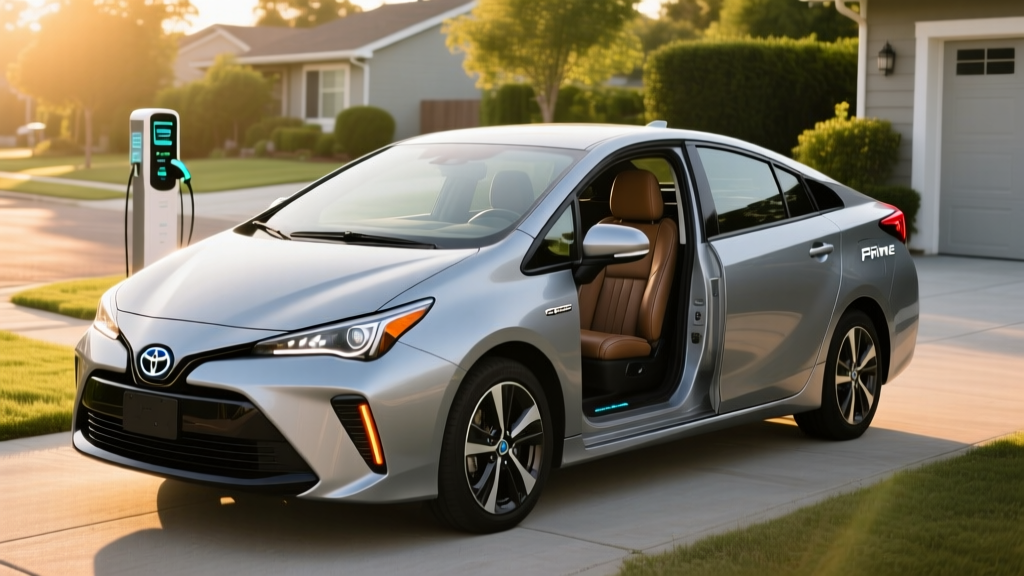
The 2017 Toyota Prius Prime was the first generation of Toyota's plug-in hybrid Prius, offering 25 miles of electric-only driving before seamlessly transitioning into a highly efficient conventional hybrid. Nearly a decade later, it remains one of the most practical used PHEVs on the market — especially for commuters with short drives and access to home or workplace charging. With EPA-rated 54 MPG combined in hybrid mode, a reliable 8.8 kWh battery, and typical used prices between $14,000 and $20,000 in 2026, the 2017 Prius Prime hybrid delivers electrified efficiency without the range anxiety or upfront cost of a full battery-electric vehicle.
But before you buy a used example, you need to understand what this car does well, where it falls short, and what to look for in a 9-year-old plug-in hybrid battery. This guide covers everything.
HEV vs PHEV: What the 2017 Prius Prime Actually Is
Buyers often confuse conventional hybrids (HEVs) with plug-in hybrids (PHEVs). The distinction matters for your daily driving and fuel costs.
| Feature | Conventional Hybrid (HEV) | Plug-In Hybrid (PHEV) — Prius Prime |
|---|---|---|
| Plug-in charging | No — charges via regenerative braking and engine | Yes — plug in to maximize electric-only miles |
| Electric-only range | 1–2 miles at low speed | 25 miles (EPA) |
| Battery size | ~1.3 kWh (small buffer) | 8.8 kWh (usable ~6.0 kWh) |
| Gas engine | Always available, seamlessly blends with motor | Same — kicks in after EV range is depleted |
| Fuel cost savings | ~30–40% less fuel than gas-only car | ~50–70% less fuel if you charge regularly |
The standard 2017 Toyota Prius (non-Prime) is a conventional HEV — you never plug it in, and it gets about 52 MPG combined. The 2017 Prius Prime hybrid is the PHEV variant: it has a larger battery you can charge from a wall outlet, giving you 25 miles of pure electric driving. Once that electric range is used up, it operates exactly like a regular Prius hybrid, with no range anxiety whatsoever.
Fuel Economy: EPA MPG and Real-World Efficiency
The 2017 Prius Prime earns strong EPA ratings in both electric and hybrid modes. Here's the official breakdown from fueleconomy.gov:
| Mode | City | Highway | Combined |
|---|---|---|---|
| Hybrid (gas) mode | 55 MPG | 53 MPG | 54 MPG |
| Electric-only mode | 133 MPGe combined | ||
Real-World MPG vs EPA Sticker
In real-world ownership, the 2017 Prius Prime hybrid often exceeds its EPA city rating. Hybrids benefit enormously from stop-and-go traffic, where regenerative braking recaptures energy and the electric motor handles low-speed driving. Many owners report 58–62 MPG in city commuting.
Highway driving tells a different story. At sustained 70–80 mph speeds, aerodynamic drag increases and regenerative braking opportunities disappear. Expect 47–50 MPG on the highway — still excellent, but below the EPA sticker. In cold weather (below 30°F), the gasoline engine runs more frequently to provide cabin heat, which can drop hybrid-mode efficiency to 42–46 MPG on short trips.
If you charge nightly and your commute is under 25 miles round-trip, you may go weeks without visiting a gas station. Owners who charge regularly report using 2–4 gallons per month for local driving.
Electric-Only Range and Total Driving Range
The 2017 Prius Prime's EPA-rated electric-only range is 25 miles. This comes from its 8.8 kWh lithium-ion battery pack (approximately 6.0 kWh usable, with the rest held as a buffer to protect long-term battery health).
EPA Electric Range: 25 miles
Real-World Expectation: 20–23 miles in moderate weather at mixed speeds; 15–18 miles in cold weather or at sustained highway speeds above 65 mph.
Total Combined Range (EV + Gas): Approximately 640 miles with a full tank and full charge.
The electric-only top speed is 84 mph, which means the Prime can handle freeway merging in EV mode — though doing so drains the battery quickly. For maximum electric range, keep speeds under 55 mph and use the car's ECO driving mode.
Once the battery depletes to its minimum state of charge, the 1.8-liter four-cylinder engine engages seamlessly. There is no jarring transition, and the car continues as a standard hybrid with the full 640-mile total range. You never need to worry about being stranded — this is the core advantage of a PHEV over a full EV for drivers without reliable charging access.
Powertrain, Battery, and Charging Specs
| Specification | 2017 Toyota Prius Prime |
|---|---|
| Engine | 1.8L 4-cylinder Atkinson-cycle (95 hp) |
| Electric motor | Permanent magnet AC synchronous (71 hp) |
| Combined system output | 121 hp (net) |
| Transmission | Continuously Variable (eCVT) |
| Battery capacity | 8.8 kWh total (lithium-ion, ~6.0 kWh usable) |
| Level 1 charging (120V) | ~5.5 hours (0–full) |
| Level 2 charging (240V) | ~2.5 hours (0–full) |
| DC fast charging | Not supported |
| Charge port | J1772 (Level 1/2 only) |
| 0–60 mph | ~10.2 seconds |
| Drivetrain | Front-wheel drive |
Charging Practicalities
The 2017 Prius Prime does not support DC fast charging — a common limitation of first-generation PHEVs. You're limited to Level 1 (standard 120V household outlet) or Level 2 (240V, like a dryer outlet or dedicated EV charger).
Level 1 charging is the default and comes with a portable cord included with the car. Plugging into a standard 120V outlet delivers roughly 1.4 kW, filling the battery from empty in about 5.5 hours. For most owners who plug in overnight, this is perfectly adequate — you wake up to a full charge every morning.
Level 2 charging at 240V cuts that time to roughly 2.5 hours. A basic Level 2 home charger (16A or 32A) costs $250–$500 for the equipment, with installation by a licensed electrician running $300–$800 depending on your panel and wiring. Given the Prime's small battery, a full home charging station is optional — many owners are perfectly satisfied with Level 1.
Public Level 2 chargers (at grocery stores, workplaces, or parking garages) are also compatible via the J1772 connector. Just don't expect to use any DC fast chargers — the car physically lacks the port.
Battery Health, Warranty, and Replacement Cost
Battery longevity is the single biggest concern for used PHEV buyers. Here's what you need to know about the 2017 Prius Prime's battery.
Original Battery Warranty: 8 years / 100,000 miles (10 years / 150,000 miles in California and states adopting CARB emissions standards)
Warranty Threshold: Toyota covers the battery if it drops below approximately 70% of original capacity.
2026 Status: Most 2017 Prius Prime vehicles are now outside the 8-year / 100,000-mile federal warranty window. California/CARB-state vehicles may still have coverage through 2027 if under 150,000 miles.
Real-World Degradation Data
Toyota's hybrid and PHEV battery packs are among the most durable in the industry. The 2017 Prius Prime uses a lithium-ion pack with conservative charge management — Toyota deliberately limits usable capacity to about 68% of the total 8.8 kWh to minimize stress on the cells.
Based on owner reports and fleet data through 2025, most 2017 Prius Prime batteries show 8–15% degradation after 7–9 years of typical use. That translates to a current electric-only range of approximately 21–23 miles (down from the original 25). This is well within acceptable limits and means the vast majority of these batteries are still performing well.
Factors that accelerate degradation include frequent deep discharges (running the battery to near-empty daily), sustained high-temperature exposure (Arizona/Texas summers), and high-mileage use. Batteries in moderate climates with regular Level 1 charging tend to show the least wear.
Battery Replacement Cost
If the battery does eventually need replacement, a new OEM Toyota Prius Prime battery pack costs approximately $3,500–$4,500 including installation at a dealership. Independent hybrid-battery specialists can sometimes perform the replacement for $2,500–$3,500. Refurbished or salvaged battery packs are available for $1,500–$2,500, though these come with shorter warranties.
For context, the Prius Prime's battery replacement cost is significantly lower than a full EV battery replacement (which can exceed $10,000–$20,000), because the PHEV battery is much smaller.
Reliability and What to Inspect on a Used Example
The 2017 Prius Prime inherits Toyota's strong reliability reputation. The fourth-generation Prius platform (on which the Prime is based) consistently earns above-average reliability scores. NHTSA gave the 2017 Prius Prime a 5-star overall safety rating, and the IIHS rated it a Top Safety Pick.
When evaluating a used 2017 Prius Prime, focus your inspection on these areas:
- Battery state of health (SoH): Ask the seller for a Toyota Hybrid Battery Health Check report, available at any Toyota dealer. This shows current capacity percentage.
- Charge port and cable: Inspect the J1772 charge port for corrosion, loose connections, or damage. Test the included Level 1 charging cord.
- Brake system: Regenerative braking reduces wear on the friction brakes, but the brake actuator (a known issue on some Toyota hybrids) should be checked if you hear unusual noises.
- Coolant system: The Prius Prime has two coolant loops — one for the engine and one for the inverter/hybrid system. Both should be inspected for leaks and proper fluid level.
- 12V auxiliary battery: Like all hybrids, the Prime has a conventional 12V battery (located in the rear) that powers accessories. These typically last 4–6 years and cost ~$200 to replace.
Pricing, Tax Credits, and Ownership Economics
Used Pricing in 2026
As of early 2026, the 2017 Toyota Prius Prime trades on the used market in these approximate ranges:
- Advanced trim (base): $14,000–$17,000 (80,000–120,000 miles)
- Premium trim: $15,500–$18,500 (60,000–100,000 miles)
- Premium Plus trim (top): $17,000–$20,500 (50,000–90,000 miles)
Prices vary by region, mileage, condition, and battery health. Low-mileage examples with documented battery health checks command a premium.
Tax Credit Eligibility
The 2017 Prius Prime originally qualified for a $4,502 federal tax credit under the pre-2023 rules. That credit is no longer available for new purchases of this model year.
For used buyers in 2026, the IRS §25E Used Clean Vehicle Credit offers up to $4,000 (or 30% of the sale price, whichever is less) on qualifying used PHEVs and EVs. Key requirements:
- Sale price must be $25,000 or less (most 2017 Prius Prime examples qualify)
- Buyer income caps: $75,000 single / $112,500 head of household / $150,000 married filing jointly
- Vehicle must be at least 2 model years old (2017 qualifies)
- Must purchase from a licensed dealer (private-party sales do not qualify)
- The vehicle's battery must still have at least 4 kWh capacity (the Prime's 8.8 kWh pack qualifies)
- Credit is non-refundable — you must have tax liability to claim it
At a typical $16,000 purchase price, 30% equals $4,800 — but the credit is capped at $4,000. This effectively reduces your net cost by up to 25%, making the 2017 Prius Prime one of the best-value electrified vehicles on the used market.
Cost to Operate
Charging the Prius Prime's small battery costs approximately $0.60–$1.20 per full charge at average US electricity rates ($0.12–$0.18/kWh). That's roughly 3–5 cents per electric mile. In hybrid mode at 54 MPG and $3.30/gallon gas, you're paying about 6 cents per mile. Either way, the Prius Prime is among the cheapest vehicles to operate in the US market.
Pros
- 25-mile EV range covers most commutes gas-free
- 54 MPG hybrid mode — exceptional even by 2026 standards
- No range anxiety — gas engine always available
- Charges on a standard 120V outlet (no expensive install required)
- Proven Toyota reliability with low battery degradation
- Eligible for up to $4,000 used EV tax credit (§25E)
- Low maintenance costs (no oil changes between fill-ups, long brake life)
Cons
- Only 25 miles of electric range (short compared to 2026 PHEVs with 40+ miles)
- No DC fast charging capability
- Modest 121 hp — acceleration is leisurely (10.2s to 60 mph)
- Tight rear seat and limited cargo space (19.8 cu ft)
- Original infotainment system feels dated; no Apple CarPlay/Android Auto
- Most examples are now out of factory battery warranty
Who Should Choose the 2017 Prius Prime vs a Full EV or Gas Car?
Choose the 2017 Prius Prime if:
- Your daily round-trip commute is under 25 miles and you can charge at home or work
- You want electric commuting but also take occasional road trips beyond EV range
- You don't have access to reliable public DC fast charging in your area
- Your budget is $14,000–$20,000 and you want to minimize fuel costs
- You want a low-risk entry into electrified driving without committing to a full EV
Choose a full EV (like a used Chevy Bolt or Nissan LEAF) if:
- You have reliable home Level 2 charging and your daily driving is under 150 miles
- You want zero gasoline use and minimal maintenance (no engine, no oil changes ever)
- You have a second gas or hybrid car for long road trips
Choose a conventional hybrid (standard Prius HEV) if:
- You cannot charge at home or work (apartment, street parking, no outlet access)
- Your daily driving exceeds 50+ miles and you don't want to plug in
- You want the lowest possible purchase price in a used efficient car
Stick with a gas car if:
- You drive fewer than 5,000 miles per year (fuel savings won't offset any price premium)
- You need a large SUV or truck for towing or heavy cargo
Frequently Asked Questions
How many MPG does the 2017 Prius Prime hybrid get?
The EPA rates the 2017 Prius Prime at 55 city / 53 highway / 54 combined MPG in hybrid mode. In electric-only mode, it achieves 133 MPGe combined. Real-world city driving often exceeds 58 MPG thanks to regenerative braking, while sustained highway driving at 75+ mph may drop to 47–50 MPG.
How far can the 2017 Prius Prime go on electric only?
The EPA rates it at 25 miles of electric-only range. In real-world conditions, expect 20–23 miles in moderate weather and 15–18 miles in cold weather or at highway speeds. The total combined range (electric plus gasoline) is approximately 640 miles.
Is the 2017 Prius Prime reliable, and what does a battery replacement cost?
Yes — the 2017 Prius Prime inherits Toyota's strong hybrid reliability track record. The lithium-ion battery is conservatively managed, and most examples show only 8–15% degradation after 7–9 years. If replacement is ever needed, expect to pay $3,500–$4,500 for a new OEM battery at a dealer, or $2,500–$3,500 at an independent hybrid specialist. The original warranty was 8 years/100,000 miles (10 years/150,000 in CARB states), and most 2017 examples are now outside this window.
Does the 2017 Prius Prime qualify for any tax credit?
Not as a new vehicle — the original federal credit is long expired. However, under the IRS §25E Used Clean Vehicle Credit, you may qualify for up to $4,000 (30% of sale price, capped at $4,000) when purchasing from a licensed dealer, provided your income falls below IRS thresholds ($75K single / $150K married filing jointly) and the sale price is $25,000 or less. Consult a tax professional to confirm eligibility.
Can I charge the 2017 Prius Prime at a public DC fast charger?
No. The 2017 Prius Prime only supports Level 1 (120V) and Level 2 (240V) AC charging via its J1772 port. It does not have a DC fast charging port (CCS or CHAdeMO). For a PHEV with this small a battery, Level 1 overnight charging is sufficient for most owners.
How does the 2017 Prius Prime compare to newer PHEVs?
Newer PHEVs like the 2025 Toyota RAV4 Prime (42 miles EV range) or 2025 Prius Prime (44 miles EV range) offer significantly more electric range, more power, and modern infotainment. However, they also cost $33,000–$45,000+ new. The 2017 Prius Prime at $14,000–$20,000 used delivers 60–70% of the benefit at 40–50% of the cost, making it an excellent value proposition for budget-minded buyers.
What's the difference between the 2017 Prius Prime and the regular 2017 Prius?
The regular 2017 Prius is a conventional hybrid (HEV) — you never plug it in, and it has no meaningful electric-only range. It gets 52 MPG combined. The Prius Prime is a plug-in hybrid (PHEV) with a larger 8.8 kWh battery, 25 miles of electric-only range, and a charge port. Once the battery is depleted, both cars operate identically as hybrids. The Prime also has slightly less cargo space (19.8 vs 24.6 cu ft) due to the larger battery.