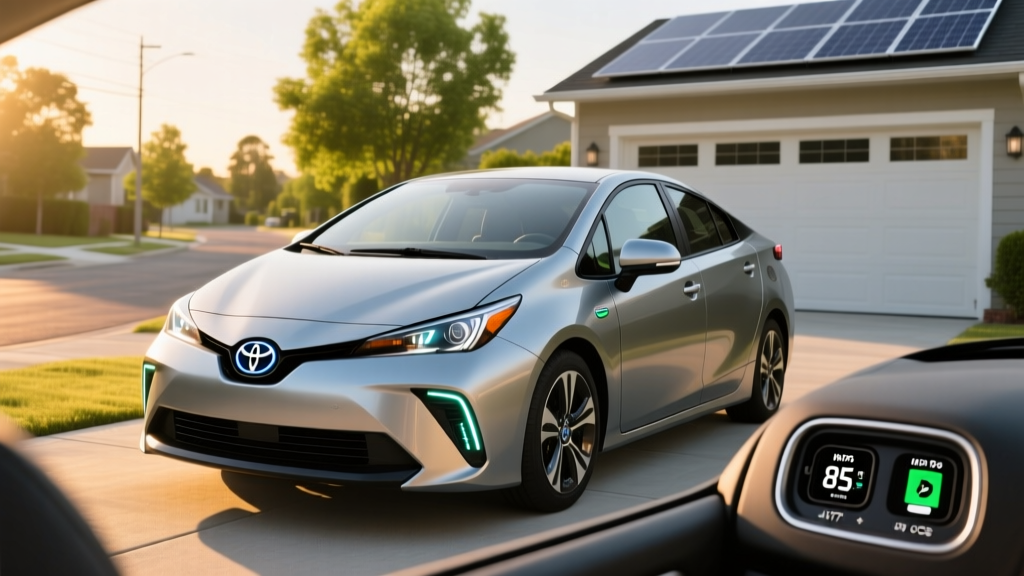
The fourth-generation Toyota Prius (model code XW50) launched for the 2016 model year, and by 2017 it had cemented itself as the benchmark for conventional hybrid efficiency. Nearly a decade later, the 2017 Prius hybrid remains one of the most searched used hybrid vehicles — and for good reason. With an EPA-estimated 52 MPG combined, a reputation for bulletproof reliability, and used prices that have settled into the $12,000–$18,000 range, it's a compelling proposition for budget-conscious commuters in 2026.
But buying a nine-year-old hybrid comes with specific concerns: How much capacity has the nickel-metal hydride (NiMH) traction battery lost? What does a replacement actually cost? And how does the 2017 Prius stack up against newer hybrids and plug-in alternatives? This guide answers those questions with exact data.
2017 Prius Hybrid: Core Specifications at a Glance
| Specification | Value |
|---|---|
| Powertrain Type | Conventional Hybrid (HEV) — no plug-in |
| Engine | 1.8L 4-cylinder Atkinson-cycle + electric motor |
| Combined System Horsepower | 121 hp |
| EPA City MPG | 54 mpg (Two/Eco trims) / 58 mpg (Prime not applicable — see below) |
| EPA Highway MPG | 50 mpg (Two/Eco trims) |
| EPA Combined MPG | 52 mpg (Two/Eco trims) / 56 mpg (Eco trim) |
| Fuel Tank Capacity | 11.4 gallons |
| Total Driving Range | ~593 miles (52 MPG × 11.4 gal) |
| Traction Battery | NiMH, 0.75 kWh (usable), 201.6V nominal |
| 0–60 mph | ~9.8 seconds |
| Drivetrain | Front-wheel drive, eCVT |
| Cargo Volume | 24.6 cu ft (rear seats up) / 50.7 cu ft (folded) |
| Curb Weight | ~3,042 lbs (Two trim) |
HEV vs PHEV: Understanding the 2017 Prius Lineup
The 2017 model year was significant because Toyota offered two distinct Prius variants side by side — and confusing them is the most common mistake used buyers make.
2017 Prius (Conventional HEV)
- No plug, no charging cord — the battery recharges via regenerative braking and the gasoline engine
- 0.75 kWh NiMH battery
- 52–56 MPG combined (depending on trim)
- No electric-only driving range to speak of (under 1 mile at very low speeds)
- Never needs to be plugged in
2017 Prius Prime (PHEV)
- Plug-in capable — charges via Level 1 (120V) or Level 2 (240V)
- 8.8 kWh lithium-ion battery
- 25 miles EPA electric-only range
- 54 MPG combined after electric range is depleted (charge-sustaining mode)
- 133 MPGe combined (electric + gas operation)
- Total range: ~640 miles
This guide focuses on the conventional 2017 Prius hybrid (HEV). If you're looking at a listing and see a charge port on the rear quarter panel, you're looking at a Prime (PHEV), not the standard Prius. The standard HEV has no exterior charge port.
2017 Prius HEV vs 2017 Prius Prime PHEV — Side by Side
| Attribute | Prius HEV (Two/Eco) | Prius Prime (PHEV) |
|---|---|---|
| Battery Chemistry | NiMH (0.75 kWh) | Lithium-ion (8.8 kWh) |
| Plug-In Charging | No | Yes (Level 1 / Level 2) |
| Electric-Only Range | ~0.5 mi (low speed) | 25 mi (EPA) |
| Combined MPG (gas) | 52–56 | 54 (charge-sustaining) |
| MPGe | N/A | 133 MPGe |
| Level 2 Charge Time | N/A | ~2 hours (240V) |
| DC Fast Charge | No | No |
| Combined HP | 121 hp | 121 hp |
| 0–60 mph | ~9.8 sec | ~10.5 sec (heavier) |
| Cargo Volume | 24.6 cu ft | 19.8 cu ft (battery intrudes) |
| 2017 MSRP (base) | $23,475 | $27,100 |
| Typical 2026 Used Price | $12,000–$18,000 | $14,000–$20,000 |
Powertrain Deep Dive: How the 2017 Prius Hybrid Works
The 2017 Prius uses Toyota's fourth-generation Hybrid Synergy Drive, pairing a 1.8-liter 2ZR-FXE Atkinson-cycle four-cylinder engine (95 hp, 105 lb-ft torque) with a permanent-magnet synchronous electric motor integrated into the transaxle. Combined system output is 121 horsepower — modest by modern standards, but the Prius prioritizes efficiency over acceleration.
The Atkinson cycle is key to understanding the Prius's efficiency. By keeping the intake valve open longer during the compression stroke, the engine achieves a higher expansion ratio than its effective compression ratio, extracting more energy from each combustion event. The trade-off is lower peak power density — exactly why the electric motor fills in the torque gap during acceleration from stop.
The eCVT (electronically controlled continuously variable transmission) isn't a traditional belt-and-pulley CVT. It's a planetary gearset that seamlessly blends power from the engine and motor(s), allowing the engine to operate at its most efficient RPM regardless of vehicle speed. This is why the Prius feels smooth and linear — there are no gear shifts, just a continuous power blend.
Regenerative braking captures kinetic energy during deceleration, converting it back to electricity stored in the NiMH battery. In city driving, this is what allows the engine to shut off frequently at stops and low speeds — the electric motor handles propulsion while the battery supplies energy, resulting in those real-world city MPG numbers that often beat the EPA sticker.
Hybrid Battery Health: Lifespan, Degradation & Replacement Cost
NiMH Battery Degradation Reality
The 2017 Prius uses a nickel-metal hydride (NiMH) traction battery — not the lithium-ion chemistry found in EVs and the Prius Prime. NiMH is less energy-dense but has proven extraordinarily durable in Toyota's hybrid applications. Real-world data from fleet operators and long-term owners shows:
- Typical capacity loss at 100,000 miles: 10–15% (measured via OBD-II scan tools reading battery internal resistance and voltage delta)
- Typical capacity loss at 150,000 miles: 15–25%
- Failure rate before 150,000 miles: Under 5% based on Toyota dealer service data and owner surveys
- Common failure mode: Individual cell imbalance rather than total pack failure — often repairable by replacing single modules
A degraded NiMH battery doesn't leave you stranded. Instead, you'll notice: more frequent engine starts, slightly reduced MPG (typically a 3–5 MPG drop at 15–20% degradation), and reduced electric-only low-speed creep distance. The car remains fully drivable.
Battery Replacement Costs (2026 Pricing)
| Option | Cost Range | Notes |
|---|---|---|
| New OEM Toyota battery | $2,500–$3,200 (parts + labor) | Dealer-installed; includes new battery ECU reprogramming |
| Remanufactured pack (e.g., Green Bean Battery) | $1,400–$2,000 | Replaced modules, balanced and tested; often includes 3–5 year warranty |
| Individual module replacement | $300–$800 | Only viable if 1–3 modules have failed; requires hybrid-savvy technician |
| Used/salvage pack | $500–$1,000 | Risky — unknown remaining life; not recommended unless verified via scan tool |
For context, a $2,000 remanufactured battery replacement on a $14,000 used Prius still makes economic sense. The vehicle's projected fuel savings over the next 5 years (at 12,000 miles/year and $3.50/gallon) amount to roughly $4,500–$5,500 compared to a 30 MPG conventional sedan.
Does the 2017 Prius Qualify for Any Tax Credits?
No. The 2017 Prius conventional hybrid (HEV) does not qualify for the federal §30D Clean Vehicle Credit. Under current IRS rules, only plug-in electric vehicles (BEVs and PHEVs with at least 7 kWh of battery capacity) are eligible — and the standard Prius's 0.75 kWh NiMH pack falls far short of that threshold.
The 2017 Prius Prime (PHEV), with its 8.8 kWh lithium-ion battery, originally qualified for a federal tax credit of up to $4,502 when new. However, that credit applied only to the original purchaser. Used PHEV buyers in 2026 may qualify for the Used Clean Vehicle Credit (§25E) — up to $4,000 or 30% of the sale price (whichever is less) — if purchasing from a licensed dealer, the vehicle's MSRP when new was under $80,000, and buyer income falls under the IRS caps ($75,000 single / $150,000 married filing jointly). Always verify current eligibility on irs.gov before purchasing.
Some states offer additional incentives for used hybrid or PHEV purchases — check your state's energy office or DMV for current programs, as these vary widely and change frequently.
Reliability, Safety & Long-Term Ownership Costs
The 2017 Prius benefits from one of the strongest reliability records in the industry. The fourth-generation model (2016–2022) addressed most of the minor complaints from the third generation, and by 2017 Toyota had refined the hybrid system through millions of cumulative real-world miles.
Reliability Highlights
- Engine (2ZR-FXE): Timing chain (no belt to replace), low-stress Atkinson cycle, routinely exceeds 250,000 miles with basic maintenance
- eCVT transaxle: Planetary gearset with no clutches, bands, or belts — one of the most durable transmission designs in production
- Inverter/cooling system: The inverter coolant pump was a known failure point on 2010–2015 models; by 2017 this had been addressed with revised components
- Brake wear: Regenerative braking dramatically reduces pad wear — many owners report original brake pads at 80,000+ miles
Safety Ratings
The 2017 Prius earned a 5-star overall rating from NHTSA and was an IIHS Top Safety Pick (with acceptable-rated headlights on certain trims). Standard Toyota Safety Sense P included pre-collision braking, lane departure alert with steering assist, automatic high beams, and full-speed dynamic radar cruise control — features that were optional or unavailable on many competitors at this price point. (NHTSA listing)
5-Year Ownership Cost Projection (Used 2017 Prius, 12,000 mi/yr)
| Category | Estimated 5-Year Cost |
|---|---|
| Purchase price (typical, good condition) | $14,000–$16,000 |
| Fuel (52 MPG avg, $3.50/gal) | $4,038 |
| Insurance (national avg) | $5,500–$7,000 |
| Maintenance (oil, tires, brakes, fluids) | $2,500–$3,500 |
| Potential hybrid battery replacement | $0–$2,000 (if needed) |
| Total estimated 5-year cost | $26,000–$32,000 |
For comparison, a similarly priced used 2017 conventional sedan averaging 30 MPG would spend roughly $7,000 on fuel over the same period — nearly $3,000 more than the Prius.
2017 Prius Hybrid vs Alternatives: Which Is Right for You?
Decision Framework
Choose the 2017 Prius HEV if:
- You want maximum MPG without ever plugging in
- You lack access to home or workplace charging
- Your budget is under $18,000 and you want proven reliability
- You drive 12,000+ miles per year (high mileage maximizes fuel savings)
- You value cargo versatility (hatchback with 24.6 cu ft)
Choose the 2017 Prius Prime (PHEV) instead if:
- You can charge at home (Level 1 is sufficient for 25 mi range overnight)
- Your commute is under 25 miles round-trip (you'll rarely use gas)
- You want the used EV tax credit (§25E, up to $4,000)
Choose a full EV (e.g., used Bolt, Model 3) instead if:
- You have reliable home Level 2 charging
- You want zero tailpipe emissions and minimal maintenance
- Your daily driving is under 200 miles and you rarely road-trip to charging deserts
Stick with a conventional gas car if:
- You drive under 6,000 miles per year (fuel savings won't offset the hybrid premium)
- You primarily drive long highway stretches at 80+ mph (hybrid advantage diminishes)
Competitor Quick Comparison
| Vehicle | EPA Combined MPG | Typical 2026 Used Price | Hybrid Type |
|---|---|---|---|
| 2017 Toyota Prius (Two/Eco) | 52–56 | $12,000–$18,000 | HEV |
| 2017 Hyundai Ioniq Hybrid | 55–58 | $11,000–$16,000 | HEV |
| 2017 Kia Niro Hybrid | 43–50 | $12,000–$17,000 | HEV |
| 2017 Toyota Prius Prime | 54 (gas) / 133 MPGe | $14,000–$20,000 | PHEV |
| 2017 Chevrolet Volt | 42 (gas) / 106 MPGe | $13,000–$18,000 | PHEV (EREV) |
The 2017 Hyundai Ioniq Hybrid actually edges out the Prius on EPA combined MPG (58 for the Blue trim), but its long-term reliability data doesn't yet match Toyota's decades-long hybrid track record, and its dealer network for hybrid-specific service is smaller. The Kia Niro offers a crossover ride height some buyers prefer, at the cost of 6–10 MPG.
What to Inspect Before Buying a Used 2017 Prius
If you're evaluating a specific 2017 Prius, here's a practical checklist tailored to this generation:
- Hybrid battery health check: Ask a hybrid-qualified mechanic (or Toyota dealer) to perform a battery health report via Toyota's Techstream diagnostic software. Key metrics: block voltage delta (should be under 0.3V across all 28 modules), internal resistance values, and state-of-health percentage. This takes 15 minutes and costs $50–$100.
- Brake actuator recall: Certain 2016–2017 Prius vehicles were subject to a brake booster assembly recall. Verify the recall status via NHTSA's VIN lookup and confirm it was performed.
- Inverter coolant pump: Check for signs of coolant weeping around the inverter (passenger-side engine bay). While improved over earlier generations, it's still a wear item at 100,000+ miles.
- 12V auxiliary battery: Located in the rear cargo area (not under the hood). These typically last 3–5 years; a weak 12V battery can cause bizarre electronic gremlins even though the high-voltage hybrid system is fine.
- EGR (exhaust gas recirculation) system: The 2ZR-FXE's EGR cooler and valve can accumulate carbon deposits above 100,000 miles, potentially causing rough idle or head gasket stress. A $150–$250 EGR cleaning is preventive maintenance worth budgeting for.
- Cargo area battery cooling fan: Ensure the traction battery cooling fan (right side of cargo area behind a vent) isn't blocked by cargo liners or debris. Restricted airflow accelerates battery degradation.
Frequently Asked Questions
How many MPG does the 2017 Prius hybrid get in real-world driving?
The EPA rates it at 54 city / 50 highway / 52 combined (Two and Two Eco trims). Real-world owners typically report 50–58 MPG combined depending on driving style and climate. City driving with frequent stops often yields 56–60 MPG, while sustained 75+ MPH highway driving drops to 44–47 MPG. Cold weather (below 30°F) reduces efficiency by 5–10%.
Does the 2017 Prius hybrid need to be plugged in?
No. The conventional 2017 Prius (HEV) charges its battery entirely through regenerative braking and the gasoline engine. There is no charge port and no plug. Only the Prius Prime (PHEV variant) requires plug-in charging to access its electric-only range.
How long will the 2017 Prius hybrid battery last?
Toyota's NiMH hybrid batteries in the fourth-generation Prius typically last 150,000–200,000 miles before significant degradation (20%+ capacity loss). Some exceed 250,000 miles with gradual decline. The battery doesn't fail catastrophically — it slowly loses capacity, resulting in slightly more engine operation and a small MPG decrease. Factory warranty was 8 years/100,000 miles (10/150,000 in CARB states).
What does it cost to replace the hybrid battery in a 2017 Prius?
A new OEM battery from Toyota runs $2,500–$3,200 installed. Remanufactured packs from reputable suppliers cost $1,400–$2,000 and often include multi-year warranties. Individual module replacement (if only a few cells have failed) can be done for $300–$800 by a hybrid-specialist shop.
Does the 2017 Prius qualify for any federal tax credit?
The conventional Prius HEV does not qualify for any federal tax credit — it lacks the minimum battery capacity and plug-in capability required under §30D. The Prius Prime PHEV may qualify for the Used Clean Vehicle Credit (§25E, up to $4,000) when purchased from a dealer in 2026, subject to IRS income caps and other requirements. Consult a tax professional for your specific situation.
Is the 2017 Prius a good car to buy used in 2026?
Yes — with caveats. At $12,000–$18,000, the 2017 Prius offers class-leading fuel economy, strong safety ratings, a spacious hatchback layout, and Toyota's proven hybrid reliability. The main risk is hybrid battery degradation on high-mileage examples, so a pre-purchase battery health check is essential. Budget $1,500–$2,000 for a potential battery replacement within your ownership period, and the total cost of ownership remains among the lowest of any vehicle on the used market.