Quick Verdict: A Proven Luxury Hybrid That Prioritizes Efficiency Over Excitement
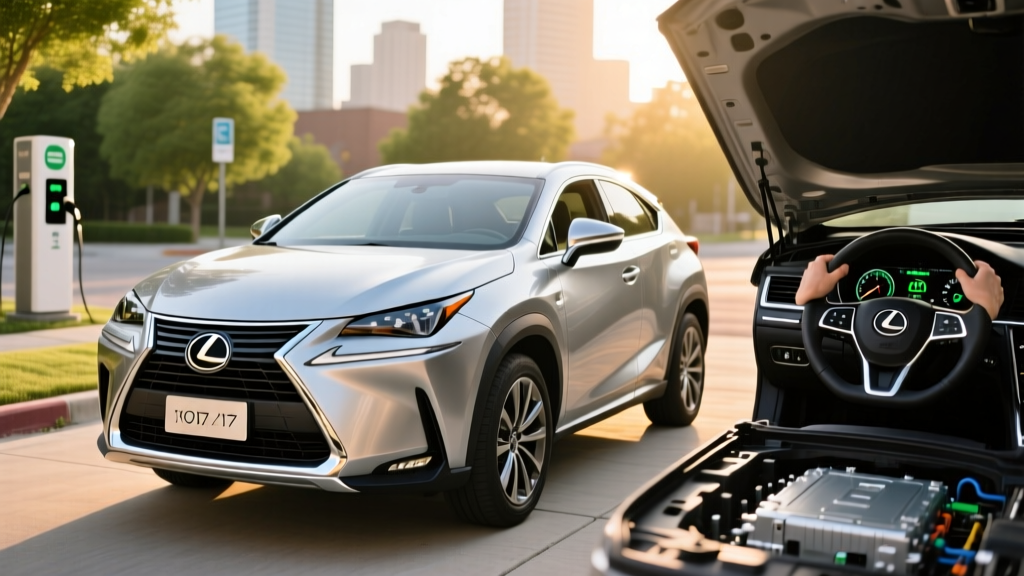
The 2017 Lexus NX 300h occupies a specific niche: a compact luxury crossover that sips fuel, delivers Lexus-grade reliability, and asks almost nothing of its owner beyond regular maintenance. As a conventional hybrid electric vehicle (HEV), it requires no plug, no charging routine, and no range planning. You simply drive it like any other car — it just happens to return 33 MPG combined according to EPA estimates on fueleconomy.gov.
For 2026 used-car shoppers, the NX 300h represents a mature, low-risk entry into hybrid ownership. But it also reflects 2017-era hybrid compromises: modest acceleration, a continuously variable transmission (CVT) that drones under hard throttle, and infotainment that feels dated by today's standards. If your priority is dependable, efficient luxury commuting rather than performance or cutting-edge tech, this powertrain still holds up.
2017 Lexus NX 300h Powertrain & Performance Specs
| Specification | 2017 Lexus NX 300h |
|---|---|
| Powertrain Type | Conventional Hybrid (HEV) — no plug |
| Engine | 2.5L inline-4 Atkinson-cycle |
| Combined Net Horsepower | 194 hp |
| Electric Motors | Front motor + rear motor (e-AWD) |
| Transmission | eCVT (electronically controlled) |
| Drivetrain | Electronic AWD (standard on 300h) |
| Hybrid Battery | ~1.6 kWh Nickel-Metal Hydride (NiMH) |
| 0–60 mph | ~9.0 seconds (est.) |
| EPA MPG (City / Hwy / Combined) | 33 / 30 / 33 |
| Fuel Tank Capacity | 14.8 gallons |
| Total Driving Range | ~488 miles |
| Original MSRP (Base) | $39,720 |
| Typical 2026 Used Price | $18,000–$24,000 |
The NX 300h pairs a 2.5-liter Atkinson-cycle four-cylinder with Lexus's Hybrid Synergy Drive system. The front axle is driven by a primary electric motor integrated into the transaxle, while a smaller, independent rear motor provides electronic all-wheel drive without a mechanical driveshaft. This e-AWD system engages automatically when slip is detected — it's not a full-time torque-vectoring system, but it handles rain, light snow, and gravel confidently.
With 194 combined net horsepower, the NX 300h is adequate rather than quick. The 0–60 time hovers around 9 seconds, which puts it well behind the turbocharged NX 200t (non-hybrid) from the same model year. The eCVT keeps the engine in its most efficient RPM band, which is great for fuel economy but produces a noticeable drone during aggressive acceleration. Around town, where the electric motor handles low-speed propulsion and regenerative braking recaptures energy, the experience is smooth and quiet.
Fuel Economy: EPA Ratings vs. Real-World MPG
| Driving Condition | MPG | Notes |
|---|---|---|
| EPA City | 33 | Hybrid advantage: regenerative braking, electric-only at low speeds |
| EPA Highway | 30 | Less hybrid benefit at sustained high speed |
| EPA Combined | 33 | Weighted average per EPA testing cycle |
| Real-World City (owner-reported) | 31–35 | Hybrids often match or exceed EPA city in stop-and-go driving |
| Real-World Highway (70–80 mph) | 27–30 | Aerodynamic drag and reduced regen benefit at speed |
| Cold Weather (below 30°F) | 26–30 | Engine runs more often for cabin heat; battery less efficient |
The 2017 NX 300h is one of those hybrids where the EPA city rating actually exceeds the highway rating — a hallmark of Toyota/Lexus hybrid systems that leverage regenerative braking and electric-only propulsion at lower speeds. In real-world city driving, many owners report matching or slightly beating the 33 MPG city figure, especially in moderate climates where the engine can shut off frequently at stops.
Highway driving tells a different story. At sustained 70–80 mph speeds, the hybrid system provides less benefit because there's minimal braking to recapture energy and the engine must run continuously. Expect 27–30 MPG on the highway, particularly with roof racks, cargo, or aggressive driving. In cold weather, fuel economy drops further because the gasoline engine runs more often to provide cabin heat and maintain battery temperature.
Compared to the non-hybrid 2017 NX 200t (rated at 22 city / 28 highway / 25 combined with AWD), the 300h delivers a meaningful 8 MPG combined improvement — roughly 32% better fuel economy. Over 15,000 miles per year at $3.50/gallon, that translates to approximately $525 in annual fuel savings.
HEV vs. PHEV vs. EV: Which Powertrain Fits You?
The 2017 NX 300h is a conventional hybrid (HEV). It has a small battery that charges through regenerative braking and the gasoline engine — it does not plug in, has no electric-only driving range to speak of, and cannot operate as a pure electric vehicle. This is fundamentally different from a plug-in hybrid (PHEV) or a battery electric vehicle (BEV).
HEV vs. PHEV vs. BEV — Key Distinctions
HEV (this vehicle): No plug. Small battery (~1–2 kWh). Battery charges via regen and engine. Electric motor assists the engine but cannot drive the car alone for meaningful distances. Best for drivers without home charging access.
PHEV: Plugs in. Larger battery (typically 10–20 kWh). Can drive 20–50 miles on electricity alone before the gasoline engine takes over. Best for drivers with home/workplace charging who want electric commuting with gas-engine flexibility for road trips.
BEV: Plugs in. Large battery (60–100+ kWh). No gasoline engine. 200–400+ miles of range. Best for drivers with reliable charging access who want zero tailpipe emissions and minimal maintenance.
For the 2017 NX 300h specifically, the HEV configuration makes sense if you:
- Live in an apartment or lack access to home/workplace charging
- Want a simpler ownership experience with no charging routine
- Drive a mix of city and highway miles and value consistent efficiency
- Want the fuel savings of electrification without the higher purchase price of a PHEV or BEV
If you have reliable Level 2 charging at home and a commute under 30 miles, a modern PHEV (like the current Lexus NX 450h+ or Toyota RAV4 Prime) would deliver far greater electric-only operation and lower fuel costs. But those vehicles cost significantly more, even on the used market.
Battery Health, Warranty & Replacement Cost
Hybrid Battery Warranty (Original)
Federal emissions/hybrid component warranty: 8 years / 100,000 miles
California and CARB-adopting states: 10 years / 150,000 miles
For a 2017 model, the federal 8-year/100k-mile warranty has expired as of 2025 unless the vehicle had very low mileage. The California/CARB 10-year warranty remains valid through 2027 for qualifying vehicles in applicable states.
The NX 300h uses a nickel-metal hydride (NiMH) hybrid battery pack, not the lithium-ion chemistry found in newer hybrids and EVs. NiMH packs are well-understood, thermally stable, and have a long track record in Toyota/Lexus hybrids dating back to the original Prius. Degradation is gradual — you'll notice slightly reduced electric-only assist at low speeds and marginally lower MPG over time, but catastrophic failure is uncommon before 150,000+ miles.
If the hybrid battery does require replacement, expect the following costs:
- Dealer replacement (new OEM battery): $3,000–$4,500 including labor
- Refurbished/reconditioned battery: $1,500–$2,500 including labor
- Individual cell/module replacement (specialist shop): $800–$1,500
For a used 2017 NX 300h in 2026, battery condition should be a priority during pre-purchase inspection. Ask for a hybrid battery health report (available through Lexus dealers using their diagnostic tools) showing the battery's state of health and any cell imbalance. A healthy 9-year-old NiMH pack should still retain 80%+ of its original capacity. If the battery warning light is illuminated or the vehicle shows reduced fuel economy combined with the engine running constantly, budget for a replacement.
Tax Credits & Incentives: What Applies to a Used Hybrid?
Because the 2017 NX 300h is a conventional hybrid (HEV) — not a plug-in hybrid or battery electric vehicle — it does not qualify for the federal §30D Clean Vehicle Credit, which requires plug-in capability and minimum battery capacity thresholds. Per current IRS guidelines, only PHEVs and BEVs with sufficient battery capacity and compliant critical-mineral/battery-component sourcing are eligible.
The federal Used Clean Vehicle Credit (up to $4,000 or 30% of sale price, whichever is lower) also applies only to used PHEVs and BEVs — not conventional hybrids. So there is no federal tax incentive for purchasing a used NX 300h.
Some states and local utilities offer rebates or incentives for hybrid purchases, though these have become less common as incentive programs shift toward plug-in vehicles. Check your state's energy office or utility provider for any current hybrid-specific programs. As always, consult a tax professional before making purchase decisions based on incentive eligibility.
Reliability, Safety & Ownership Costs
The 2017 NX 300h benefits from one of the strongest reliability reputations in the luxury segment. The Toyota/Lexus hybrid system is among the most proven electrified powertrains on the road, with millions of units in service worldwide. The 2.5L Atkinson-cycle engine is under-stressed and conservatively tuned, contributing to longevity. Common maintenance items are straightforward: oil changes, brake fluid, coolant, and cabin air filters. Brake pad life is often extended significantly by regenerative braking, which handles much of the deceleration load.
The NHTSA gave the 2017 NX an overall 5-star safety rating. The IIHS rated it Good in most crashworthiness categories, though headlight ratings varied by trim. Lexus Safety System+ was standard, including pre-collision warning with pedestrian detection, lane departure alert, automatic high beams, and dynamic radar cruise control.
Pros
- 33 MPG combined — excellent for a luxury AWD crossover
- Proven Lexus/Toyota hybrid reliability with extensive service history
- No plug required — works with any lifestyle or housing situation
- Standard electronic AWD for all-weather confidence
- Quiet, refined ride quality typical of Lexus
- Strong resale value relative to non-hybrid competitors
- Extended brake life from regenerative braking
Cons
- 9-second 0–60 time — noticeably slow for the segment
- CVT drone under hard acceleration
- 2017-era infotainment lacks Apple CarPlay/Android Auto
- Touchpad controller is frustrating to use while driving
- Cargo space slightly reduced vs. non-hybrid NX (battery placement)
- Highway MPG drops below EPA estimate at sustained speed
- No federal tax credit eligibility (HEV, not PHEV/BEV)
Who Should Buy the 2017 Lexus NX 300h?
Decision Framework
Choose the 2017 NX 300h if: You want a reliable, efficient luxury crossover with AWD, don't have access to charging infrastructure, and prioritize low running costs over performance or modern infotainment. It's ideal for city-heavy commuters who value Lexus build quality and want hybrid efficiency without plug-in complexity.
Look elsewhere if: You need brisk acceleration, want modern smartphone integration (CarPlay/Android Auto), have home charging access and could benefit from a PHEV's electric-only range, or prefer a more engaging driving experience. Consider the newer Lexus NX 450h+ (PHEV) or a used Tesla Model Y if charging access allows.
Frequently Asked Questions
How many MPG does the 2017 Lexus NX 300h hybrid get?
The EPA rates the 2017 NX 300h at 33 MPG city, 30 MPG highway, and 33 MPG combined. Real-world city driving often matches or slightly exceeds the EPA figure, while sustained highway driving at 70+ mph typically returns 27–30 MPG. Cold weather can reduce combined fuel economy to 26–30 MPG.
Does the 2017 NX 300h need to be plugged in?
No. The NX 300h is a conventional hybrid (HEV), not a plug-in hybrid. Its small NiMH battery charges through regenerative braking and the gasoline engine. You never plug it in — you simply fill it with gasoline like any other car.
How far can the 2017 NX 300h drive on electric power alone?
Essentially zero meaningful distance. The NX 300h can creep at very low speeds (under ~25 mph) on electric power for short distances — typically less than a mile — but the battery is far too small (~1.6 kWh) for any practical electric-only driving. This is normal for conventional hybrids; the electric motor's role is to assist the engine and recapture braking energy, not to replace the engine.
Is the 2017 NX 300h reliable, and what does battery replacement cost?
Yes. The Lexus/Toyota hybrid system is one of the most reliable electrified powertrains available, with a proven track record spanning decades. The NiMH battery pack typically lasts 150,000+ miles before needing replacement. If replacement is needed, expect $3,000–$4,500 at a dealer for a new OEM pack, or $1,500–$2,500 for a refurbished unit from a specialist.
Does the 2017 NX 300h qualify for any tax credits?
No. As a conventional hybrid (HEV), the NX 300h does not qualify for the federal §30D Clean Vehicle Credit or the Used Clean Vehicle Credit, both of which require plug-in capability. Some state or utility programs may offer minor incentives for hybrids, but these are increasingly rare. Check your state's energy office for current programs.
What should I check before buying a used 2017 NX 300h?
Prioritize a hybrid battery health report from a Lexus dealer, which shows cell balance and state of health. Verify that the hybrid system warning indicators are clear on the instrument cluster. Check service records for regular oil changes and coolant maintenance. Inspect the brake system — regenerative braking extends pad life, but the friction brakes still need periodic service. Finally, confirm the vehicle has no outstanding recalls via the NHTSA VIN lookup tool.