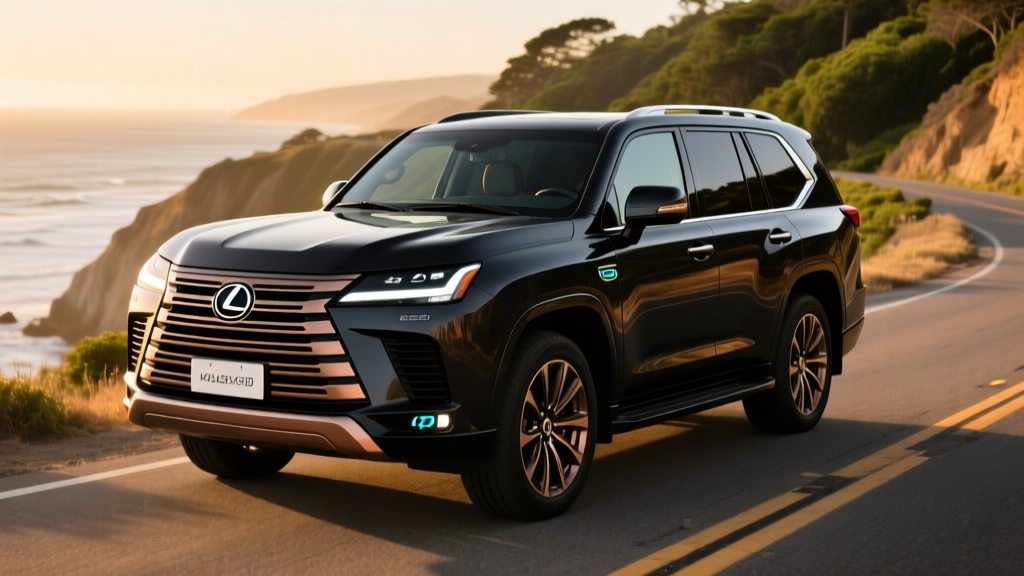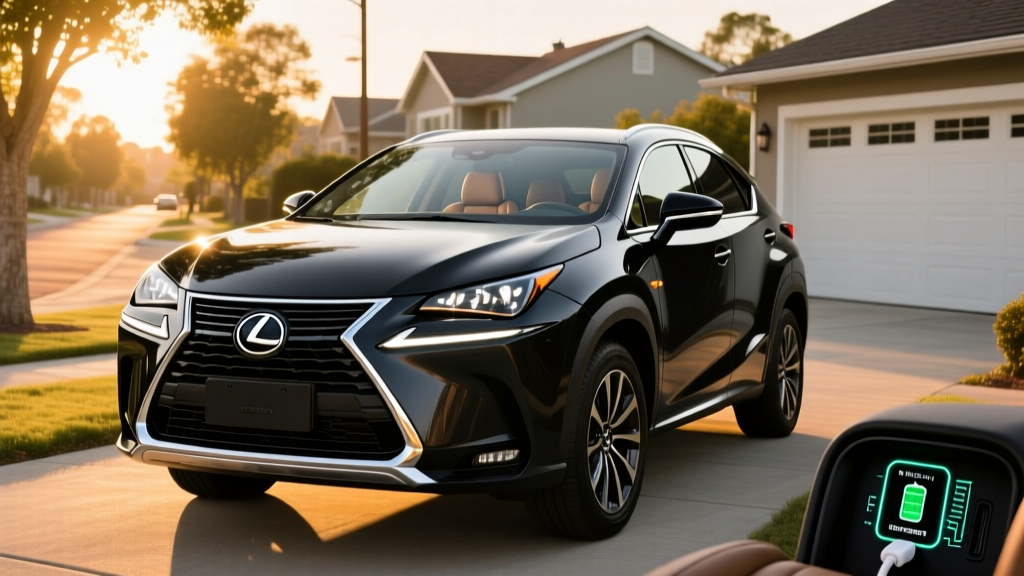
The 2017 Lexus NX 300h occupies a specific niche in the used luxury crossover market: a compact premium SUV that prioritizes fuel efficiency and long-term reliability over outright performance. Built on Toyota's proven hybrid synergy drive architecture, the NX 300h pairs a 2.5-liter Atkinson-cycle four-cylinder engine with electric motors to deliver an EPA-estimated 33 MPG combined — a figure that remains competitive nearly a decade after this model year left showrooms. For buyers in 2026 weighing a used luxury hybrid against newer EVs or conventional gas crossovers, the NX 300h demands a closer look at what it actually delivers on the road, what ownership costs look like, and where its limitations lie.
2017 Lexus NX 300h: Powertrain and Performance Specs
The NX 300h uses Lexus's well-established hybrid powertrain, shared in various forms with the Toyota RAV4 Hybrid and Camry Hybrid of the same era. Here's the mechanical breakdown:
| Specification | Value |
|---|---|
| Engine | 2.5L Atkinson-cycle inline-4 |
| Engine Output | 150 hp / 152 lb-ft torque |
| Electric Motors | Front: 105 kW (141 hp); Rear: 50 kW (67 hp) — E-Four AWD models |
| Combined System Output | 194 hp |
| Transmission | eCVT (planetary gearset, not a belt-driven CVT) |
| Drivetrain | FWD standard; E-Four electronic AWD available |
| Hybrid Battery | 1.6 kWh NiMH (nickel-metal hydride) |
| 0-60 mph | ~9.0 seconds (FWD); ~8.8 seconds (AWD) |
| Curb Weight | ~4,035 lbs (FWD); ~4,130 lbs (AWD) |
| Cargo Volume | 17.7 cu ft (behind rear seats); 54.6 cu ft (seats folded) |
| Towing Capacity | Not rated for towing |
A critical distinction for shoppers: the 2017 NX 300h is a conventional hybrid (HEV), not a plug-in hybrid (PHEV). It does not have a charge port, cannot be plugged in, and has no meaningful electric-only driving range. The small 1.6 kWh nickel-metal hydride battery serves as a buffer — it captures energy from regenerative braking and the engine, then deploys it to assist acceleration and enable brief low-speed electric-only movement (typically under 1 mile at very low speeds). Lexus did not offer a plug-in variant of the first-generation NX; the NX 450h+ PHEV arrived with the redesigned 2022 model.
Fuel Economy: EPA Ratings vs. Real-World MPG
| Drivetrain | City | Highway | Combined |
|---|---|---|---|
| FWD | 33 MPG | 30 MPG | 32 MPG |
| E-Four AWD | 33 MPG | 30 MPG | 33 MPG |
Source: EPA / fueleconomy.gov
The AWD model's slightly higher combined rating (33 vs. 32) reflects the E-Four system's ability to recover additional energy through the rear motor during deceleration. In practice, the difference is negligible.
Real-World MPG: What Owners Actually Report
Toyota/Lexus hybrids tend to meet or slightly exceed their EPA city ratings in real-world driving, because city conditions maximize regenerative braking opportunities. Highway driving is where hybrids lose their advantage — at sustained 70-80 mph speeds, the engine does most of the work with minimal electric assist.
Based on aggregated owner data from Fuelly and Edmunds user reports for the 2017 NX 300h:
- City driving (suburban, stop-and-go): 31-36 MPG — many owners report matching or beating the 33 MPG city EPA figure
- Highway driving (70+ mph sustained): 27-30 MPG — expect roughly 28 MPG on flat interstate at 75 mph
- Mixed real-world average: 30-33 MPG — consistent with the EPA combined rating
- Cold weather penalty: Expect a 5-10% reduction (roughly 28-30 MPG combined) in freezing temperatures as the engine runs more frequently to generate cabin heat
Compared to the gas-only 2017 NX 200t (22 MPG combined EPA with AWD), the NX 300h delivers roughly a 50% improvement in fuel economy. At 2026 fuel prices averaging ~$3.40/gallon nationally, that translates to approximately $600-$800 in annual fuel savings for a driver covering 12,000 miles per year.
HEV vs. PHEV vs. EV: Where Does the NX 300h Fit?
Understanding where a conventional hybrid like the NX 300h sits in the electrification spectrum is essential for making the right purchase decision.
| Factor | HEV (NX 300h) | PHEV (e.g., NX 450h+) | BEV (e.g., Tesla Model Y) |
|---|---|---|---|
| Plug-in Required? | No | Yes (for EV range) | Yes |
| Electric-Only Range | ~0.5 mi (low speed) | 37 mi (NX 450h+ EPA) | 300+ mi |
| Total Range | ~440 mi (14.3-gal tank) | ~550 mi combined | 300-330 mi |
| Home Charging Needed? | No | Recommended | Essential |
| Federal Tax Credit (New) | None | Up to $7,500 (§30D) | Up to $7,500 (§30D) |
| Used EV Tax Credit (§25E) | Not eligible | Not eligible | Up to $4,000 |
| Maintenance Complexity | Low (proven) | Moderate | Low |
| Best For | No charging access; want simplicity | Short commutes + road trips | Home charging + daily driving |
The NX 300h is the right choice if you lack reliable home or workplace charging, want the lowest possible ownership complexity, and value fuel savings without any behavioral change. It is the wrong choice if you have home charging access and a short commute — a PHEV or BEV would eliminate most of your fuel consumption entirely.
Hybrid Battery Lifespan, Warranty, and Replacement Cost
2017 Lexus NX 300h Hybrid Battery Warranty (Original)
- Standard coverage: 8 years / 100,000 miles (whichever comes first)
- CARB-state coverage: 10 years / 150,000 miles in states that follow California emissions rules (CA, CT, ME, MD, MA, NJ, NY, OR, RI, VT, WA, and others adopting CARB standards)
- Coverage trigger: Battery capacity loss below a defined threshold or complete failure
For a 2017 model in 2026, the standard 8-year/100,000-mile warranty is expiring or has expired for most vehicles. CARB-state vehicles may still have coverage through 2027 if under 150,000 miles. Buyers should verify warranty status with a Lexus dealer using the VIN before purchase.
How Long Does the NX 300h Hybrid Battery Actually Last?
Toyota/Lexus NiMH hybrid batteries have an exceptional longevity track record. The 1.6 kWh pack in the NX 300h is conservatively sized and operates within a narrow state-of-charge window (roughly 40-80%), which dramatically reduces stress on the cells. Based on data from Prius fleets and Lexus hybrid owners:
- Typical lifespan: 150,000-200,000+ miles before significant degradation or failure
- Age-related degradation: NiMH packs can lose capacity over time regardless of mileage; 10-15 years is a common replacement window
- Failure rate: Low — complete failures before 120,000 miles are uncommon
Battery Replacement Cost
If the hybrid battery does fail out of warranty, replacement options include:
- New OEM battery (Lexus dealer): $3,000-$4,500 installed — the most expensive but most reliable option
- Remanufactured battery: $1,500-$2,500 installed — available from third-party hybrid specialists; quality varies by vendor
- Individual cell/module replacement: $500-$1,200 — only viable if a single module has failed; requires a hybrid specialist to diagnose and balance
For context, the hybrid battery is not a routine maintenance item. Most NX 300h owners will never replace it. The gasoline engine's 12V auxiliary battery, brake pads (regen braking reduces wear significantly), and standard fluid changes remain the primary maintenance costs.
Pricing in 2026: Used Market and Tax Credit Eligibility
The 2017 Lexus NX 300h is no longer sold new. On the used market in 2026, pricing varies by mileage, condition, and region:
- Typical used price range: $18,000-$26,000 (60,000-100,000 miles, clean title)
- Low-mileage examples (under 50,000 mi): $26,000-$30,000
- Original MSRP (2017): $39,720 (base FWD) to $41,120 (base AWD), before options
Tax Credit Status
The 2017 NX 300h does not qualify for any current federal tax credit:
- §30D New Vehicle Credit: Not applicable — this is a used vehicle, and conventional HEVs were never eligible for §30D regardless
- §25E Used EV Credit: Not applicable — this credit covers only battery electric vehicles (BEVs) and plug-in hybrids (PHEVs) purchased used, not conventional hybrids
- State incentives: A small number of states or utilities offer modest rebates for used hybrids, but these are uncommon and typically under $500. Check your state energy office or utility provider for current programs
Per IRS guidelines, only plug-in vehicles with sufficient battery capacity qualify for federal electrification credits. The NX 300h's 1.6 kWh NiMH pack falls well below the threshold.
Reliability and Ownership Costs
Lexus consistently ranks at or near the top of J.D. Power Vehicle Dependability Studies and Consumer Reports reliability surveys. The NX 300h benefits from:
- Proven powertrain: The 2.5L Atkinson-cycle engine and eCVT are shared with the Toyota Camry Hybrid and RAV4 Hybrid — millions of these units are on the road with extensive longevity data
- eCVT durability: Unlike belt-driven CVTs found in some competitors, Toyota's planetary-gear eCVT has no belts, clutches, or friction components to wear. Failures are extremely rare
- Brake longevity: Regenerative braking handles most deceleration, so brake pads commonly last 80,000-120,000 miles
- Insurance costs: Moderate for the luxury compact segment — typically $1,200-$1,800/year depending on driver profile and state
Common issues reported by owners and independent mechanics for the 2017 NX 300h include:
- Infotainment system (Remote Touch Interface) is widely criticized for its frustrating mouse-like controller — functional but dated even in 2017
- Some reports of wind noise around the side mirrors at highway speeds
- Occasional 12V auxiliary battery drain if the vehicle sits unused for extended periods (common in all hybrids)
The NHTSA gave the 2017 NX an overall 5-star safety rating. The IIHS rated it "Good" in most crashworthiness categories, though headlight performance earned a marginal rating on base trims.
Pros and Cons: The Honest Assessment
Pros
- 33 MPG combined is excellent for a luxury AWD crossover
- Exceptional powertrain reliability and longevity track record
- No plug-in charging required — works with existing habits
- Low maintenance costs (long brake life, no transmission fluid changes typical)
- Quiet, comfortable ride quality for daily commuting
- Strong resale value relative to non-hybrid luxury competitors
Cons
- 9.0-second 0-60 time is slow — merging onto fast highways requires planning
- 1.6 kWh NiMH battery is older technology; no electric-only highway driving
- Remote Touch infotainment interface is frustrating and dated
- No federal tax credit eligibility (new or used)
- Cargo space (17.7 cu ft) is below competitors like the Acura RDX and Audi Q5
- Not rated for any towing
- Hybrid battery replacement ($3,000-$4,500) is a looming cost for high-mileage examples
Who Should Buy the 2017 Lexus NX 300h?
Choose the NX 300h If:
- You lack access to home or workplace charging and want fuel savings without infrastructure changes
- Your priority is long-term reliability and low cost of ownership in a luxury badge
- You drive a mixed city/highway commute of 20-50 miles daily
- You plan to keep the vehicle 5+ years and value proven mechanicals over cutting-edge tech
- You live in a region without reliable public DC fast-charging infrastructure
Look Elsewhere If:
- You have home charging and a short commute — a PHEV (NX 450h+, RAV4 Prime) or BEV would eliminate most fuel use
- Performance matters — the NX 300h's 194 hp and 9-second 0-60 won't satisfy spirited drivers
- You need cargo space or towing — consider a RAV4 Hybrid (39.1 cu ft cargo, 1,750-lb tow) or a larger SUV
- You want the latest driver-assistance tech — the 2017 NX has Lexus Safety System+ (pre-collision, lane departure alert, adaptive cruise) but lacks modern features like lane centering or blind-spot intervention standard on newer models
Frequently Asked Questions
How many MPG does the 2017 Lexus NX 300h hybrid get?
The EPA rates the 2017 NX 300h at 33 MPG city, 30 MPG highway, and 33 MPG combined (AWD model). Real-world owners typically report 30-33 MPG in mixed driving, with city driving sometimes exceeding the EPA estimate and highway driving falling to 27-30 MPG at sustained speeds above 70 mph.
Does the 2017 NX 300h need to be plugged in?
No. The NX 300h is a conventional hybrid (HEV), not a plug-in hybrid. It has no charge port. The hybrid battery charges solely through regenerative braking and the gasoline engine. You simply fill it with gasoline like any other car.
How far can the 2017 NX 300h drive on electric power alone?
Effectively zero meaningful distance. The NX 300h can creep at very low speeds (under 25 mph) on electric power for roughly half a mile under ideal conditions, but the engine engages almost immediately under any meaningful acceleration or speed. This is not a vehicle that provides electric-only commuting — for that, you need a PHEV or BEV.
Is the 2017 Lexus NX 300h reliable?
Yes. Lexus ranks consistently at the top of dependability studies, and the NX 300h's powertrain (shared with Toyota's Camry and RAV4 hybrids) has millions of miles of real-world service data supporting its longevity. The eCVT transmission is particularly robust. The primary long-term cost risk is hybrid battery replacement after 150,000+ miles or 12-15 years of age, at a cost of $1,500-$4,500 depending on the replacement source.
What does a replacement hybrid battery cost for the NX 300h?
A new OEM battery from a Lexus dealer typically costs $3,000-$4,500 installed. Remanufactured batteries from hybrid specialists run $1,500-$2,500 installed. Individual cell module replacement (if only one module has failed) can cost $500-$1,200. Most NX 300h owners will never need a battery replacement within typical ownership periods.
Does the 2017 NX 300h qualify for any tax credit?
No. As a conventional hybrid (not a plug-in), the NX 300h was never eligible for the federal §30D new vehicle tax credit, and it does not qualify for the §25E used EV credit either. Some state or utility programs may offer small incentives for used hybrids, but these are rare and typically under $500. Check your state energy office for current programs.
What's the difference between the NX 300h and the newer NX 450h+?
The NX 450h+ (introduced for the 2022 model year on a completely redesigned platform) is a plug-in hybrid with an 18.1 kWh lithium-ion battery, 37 miles of EPA-rated electric-only range, and a combined 304 hp. It qualifies for federal tax credits when purchased new and can be plugged in to charge. The NX 300h is the prior-generation conventional hybrid with no plug-in capability, lower power, and a much smaller NiMH battery. They share the "NX" nameplate but are fundamentally different vehicles.
How does the NX 300h compare to a used Tesla Model Y or other EV?
A used Tesla Model Y (2020-2022) typically costs $28,000-$38,000 in 2026 — significantly more than an NX 300h. The Model Y offers 300+ miles of electric range, far lower per-mile fueling costs (if charging at home), and stronger performance. However, it requires reliable home charging access, may carry higher insurance premiums, and introduces battery degradation considerations. The NX 300h wins on upfront cost, charging independence, and proven long-term mechanical simplicity. The right choice depends entirely on your charging access and daily driving pattern.
Sources: EPA fuel economy data from fueleconomy.gov; safety ratings from NHTSA; federal tax credit rules per IRS §30D and §25E guidelines. Used pricing reflects market conditions as of early 2026 and varies by region, condition, and mileage.