Quick Verdict: The 2017 Hyundai Plug-In Ioniq Still Holds Up
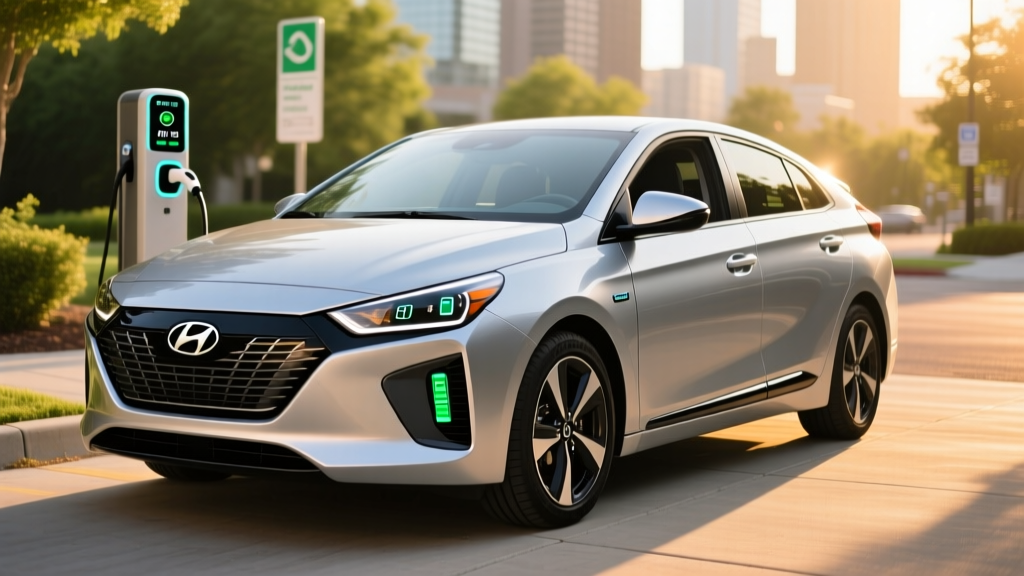
Hyundai's first plug-in hybrid arrived in the U.S. for the 2017 model year as part of the Ioniq lineup, offering a practical bridge between conventional hybrids and full battery-electric vehicles. The 2017 Hyundai plug-in Ioniq PHEV delivers an EPA-estimated 29 miles of electric-only driving and 52 MPG combined once the gasoline engine kicks in — figures that remain competitive even among newer PHEVs in 2026. For used-car shoppers considering an affordable entry into electrified driving, this compact hatchback warrants a serious look, provided you understand its limitations around charging speed, interior space, and aging battery health.
| Specification | 2017 Hyundai Ioniq Plug-In Hybrid |
|---|---|
| Body Style | 5-door compact hatchback |
| Powertrain | 1.6L GDI 4-cyl + electric motor (PHEV) |
| Combined Horsepower | 139 hp |
| Battery Capacity | 8.9 kWh (lithium-ion polymer) |
| EPA Electric-Only Range | 29 miles |
| EPA Combined MPG (hybrid mode) | 52 MPG |
| MPGe (electric + gas combined) | 119 MPGe |
| Total Combined Range | ~630 miles |
| Level 2 Charge Time (0–100%) | ~2 hours 15 minutes |
| DC Fast Charging | Not available |
| 0–60 mph | ~9.7 seconds |
| Cargo Volume | 23.0 cu ft (rear seats up) |
| Original MSRP (Base) | $27,300 |
| Battery Warranty (original) | 10 years / 100,000 miles |
HEV vs PHEV: Understanding the Ioniq Lineup
Hyundai sold the 2017 Ioniq in three distinct electrified variants, and confusing them is a common buyer mistake. Here is the critical distinction:
| Feature | Ioniq Hybrid (HEV) | Ioniq Plug-In Hybrid (PHEV) | Ioniq Electric (BEV) |
|---|---|---|---|
| Plug-in Charging | No — self-charging via regen & engine | Yes — plug in to charge battery | Yes — plug in to charge battery |
| Battery Size | 1.56 kWh | 8.9 kWh | 28 kWh |
| Electric-Only Range | ~1 mile (low speed) | 29 miles (EPA) | 124 miles (EPA) |
| Combined MPG / MPGe | 58 MPG | 52 MPG / 119 MPGe | 136 MPGe |
| Gasoline Engine | Yes | Yes | No |
| Gasoline Required | Yes | Only beyond electric range | No |
The conventional Ioniq Hybrid (HEV) never plugs in. It uses regenerative braking and its gasoline engine to keep a small battery charged, delivering excellent fuel economy with zero behavior change from a standard gas car. The Ioniq Plug-In Hybrid (PHEV) — the focus of this review — has a larger 8.9 kWh battery that you charge by plugging in, giving you 29 miles of pure electric driving before the 1.6L gasoline engine takes over. The Ioniq Electric (BEV) is a full battery-electric vehicle with no gas engine at all.
Fuel Economy: EPA Numbers and Real-World MPG
The EPA rates the 2017 Hyundai Ioniq Plug-In Hybrid at 52 MPG combined in hybrid mode (after the battery is depleted), with a breakdown of 52 city / 52 highway according to fueleconomy.gov. In electric mode, it achieves 119 MPGe combined.
| Driving Mode | City | Highway | Combined |
|---|---|---|---|
| Hybrid (charge-depleted) | 52 MPG | 52 MPG | 52 MPG |
| Electric-only (charge-sustaining) | 119 MPGe combined | ||
Real-world expectations: Hyundai's hybrid system is one of the more honest on the market. Owners consistently report achieving 48–55 MPG in mixed driving once the battery is depleted, with city driving often matching or slightly exceeding the EPA estimate thanks to aggressive regenerative braking. Highway driving at sustained 75+ mph speeds typically drops to 45–48 MPG. In cold weather (below 30°F), expect a 10–15% reduction in electric-only range and a 3–5 MPG dip in hybrid mode as the engine runs more frequently for cabin heat.
The 29-mile electric-only range is best used for daily commutes under 30 miles. If you charge at home every night and your round-trip commute is within that envelope, you may go weeks without the gasoline engine engaging — effectively driving an EV for daily use while retaining a gas engine for road trips.
Charging: Level 1, Level 2, and What to Expect
The 2017 Ioniq PHEV uses a standard J1772 connector for AC charging and does not support DC fast charging. This is typical for PHEVs of this era — the 8.9 kWh battery is small enough that fast charging is unnecessary.
| Charging Level | Power | Time (0–100%) | Notes |
|---|---|---|---|
| Level 1 (120V household) | ~1.4 kW | ~6–7 hours | Standard outlet; sufficient for overnight |
| Level 2 (240V) | ~3.3 kW (onboard charger limit) | ~2 hours 15 min | Home wallbox or public Level 2 |
| DC Fast Charge | N/A | N/A | Not supported |
The onboard charger is limited to 3.3 kW, meaning even if you plug into a 7.2 kW or 11.5 kW Level 2 station, the car will only draw 3.3 kW. For most PHEV owners, Level 1 charging from a standard 120V outlet is adequate — plugging in at night replenishes the full 8.9 kWh battery by morning. A dedicated Level 2 home charger is a convenience upgrade, not a necessity, for this vehicle.
Charging cost estimate: At the U.S. average residential electricity rate of ~$0.16/kWh (EIA, 2025 data), a full charge costs approximately $1.42 — roughly equivalent to $0.05 per electric mile. Compare that to $0.10–$0.12 per mile for a 30 MPG gas car at $3.20/gallon.
Powertrain, Performance, and Driving Impressions
The 2017 Ioniq PHEV pairs a 1.6-liter gasoline direct-injection 4-cylinder engine (104 hp) with a 44.5 kW electric motor (60 hp) integrated into a 6-speed dual-clutch automatic transmission. Combined system output is 139 horsepower and 195 lb-ft of torque.
Unlike many hybrids that use a continuously variable transmission (CVT), Hyundai's dual-clutch setup provides more natural, stepped gear shifts. This gives the Ioniq PHEV a more conventional driving feel compared to the rubber-band sensation of Toyota's hybrid CVTs, though it can occasionally hunt for gears under hard acceleration.
The 0–60 mph time of approximately 9.7 seconds is adequate for merging and passing but not quick. The Ioniq PHEV prioritizes efficiency over performance. Ride quality is composed and comfortable for a compact hatchback, and the low center of gravity from the under-floor battery pack contributes to stable handling. Road noise is well-suppressed at city speeds but becomes noticeable above 70 mph.
Three driving modes are available: EV (electric-only), HEV (hybrid), and a driver-selectable mode that manages the battery charge for later use — useful if you want to save electric range for city driving after a highway segment.
Battery Health, Warranty, and Replacement Cost
Original battery warranty: 10 years / 100,000 miles (whichever comes first) for the high-voltage lithium-ion polymer battery pack. The warranty covers capacity loss below a defined threshold, typically around 70% of original capacity. Hyundai's hybrid/PHEV battery warranty is transferable to subsequent owners, though the coverage period for second owners may be reduced to 8 years / 80,000 miles depending on state and model year — verify with a Hyundai dealer using the VIN.
For a 2017 model in 2026, the original 10-year / 100,000-mile battery warranty is expiring or has expired for most vehicles. This is a critical consideration for used buyers. Here is what you need to know:
- Degradation data: Hyundai's lithium-ion polymer PHEV batteries have shown moderate degradation in real-world use. Owner reports and testing suggest 8–12% capacity loss over 7–8 years of typical use, meaning a 2017 Ioniq PHEV may now deliver 25–27 miles of electric range rather than the original 29. This is within normal expectations for the chemistry and usage pattern.
- Pre-purchase check: Have a Hyundai dealer perform a battery State of Health (SoH) diagnostic before purchasing. This reads the actual remaining capacity and any fault codes. Some dealerships offer this for free or a minimal diagnostic fee ($50–$100).
- Replacement cost: If the high-voltage battery fails outside warranty, a replacement pack for the Ioniq PHEV costs approximately $3,500–$5,500 including parts and labor at a Hyundai dealer. Third-party hybrid battery specialists may offer refurbished packs for $2,000–$3,500. This is significantly less than full EV battery replacements.
- 12V auxiliary battery: Like all hybrids and EVs, the Ioniq PHEV has a separate 12V battery for electronics. Expect to replace this every 4–5 years at a cost of $150–$250.
Reliability: The 2017 Ioniq PHEV has earned strong reliability marks from owner surveys and industry trackers. The 1.6L GDI engine is proven and straightforward, the dual-clutch transmission has been durable in this low-stress application, and the hybrid system components are well-tested. According to NHTSA records, there have been no major safety recalls specific to the PHEV battery system. The conventional 12V battery and standard wear items (brakes, tires, suspension) are the primary maintenance expenses.
Pricing, Tax Credits, and Used Market Value
The 2017 Hyundai Ioniq Plug-In Hybrid originally started at $27,300 MSRP (before destination) for the base trim, with a Limited trim at approximately $33,000. The vehicle originally qualified for a $4,543 federal tax credit under the pre-2023 IRS §30D rules based on its 8.9 kWh battery capacity.
Important for 2026 used buyers: The original new-vehicle federal tax credit is no longer available for this model year. However, the used clean vehicle credit (IRS §25E) may apply if you purchase a qualifying pre-owned Ioniq PHEV from a licensed dealer. Key requirements include:
- Sale price must be $25,000 or less
- Buyer income limits: $75,000 (single) / $150,000 (joint) modified AGI
- Credit equals 30% of sale price, up to a maximum of $4,000
- Vehicle must be at least 2 model years old (2017 qualifies)
- Must purchase from a licensed dealer — private-party sales do not qualify
- Credit is non-refundable and can only be claimed once per vehicle
As always, consult a tax professional and review current IRS guidance on the used clean vehicle credit before relying on incentive estimates. Rules and eligible vehicle lists can change.
Used market pricing (early 2026): Expect to pay $12,000–$18,000 for a 2017 Ioniq PHEV depending on mileage, condition, and trim. Well-maintained examples under 60,000 miles with documented battery health reports command the higher end of that range. At these prices, the used-EV credit could offset up to $4,000 of the purchase, bringing effective cost as low as $8,000–$14,000.
Who Should Choose the 2017 Ioniq PHEV vs. a Full EV or Gas Car
Pros
- 29-mile electric range covers most daily commutes gas-free
- 52 MPG hybrid mode eliminates range anxiety on road trips
- Level 1 charging is sufficient — no home electrical upgrade needed
- Strong reliability record and low maintenance costs
- Affordable used pricing with potential $4,000 tax credit
- Hatchback versatility with 23 cu ft cargo space
Cons
- No DC fast charging capability
- Modest 139 hp — slow acceleration for highway merging
- Rear seat and cargo space tighter than compact SUV competitors
- Original battery warranty expiring on 2017 models
- Infotainment system dated by 2026 standards (small screen, no wireless CarPlay)
- 3.3 kW onboard charger limits Level 2 speed
Choose the 2017 Ioniq PHEV if: Your daily commute is under 30 miles round-trip, you have access to a standard 120V outlet for overnight charging, you want the option of gas-free daily driving without committing to a full EV, and you want an affordable, reliable used vehicle with low running costs.
Choose a full EV (like a used Bolt EV or Leaf) if: You have reliable Level 2 home charging, your daily driving stays under 150 miles, you want zero gasoline expenses and minimal maintenance, and you can accommodate the higher upfront used cost.
Choose a conventional hybrid (HEV) if: You cannot plug in at home or work, you want maximum fuel economy with zero behavior change, and you prefer not to manage charging routines. The standard Ioniq Hybrid at 58 MPG combined is an excellent alternative.
Choose a gas car if: You drive very low annual miles (under 5,000), the fuel savings would not offset a higher purchase price, or you need capabilities (towing, off-road) that compact hatchbacks cannot provide.
Frequently Asked Questions
How many MPG does the 2017 Hyundai Ioniq plug-in hybrid get?
The EPA rates it at 52 MPG combined (52 city / 52 highway) in hybrid mode after the battery is depleted. In electric mode, it achieves 119 MPGe. Real-world owners report 48–55 MPG in mixed driving, with city driving often meeting or slightly exceeding the EPA figure.
How far can the 2017 Ioniq PHEV go on electric only?
The EPA-estimated electric-only range is 29 miles. In real-world conditions, expect 25–28 miles in moderate temperatures and 20–24 miles in cold weather (below 30°F) or at sustained highway speeds. For a 9-year-old vehicle in 2026, mild battery degradation may reduce this to 25–27 miles when new-range is compared to current State of Health.
Does the 2017 Hyundai Ioniq PHEV qualify for any tax credit in 2026?
The original new-vehicle federal tax credit is no longer available. However, the IRS §25E used clean vehicle credit may provide up to $4,000 (30% of sale price) if you buy from a licensed dealer for $25,000 or less and meet income requirements ($75,000 single / $150,000 joint). State incentives vary — check your state's energy office for local rebates.
Is the 2017 Ioniq PHEV reliable and what does battery replacement cost?
Yes — the Ioniq PHEV has a strong reliability record. The 1.6L engine and hybrid system are proven. The high-voltage battery typically loses 8–12% capacity over 7–8 years. Out-of-warranty battery replacement costs $3,500–$5,500 at a dealer or $2,000–$3,500 from a third-party hybrid specialist. Always get a battery SoH diagnostic before purchasing.
Do I need to install a Level 2 charger at home for the Ioniq PHEV?
No. The 8.9 kWh battery charges fully in 6–7 hours on a standard 120V household outlet (Level 1), which is sufficient for overnight charging. A Level 2 (240V) charger reduces this to about 2 hours 15 minutes but is optional. Given the 3.3 kW onboard charger limit, investing in a high-power Level 2 unit provides diminishing returns for this specific vehicle.
Hybrid vs PHEV vs EV — which is right for me?
A conventional hybrid (HEV) is best if you cannot plug in and want maximum MPG with no behavior change. A PHEV like the Ioniq is ideal if you can charge at home and want electric-only daily commuting plus a gas engine for longer trips. A full EV (BEV) suits drivers with home charging who want zero gasoline use, lower maintenance, and are comfortable with 150–300+ miles of range. The Ioniq PHEV occupies a practical middle ground: electric for the commute, gas for everything else.
What is the total driving range of the 2017 Ioniq PHEV?
With a full battery and a full 11.9-gallon fuel tank, the total combined range is approximately 630 miles — 29 miles on electricity plus roughly 600 miles on gasoline. This eliminates any range anxiety for road trips while still offering daily electric commuting.