Quick Verdict: A Proven Midsize Hybrid at a Used-Car Bargain
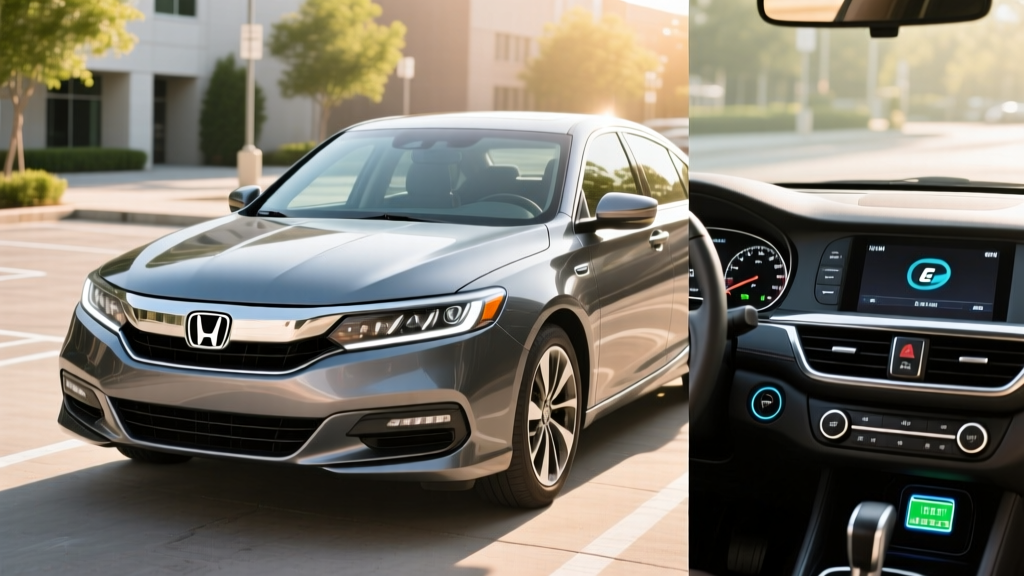
The 2017 Honda Accord Hybrid occupies a specific niche in 2026's used-car market: a midsize sedan that delivers genuine 40+ MPG without requiring a plug, a charging routine, or any change in driving habits. With EPA ratings of 49 city / 47 highway / 48 combined, Honda's two-motor i-MMD system remains one of the most efficient hybrid powertrains ever put into a family sedan. At current used prices—typically $13,000 to $18,000 depending on mileage and condition—it undercuts nearly every electrified alternative on cost-per-mile.
But buying a nine-year-old hybrid raises real questions. How much battery degradation should you expect? What does replacement cost? And does a conventional hybrid (HEV) still make sense when plug-in hybrids and full EVs dominate new-car showrooms? This guide answers those questions with hard data.
2017 Accord Hybrid Fuel Economy: EPA Numbers vs. Real World
The Accord Hybrid's headline number is its EPA combined rating of 48 MPG. Here's the full breakdown by trim and driving condition, sourced from fueleconomy.gov:
| Metric | City | Highway | Combined |
|---|---|---|---|
| EPA Rating | 49 MPG | 47 MPG | 48 MPG |
| Real-World Expectation | 46–52 MPG | 40–45 MPG | 43–48 MPG |
| Annual Fuel Cost (15k mi/yr @ $3.40/gal) | ~$1,063 (EPA combined) / ~$1,190 (real-world ~43 MPG) | ||
Why real-world often beats EPA in the city: Honda's i-MMD system operates primarily as a series hybrid at low speeds—the gasoline engine acts as a generator, while the 184-hp electric drive motor propels the wheels. This means stop-and-go traffic actually plays to the system's strength, with aggressive regenerative braking recapturing energy that a conventional car wastes as heat. Many owners report 50+ MPG on city commutes under 40 mph.
Where it falls short: Sustained highway driving above 70 mph forces the system into direct engine-drive mode via a lock-up clutch. At these speeds, the 2.0-liter Atkinson-cycle engine is working without electric assist, and aerodynamic drag dominates. Expect 40–43 MPG on long interstate trips at 75+ mph. Cold weather (below 30°F) reduces fuel economy by roughly 8–12% as the engine runs more frequently to provide cabin heat and maintain battery temperature.
Powertrain Deep Dive: How Honda's i-MMD Works
The 2017 Accord Hybrid uses Honda's two-motor Intelligent Multi-Mode Drive (i-MMD), which is fundamentally different from Toyota's planetary-gear Hybrid Synergy Drive. Here are the hard specs:
| Component | Specification |
|---|---|
| Gasoline Engine | 2.0L Atkinson-cycle I4, 143 hp / 129 lb-ft |
| Drive Motor | AC permanent-magnet, 184 hp / 232 lb-ft |
| Generator Motor | AC permanent-magnet (starter/generator) |
| Combined System Output | 212 hp |
| Hybrid Battery | 1.3 kWh lithium-ion (nominal) |
| Transmission | e-CVT (no traditional gears; single-speed clutch for highway) |
| 0–60 mph | ~7.5 seconds |
| Drivetrain | Front-wheel drive |
| Curb Weight | ~3,536 lbs |
Three operating modes:
- EV Drive: Battery powers the drive motor alone. Only active at very low speeds for roughly 1 mile. This is not a usable electric-only mode—it's a maneuvering/parking assist.
- Hybrid Drive (series): The engine spins the generator motor to produce electricity, which feeds the drive motor. This is the default mode for city and suburban driving up to ~50 mph.
- Engine Drive (direct): A lock-up clutch mechanically connects the engine to the front wheels. Engages at steady highway cruising speeds (roughly 45–80 mph) where the engine operates at peak thermal efficiency.
The result is seamless acceleration with no traditional shift feel, and the electric motor's instant 232 lb-ft of torque makes the Accord Hybrid feel quicker off the line than its 7.5-second 0–60 time suggests.
HEV vs. PHEV vs. EV: Which Powertrain Fits You?
The 2017 Accord Hybrid is an HEV—meaning no plug, no electric-only commute, no tax credit. Here's how it compares structurally to the alternatives a used-car buyer might consider:
HEV (This Car)
Example: 2017 Accord Hybrid
Plug required: No
Electric-only range: ~1 mi (negligible)
Battery: 1.3 kWh
Best for: Drivers without home charging access who want lower fuel costs with zero routine change
PHEV
Example: Used Toyota Prius Prime
Plug required: Yes (Level 1/2)
Electric-only range: 25–44 mi
Battery: 8.8–13.6 kWh
Best for: Short commuters with home/work charging who want EV-like daily driving plus gas backup
BEV (Full EV)
Example: Used Chevy Bolt / Tesla Model 3
Plug required: Yes (Level 2 + DC fast)
Electric-only range: 220–350 mi
Battery: 50–82 kWh
Best for: Drivers with reliable home charging who want zero gas and lowest cost-per-mile
Choose the Accord Hybrid if: You live in an apartment without charging access, regularly drive 300+ mile trips where charging infrastructure is sparse, or want the lowest possible purchase price for an electrified vehicle. The Accord Hybrid asks nothing of you that a gas car doesn't—just fill up and drive.
Look elsewhere if: You have a garage with a 240V outlet and a short commute. A used PHEV or BEV will deliver far lower daily energy costs, and many qualify for the federal clean vehicle credit if purchased new (used-EV credits under §25E apply to BEVs and PHEVs, not conventional HEVs).
Battery Longevity, Warranty & Replacement Cost
This is the single biggest concern for any used hybrid buyer. The 2017 Accord Hybrid uses a 1.3 kWh lithium-ion pack located behind the rear seat. Because the battery is small and Honda's powertrain management keeps it within a narrow state-of-charge window (roughly 30–70% SoC), degradation is minimal compared to a full EV's large pack that cycles through deeper ranges.
Real-world degradation data: Owner reports and fleet data indicate that 2014–2017 Accord Hybrids typically retain 85–92% of original battery capacity at 100,000 miles. Because the pack is small and works in a shallow cycle window, catastrophic failure is rare. The more common failure mode is gradual capacity loss that slightly reduces regenerative braking effectiveness and city MPG—perhaps a 2–4 MPG drop at high mileage.
Replacement cost (2026 estimates):
| Option | Cost Range | Notes |
|---|---|---|
| New OEM (Honda dealer) | $3,000 – $4,200 | Includes labor; 3-year warranty on replacement |
| Refurbished/remanufactured | $1,500 – $2,500 | Reconditioned cells; 1–3 year warranty typical |
| Individual cell module replacement | $500 – $1,200 | Independent hybrid shops can replace failed modules only; requires balancing |
For context, the average 2017 Accord Hybrid buyer will drive this car 5–7 years and 60,000–90,000 miles. Battery replacement is statistically unlikely during typical second-owner usage. Still, budgeting $2,000–$3,000 as a contingency is prudent.
Used Pricing, Trim Levels & Tax Credit Reality
As of early 2026, the 2017 Accord Hybrid trades in the used market at these approximate ranges:
| Trim | Original MSRP | Used Price (60k–90k mi) | Used Price (90k–130k mi) |
|---|---|---|---|
| Hybrid (base) | $29,605 | $16,000 – $18,000 | $13,000 – $15,000 |
| Hybrid EX-L | $32,905 | $17,500 – $20,000 | $14,500 – $17,000 |
| Hybrid EX-L w/ Navi | $33,905 | $18,000 – $21,000 | $15,000 – $17,500 |
Tax credit status: The 2017 Accord Hybrid does not qualify for any federal tax credit. The IRS §30D Clean Vehicle Credit and the §25E Used Clean Vehicle Credit both require a plug-in vehicle with a minimum battery capacity (4 kWh for §25E, 7 kWh for §30D). The Accord Hybrid's 1.3 kWh pack and lack of a charging port make it ineligible. No state currently offers incentives for conventional HEVs either—those programs target PHEVs and BEVs exclusively.
Pros and Cons at a Glance
✓ Pros
- 48 MPG combined EPA; 50+ achievable in city driving
- 212 hp system output — peppy acceleration from electric torque
- No plug, no charging routine, no range planning
- Spacious midsize cabin; 13.4 cu-ft trunk (only slightly reduced vs. gas model)
- Strong reliability record; hybrid system proven over 200k+ miles
- Low used pricing ($13k–$21k) with strong parts availability
✗ Cons
- No tax credit eligibility (federal or state)
- Highway MPG drops to 40–43 at 75+ mph
- Original battery warranty expiring/expired on most examples
- Dated infotainment (no wireless CarPlay; sluggish touchscreen on base trim)
- No DC fast charging capability (not applicable — HEV)
- Trunk slightly smaller than gas Accord due to battery placement
Who Should Buy the 2017 Accord Hybrid in 2026?
This car makes financial sense for a specific buyer profile:
Ideal buyer: You drive 12,000–18,000 miles per year, mostly in city/suburban conditions, lack access to home or workplace charging, and want to minimize fuel spending without the complexity of a plug-in vehicle. At 48 MPG combined and $3.40/gallon gas, you'll spend roughly $1,060/year on fuel—compared to $1,900 for a comparable 28-MPG gas midsize sedan. That's $840/year in savings, meaning the price premium over a used gas Accord (typically $2,000–$3,500 more) pays for itself within 2.5–4 years.
Not ideal if: You have a short commute under 20 miles with garage charging access. A used PHEV like the 2017–2020 Prius Prime (25 mi electric-only) or a used BEV like the Chevy Bolt (238 mi EPA) will deliver far lower daily energy costs—electricity at $0.14/kWh costs roughly $0.04/mile vs. the Accord Hybrid's $0.07/mile at 48 MPG.
Frequently Asked Questions
How many MPG does the 2017 Accord Hybrid get?
The EPA rates it at 49 city / 47 highway / 48 combined. Real-world results vary: city drivers commonly see 50–52 MPG thanks to regenerative braking, while sustained highway driving at 75+ mph yields 40–43 MPG. Cold weather reduces economy by 8–12%.
Can the 2017 Accord Hybrid drive on electric power only?
Only for about 1 mile at very low speeds (under 25 mph). This is not a usable electric-only mode—it's designed for parking lots and quiet residential maneuvering. The car cannot be plugged in and does not have a meaningful electric-only range. It is a conventional hybrid (HEV), not a plug-in hybrid (PHEV).
Is the 2017 Accord Hybrid reliable?
Yes. Honda's i-MMD system has proven durable, with many examples exceeding 200,000 miles without major hybrid-component failure. The two-motor design has fewer wear components than a traditional automatic transmission (no torque converter, no gear shifts). The primary long-term risk is hybrid battery degradation, which is typically gradual rather than catastrophic. NHTSA records show no systemic hybrid-system recalls for this model year.
How much does it cost to replace the hybrid battery?
A new OEM replacement runs $3,000–$4,200 installed at a Honda dealer. Refurbished packs cost $1,500–$2,500, and independent hybrid specialists can replace individual failed modules for $500–$1,200. Most 2017 examples will not need replacement during typical second-owner use.
Does the 2017 Accord Hybrid qualify for any tax credit?
No. It does not qualify for the federal §30D Clean Vehicle Credit or the §25E Used Clean Vehicle Credit, both of which require a plug-in vehicle with minimum battery capacity. Conventional hybrids (HEVs) are not eligible for federal or state EV incentives. Check IRS.gov for current credit rules.
What should I check before buying a used 2017 Accord Hybrid?
Request a hybrid battery health report from a Honda dealer (they can read State of Health via OBD-II). Verify remaining warranty by VIN—CARB-state vehicles may still have coverage through 2027. Check for the 2017 model's software update TSBs related to the hybrid system. A pre-purchase inspection should include a load test of the 12V auxiliary battery, which powers the hybrid system's computers and is a common failure point on high-mileage examples.