Quick Verdict: A Proven Hybrid That Still Holds Up
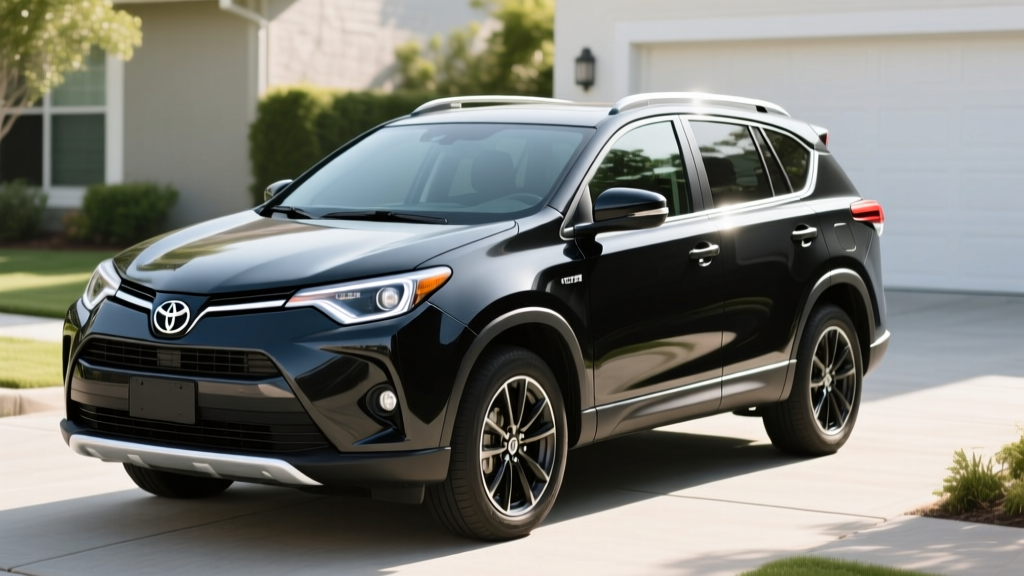
The 2016 Toyota RAV4 Hybrid XLE remains one of the most pragmatic compact SUV choices on the used market. As a conventional hybrid (HEV) — not a plug-in — it requires zero change to your fueling routine while delivering a meaningful efficiency bump over its gas-only sibling. With an EPA-rated 32 MPG combined and Toyota's reputation for hybrid powertrain longevity, this model year represents a sweet spot for buyers who want hybrid efficiency without plug-in complexity or full-EV range considerations.
This guide covers everything a prospective used buyer or current owner needs: exact fuel economy figures, powertrain specs, real-world MPG expectations, battery longevity data, and how the RAV4 Hybrid stacks up against modern PHEVs and EVs in 2026.
HEV vs. PHEV: What the RAV4 Hybrid Actually Is
A common source of confusion is whether the RAV4 Hybrid needs to be plugged in. It does not. The 2016 RAV4 Hybrid is a conventional hybrid electric vehicle (HEV), meaning its small battery recharges exclusively through regenerative braking and the gasoline engine. You fuel it like any other car — at a gas station — and the hybrid system handles energy management automatically.
| Feature | HEV (e.g., RAV4 Hybrid) | PHEV (e.g., RAV4 Prime) | BEV (e.g., bZ4X) |
|---|---|---|---|
| Plug-in charging? | No | Yes (Level 1/2) | Yes (Level 1/2/DC) |
| Electric-only range | ~0.5 mi at low speed | 42 mi (RAV4 Prime) | 222–252 mi (bZ4X) |
| Battery size | ~1.6 kWh (NiMH) | 18.1 kWh (Li-ion) | 71.4 kWh (Li-ion) |
| Gasoline engine? | Yes | Yes | No |
| Fueling | Gas station only | Gas station + plug | Plug only |
| Federal tax credit (§30D) | No | Up to $7,500 (if eligible) | Up to $7,500 (if eligible) |
Toyota did not offer a plug-in RAV4 (the RAV4 Prime) until the 2021 model year. If you need electric-only commuting capability, you'd need to look at a newer PHEV or a full EV. But if you want simplicity — no charging cables, no outlet installation, no range planning — the HEV format is purpose-built for that.
Fuel Economy: EPA Ratings and Real-World MPG
The 2016 RAV4 Hybrid XLE carries the following EPA fuel economy ratings (shared across all trims with AWD-i):
| Cycle | MPG |
|---|---|
| City | 34 MPG |
| Highway | 31 MPG |
| Combined | 32 MPG |
For context, the 2016 gas-only RAV4 LE AWD is rated at 22 city / 29 highway / 25 combined. The hybrid's 7 MPG combined advantage translates to roughly 80–100 fewer gallons per year for a driver covering 15,000 miles — a meaningful savings at any fuel price.
Real-World MPG: What Owners Actually See
Hybrids tend to outperform their EPA city ratings in stop-and-go driving because regenerative braking recovers energy that a gas car wastes as heat. Many RAV4 Hybrid owners report 33–36 MPG in mixed suburban driving. Highway-only trips at 75+ MPH tend to pull figures down to 28–30 MPG, since the electric motor contributes less at sustained high speeds and aerodynamic drag dominates.
Cold weather (below 30°F) typically costs 2–4 MPG as the engine runs more frequently to maintain cabin heat and battery temperature. This is a smaller penalty than EVs experience (which can lose 20–30% of range in deep cold), but it's worth noting if you live in a northern climate.
Powertrain Specs: Engine, Motors, and Performance
| Specification | Value |
|---|---|
| Engine | 2.5L Atkinson-cycle 4-cylinder |
| Engine output | 150 hp / 135 lb-ft torque |
| Front electric motor | 105 kW (141 hp) / 247 lb-ft |
| Rear electric motor (AWD-i) | 50 kW (67 hp) / 103 lb-ft |
| Net system horsepower | 194 hp |
| Transmission | eCVT (planetary gearset) |
| Drivetrain | Electronic on-demand AWD (AWD-i) |
| 0–60 mph | ~7.8 seconds |
| Hybrid battery | ~1.6 kWh, Nickel-Metal Hydride (NiMH) |
| Curb weight | ~3,950 lbs |
| Towing capacity | Not rated (unofficial max ~1,500 lbs) |
The Atkinson-cycle engine sacrifices peak power for thermal efficiency, while the electric motors fill in torque instantly from a stop. The result is responsive around-town acceleration that feels quicker than the 7.8-second 0–60 time suggests. The eCVT is a planetary gearset — not a belt-driven CVT — so there's no rubber-band effect or drone typical of conventional CVTs.
The AWD-i system uses the rear electric motor to power the rear wheels only when slip is detected or during hard acceleration. There's no mechanical driveshaft connecting the front and rear axles. This means the RAV4 Hybrid's AWD is adequate for rain, light snow, and gravel, but it's not a substitute for a dedicated off-road vehicle.
Battery Longevity, Warranty, and Replacement Cost
Hybrid Battery Warranty
Original coverage: 8 years / 100,000 miles (10 years / 150,000 miles in California and states adopting CARB emissions standards).
Current status (2026): A 2016 model's original hybrid battery warranty has expired by time (10 years from model year) in most states. However, any replacement battery installed by a Toyota dealer carries its own warranty — typically 3 years/unlimited miles for Toyota remanufactured units.
How Long Do RAV4 Hybrid Batteries Actually Last?
Toyota's NiMH hybrid batteries have an exceptionally strong track record. The ~1.6 kWh pack in the RAV4 Hybrid is small and is never fully charged or fully depleted — the hybrid system keeps the state of charge (SoC) in a narrow window (roughly 40–80%) to minimize stress. This shallow-cycling strategy is why Toyota hybrid batteries routinely exceed 150,000–200,000 miles without replacement.
Data from fleet operators and owner surveys consistently show failure rates below 5% within the first 10 years. The Prius, which uses similar NiMH chemistry, has documented cases exceeding 300,000 miles on the original battery.
Replacement Cost If It Does Fail
If the hybrid battery does require replacement out of warranty:
- Toyota remanufactured battery: $2,000–$3,000 (parts) + $500–$800 labor
- Aftermarket/refurbished battery: $1,200–$2,000 installed
- Individual cell/module replacement: $500–$1,000 at a hybrid specialist (only the failed modules are replaced)
For a 2016 model with 100,000–140,000 miles, the battery is statistically likely to outlast the vehicle. Budgeting $2,500 as a worst-case reserve is prudent, but most owners will never need it.
Used Pricing and Tax Credit Eligibility
The 2016 RAV4 Hybrid XLE originally carried an MSRP of approximately $30,460 (including destination). In the 2026 used market, examples with 80,000–120,000 miles typically list between $14,000 and $19,000, depending on condition, mileage, and region.
Does It Qualify for Any Tax Credit?
No. Under current IRS §30D Clean Vehicle Credit rules, conventional hybrids (HEVs) have never qualified for the federal EV tax credit. The credit applies only to plug-in electric vehicles — battery-electric (BEV) and plug-in hybrid (PHEV) models that meet battery capacity, critical-mineral sourcing, MSRP caps, and buyer income limits.
Some states offer their own incentives for used vehicle purchases or for high-efficiency vehicles, but these vary by jurisdiction. Check your state's energy or environmental agency for current programs. There is no federal used-EV credit applicable to HEVs either — the previously owned clean vehicle credit (§25E) also applies only to plug-in vehicles.
Who Should Choose the RAV4 Hybrid vs. a PHEV or EV?
Decision Framework
Choose the 2016 RAV4 Hybrid (HEV) if:
- You lack access to home or workplace charging (apartment, street parking)
- You want hybrid efficiency with zero behavioral change — just gas up and drive
- Your budget is $14,000–$19,000 for a reliable compact SUV
- You prioritize proven long-term reliability over cutting-edge tech
- You drive a mix of city and highway miles and want strong city MPG
Consider a PHEV (e.g., RAV4 Prime, 2021+) if:
- You can install a Level 2 home charger and want 42 miles of electric-only commuting
- Your daily round-trip commute is under 40 miles (you'd rarely use gas)
- You want to qualify for federal or state plug-in incentives
- Budget allows $30,000+ for a newer used PHEV
Consider a full EV (e.g., Tesla Model Y, Hyundai Ioniq 5) if:
- You have reliable home Level 2 charging
- You want to eliminate gasoline entirely and reduce per-mile fuel cost to ~$0.04–$0.06
- Your budget supports a $30,000+ EV purchase (new or used)
- You're comfortable with public DC fast charging for road trips
Pros and Cons
Pros
- 32 MPG combined with no plug-in requirement
- Toyota hybrid reliability — NiMH battery longevity is well-documented
- Strong city MPG (34) from regenerative braking
- AWD-i provides confident traction in rain and light snow
- Lower used-market pricing vs. newer PHEVs or EVs
- No home charger installation needed
- Smooth eCVT with no belt-driven drone
Cons
- No electric-only driving range (unlike PHEVs)
- No federal or state plug-in tax credit eligibility
- Highway MPG (31) trails city — less efficient on long road trips
- 2016 infotainment is dated: no Apple CarPlay or Android Auto
- Not rated for towing (limits utility vs. some competitors)
- NiMH battery is older chemistry — heavier per kWh than modern Li-ion
- Original factory warranty has expired by time
Frequently Asked Questions
How many MPG does the 2016 Toyota RAV4 Hybrid get?
The EPA rates it at 34 city / 31 highway / 32 combined. Real-world mixed driving typically yields 31–35 MPG, with city-heavy routes pushing toward the upper end and sustained highway driving pulling slightly below the combined rating.
Does the 2016 RAV4 Hybrid need to be plugged in?
No. It is a conventional hybrid (HEV), not a plug-in hybrid (PHEV). The battery recharges through regenerative braking and the gasoline engine. You fuel it exclusively at a gas station.
How far can it drive on electric power alone?
Essentially zero miles at normal driving speeds. At very low speeds (under ~25 MPH) with a charged battery, the RAV4 Hybrid can creep short distances — perhaps a few hundred yards in a parking lot — on electric power. This is not usable as an electric commuting vehicle. For meaningful electric-only range, you'd need the RAV4 Prime PHEV (42 miles) or a full EV.
Is the 2016 RAV4 Hybrid reliable?
Yes. Toyota's hybrid powertrain is among the most reliable in the industry. The 2.5L Atkinson-cycle engine is under-stressed, the eCVT has no wear-prone belts or clutches, and the NiMH hybrid battery is designed for shallow cycling that maximizes lifespan. With regular maintenance (oil changes, coolant service, brake fluid), these vehicles routinely reach 200,000+ miles. The NHTSA gave the 2016 RAV4 a 5-star overall safety rating.
What does a hybrid battery replacement cost?
A Toyota remanufactured replacement runs $2,500–$3,800 installed. Aftermarket or refurbished options can reduce this to $1,200–$2,000. However, statistical failure rates for this generation are low — most batteries outlast 150,000 miles without issue.
Does the 2016 RAV4 Hybrid qualify for any tax credit?
No federal tax credit applies. The IRS §30D credit is limited to plug-in vehicles (BEVs and PHEVs). Conventional hybrids have never qualified. Check your state's environmental or energy agency for any local incentives, though most states also limit incentives to plug-in vehicles.
Hybrid vs. PHEV vs. EV — which is right for me?
If you can't charge at home, the HEV (like this RAV4 Hybrid) is the clear choice — it improves fuel economy with zero infrastructure needs. If you can charge at home and commute under 40 miles round-trip, a PHEV lets you drive mostly on electricity while keeping a gas engine for longer trips. If you have home charging and want the lowest per-mile cost and zero tailpipe emissions, a full EV is the long-term play — but at a higher upfront purchase price.
Does the 2016 RAV4 Hybrid have Apple CarPlay or Android Auto?
No. Toyota did not add Apple CarPlay to the RAV4 until the 2020 model year, and Android Auto arrived in 2021. The 2016 model uses Toyota's Entune Audio Plus system with a 7-inch touchscreen, Bluetooth, and USB. Aftermarket head-unit replacements are available if smartphone integration is a priority.