Quick Verdict: The 2016 RAV4 Hybrid in 2026
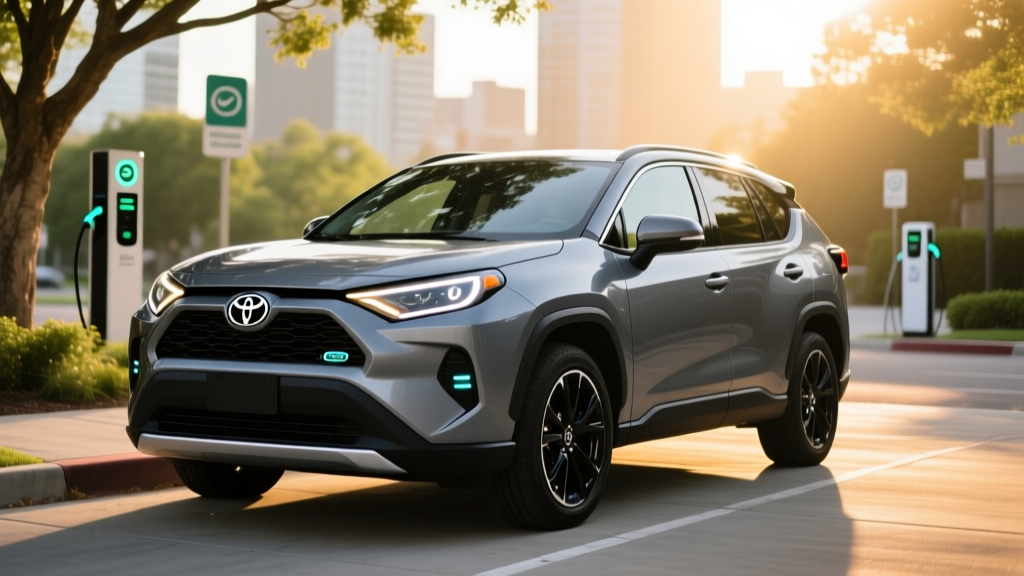
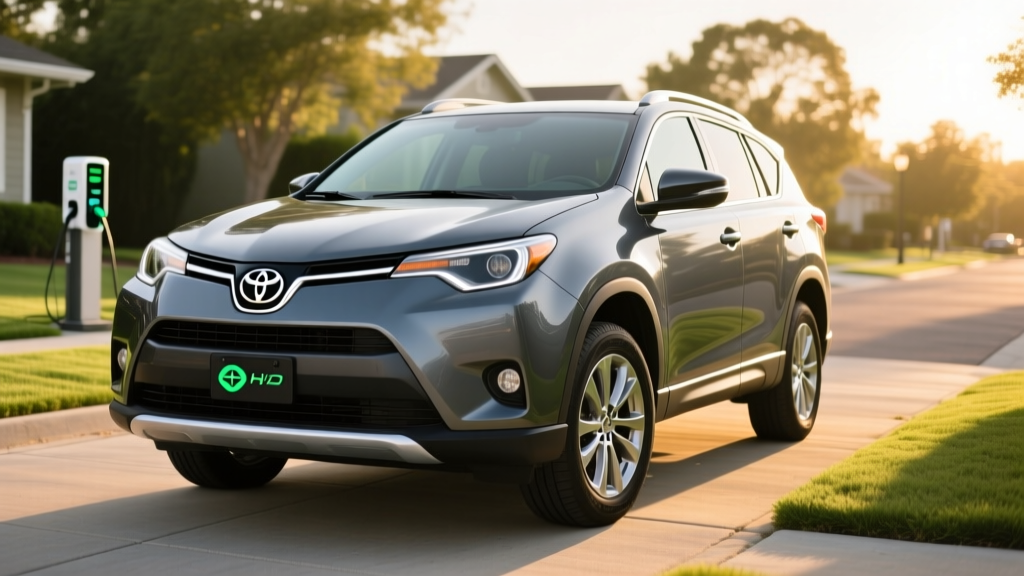
The 2016 Toyota RAV4 Hybrid remains one of the most pragmatic used hybrid SUVs on the market a decade after its debut. With an EPA-rated 32 MPG combined, standard all-wheel drive, and Toyota's proven hybrid synergy drive system, it delivers fuel savings without the range anxiety, charging infrastructure dependence, or upfront premium of a full battery-electric vehicle. For used-car shoppers in 2026 evaluating whether a nearly decade-old hybrid is a sound purchase, the RAV4 Hybrid's track record on battery longevity and powertrain reliability makes a strong case.
This guide covers everything a prospective buyer needs: exact EPA and real-world fuel economy, the hybrid battery's expected lifespan and replacement cost, how this conventional hybrid (HEV) differs from a plug-in hybrid (PHEV) or full EV, and whether any tax incentives still apply to a 2016 model.
HEV vs PHEV vs EV: What the 2016 RAV4 Hybrid Actually Is
Conventional Hybrid (HEV): The 2016 RAV4 Hybrid is a self-charging hybrid. It uses a gasoline engine paired with electric motor-generators and a small nickel-metal hydride (NiMH) traction battery. You never plug it in. The battery recharges through regenerative braking and the gas engine. It cannot drive on electric power alone for meaningful distances — the EV mode is limited to roughly 1 mile at very low speeds.
Plug-in Hybrid (PHEV): A PHEV (like the current RAV4 Prime) has a much larger battery (typically 14–18 kWh), can be plugged into a wall outlet or Level 2 charger, and offers 25–42 miles of electric-only driving before the gas engine engages. The 2016 RAV4 Hybrid is not a PHEV.
Battery Electric Vehicle (BEV): A full EV (like the Toyota bZ4X or Tesla Model Y) has no gasoline engine, relies entirely on a large battery pack (60–100+ kWh), and must be charged from an external source. Range typically spans 230–330+ miles depending on the model.
| Specification | Value |
|---|---|
| Powertrain Type | Conventional Hybrid (HEV), self-charging |
| Engine | 2.5L 4-cylinder Atkinson cycle |
| Combined System Horsepower | 194 hp |
| Electric Motors | Front motor-generator + rear motor-generator (AWD) |
| Traction Battery | NiMH, ~1.6 kWh (usable) |
| Drivetrain | Electronic On-Demand AWD (standard) |
| Transmission | eCVT (planetary gearset) |
| 0–60 mph | ~7.8 seconds |
| Towing Capacity | 1,750 lbs |
| Cargo Volume | 35.6 cu ft (rear seats up) / 73.4 cu ft (folded) |
| Plug-In Required? | No — never plug in |
| EV-Only Mode Range | ~1 mile at low speed (not a PHEV) |
Fuel Economy: EPA Ratings and Real-World MPG
| Driving Cycle | EPA MPG |
|---|---|
| City | 34 MPG |
| Highway | 31 MPG |
| Combined | 32 MPG |
Source: EPA fueleconomy.gov
Real-world MPG expectations: Toyota hybrids consistently outperform their EPA city estimates in stop-and-go driving because regenerative braking recovers energy that a gas car wastes as heat. Owners on fuel-tracking platforms like Fuelly report lifetime averages between 30–35 MPG combined, with some drivers seeing 36–38 MPG in warm-climate city commutes. Highway-heavy driving at 75+ mph tends to land closer to 28–30 MPG, as the aerodynamic drag of an SUV and the Atkinson-cycle engine's lower peak power reduce efficiency at sustained high speeds.
Cold-weather note: In sub-freezing temperatures, expect a 2–4 MPG drop. The engine runs more often to maintain cabin heat and battery temperature, reducing the hybrid system's ability to shut the engine off at stops. This is normal hybrid behavior, not a defect.
Compared to the 2016 gas-only RAV4 AWD (25 MPG combined EPA), the hybrid saves roughly 3.4 gallons per 100 miles driven. At $3.50/gallon and 12,000 miles/year, that translates to approximately $476 in annual fuel savings — or about $4,760 over a decade of ownership.
Powertrain Deep Dive: How the Hybrid System Works
The 2016 RAV4 Hybrid pairs a 2.5-liter Atkinson-cycle four-cylinder engine (150 hp, 152 lb-ft) with Toyota's Hybrid Synergy Drive system. Unlike a conventional transmission, the eCVT uses a planetary gearset to seamlessly blend power from the gas engine and two motor-generators (MG1 and MG2).
Front axle: The primary drive motor (MG2) delivers 105 kW (141 hp) and can propel the vehicle at low speeds independently. The gas engine and MG2 work in concert for acceleration, with the system's combined output rated at 194 hp.
Rear axle: A separate 50 kW (67 hp) rear motor provides electronic on-demand AWD. There is no mechanical driveshaft connecting the front and rear axles — the rear motor engages automatically when the system detects front-wheel slip or during hard acceleration. This means AWD is standard on every 2016 RAV4 Hybrid trim, unlike the gas model where AWD was optional.
The eCVT planetary gearset has no traditional clutch packs, bands, or shift solenoids. This is why Toyota hybrid transmissions are widely regarded as among the most durable in the industry — there are fewer wear components to fail.
Hybrid Battery Lifespan, Warranty, and Replacement Cost
The 2016 RAV4 Hybrid uses a nickel-metal hydride (NiMH) traction battery pack with approximately 1.6 kWh of usable capacity. While this is tiny compared to a PHEV (18 kWh) or a full EV (75+ kWh), it is sufficient for the hybrid system's charge-sustaining operation — the battery is never deeply discharged, which is key to its longevity.
Original warranty: Toyota covered the hybrid battery for 8 years / 100,000 miles in most states, and 10 years / 150,000 miles in California Air Resources Board (CARB) states (CA, CT, ME, MD, MA, NJ, NY, OR, RI, VT, WA, and others adopting CARB standards). Hybrid system components (inverter, motor-generators, ECU) received the same coverage.
Expected lifespan in 2026: A 2016 RAV4 Hybrid is now 10 years old. Toyota's NiMH hybrid batteries have an excellent track record — data from fleet operators and long-term owners (including the Prius, which shares the same fundamental hybrid architecture) shows that many original batteries remain functional well past 150,000 miles. However, capacity loss and eventual cell failure become increasingly likely as the pack ages past the 8–10 year mark.
Battery replacement cost (2026 estimates):
- New OEM Toyota battery: $3,000–$4,500 (parts + labor at a dealership)
- Remanufactured/reconditioned battery: $1,500–$2,500 (from third-party hybrid specialists)
- Individual cell/module replacement: $500–$1,200 (if only a few modules have failed — requires a hybrid-specialist shop)
If you're buying a used 2016 RAV4 Hybrid, check whether the hybrid battery has already been replaced (request documentation). A recently replaced OEM battery is a significant value-add. If the original battery is still in place at 10 years old, budget $2,000–$4,000 as a contingency for eventual replacement.
Pre-purchase tip: Ask a mechanic to perform a hybrid battery health check using a scan tool that reads individual module voltages. A healthy pack will show all modules within 0.2V of each other. Wide voltage variance between modules signals impending failure.
Pricing and Tax Credit Eligibility
Original MSRP (2016): The RAV4 Hybrid launched in two trims:
- XLE: ~$29,270
- Limited: ~$34,510
Used market pricing (early 2026): Expect to pay between $14,000 and $22,000 depending on mileage, condition, trim, and region. Lower-mileage Limited trims command a premium.
Federal tax credit: The 2016 RAV4 Hybrid does not qualify for the federal §30D new clean vehicle credit — that credit applies only to new plug-in vehicles (PHEVs and BEVs) meeting current-year battery sourcing, MSRP, and buyer income requirements as defined by the IRS. Conventional hybrids (HEVs) have never qualified for §30D.
Used clean vehicle credit (§25E): This credit (up to $4,000 or 30% of sale price, whichever is less) applies only to used PHEVs and BEVs — not conventional hybrids. The 2016 RAV4 Hybrid is ineligible.
State incentives: A small number of states offer rebates or HOV-lane access for hybrids, but most state-level EV incentives have shifted to plug-in vehicles. Check your state's energy or DMV website for current programs.
Who Should Choose the 2016 RAV4 Hybrid vs a PHEV or Full EV
Choose the 2016 RAV4 Hybrid if:
- You want fuel savings without changing your fueling habits — no plugs, no charging apps, no route planning around chargers
- You live in an apartment or lack access to home/workplace charging (a critical barrier for PHEVs and EVs)
- You regularly drive in stop-and-go city traffic where hybrid regenerative braking delivers maximum benefit
- You want AWD for snow/rain but don't need the towing capacity of a larger SUV
- Your budget is $15,000–$22,000 and you want a reliable, fuel-efficient compact SUV
Consider a PHEV (like a used RAV4 Prime or newer Plug-in Hybrid) if:
- You have access to Level 2 charging at home or work
- Your daily commute is under 40 miles and you want to drive mostly on electricity
- You want to reduce gasoline consumption by 60–80% while retaining a gas engine for road trips
Consider a full EV (like a used Model Y, Ioniq 5, or Mustang Mach-E) if:
- You have reliable home Level 2 charging
- You want the lowest per-mile fuel cost (electricity at $0.12/kWh ≈ $3.50/gallon equivalent)
- You want minimal maintenance (no oil changes, no transmission fluid, fewer moving parts)
- Your typical daily driving is under 250 miles and you're comfortable with DC fast charging on road trips
Pros and Cons at a Glance
Pros
- 32 MPG combined — strong for a compact AWD SUV
- Standard AWD on every trim (electronic rear motor)
- No plug-in charging required — fuels like a normal car
- Proven hybrid powertrain with excellent long-term reliability data
- eCVT has no traditional wear components (clutches, bands)
- Strong cargo space (35.6 cu ft) for the segment
- Lower annual fuel cost vs gas RAV4 (~$476/yr savings)
Cons
- Hybrid battery is 10 years old — replacement likely within next few years ($2K–$4.5K)
- No federal or state tax credits available (HEV, not PHEV/BEV)
- Highway MPG (31) is lower than city (34) — less benefit on long road trips
- Modest 194 hp — adequate but not quick for highway merging
- Infotainment system is dated by 2026 standards (no wireless CarPlay/Android Auto)
- No DC fast charging capability (not applicable — HEV doesn't plug in)
- Towing limited to 1,750 lbs
Frequently Asked Questions
How many MPG does the 2016 Toyota RAV4 Hybrid get?
The EPA rates it at 34 MPG city, 31 MPG highway, and 32 MPG combined. Real-world owner data shows most drivers achieve 30–35 MPG combined over the life of the vehicle, with city-heavy driving often exceeding the EPA estimate thanks to regenerative braking.
Does the 2016 RAV4 Hybrid need to be plugged in?
No. It is a conventional hybrid (HEV), not a plug-in hybrid (PHEV). The battery charges itself through regenerative braking and the gasoline engine. You simply fill it with gas like any other car.
How long will the hybrid battery last on a 2016 RAV4 Hybrid?
Toyota's NiMH hybrid batteries commonly last 10–15 years or 150,000–200,000 miles before significant degradation or failure. At 10 years old in 2026, some original batteries are still functional, but buyers should budget for a potential replacement ($2,000–$4,500) within the next few years if the original pack is still installed.
What does it cost to replace the hybrid battery?
A new OEM Toyota replacement runs $3,000–$4,500 installed at a dealership. Remanufactured packs from hybrid specialists cost $1,500–$2,500. If only a few modules have failed, individual cell replacement can cost $500–$1,200.
Does the 2016 RAV4 Hybrid qualify for any tax credit?
No. Federal tax credits under §30D (new vehicles) and §25E (used vehicles) apply only to plug-in hybrids (PHEVs) and battery-electric vehicles (BEVs). Conventional hybrids like the RAV4 Hybrid have never qualified for these credits. Some states may offer minor incentives — check your state energy office.
Is the 2016 RAV4 Hybrid reliable?
Yes. Toyota's Hybrid Synergy Drive is one of the most proven electrified powertrains in the world, with billions of real-world miles across the Prius, Camry Hybrid, and RAV4 Hybrid lineages. The eCVT transmission has no traditional friction-based shift components, reducing failure points. The primary long-term concern is hybrid battery age, not powertrain reliability.
Hybrid vs PHEV vs EV — which should I choose?
If you cannot charge at home, the conventional hybrid (HEV) is the right choice — no behavior change required. If you have home charging and a short commute, a PHEV lets you drive on electricity daily while keeping the gas engine for road trips. If you have home charging and want the lowest operating cost with zero tailpipe emissions, a full EV is the long-term play. The 2016 RAV4 Hybrid is ideal for buyers who want efficiency without any charging dependency.
How does the AWD system work on the 2016 RAV4 Hybrid?
The RAV4 Hybrid uses an electronic on-demand AWD system with a dedicated 50 kW electric motor on the rear axle. There is no mechanical driveshaft — the rear motor activates automatically when front-wheel slip is detected or during hard acceleration. This makes AWD standard on every trim, unlike the gas-only 2016 RAV4 where AWD was a paid option.
Final Assessment for Used Buyers
The 2016 Toyota RAV4 Hybrid occupies a practical sweet spot in the 2026 used-car market. It delivers genuine fuel savings (roughly 28% better than its gas counterpart), standard AWD, and a powertrain with a well-documented reliability record — all without requiring any change to your fueling routine. The main financial risk is hybrid battery replacement, which at $2,000–$4,500 is a meaningful but manageable expense that can be assessed before purchase with a proper scan-tool health check.
For buyers who lack home charging access or simply want a fuel-efficient compact SUV that works like a normal car, the 2016 RAV4 Hybrid remains a data-backed, low-risk choice. For those with charging access and a desire to eliminate most gasoline use, a used PHEV or full EV may deliver greater long-term savings — but at a higher upfront price point.