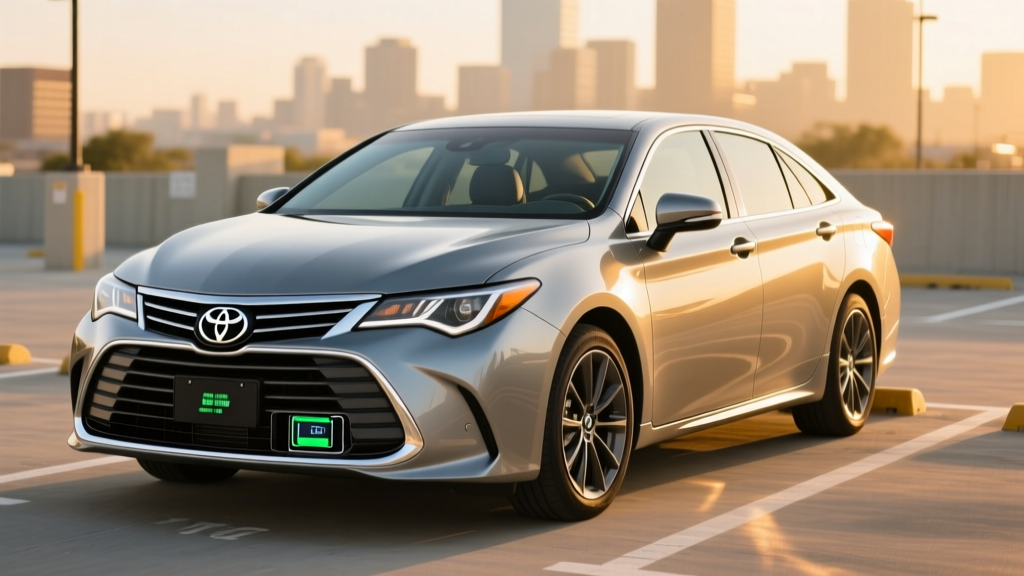
The 2016 Toyota Avalon Hybrid occupies a specific niche in the used-car market: a full-size sedan that delivers mid-compact fuel economy without requiring a plug, a charging routine, or any change in driving habits. With an EPA rating of 40 MPG combined and Toyota's proven Hybrid Synergy Drive system, it remains a practical choice for buyers who want electrified efficiency without the infrastructure demands of a plug-in hybrid (PHEV) or battery-electric vehicle (BEV).
This guide breaks down everything a 2026 used-car shopper needs to know — from real-world MPG expectations and battery longevity to replacement costs and how the Avalon Hybrid stacks up against modern alternatives.
HEV vs. PHEV vs. EV: Where the Avalon Hybrid Fits
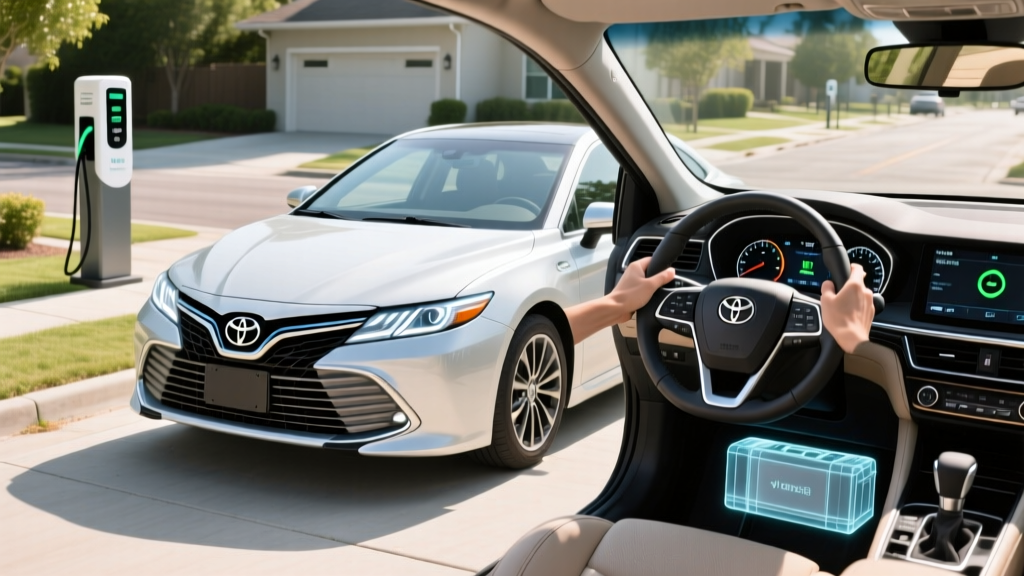
Conventional Hybrid (HEV) — The 2016 Avalon Hybrid is a self-charging hybrid. Its small battery is recharged exclusively through regenerative braking and the gasoline engine. You never plug it in. You simply fuel up at any gas station.
Plug-In Hybrid (PHEV) — Vehicles like the Toyota Prius Prime or RAV4 Prime have larger batteries (8–18 kWh) that charge from a wall outlet or public charger, delivering 25–42 miles of electric-only driving before the gas engine engages.
Battery Electric (BEV) — Fully electric vehicles like the Tesla Model 3 or Hyundai Ioniq 6 have no gasoline engine. They rely entirely on plug-in charging and deliver 250–360+ miles of EPA range.
The Avalon Hybrid is strictly an HEV. It cannot drive on electricity alone for meaningful distances (only very low-speed, short creeping), and it does not accept a charging plug. This is by design — it's engineered for drivers who want better fuel economy with zero behavioral change.
Fuel Economy: EPA Ratings and Real-World MPG
| Metric | EPA Estimate | Real-World Expectation |
|---|---|---|
| City MPG | 40 MPG | 38–43 MPG (hybrids often beat EPA in city) |
| Highway MPG | 39 MPG | 35–38 MPG (less regen benefit at sustained speed) |
| Combined MPG | 40 MPG | 37–41 MPG |
| Fuel Tank Capacity | 17.0 gallons | ~600–680 miles per tank |
According to fueleconomy.gov, the 2016 Avalon Hybrid earns a 40 MPG combined rating — identical to its city figure, which is unusual and reflects Toyota's hybrid tuning for stop-and-go efficiency.
Real-world note: Toyota hybrids frequently exceed their EPA city estimates because regenerative braking recovers more energy in heavy traffic. On the highway, however, the advantage narrows — the electric motor provides less assistance at sustained 70+ MPH speeds, and the 2.5-liter four-cylinder engine does more of the work. Owners reporting on Fuelly and similar tracking platforms commonly log 37–41 MPG combined over thousands of miles, which aligns closely with the EPA sticker.
Compared to the gas-only 2016 Avalon (24 MPG combined with its 3.5L V6), the hybrid saves roughly 250 gallons of fuel per year at 15,000 miles — approximately $750–$900 annually at 2026 fuel prices.
Powertrain Specs: Engine, Motor, and Combined Output
| Specification | Detail |
|---|---|
| Engine | 2.5L inline-4 Atkinson cycle |
| Engine Horsepower | 156 HP @ 5,700 RPM |
| Electric Motor Output | 105 kW (141 HP) |
| Net Combined System HP | 200 HP |
| Transmission | ECVT (planetary gearset, not a belt CVT) |
| Drivetrain | Front-wheel drive |
| 0–60 MPH | ~7.7 seconds |
| Hybrid Battery | 1.6 kWh nickel-metal hydride (NiMH) |
| Curb Weight | ~3,595 lbs |
The Hybrid Synergy Drive system pairs the Atkinson-cycle four-cylinder with a permanent-magnet electric motor through Toyota's eCVT — a planetary gearset that seamlessly blends power sources. Unlike the rubber-belt CVTs found in some competitors, Toyota's eCVT has no belts or pulleys to wear, contributing to its reputation for durability.
With 200 combined system horsepower, the Avalon Hybrid accelerates adequately for highway merging and passing, though it's noticeably less punchy than the V6 gas model (268 HP, 0–60 in ~6.7 seconds). The trade-off is deliberate: you're exchanging outright acceleration for a 65% improvement in fuel economy.
Hybrid Battery: Longevity, Warranty, and Replacement Cost
Original Warranty: Toyota covered the 2016 Avalon Hybrid's battery for 8 years / 100,000 miles (10 years / 150,000 miles in California and states adopting CARB emissions standards).
Current Status (2026): A 2016 model is now 10 years old. Original factory battery warranty has expired in most states, though California/CARB-state vehicles may still have coverage if under 150,000 miles.
How long do these batteries actually last? Toyota's NiMH hybrid batteries have an exceptionally well-documented track record. Data from taxi fleets, high-mileage owner reports, and third-party analyses show that Gen-3 and later Toyota hybrid batteries commonly reach 150,000–200,000+ miles before requiring replacement. The Avalon Hybrid's battery is relatively small (1.6 kWh) and is never deeply cycled — the system keeps the state of charge between roughly 40% and 80%, which dramatically reduces cell stress.
Battery replacement cost in 2026:
- New OEM battery (Toyota dealer): $2,500–$3,800 installed
- Refurbished/remanufactured battery: $1,200–$2,000 installed
- Individual cell module replacement: $500–$900 (specialist shops can replace only the degraded modules rather than the full pack)
For a used-car buyer, the key question is battery health. Before purchasing, request a hybrid battery health check — many Toyota dealers and independent hybrid specialists can read the battery's internal resistance and voltage-delta data to assess remaining life. A healthy 10-year-old Avalon Hybrid battery should show less than 15–20% capacity loss, which has minimal impact on fuel economy since the system is designed to work with a partially depleted pack.
Pricing, Trim Levels, and Tax Credit Eligibility
The 2016 Avalon Hybrid was offered in three trims:
| Trim | Original MSRP | 2026 Used Market Range |
|---|---|---|
| XLE Premium | $37,835 | $13,000–$17,000 |
| XLE Touring | $40,535 | $15,000–$19,000 |
| Limited | $43,735 | $17,000–$22,000 |
Used prices vary significantly by mileage, condition, and region. Well-maintained examples under 80,000 miles command a premium, particularly in markets where fuel costs are high.
Federal tax credit: The 2016 Avalon Hybrid does not qualify for the federal §30D Clean Vehicle Credit. That credit applies only to plug-in vehicles (PHEVs and BEVs) with a minimum battery capacity of 7 kWh. The Avalon Hybrid's 1.6 kWh NiMH pack falls far short of this threshold. Per IRS guidelines, conventional hybrids are ineligible for the new or used clean vehicle credits.
Some states may offer minor registration incentives or HOV lane access for hybrids, but these programs have largely shifted toward PHEVs and BEVs. Check your state's DMV or energy office for current rules.
Reliability and Ownership Costs
The 2016 Avalon Hybrid benefits from one of the most proven drivetrains in the automotive industry. Toyota's hybrid system has been in continuous production since 1997, and the Avalon-specific implementation shares major components with the Camry Hybrid — meaning parts availability and mechanic familiarity are excellent.
Key reliability considerations:
- eCVT transmission: Essentially bulletproof. No belts, clutches, or torque converters to fail. Routine fluid changes every 60,000 miles are recommended.
- Brake wear: Regenerative braking significantly reduces pad and rotor wear. Many owners report original brake pads lasting 80,000–100,000+ miles.
- Inverter coolant: The hybrid inverter has its own coolant loop. Toyota recommends replacement at 100,000 miles; neglecting this can lead to inverter failure ($1,500–$2,500 replacement).
- 12V auxiliary battery: Like all Toyotas, the 12V battery (which powers electronics and starts the hybrid system) typically lasts 4–6 years and costs $150–$250 to replace.
According to IIHS, the 2016 Avalon earned a Top Safety Pick designation with Good ratings in all crashworthiness tests, though its front crash prevention system was rated only Basic by today's standards.
Avalon Hybrid vs. Modern Alternatives: What Should You Buy?
Reasons to Choose the 2016 Avalon Hybrid
- 40 MPG combined with zero plug-in requirement
- Spacious full-size sedan interior (16.0 cu-ft trunk, generous rear legroom)
- Proven hybrid reliability with 200,000+ mile potential
- Low purchase price ($13K–$22K) vs. new electrified vehicles
- No charging infrastructure needed — ideal for apartment dwellers
- Smooth, quiet ride quality competitive with entry-luxury sedans
Reasons to Look Elsewhere
- No electric-only driving (not a PHEV or BEV)
- No federal tax credit eligibility
- Dated infotainment (no standard Apple CarPlay/Android Auto on 2016 models)
- ADAS features limited by 2016 standards (no lane centering, basic pre-collision)
- Hybrid battery warranty likely expired — potential $2,000–$3,500 liability
- Discontinued after 2022 model year (Toyota replaced Avalon with Crown)
Choose the 2016 Avalon Hybrid if: You want a comfortable, spacious sedan with excellent fuel economy, you don't have access to home charging, and you're comfortable buying a 10-year-old vehicle with potential battery replacement on the horizon.
Choose a used PHEV (e.g., Prius Prime, Clarity PHEV) if: You have home charging access, want 25–47 miles of electric-only commuting, and still need gas flexibility for longer trips.
Choose a used BEV (e.g., Chevy Bolt, Tesla Model 3) if: You can charge at home, your daily driving is under 200 miles, and you want the lowest per-mile fuel cost and minimal maintenance.
Choose a newer hybrid (e.g., 2023+ Camry Hybrid) if: You want remaining factory warranty, modern infotainment, and current ADAS features — and can spend $25,000+.
Frequently Asked Questions
How many MPG does the 2016 Toyota Avalon Hybrid get?
The EPA rates it at 40 MPG city, 39 MPG highway, and 40 MPG combined. Real-world driving typically yields 37–41 MPG combined, with city driving often exceeding the EPA estimate thanks to regenerative braking.
Does the 2016 Avalon Hybrid need to be plugged in?
No. It is a conventional hybrid (HEV), not a plug-in hybrid. The battery charges through regenerative braking and the gasoline engine. You only ever need to fill the gas tank.
How far can the 2016 Avalon Hybrid drive on electric power alone?
Effectively zero miles in normal driving. The electric motor assists the gas engine and powers very low-speed creeping (under ~25 MPH for short distances), but the 1.6 kWh battery is far too small to sustain electric-only driving. This is normal for all conventional HEVs.
Is the hybrid battery reliable, and what does replacement cost?
Toyota's NiMH hybrid batteries are among the most reliable in the industry, commonly lasting 150,000–200,000+ miles. A new OEM replacement costs $2,500–$3,800 installed; refurbished packs run $1,200–$2,000. Individual cell module replacement by a specialist can cost as little as $500–$900.
Does the 2016 Avalon Hybrid qualify for any tax credit?
No. The federal §30D Clean Vehicle Credit requires a minimum 7 kWh battery and plug-in capability. The Avalon Hybrid's 1.6 kWh NiMH battery does not qualify. It is also ineligible for the used EV credit (§25E), which similarly requires plug-in vehicles. No state-level hybrid-specific credits are widely available as of 2026.
How does the 2016 Avalon Hybrid compare to a modern Camry Hybrid?
The 2025 Toyota Camry Hybrid achieves 51 MPG combined (LE FWD) with a more advanced fourth-generation hybrid system, a lithium-ion battery, standard Apple CarPlay/Android Auto, and Toyota Safety Sense 2.5+ with lane centering and improved pre-collision detection. However, a used 2025 Camry Hybrid costs $28,000–$35,000 vs. $13,000–$22,000 for a 2016 Avalon Hybrid. If budget is the primary constraint, the Avalon delivers strong value.
What should I check before buying a used 2016 Avalon Hybrid?
Prioritize a hybrid battery health diagnostic (voltage delta and internal resistance), confirm inverter coolant has been changed at recommended intervals, check for any open recalls via NHTSA's VIN lookup, and verify maintenance records — especially for the eCVT fluid and engine oil change history.