Quick Verdict: The 2016 MKZ Hybrid a Decade Later
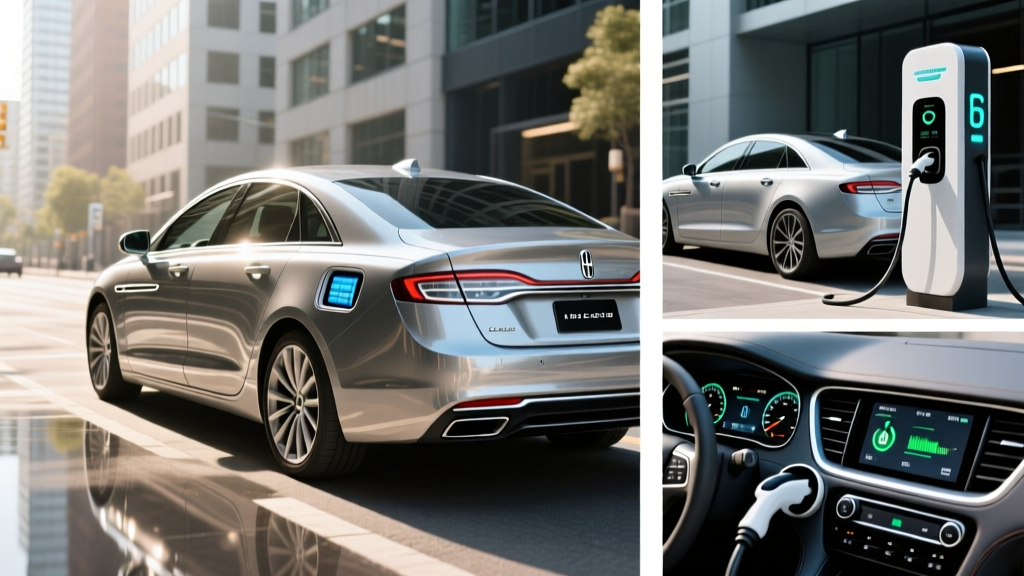
The 2016 Lincoln MKZ Hybrid was Ford's premium answer to the Toyota Camry Hybrid and Lexus ES 300h — a midsize luxury sedan wrapping Ford's proven 2.0-liter Atkinson-cycle hybrid powertrain in Lincoln's quiet, soft-riding chassis. A decade on, it remains one of the most accessible used luxury hybrids on the market, with strong real-world fuel economy and a track record of battery longevity that should reassure second- and third-owners shopping in 2026.
Before we get into the numbers, a critical clarification: the MKZ Hybrid is a conventional hybrid (HEV), not a plug-in hybrid (PHEV). It does not have a charge port, cannot be plugged in, and has no meaningful electric-only driving range. Lincoln never produced a plug-in MKZ. If you're looking for plug-in capability in a Ford-family sedan from this era, the Ford Fusion Energi (PHEV) is the mechanical sibling to investigate.
A conventional hybrid (HEV) like the MKZ Hybrid uses a small battery (~1.4 kWh) charged entirely by regenerative braking and the gasoline engine. You never plug it in. A plug-in hybrid (PHEV) has a larger battery (typically 10–25 kWh), a charge port, and 20–45 miles of electric-only range before the gas engine kicks in. The MKZ is strictly HEV.
2016 MKZ Hybrid Fuel Economy: EPA and Real-World MPG
| Metric | MPG |
|---|---|
| City | 40 |
| Highway | 39 |
| Combined | 40 |
Source: fueleconomy.gov
The 40/39/40 split is notable because most hybrids skew heavily toward city MPG (where regenerative braking and electric-motor assist shine) while dropping on the highway. The MKZ Hybrid's Atkinson-cycle 2.0L engine and CVT keep highway numbers remarkably close to city figures — a rarity among hybrids of this generation.
Real-World MPG Expectations
Owner-reported data on Fuelly and Edmunds consistently shows real-world combined MPG between 37 and 43, depending on driving style and climate. The MKZ Hybrid is one of those rare vehicles where careful drivers can exceed the EPA sticker in city driving, thanks to aggressive regenerative braking and the ability to coast on electric power at low speeds.
Expect the lower end (~35–37 MPG) if your commute is predominantly high-speed interstate (75+ mph) or if you live in a cold climate where the engine runs more frequently for cabin heat. In moderate temperatures with mixed city/suburban driving, 41–43 MPG is achievable.
Powertrain and Battery Specifications
| Specification | Value |
|---|---|
| Engine | 2.0L Atkinson-cycle I4 |
| Engine Power | 141 hp @ 6,000 rpm |
| Electric Motor Power | 120 hp (88 kW) |
| Combined System Output | 188 hp |
| Transmission | eCVT (planetary gearset) |
| Hybrid Battery | 1.4 kWh lithium-ion |
| Drivetrain | Front-wheel drive |
| 0–60 mph | ~8.4 seconds |
| Fuel Tank | 13.5 gallons |
| Total Driving Range | ~540 miles |
The 1.4 kWh lithium-ion pack is small by modern standards, but that's by design. In a conventional HEV, the battery acts as a power buffer — absorbing regenerative braking energy and releasing it for acceleration assist and low-speed electric creep. It never needs to store enough energy for sustained electric-only driving, so the small capacity keeps weight and cost down.
There is no charge port, no Level 1 or Level 2 charging capability, and no DC fast charging. The battery is charged exclusively through regenerative braking and engine-driven generation. This is the defining difference between an HEV and a PHEV.
Battery Reliability, Warranty, and Replacement Cost
How Long Does the MKZ Hybrid Battery Last?
Ford's second-generation hybrid system (shared with the Fusion Hybrid) has proven to be one of the most durable in the industry. Taxi fleets running the Ford Fusion Hybrid — mechanically identical to the MKZ Hybrid — routinely exceed 200,000–300,000 miles on the original battery pack. The lithium-ion cells in the 2016 model are more thermally stable than the nickel-metal hydride (NiMH) packs in older Toyota hybrids, and the battery management system keeps the state of charge in a conservative middle window to minimize degradation.
For a 2016 model in 2026, expect the battery to be 10 years old. Most will still function, but with some capacity loss. The practical effect of hybrid battery degradation isn't sudden failure — it's a gradual reduction in electric-assist contribution, which manifests as slightly lower MPG (perhaps 1–3 MPG below original) and more frequent engine engagement at low speeds.
Battery Replacement Cost
If the battery does eventually require replacement:
- New OEM battery pack (Lincoln dealer): $2,500–$3,500 including labor
- Refurbished/remanufactured pack: $1,200–$2,000 installed
- Individual cell/module replacement (specialist shop): $500–$1,200
These costs are significantly lower than full EV battery replacements ($5,000–$20,000+) because the pack is small (1.4 kWh). Several aftermarket suppliers offer compatible refurbished units, and hybrid-specialty shops in most metro areas can perform the swap in 2–3 hours.
2016 MKZ Hybrid Pricing in 2026
Original MSRP for the 2016 Lincoln MKZ Hybrid started at approximately $36,560 (base Premiere trim) and climbed to around $47,000 for a fully loaded Reserve or Black Label model. Lincoln notably charged no premium for the hybrid powertrain over the gasoline 2.0L EcoBoost — a decision that made the hybrid the value choice at launch.
In the 2026 used market, expect to pay:
- 80,000–120,000 miles: $9,000–$13,000
- 50,000–80,000 miles: $13,000–$17,000
- Under 50,000 miles: $17,000–$21,000
Tax Credit Eligibility
The 2016 MKZ Hybrid does not qualify for the federal §30D new-vehicle EV tax credit (up to $7,500) because it is a conventional hybrid, not a plug-in vehicle. It also does not qualify for the used clean vehicle credit (up to $4,000), which requires the vehicle to be a BEV, PHEV, or fuel-cell vehicle with at least 4 kWh of battery capacity.
Some states offer their own incentives for hybrid purchases, but these typically target new vehicles. Check your state's energy office or department of environmental quality for any current programs. For federal rules, always consult IRS.gov §30D guidance or a tax professional.
Who Should Buy the 2016 MKZ Hybrid — And Who Shouldn't
✓ Buy This If
- You want a quiet, comfortable luxury sedan with low running costs
- Your commute is city-heavy or mixed (where hybrids shine)
- You lack access to home or workplace charging (no plug needed)
- You want a proven, low-risk hybrid system with cheap battery replacement
- Your budget is $10,000–$18,000 for a used luxury car
✗ Look Elsewhere If
- You want electric-only driving or plug-in capability
- You primarily drive highway miles at 80+ mph (diesel or efficient gas may match MPG)
- You need AWD (the MKZ Hybrid is FWD only)
- You want modern ADAS features like adaptive cruise with lane centering
- You want to qualify for a federal tax credit
MKZ Hybrid vs. a Modern PHEV vs. a Full EV
If you have reliable home charging and a commute under 40 miles round-trip, a modern PHEV like the Toyota Prius Prime (44 miles electric-only, 48 MPG combined after that) or a used BMW 330e can deliver near-EV daily driving with gas-engine road-trip flexibility. The trade-off: PHEVs require plugging in to realize their advantage, and their more complex powertrains carry higher maintenance risk long-term.
A full EV like the Chevrolet Bolt or Hyundai Kona Electric eliminates gasoline entirely and costs far less per mile to fuel — but requires reliable charging access and a higher upfront investment. If you can charge at home and your daily driving is under 200 miles, a used EV is often the more economical choice in 2026.
The MKZ Hybrid's sweet spot is the buyer who wants a premium sedan with minimal fuel costs, zero charging infrastructure requirements, and a sub-$18,000 purchase price. That combination is hard to beat.
Known Issues and Pre-Purchase Checklist
The 2016 MKZ Hybrid is mechanically sound, but a few items warrant attention on any used example:
- Hybrid battery health: Ask for a battery state-of-health (SoH) readout from a Ford/Lincoln dealer or hybrid specialist. Look for less than 15% capacity loss.
- 12V auxiliary battery: Like all hybrids and EVs, the MKZ has a conventional 12V battery that powers electronics. These typically last 3–5 years and cost $150–$250 to replace.
- CVT fluid: Ford recommends eCVT fluid inspection at 150,000 miles. Some owners opt for a drain-and-fill at 100,000 miles as preventative maintenance (~$200–$300).
- Brake wear: Regenerative braking significantly extends pad life. Original brake pads lasting 80,000–100,000+ miles are common, but rotors may need attention due to surface rust from lighter use.
- Infotainment: The 2016 SYNC 3 system is functional but dated. Apple CarPlay and Android Auto are supported on late-2016 builds — verify before purchasing.
Frequently Asked Questions
How many MPG does the 2016 MKZ Hybrid get?
The EPA rates the 2016 Lincoln MKZ Hybrid at 40 city / 39 highway / 40 combined MPG. Real-world owners report between 37 and 43 MPG combined, with city-heavy driving often exceeding the EPA figure and sustained high-speed highway driving dropping to the mid-30s.
Does the 2016 MKZ Hybrid need to be plugged in?
No. The MKZ Hybrid is a conventional hybrid (HEV), not a plug-in hybrid. It has no charge port. The 1.4 kWh battery charges exclusively through regenerative braking and the gasoline engine. You fuel it like any other car — with gasoline only.
How far can the MKZ Hybrid drive on electric power alone?
Essentially zero miles at sustained speed. The hybrid system can propel the car on electric-only power for very short distances (a few hundred yards) at low speeds (under 25 mph), such as creeping through a parking lot. It cannot sustain electric-only driving at road speeds. If electric-only range matters to you, you need a PHEV or BEV.
Is the 2016 MKZ Hybrid reliable?
Yes. Ford's 2.0L hybrid powertrain is among the most proven in the industry, with extensive taxi-fleet use demonstrating 200,000+ mile longevity. The lithium-ion hybrid battery, eCVT transmission, and Atkinson-cycle engine are all low-stress, conservatively tuned components. Major reliability databases (Consumer Reports, J.D. Power) rated the MKZ Hybrid as average to above-average for its class.
What does it cost to replace the hybrid battery?
A new OEM replacement runs $2,500–$3,500 installed at a Lincoln dealer. Refurbished packs from aftermarket suppliers cost $1,200–$2,000 installed. Individual module repairs can be done for $500–$1,200 at hybrid-specialty shops. Given the pack's small 1.4 kWh capacity, replacement costs are far lower than EV battery replacements.
Does the 2016 MKZ Hybrid qualify for any tax credit?
No. The federal §30D new clean vehicle credit and the used clean vehicle credit (up to $4,000) apply only to plug-in vehicles (BEVs, PHEVs, and fuel-cell vehicles). Conventional hybrids like the MKZ Hybrid are not eligible for federal purchase incentives. Some states may offer their own programs — check your state energy office for current availability.
Is the MKZ Hybrid the same as the Ford Fusion Hybrid?
Mechanically, yes. The 2016 MKZ Hybrid shares its entire powertrain, hybrid system, and platform with the 2016 Ford Fusion Hybrid. The differences are exclusively in exterior styling, interior materials, sound insulation, suspension tuning, and Lincoln-specific features. The Fusion Hybrid is typically $3,000–$5,000 cheaper on the used market and offers the same 40 MPG combined.