Quick Verdict: A Luxury Hybrid That Punches Above Its Weight
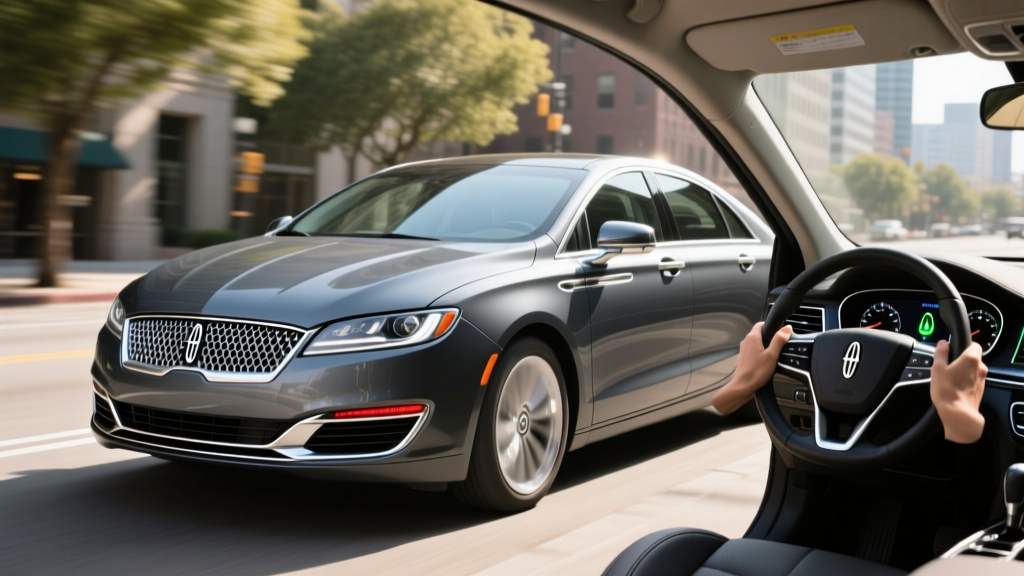
The 2016 Lincoln MKZ Hybrid occupies a specific niche in the used-car market: a midsize luxury sedan with genuine hybrid efficiency, no plug required, and a price that has depreciated into accessible territory. Built on Ford's CD4 platform and sharing its hybrid powertrain architecture with the Ford Fusion Hybrid, the MKZ Hybrid delivers an EPA-estimated 40 MPG combined — a figure that still holds up against newer hybrid sedans in 2026.
But as a used hybrid approaching a decade old, the real questions center on battery health, long-term reliability, and whether this conventional hybrid (HEV) still makes financial sense versus a newer PHEV or full EV. This guide gives you the exact numbers you need to decide.
2016 Lincoln MKZ Hybrid: Core Specifications
| Specification | Value |
|---|---|
| Vehicle Type | Conventional Hybrid (HEV) — no plug |
| Engine | 2.0L Atkinson-cycle 4-cylinder |
| Combined Horsepower | 188 hp (net system) |
| Hybrid Battery | 1.4 kWh lithium-ion (usable ~1.0 kWh) |
| Transmission | eCVT (planetary gearset, no fixed gears) |
| EPA MPG (City / Hwy / Combined) | 40 / 39 / 40 MPG |
| Fuel Tank | 13.5 gallons |
| Total Range | ~540 miles per tank |
| 0-60 mph | ~8.5 seconds |
| Drivetrain | Front-wheel drive |
| Original MSRP (Base) | $36,560 |
| 2026 Used Price Range | $10,000 – $16,000 (depending on mileage/condition) |
Fuel Economy: EPA Numbers vs. Real-World MPG
| Driving Scenario | City | Highway | Combined |
|---|---|---|---|
| EPA Estimate | 40 MPG | 39 MPG | 40 MPG |
| Real-World (Owner Reports) | 38–44 MPG | 35–39 MPG | 37–42 MPG |
The 2016 MKZ Hybrid's EPA rating of 40 MPG combined (40 city / 39 highway) was competitive when new and remains respectable today. According to fueleconomy.gov, this matches or beats many 2026 hybrid sedans in the luxury segment.
How hybrids behave in the real world: Unlike gas cars, conventional hybrids typically exceed their EPA city rating in stop-and-go traffic because regenerative braking recovers energy that would otherwise be wasted. Highway driving is where hybrids lose their advantage — the engine runs more continuously at steady speeds, and aerodynamic drag dominates. Expect 42-44 MPG in urban commuting but closer to 35-37 MPG on sustained highway trips at 70+ mph.
Cold-weather impact: In sub-freezing temperatures, expect a 10-15% fuel economy reduction. The engine runs more frequently to provide cabin heat (since there's no waste heat from an electric motor like in an EV), and the battery's charge/discharge efficiency drops in cold weather. Winter city MPG may dip to 34-36.
Powertrain Deep Dive: How the Hybrid System Works
The MKZ Hybrid uses Ford's second-generation hybrid system, pairing a 2.0-liter Atkinson-cycle four-cylinder engine with a permanent-magnet electric motor through an electronically controlled continuously variable transmission (eCVT). This is not a belt-driven CVT like those in some Nissan products — it's a planetary gearset that blends engine and motor power seamlessly, with no rubber bands or slipping belts.
Engine output: 141 hp and 129 lb-ft of torque
Electric motor output: 120 hp (88 kW)
Net combined system output: 188 hp
The system automatically switches between electric-only mode (at low speeds, typically under 25 mph for short distances), engine-only mode (highway cruising), and combined mode (hard acceleration). The 1.4 kWh lithium-ion battery is small by PHEV or EV standards — it stores enough energy for roughly 1-2 miles of low-speed electric-only creeping, but this is not a vehicle designed for meaningful electric-only range. Its purpose is to buffer regenerative energy and assist the engine during acceleration.
Conventional Hybrid (HEV) — like this MKZ: No plug. Charges itself via regen braking and the engine. Best for drivers without home charging access who want better MPG without changing habits. You just fill up with gas.
Plug-in Hybrid (PHEV): Larger battery (typically 10-25 kWh), plugs into a wall outlet or Level 2 charger, offers 20-50 miles of electric-only range before the gas engine kicks in. Best for drivers with home charging who commute short distances but need gas-engine range for road trips.
Battery Electric (BEV): No gas engine. 200-400+ miles of range, requires charging infrastructure. Lowest operating cost but demands charging access.
Hybrid Battery: Warranty, Lifespan, and Replacement Cost
Original Warranty: 8 years / 100,000 miles (hybrid battery and components) — or 10 years / 150,000 miles in CARB states (CA, NY, MA, and others that follow California emissions standards).
2026 Status: Most 2016 MKZ Hybrids have exceeded the 8-year/100,000-mile standard warranty. If the vehicle was originally sold in a CARB state and has under 150,000 miles, the 10-year hybrid component warranty may still apply through the end of 2026.
Battery Replacement Cost: $2,500 – $4,000 for a refurbished or new hybrid battery pack (parts and labor). Independent hybrid specialists often offer refurbished units at the lower end of this range.
Real-World Degradation: Ford's Gen 2 hybrid system has proven durable. The 1.4 kWh battery is conservatively managed — the system never fully charges or fully depletes it, keeping it in a 40-80% state of charge window. Most owners report minimal MPG degradation even at 150,000+ miles. Complete battery failure before 200,000 miles is uncommon.
The hybrid battery in the MKZ is a lithium-ion pack with a modest capacity. Because the hybrid system uses only a narrow band of the battery's total capacity (a shallow charge/discharge cycle), cell degradation is slow. This is fundamentally different from a PHEV or EV battery that cycles through a much wider state-of-charge range daily.
Signs of hybrid battery trouble: Noticeable drop in fuel economy (below 30 MPG combined in normal driving), a dashboard warning light (check engine or hybrid system warning), or the engine running almost constantly even at low speeds. A diagnostic scan at any Ford/Lincoln dealer or hybrid specialist can check battery cell balance and state of health.
Is the 2016 MKZ Hybrid Reliable?
The 2016 MKZ Hybrid benefits from Ford's extensive hybrid experience — the company has been building Fusion Hybrids since 2010, and the powertrain in the 2016 MKZ represents a mature, well-debugged system. The eCVT transmission, in particular, has proven more reliable than conventional automatic or belt-driven CVT transmissions because it has no clutches, belts, or friction bands to wear out.
Common issues to watch for (non-hybrid):
- MyFord Touch / SYNC infotainment glitches: The 2016 model year still uses Ford's older SYNC system, which can be slow and occasionally freeze. Software updates help but don't fully resolve it.
- 12V battery drain: Like all modern vehicles with extensive electronics, the 12V auxiliary battery can drain if the car sits unused for weeks. This is separate from the hybrid traction battery.
- Brake feel: The transition between regenerative braking and friction braking can feel slightly inconsistent — a common trait in hybrids of this era, not a defect.
The hybrid-specific components (battery, motor, eCVT, inverter) have a strong reliability record. The NHTSA gave the 2016 MKZ a 5-star overall safety rating, and the IIHS rated it Good in most crash-test categories.
Pricing, Tax Credits, and Total Cost of Ownership
Original MSRP: The 2016 MKZ Hybrid started at $36,560 for the base trim, with the Reserve and Black Label trims pushing past $45,000. Lincoln notably offered the hybrid powertrain at no premium over the gasoline 2.0L EcoBoost model — a rare move at the time.
2026 Used Market Price: Expect to pay $10,000 to $16,000 depending on mileage, condition, and trim level. Examples under 80,000 miles in Reserve trim typically command $13,000-$16,000. High-mileage examples (120,000+) can be found under $11,000.
Tax Credit Eligibility: The 2016 MKZ Hybrid does not qualify for the federal §30D new clean vehicle credit (which applies only to new PHEVs and BEVs with sufficient battery capacity). For used purchases, the §25E used clean vehicle credit allows up to $4,000 or 30% of the sale price (whichever is lower) — but only for vehicles with a battery capacity of at least 7 kWh. The MKZ Hybrid's 1.4 kWh battery falls well below this threshold. This vehicle does not qualify for any federal EV or hybrid tax credit. Always verify current rules on IRS.gov and consult a tax professional.
Cost per mile (fuel): At 40 MPG combined and $3.20/gallon regular unleaded (2026 national average), the MKZ Hybrid costs approximately $0.08 per mile in fuel. Compare that to a comparable non-hybrid luxury sedan at 25 MPG ($0.128/mile) — a savings of roughly $480 per year at 10,000 miles driven annually.
Pros and Cons: The Honest Assessment
- 40 MPG combined — genuine hybrid efficiency
- No plug required — no charging infrastructure needed
- Proven, reliable hybrid powertrain (Ford Gen 2)
- Luxury features at a used-economy price
- Comfortable ride quality, quiet cabin
- No hybrid battery premium over gas model (when new)
- 540-mile total range per tank
- No electric-only range to speak of (1-2 mi at low speed)
- Outdated infotainment system (SYNC 2)
- No federal or state tax credit eligibility
- FWD only — no AWD option
- Modest 188 hp — not a performance sedan
- Hybrid battery warranty mostly expired by 2026
- Lincoln brand depreciation steeper than Lexus/Toyota
Who Should Buy the 2016 MKZ Hybrid — And Who Shouldn't
Choose the 2016 MKZ Hybrid if:
- You want 40 MPG without plugging in or changing your fueling habits
- You don't have access to home or workplace charging (apartment, street parking)
- You want luxury features (leather, premium audio, adaptive suspension) under $16,000
- Your commute is mostly city/suburban with frequent stops
- You want a proven hybrid system with low risk of expensive failure
- You have home charging and a short commute (under 30 miles) — a PHEV like the Toyota RAV4 Prime or Chrysler Pacifica Hybrid lets you drive mostly on electricity
- You want to reduce gasoline consumption dramatically, not just improve MPG
- You want access to HOV lanes (available in some states for PHEVs, not HEVs)
- You have reliable home Level 2 charging
- You want the lowest possible per-mile operating cost ($0.03-$0.05/mile on electricity vs $0.08/mile on gas)
- You want to eliminate oil changes, spark plugs, and transmission fluid entirely
- You qualify for the §30D federal tax credit on a new EV (up to $7,500) or the §25E used EV credit (up to $4,000)
Frequently Asked Questions
How many MPG does the 2016 Lincoln MKZ Hybrid get?
The EPA rates the 2016 MKZ Hybrid at 40 MPG city, 39 MPG highway, and 40 MPG combined. In real-world driving, most owners report 37-42 MPG combined depending on driving style, with city driving often exceeding the EPA estimate and highway driving falling slightly below it.
Does the 2016 MKZ Hybrid need to be plugged in?
No. The 2016 MKZ Hybrid is a conventional hybrid (HEV), not a plug-in hybrid. It charges its small battery entirely through regenerative braking and the gasoline engine. You fuel it like any other car — with gasoline at a gas station.
How far can it drive on electric power alone?
The MKZ Hybrid can creep along at very low speeds (under 25 mph) on electric power for roughly 1-2 miles in ideal conditions. This is not meaningful electric-only range — it's designed for parking lots and stop-and-go traffic assist, not electric commuting. If you need 20+ miles of electric-only driving, you need a PHEV or BEV.
Is the hybrid battery reliable, and what does replacement cost?
Ford's Gen 2 hybrid battery system has a strong reliability record. The battery is conservatively managed (shallow charge cycles), and most units last well past 150,000 miles without significant degradation. If replacement is needed, expect $2,500-$4,000 for a refurbished or new pack from a dealer or independent hybrid specialist.
Does the 2016 MKZ Hybrid qualify for any tax credit?
No. The federal §30D new vehicle credit applies only to new PHEVs and BEVs, and the §25E used vehicle credit requires a minimum 7 kWh battery — the MKZ Hybrid's 1.4 kWh pack doesn't qualify. No federal tax credit is available for this vehicle. Some states may offer separate incentives for hybrid purchases, but these are rare and vary by jurisdiction. Check your state's DMV or energy office for current programs.
What should I check before buying a used 2016 MKZ Hybrid?
Have a pre-purchase inspection performed by a Ford/Lincoln dealer or hybrid specialist that includes a hybrid battery health diagnostic (cell voltage balance and capacity test). Also check for any outstanding recalls or TSBs (technical service bulletins), verify the maintenance history (especially engine oil changes — the Atkinson-cycle engine still needs regular oil service), and test-drive in both city and highway conditions to assess brake feel and engine/motor transitions.