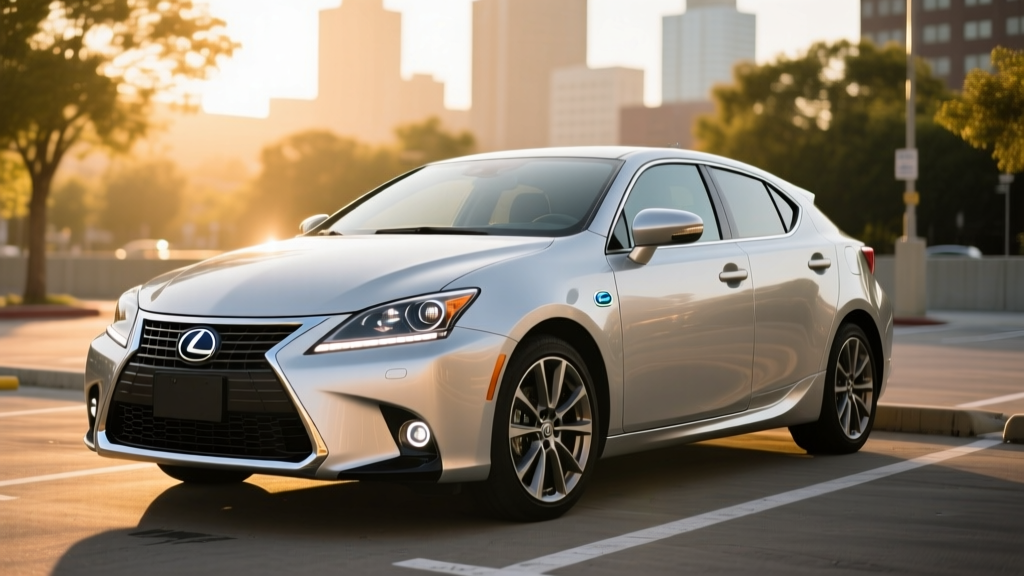
The 2016 Lexus CT 200h occupies a specific niche in the used-car market: a luxury-badged conventional hybrid hatchback that prioritizes fuel economy over performance, and build quality over cutting-edge tech. Built on the same platform as the fourth-generation Toyota Prius, the CT 200h pairs a 1.8-liter four-cylinder engine with an electric motor for a combined 134 horsepower. It does not plug in. It does not offer electric-only highway driving. What it does offer is a proven Toyota Hybrid Synergy Drive powertrain wrapped in a quieter, more refined package than its Prius sibling.
If you're shopping for a used 2016 Lexus CT 200h hybrid in 2026, the key questions are about battery longevity, real-world fuel economy, and whether a decade-old hybrid still delivers on its efficiency promises. This guide covers every number that matters.
2016 Lexus CT 200h Hybrid: Key Specifications at a Glance
| Specification | 2016 Lexus CT 200h |
|---|---|
| Powertrain Type | Conventional Hybrid (HEV) — no plug |
| Combined Horsepower | 134 hp |
| Gas Engine | 1.8L 4-cylinder (98 hp, 105 lb-ft) |
| Electric Motor | 60 kW (80 hp), integrated into transaxle |
| Hybrid Battery | 1.3 kWh nickel-metal hydride (NiMH) |
| EPA MPG (City / Highway / Combined) | 43 / 40 / 42 |
| 0–60 mph | 9.8 seconds |
| Drivetrain | Front-wheel drive, CVT |
| Cargo Volume | 14.3 cu ft (rear seats up) |
| Original MSRP (Base) | $31,250 |
| Typical Used Price (2026) | $12,000–$17,000 |
| Hybrid Battery Warranty (Original) | 8 years / 100,000 miles (10 yr/150k in CARB states) |
Fuel Economy: EPA Ratings vs. Real-World MPG
The EPA rates the 2016 Lexus CT 200h at 43 mpg city, 40 mpg highway, and 42 mpg combined, according to fueleconomy.gov. These figures apply to all trim levels, as the powertrain is identical across the lineup.
| Driving Condition | EPA Rating | Real-World Expectation |
|---|---|---|
| City | 43 mpg | 44–48 mpg (hybrids excel in stop-and-go) |
| Highway (65–75 mph) | 40 mpg | 36–39 mpg (aero drag, limited regen benefit) |
| Combined | 42 mpg | 40–44 mpg |
| Cold Weather (below 30°F) | — | 35–38 mpg (engine runs more for cabin heat) |
The CT 200h's hybrid system recaptures energy during braking and deceleration, which is why city driving actually yields higher mpg than highway driving — the opposite of a conventional gas car. Owners who do mostly urban commuting frequently report exceeding the EPA city number. Highway-heavy drivers should expect to fall a few mpg below the sticker, particularly at speeds above 70 mph where the small engine works harder and aerodynamic losses increase.
In cold weather, fuel economy drops noticeably. The engine must run more frequently to provide cabin heat (the CT 200h has no electric resistance heater or heat pump for the cabin), and the battery's charge/discharge efficiency decreases at low temperatures. Expect a 10–15% reduction in winter months in northern climates.
Hybrid Powertrain: How the CT 200h Drives
The CT 200h uses Toyota's third-generation Hybrid Synergy Drive. The 1.8-liter Atkinson-cycle four-cylinder produces 98 hp on its own, supplemented by a 60 kW (80 hp) electric motor integrated into the e-CVT transaxle. Combined system output is 134 hp — adequate for commuting and merging but not quick by any standard. The 9.8-second 0–60 mph time feels deliberate rather than urgent.
The e-CVT is not a traditional belt-and-pulley CVT; it's a planetary gearset that blends engine and motor power seamlessly. There are no fixed gear ratios and no shifting sensation. The result is smooth, quiet acceleration around town, but noticeable engine drone under hard acceleration as the engine holds at high RPM.
Lexus added drive-mode selectors (Normal, Eco, Sport, and EV). Eco mode softens throttle response and reduces climate-control power draw to maximize efficiency. Sport mode sharpens throttle mapping and adds weight to the electric power steering. EV mode forces electric-only driving at very low speeds (under ~25 mph, for roughly one mile at most) — useful for creeping through a parking garage, but not a meaningful electric-driving experience.
HEV vs. PHEV vs. EV: Where the CT 200h Fits
The 2016 Lexus CT 200h is a conventional hybrid (HEV). It has no plug, no charging port, and no meaningful electric-only range. The 1.3 kWh NiMH battery recharges exclusively through regenerative braking and the gas engine. This is a fundamental distinction from plug-in hybrids and battery-electric vehicles.
| Feature | HEV (CT 200h) | PHEV (e.g., Prius Prime) | BEV (e.g., Model 3) |
|---|---|---|---|
| Plugs In? | No | Yes (Level 1/2) | Yes (Level 1/2/DC) |
| Electric-Only Range | ~1 mile at low speed | 25–44 miles | 250–360+ miles |
| Gas Engine? | Yes (always available) | Yes (backup) | No |
| Fuel/Charging Needed | Gas only | Gas + electricity | Electricity only |
| Home Charging Required? | No | Recommended | Essential |
| Federal Tax Credit (New) | None | Up to $7,500 (§30D) | Up to $7,500 (§30D) |
| Used Tax Credit (§25E) | Not eligible (HEV) | Up to $4,000 | Up to $4,000 |
Choose the CT 200h (HEV) if: You want maximum fuel efficiency without changing your refueling habits. No home charging setup is needed. You drive in a mix of city and highway conditions and want a proven, low-maintenance powertrain.
Choose a PHEV if: You have access to home or workplace Level 2 charging and want to do most daily driving on electricity (25–44 miles electric-only) while retaining a gas engine for road trips. A used PHEV may qualify for the federal §25E used clean vehicle credit (up to $4,000, subject to income and price caps per IRS guidelines).
Choose a BEV if: You have reliable home charging, want zero tailpipe emissions, and are ready to plan road trips around DC fast-charging infrastructure. Used BEVs also qualify for the §25E credit.
Battery Health, Longevity, and Replacement Cost
Original warranty: 8 years / 100,000 miles nationwide; 10 years / 150,000 miles in CARB-adopting states (CA, CT, ME, MA, NJ, NY, OR, RI, VT, WA).
Battery type: 1.3 kWh nickel-metal hydride (NiMH), 28 modules.
Expected lifespan: 150,000–200,000+ miles with normal use.
Replacement cost: $2,000–$4,000 (new OEM), $1,000–$2,000 (remanufactured/refurbished).
The CT 200h's NiMH hybrid battery is one of the most proven components in the automotive industry. Toyota and Lexus have been refining this exact battery architecture since the 2001 Prius. By 2026, a 2016 CT 200h is 10 years old, which means the original 8-year/100,000-mile hybrid battery warranty has expired in most states unless the vehicle was first registered in a CARB state with the extended 10-year/150,000-mile coverage.
NiMH batteries degrade more gracefully than early lithium-ion packs. Rather than sudden capacity loss, they gradually lose their ability to hold a charge, which manifests as slightly reduced fuel economy and more frequent engine cycling. Most CT 200h and Prius owners report the original battery lasting 150,000 to 200,000 miles before replacement becomes necessary.
If the battery does need replacement, you have options:
- New OEM battery (Lexus dealer): $3,000–$4,000 installed. This is the most expensive route but comes with a new warranty.
- Remanufactured battery: $1,500–$2,500 installed from specialists like Green Bean Battery or similar services. These replace degraded modules and rebalance the pack.
- Individual module replacement: $500–$1,000 if only a few of the 28 modules have failed. Requires a hybrid-savvy independent shop.
Before purchasing a used 2016 CT 200h, request a hybrid battery health check. A Toyota/Lexus dealer can run a diagnostic that shows battery internal resistance and state-of-health data. Independent hybrid shops can do the same. Look for balanced module voltages — a pack with one or two weak modules can often be repaired affordably, while a uniformly degraded pack is nearing full replacement.
Reliability and Ownership Costs
The 2016 CT 200h is among the most reliable vehicles in its class. The Toyota Hybrid Synergy Drive has an extraordinary track record, and the CT 200h shares its core powertrain with the Prius — a vehicle routinely exceeding 300,000 miles with basic maintenance. The e-CVT has no belts, clutches, or bands to wear out; it's a simple planetary gearset that's essentially bulletproof.
Routine maintenance is minimal:
- Oil changes every 10,000 miles (0W-20 synthetic)
- No transmission fluid changes required under normal use
- Brake pads last 80,000–120,000+ miles thanks to regenerative braking reducing mechanical brake wear
- Inverter coolant and engine coolant service at 100,000+ miles
The 12-volt auxiliary battery (located in the rear cargo area) is a separate concern from the hybrid traction battery. It's a standard AGM or flooded lead-acell battery that typically needs replacement every 4–6 years and costs $150–$250. If the 12V battery dies, the car will not start — even though the hybrid battery may be fully charged. This is a common point of confusion for new hybrid owners.
Insurance costs for a used 2016 CT 200h are generally low, as the vehicle's value has depreciated to the $12,000–$17,000 range and repair costs are modest. Expect $800–$1,200 annually depending on your driving record and location.
Tax Credit Eligibility: What Applies to a Used CT 200h
The 2016 Lexus CT 200h does not qualify for any federal tax credit, whether purchased new or used. Here's why:
- New vehicle credit (§30D): Only available for plug-in electric vehicles (PHEVs and BEVs) with qualifying battery capacity and critical-mineral/battery-component sourcing. The CT 200h is a conventional hybrid with no plug, so it never qualified.
- Used vehicle credit (§25E): Available for used PHEVs and BEVs sold for $25,000 or less through a licensed dealer, offering up to $4,000 or 30% of the sale price (whichever is less). Again, the CT 200h's HEV powertrain excludes it.
- State incentives: Some states offer rebates or HOV-lane access for hybrids, but these are typically for new purchases and vary significantly by jurisdiction. Check your state's energy or DMV website for current programs.
The absence of tax credits is offset by the CT 200h's low purchase price and exceptional fuel economy. At $12,000–$17,000 on the used market and 42+ mpg, the total cost of ownership is competitive with vehicles that cost more upfront but qualify for credits.
Pros and Cons: The Honest Verdict
- 42 mpg combined; often exceeds EPA in city driving
- Exceptional powertrain reliability (Toyota hybrid DNA)
- Low maintenance costs; brake pads last 100k+ miles
- Quiet, refined ride compared to same-era Prius
- Hatchback versatility with 14.3 cu ft cargo area
- Affordable used pricing ($12k–$17k)
- Lexus dealership service network
- Slow: 9.8-second 0–60 mph, underwhelming passing power
- Dated interior tech (small screen, no Apple CarPlay/Android Auto)
- Tight rear seat legroom (32.7 inches)
- Firm ride on sport-tuned suspension vs. typical Lexus comfort
- No plug-in capability; cannot drive on electric alone meaningfully
- No all-wheel-drive option
- Original hybrid battery warranty now expired on most examples
Who Should Buy the 2016 Lexus CT 200h Hybrid?
The 2016 CT 200h is the right used car for a specific buyer: someone who wants a fuel-efficient daily commuter with luxury touches, doesn't need rapid acceleration or the latest infotainment, and values long-term reliability over novelty. It's ideal for urban and suburban drivers covering 10,000–15,000 miles per year who want to minimize fuel costs without the infrastructure requirements of a plug-in vehicle.
It's the wrong choice if you need highway passing confidence, modern connectivity (no CarPlay or Android Auto from the factory), spacious rear seating, or the ability to drive on electric power. Buyers who can install a Level 2 home charger and want electric daily driving should look at a used PHEV like the Toyota Prius Prime or a used BEV like the Chevrolet Bolt EV — both of which may also qualify for the §25E used clean vehicle credit.
Frequently Asked Questions
How many MPG does the 2016 Lexus CT 200h get?
The EPA rates it at 43 mpg city, 40 mpg highway, and 42 mpg combined. Real-world city driving often yields 44–48 mpg thanks to regenerative braking. Highway driving at 70+ mph typically returns 36–39 mpg. Cold weather reduces efficiency by 10–15%.
Does the 2016 CT 200h plug in?
No. The CT 200h is a conventional hybrid (HEV), not a plug-in hybrid (PHEV). It has no charging port. The 1.3 kWh hybrid battery recharges through regenerative braking and the gasoline engine. You fuel it exclusively at gas stations.
How far can the CT 200h drive on electric power alone?
In EV mode, approximately one mile at speeds under 25 mph — enough for a parking garage or a quiet residential street. This is not a meaningful electric-driving experience. For substantial electric-only range, you need a PHEV or BEV.
Is the hybrid battery reliable, and what does replacement cost?
The NiMH battery is among the most reliable components in the car, typically lasting 150,000–200,000+ miles. If replacement is needed, expect $2,000–$4,000 for a new OEM battery or $1,000–$2,000 for a remanufactured unit. The original 8-year/100,000-mile warranty has now expired on most 2016 examples.
Does the 2016 Lexus CT 200h qualify for any tax credit?
No. Because it's a conventional hybrid without a plug, it does not qualify for the federal §30D new vehicle credit or the §25E used vehicle credit. These credits are reserved for plug-in electric vehicles (PHEVs and BEVs). Some states may offer separate incentives for efficient vehicles — check your state's energy office for details.
How does the CT 200h compare to the Toyota Prius?
They share the same powertrain (134 hp, 1.8L hybrid), but the CT 200h has a quieter cabin, firmer suspension tuning, a more upscale interior, and a hatchback design. The Prius offers more rear-seat room, slightly better fuel economy (52 mpg combined for the 2016 Prius Eco), and a lower used price. Choose the CT 200h for refinement; choose the Prius for practicality and efficiency.
Sources: U.S. EPA / fueleconomy.gov, IRS Used Clean Vehicle Credit (§25E), NHTSA.