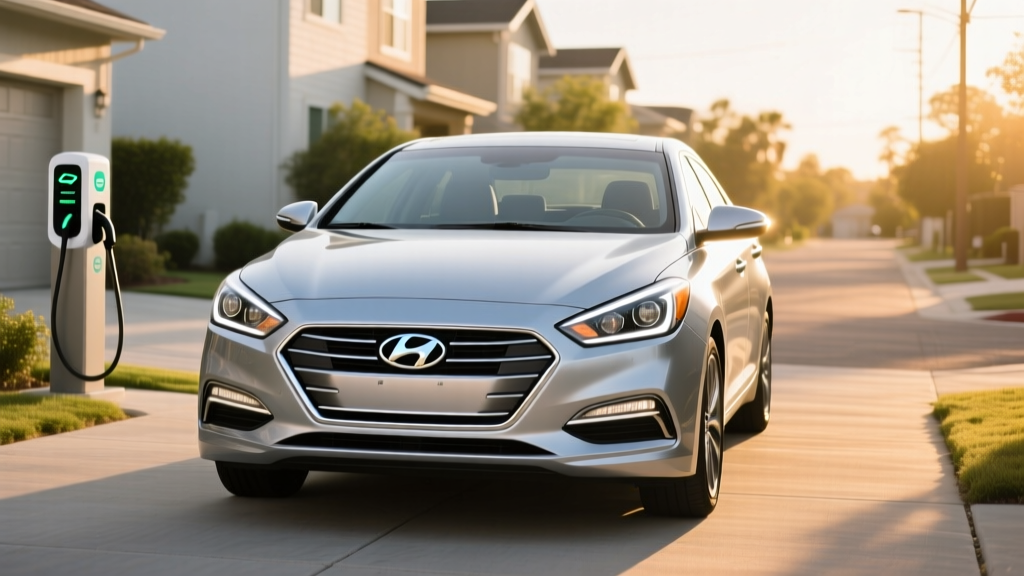
If you're shopping the used midsize-hybrid sedan market in 2026, the 2016 Hyundai Sonata Hybrid keeps surfacing as a value pick. A redesigned model year with a revised powertrain and new sheet metal, it promises strong fuel economy without the plug-in complexity. But at nearly a decade old, the real question isn't how it performed on the showroom floor — it's how it's held up. This guide digs into 2016 Hyundai Sonata Hybrid reliability using long-term owner data, battery warranty realities, and what you should budget for if you buy one today.
2016 Sonata Hybrid at a Glance: Key Specs
Before we get into long-term durability, here's what you're working with mechanically. The 2016 Sonata Hybrid uses a conventional hybrid (HEV) powertrain — meaning it charges its own battery through regenerative braking and the gasoline engine. You never plug it in. (Hyundai also sold a plug-in variant that year, the Sonata Plug-in Hybrid, which we'll distinguish clearly below.)
| Spec | Value |
|---|---|
| Powertrain | 2.0L 4-cyl GDI + electric motor (HEV, self-charging) |
| Combined Horsepower | 193 hp |
| Transmission | 6-speed automatic (torque converter, not CVT) |
| Hybrid Battery | 1.62 kWh lithium-ion polymer |
| EPA MPG (City / Hwy / Combined) | 39 / 43 / 40 MPG |
| 0–60 mph | ~8.2 seconds |
| Fuel Tank | 18.5 gallons |
| Total Range | ~740 miles |
| Original MSRP (2016) | $26,000–$31,000 (base to Limited) |
| Avg. Used Price (2026) | $9,000–$14,000 depending on mileage/condition |
| Hybrid Battery Warranty (Original) | 8 years / 100,000 miles (10 yr/100k in CARB states) |
The 2.0-liter Atkinson-cycle four-cylinder produces 154 hp on its own, while the 38 kW electric motor adds 51 hp. Combined output is 193 hp — adequate for highway merging but not sporty. Notably, Hyundai stuck with a conventional 6-speed automatic rather than the CVT or e-CVT found in most competitors. This gives the Sonata Hybrid a more natural driving feel, though it sacrifices a small amount of efficiency versus the Toyota Camry Hybrid's planetary gearset.
Fuel Economy: EPA Sticker vs. Real-World MPG
Per fueleconomy.gov, the 2016 Sonata Hybrid earns an EPA-estimated 39 city / 43 highway / 40 combined MPG. That highway-biased rating is somewhat unusual for hybrids, which typically excel in stop-and-go driving where regenerative braking recaptures energy.
| Driving Scenario | EPA Estimate | Real-World Average (Owner Reports) |
|---|---|---|
| City | 39 MPG | 36–41 MPG |
| Highway (70 mph cruise) | 43 MPG | 38–42 MPG |
| Combined | 40 MPG | 37–40 MPG |
| Cold Weather (below 32°F) | N/A | 32–36 MPG |
Owner-reported data on Fuelly and Edmunds shows most drivers land between 37 and 40 MPG combined — very close to the EPA sticker. Some hypermilers push past 42 MPG on highway-heavy commutes, while aggressive city driving and cold-weather operation can dip into the mid-30s. The Sonata Hybrid's real-world efficiency is respectable but trails the 2016 Toyota Camry Hybrid (40/38/41 MPG EPA) and the 2016 Ford Fusion Hybrid (44/41/42 MPG EPA) in city driving. Where it holds its own is highway cruising, where the 6-speed automatic lets the engine operate at efficient RPM without the drone associated with CVTs.
HEV vs. PHEV: Which 2016 Sonata Did Hyundai Sell?
This is a common point of confusion, so let's clarify: Hyundai offered two distinct electrified Sonata models for the 2016 model year, and they are fundamentally different vehicles.
| Attribute | Sonata Hybrid (HEV) | Sonata Plug-in Hybrid (PHEV) |
|---|---|---|
| Plug-in Required? | No — self-charging | Yes — Level 1/Level 2 |
| Electric-Only Range | N/A (motor assists only) | ~27 miles (EPA) |
| Battery Capacity | 1.62 kWh | 9.8 kWh |
| Combined HP | 193 hp | 202 hp |
| EPA Combined (gas) | 40 MPG | 39 MPG (99 MPGe w/ electric) |
| DC Fast Charge? | No | No (Level 2 only, ~3 hrs) |
| Original MSRP | ~$26,000–$31,000 | ~$35,000–$38,000 |
| Federal Tax Credit (2016) | None | ~$4,543 (expired, not transferable) |
The HEV is the volume seller and the model most buyers encounter on the used market. It requires no behavioral change — fill it with gas and drive. The PHEV offered 27 miles of electric-only range (enough for short commutes) but carried a $5,000+ premium and was sold in limited volumes. If you're reading about "2016 Sonata Hybrid reliability," you're almost certainly looking at the HEV. The PHEV's larger battery introduces different long-term considerations we'll note where relevant.
Long-Term Reliability: What a Decade of Data Shows
The 2016 Sonata Hybrid's reliability record is a mixed story — strong in some areas, a known concern in one critical area.
What Holds Up Well
- Engine and transmission: The 2.0L Nu GDI engine and 6-speed automatic have proven durable. Hyundai's decision to avoid a CVT eliminates the long-term belt/pulley wear concerns some CVT-equipped hybrids face past 150,000 miles.
- Brakes: Regenerative braking handles most deceleration, so the friction brake pads and rotors often last 80,000–100,000+ miles — a significant maintenance savings versus gas-only models.
- Electrical systems: The 12V auxiliary battery and infotainment electronics are conventional and inexpensive to replace. No widespread reports of inverter or power-control-unit failures.
- Build quality: The 2016 redesign addressed many fit-and-finish complaints from the prior generation. Interior materials and assembly have aged well relative to price point.
The Known Concern: Hybrid Battery Degradation
This is the single biggest reliability variable for any 10-year-old hybrid, and the Sonata is no exception. The 1.62 kWh lithium-ion polymer pack was state-of-the-art in 2016, but all hybrid batteries lose capacity over time and with heat exposure.
Hyundai originally warranted the Sonata Hybrid's battery for 8 years / 100,000 miles (extended to 10 years / 100,000 miles in California and states adopting CARB emissions standards). For a 2016 model, the 8-year federal warranty expired in 2024. The 10-year CARB-state warranty expires in 2026. If you're buying one today, you are almost certainly purchasing a vehicle out of hybrid battery warranty unless the original owner was in a CARB state and the car has under 100k miles.
Owner forums (SonataHybridForum.com, Hyundai Forums) and repair databases show a pattern: most 2016 Sonata Hybrid batteries retain adequate function through 120,000–150,000 miles. However, reports of noticeable capacity loss and reduced fuel economy begin to cluster around the 130,000–160,000 mile mark, particularly in hot-climate states (Arizona, Texas, Florida) where battery thermal stress is higher. Complete failure is uncommon but not unheard of past 150,000 miles.
Hybrid Battery Replacement Cost
If the pack does need replacement, here's what to budget:
- New OEM battery (Hyundai dealer): $3,000–$4,500 installed
- Remanufactured/reconditioned battery: $1,800–$2,800 installed (from specialists like GreenTech Automotive or independent hybrid shops)
- Individual cell/module replacement: $500–$1,200 if only specific modules have failed (requires diagnostic testing to confirm)
The reconditioned route is increasingly common for out-of-warranty hybrids and can extend the vehicle's life by another 80,000–100,000 miles at a fraction of OEM cost. Before purchasing any used 2016 Sonata Hybrid, request a hybrid battery health diagnostic from a qualified shop — this $100–$150 test can save you thousands.
Tax Credits and Incentives in 2026
Let's be direct: there is no federal tax credit available for purchasing a used 2016 Hyundai Sonata Hybrid in 2026.
The IRS §30D Clean Vehicle Credit applies only to new vehicles meeting current battery-sourcing and critical-mineral requirements. The separate Used Clean Vehicle Credit (§25E) provides up to $4,000 (or 30% of sale price, whichever is less) but only for used plug-in electric vehicles (BEVs and PHEVs) with a battery capacity of at least 7 kWh. The Sonata Hybrid (HEV) has a 1.62 kWh battery and is not a plug-in vehicle — it does not qualify.
The Sonata Plug-in Hybrid (PHEV) variant has a 9.8 kWh battery and may qualify for the used-EV credit if purchased from a licensed dealer, subject to income caps ($75,000 single / $150,000 joint filer), a $25,000 maximum sale price, and other IRS requirements. Always verify current eligibility at irs.gov and consult a tax professional before relying on credit estimates.
Some states and municipalities offer their own incentives for used hybrid purchases or for hybrid battery replacement. Check your state energy office or DMV for current programs — these vary widely and change frequently.
Who Should Buy the 2016 Sonata Hybrid?
- You want 38–40 MPG combined without plugging in or changing habits
- You drive 12,000–18,000 miles/year and want low fuel costs (~$1,200–$1,500/yr at $3.20/gal)
- You prefer a conventional automatic transmission over a CVT
- You need a spacious midsize sedan with a large trunk (16.3 cu ft)
- You find a well-maintained example under 120,000 miles with a clean battery diagnostic
- You want electric-only driving for short commutes (consider the PHEV or a full BEV)
- You drive primarily in the city and want maximum MPG (the Fusion Hybrid or Camry Hybrid beat it in stop-and-go)
- You live in a hot-climate state and the car has 140,000+ miles without battery service
- You're expecting any federal tax credit — there isn't one for this HEV
- You want the latest ADAS features (the 2016 model lacks modern lane-keeping, adaptive cruise on most trims)
2016 Sonata Hybrid vs. Full EV vs. Gas: Which Fits You?
At $9,000–$14,000 on the used market, the 2016 Sonata Hybrid competes with both used gas sedans and entry-level used EVs. Here's a practical decision framework:
| Factor | 2016 Sonata Hybrid (HEV) | Used Gas Sedan (e.g., 2016 Camry) | Used EV (e.g., 2018–2020 Leaf/Bolt) |
|---|---|---|---|
| Annual Fuel/Energy Cost | ~$1,200–$1,500 | ~$1,800–$2,200 | ~$500–$900 (home charging) |
| Maintenance (annual avg.) | ~$400–$600 | ~$600–$900 | ~$300–$500 |
| Home Charging Needed? | No | No | Yes (Level 2 recommended) |
| Road-Trip Friendly? | Yes (740-mi range, 5-min refill) | Yes | Requires planning (30-min DC stops) |
| Biggest Cost Risk | Hybrid battery ($2K–$4.5K) | Transmission/engine ($2K–$5K) | Traction battery ($5K–$15K+) |
| Best For | High-mileage commuters w/o home charging access | Low-mileage drivers, lowest upfront cost | Home-charging access, daily commutes under 150 mi |
The Sonata Hybrid's sweet spot is the driver who covers serious annual mileage, doesn't have reliable access to home or workplace Level 2 charging, and wants to minimize fuel costs without range anxiety. If you can charge at home, a used BEV like a 2019 Chevrolet Bolt (EPA 259 mi range, often $12,000–$16,000 in 2026) will cost less per mile and qualify for the $4,000 used-EV credit — potentially making it cheaper to own despite a higher sticker price.
Pre-Purchase Checklist: What to Inspect
If you're serious about a 2016 Sonata Hybrid, here's what to verify before handing over cash:
- Hybrid battery health scan: Any qualified hybrid shop or Hyundai dealer can read the battery's State of Health (SoH). Look for less than 15% capacity loss and balanced cell voltages.
- Service records: Confirm regular oil changes (the GDI engine is sensitive to oil quality) and that the inverter coolant was flushed per schedule (every 60,000 miles).
- Recall status: Check the VIN at nhtsa.gov/recalls. The 2016 Sonata had recalls for trunk latch, brake pedal stop lamp switch, and some airbag inflators — confirm all were completed.
- 12V battery age: The conventional 12V battery powers electronics and starts the hybrid system. If it's over 4 years old, budget $150–$200 for replacement.
- Tire wear pattern: Uneven wear may indicate alignment issues or worn suspension components common at 100,000+ miles.
Frequently Asked Questions
How many MPG does the 2016 Sonata Hybrid actually get?
The EPA rates it at 39 city / 43 highway / 40 combined. Real-world owners average 37–40 MPG combined, with cold weather and aggressive driving pulling it into the mid-30s. It's efficient but not class-leading — the 2016 Fusion Hybrid and Camry Hybrid edge it out in city driving.
Is the 2016 Hyundai Sonata Hybrid reliable?
Mechanically, yes — the engine, transmission, and brakes are durable and the car avoids the CVT issues some competitors face. The main variable is the hybrid battery, which shows degradation risk past 130,000–150,000 miles, especially in hot climates. A pre-purchase battery diagnostic is essential.
How much does it cost to replace the hybrid battery?
A new OEM battery runs $3,000–$4,500 installed at a dealer. Reconditioned batteries from hybrid specialists cost $1,800–$2,800 installed. Individual module replacement (if only some cells fail) can be as low as $500–$1,200.
Does the 2016 Sonata Hybrid qualify for any tax credit in 2026?
No. The conventional Sonata Hybrid (HEV) does not qualify for the federal §30D new-vehicle credit or the §25E used-vehicle credit, because it is not a plug-in vehicle and its battery is below 7 kWh. The Sonata Plug-in Hybrid (PHEV) variant may qualify for the used-EV credit if purchased from a dealer and if you meet income and price caps. Verify at irs.gov.
Can I plug in the 2016 Sonata Hybrid to charge it?
No. The standard Sonata Hybrid (HEV) has no plug and no charging port. It charges its small 1.62 kWh battery internally through regenerative braking and the gasoline engine. Only the separate Sonata Plug-in Hybrid (PHEV) model can be plugged in.
How does the Sonata Hybrid compare to a full EV like a used Tesla or Bolt?
For drivers without home charging, the Sonata Hybrid is far more practical — no charging infrastructure needed, 740-mile total range, and 5-minute refueling. For drivers with reliable Level 2 home charging, a used EV will deliver lower per-mile energy costs, less maintenance, and potentially a $4,000 used-EV tax credit that the Sonata HEV cannot access.
What's the difference between the Sonata Hybrid and the Sonata Plug-in Hybrid?
The HEV (1.62 kWh battery, no plug) gets 40 MPG combined and never needs charging. The PHEV (9.8 kWh battery, has a plug) can drive about 27 miles on electricity alone before the gas engine kicks in, then operates as a conventional hybrid at 39 MPG combined. The PHEV cost roughly $5,000–$7,000 more new and is rarer on the used market.