Quick Verdict: The 2016 Sonata Hybrid's Efficiency Story
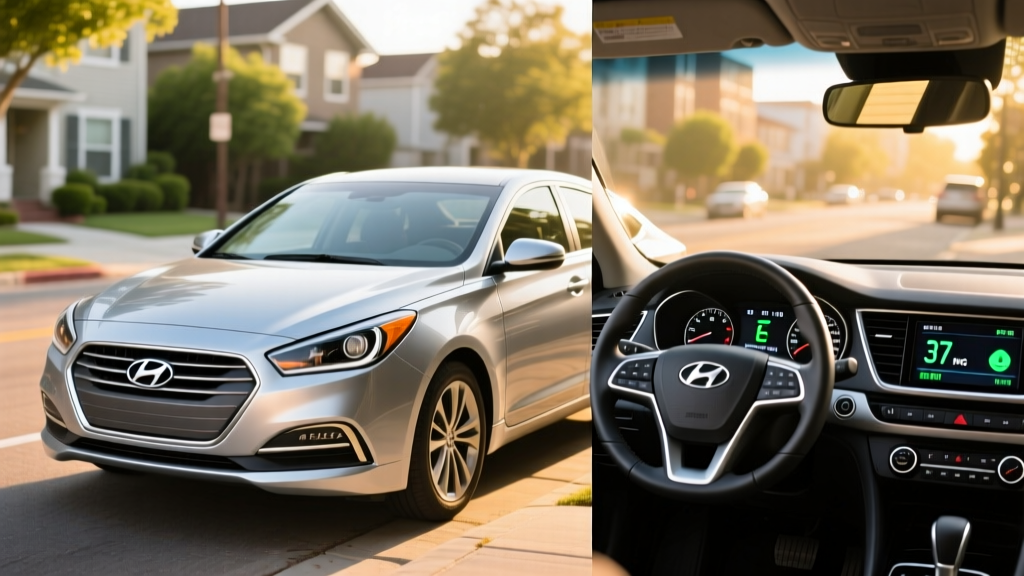
If you're researching the 2016 Hyundai Sonata Hybrid MPG figures, you're likely evaluating this midsize sedan as a used purchase or validating what you already own. The 2016 Sonata Hybrid delivers an EPA-estimated 39 mpg city / 43 mpg highway / 41 mpg combined — numbers that remain competitive a decade later against newer hybrid sedans. But sticker MPG and real-world fuel economy rarely match perfectly, and a 10-year-old hybrid battery introduces ownership variables that spec sheets don't capture.
This guide covers everything a data-driven buyer needs: exact EPA figures, real-world MPG observations, the powertrain behind the numbers, battery longevity and replacement costs, and how this conventional hybrid (HEV) stacks up against PHEVs and full EVs in 2026.
2016 Hyundai Sonata Hybrid: EPA MPG and Real-World Fuel Economy
| Metric | EPA Estimate | Real-World Expectation |
|---|---|---|
| City MPG | 39 mpg | 38–44 mpg (hybrids excel in stop-and-go) |
| Highway MPG | 43 mpg | 37–41 mpg (aerodynamic drag reduces efficiency at 70+ mph) |
| Combined MPG | 41 mpg | 38–42 mpg (varies by driving mix) |
| Fuel Tank Capacity | 18.5 gallons | — |
| Total Range | ~758 miles | ~700–770 miles |
Source: EPA Fuel Economy Guide — 2016 Hyundai Sonata Hybrid
Powertrain Specs: What's Under the Hood
The 2016 Sonata Hybrid uses a parallel hybrid system — the gasoline engine and electric motor can drive the wheels independently or together. This is a conventional hybrid (HEV), meaning it never needs to be plugged in. The battery recharges through regenerative braking and engine-generated electricity.
| Specification | Detail |
|---|---|
| Engine | 2.0L inline-4 GDI (154 hp, 140 lb-ft) |
| Electric Motor | Permanent magnet synchronous (38 kW / 51 hp, 151 lb-ft) |
| Combined System Output | 192 hp |
| Transmission | 6-speed automatic |
| Hybrid Battery | 1.62 kWh lithium-ion polymer (LiPB) |
| Drivetrain | Front-wheel drive |
| 0–60 mph | ~8.3 seconds |
| Curb Weight | ~3,520 lbs |
The 1.62 kWh battery is small by electrified-vehicle standards — it's not designed for electric-only driving at meaningful speeds. Instead, it serves as an energy buffer, allowing the engine to shut off at stops, assist during acceleration, and capture braking energy. Hyundai's hybrid system in this generation prioritized seamless engine-motor handoff over maximum electric assist, resulting in smooth but unremarkable acceleration.
HEV vs. PHEV vs. EV: Which Powertrain Fits You?
HEV (This Car)
2016 Sonata Hybrid
- No plug needed
- 41 mpg combined
- ~758 mi total range
- No electric-only driving
- No federal tax credit (used)
PHEV
e.g., 2016 Sonata Plug-In Hybrid
- Plug-in required for EV range
- 27 mi electric-only
- 9.8 kWh battery
- ~39 mpg after battery depletes
- No longer eligible for federal credit (new only)
BEV (Full EV)
e.g., 2026 Hyundai Ioniq 6
- Plug-in only — no gas engine
- 300+ mi EPA range
- 77–111 kWh battery
- 130+ MPGe combined
- Up to $7,500 §30D credit (if eligible)
Choose the HEV (2016 Sonata Hybrid) if: You want better fuel economy without changing your fueling habits. No home charger? No problem. You fill up at gas stations as usual and simply drive less to the pump.
Choose a PHEV if: You have home charging access and a short commute (under 30 miles round-trip). You'll drive mostly on electricity with gas-engine backup for longer trips.
Choose a BEV if: You have reliable home or workplace charging, want to eliminate gas entirely, and your typical trips fall within 250 miles. BEVs have higher upfront costs but lower per-mile energy expenses.
Battery Longevity, Warranty, and Replacement Costs
For a 2016 model, the original factory warranty has expired in most cases (we're now in 2026 — that's 10 years since manufacture). However, Hyundai's lithium-ion polymer (LiPB) hybrid batteries have demonstrated strong longevity in the field. The 1.62 kWh pack operates within a narrow state-of-charge window (roughly 40–80% SoC), which dramatically reduces degradation compared to full EV batteries that cycle from near-empty to near-full.
Expected battery lifespan: Most Sonata Hybrid owners report no significant battery degradation at 150,000–200,000 miles. The battery management system's conservative charge window is the primary reason.
Replacement cost if needed: A replacement hybrid battery pack for the 2016 Sonata Hybrid runs approximately $2,500–$4,000 including labor at an independent hybrid specialist, or $4,000–$5,500 at a Hyundai dealer. Refurbished or reconditioned packs are available for $1,800–$2,800 from third-party suppliers. This is dramatically less than a full EV battery replacement ($8,000–$20,000+).
Reliability and Known Issues
The 2016 Sonata Hybrid earned average to above-average reliability scores from major evaluators. The powertrain — Hyundai's 2.0L Nu engine paired with the hybrid system — has proven durable. Common maintenance items include standard brake wear (though regenerative braking extends pad life significantly, often to 80,000+ miles), transmission fluid changes, and the typical suspension wear expected at this vehicle's age.
Some owners have reported issues with the hybrid system's inverter cooling system and occasional 12V auxiliary battery drain if the vehicle sits unused for extended periods. Neither is widespread, but both are worth checking during a pre-purchase inspection.
For safety context, the 2016 Sonata (including the Hybrid) earned a 5-star overall rating from NHTSA and was an IIHS Top Safety Pick when equipped with optional forward collision warning.
Used Pricing in 2026 and Tax Credit Eligibility
| Trim | Original MSRP (2016) | Estimated Used Price (2026) |
|---|---|---|
| Base Hybrid | $26,825 | $10,000–$13,500 |
| Limited Hybrid | $31,225 | $13,000–$17,000 |
Used prices vary significantly by mileage, condition, and region. Well-maintained examples under 100,000 miles command a premium.
Federal tax credit status: The 2016 Sonata Hybrid (HEV) does not qualify for the federal §30D clean vehicle credit — that credit applies only to plug-in electric vehicles (PHEVs and BEVs) with sufficient battery capacity. The conventional Sonata Hybrid's 1.62 kWh battery falls far below the §30D minimum of 7 kWh.
The 2016 Sonata Plug-In Hybrid (a separate model with a 9.8 kWh battery and 27-mile EV range) originally qualified for a $4,919 federal credit when new. However, used PHEV purchases are eligible for up to $4,000 under the §25E previously owned clean vehicle credit, subject to these IRS requirements:
- Sale price must be $25,000 or less
- Buyer income caps: $75,000 single / $112,500 head of household / $150,000 joint
- Vehicle must be at least 2 model years old
- Credit is 30% of sale price, max $4,000
- Can only be claimed once per buyer every 3 years
Always verify current eligibility on IRS.gov and consult a tax professional before claiming.
Pros and Cons at a Glance
Pros
- 41 mpg combined — still competitive in 2026
- No plug-in charging required
- Strong total range (~758 miles per tank)
- Comfortable midsize sedan cabin with good trunk space
- Regenerative braking extends brake pad life
- Hybrid battery replacement cost is manageable
- 5-star NHTSA safety rating
Cons
- No electric-only driving capability
- Original factory warranty likely expired
- Acceleration is adequate but not quick (8.3s 0–60)
- Highway MPG drops noticeably above 70 mph
- Infotainment tech feels dated vs. 2026 vehicles
- No federal tax credit for the HEV version
- Some competitors (Prius, Accord Hybrid) offer slightly higher MPG
Frequently Asked Questions
How many MPG does the 2016 Hyundai Sonata Hybrid get?
The EPA rates it at 39 mpg city, 43 mpg highway, and 41 mpg combined. In real-world mixed driving, most owners report 38–42 mpg combined. City driving often yields higher numbers thanks to regenerative braking, while sustained highway speeds above 70 mph can reduce economy to the mid-to-high 30s.
Does the 2016 Sonata Hybrid need to be plugged in?
No. This is a conventional hybrid (HEV), not a plug-in hybrid (PHEV). The 1.62 kWh battery charges entirely through regenerative braking and the gasoline engine. You fuel it like any other car — at a gas station. Hyundai did sell a separate Sonata Plug-In Hybrid model in 2016 with a larger 9.8 kWh battery and 27 miles of electric-only range, but that is a different vehicle.
Is the 2016 Sonata Hybrid reliable, and what does battery replacement cost?
Reliability is average to above average for its class. The hybrid battery (LiPB chemistry) has proven durable, with many examples exceeding 150,000 miles without significant degradation thanks to the conservative charge window. If replacement is needed, expect $2,500–$5,500 depending on whether you choose an independent shop or dealer, and whether you use a new or refurbished pack.
Does the 2016 Sonata Hybrid qualify for any tax credit?
The conventional HEV version does not qualify for any federal tax credit. If you're looking at the 2016 Sonata Plug-In Hybrid (PHEV), it may qualify for the §25E used clean vehicle credit (up to $4,000) if the sale price is $25,000 or less and you meet IRS income requirements. Verify on IRS.gov.
Hybrid vs. PHEV vs. EV — which should I choose?
If you lack home charging access or frequently drive long distances without predictable charging stops, the HEV (this car) is the lowest-friction option. If you can charge at home and commute under 30 miles daily, a PHEV lets you drive mostly electric while keeping gas backup. If you have reliable charging and want zero tailpipe emissions with the lowest per-mile cost, a modern BEV is the better long-term play — but at a higher purchase price.
How does the Sonata Hybrid compare to the Toyota Camry Hybrid or Honda Accord Hybrid?
The 2016 Camry Hybrid LE achieves 41 mpg combined (matching the Sonata), while the Accord Hybrid of the same era hits approximately 47 mpg combined. The Sonata trades a few MPG for a slightly more refined ride and Hyundai's generous original warranty. On the used market in 2026, the Accord Hybrid often commands a higher price due to its efficiency advantage, while the Sonata Hybrid can represent a value play.
Editorial note: This article references a 2016 model-year vehicle evaluated from a 2026 used-market perspective. Specifications reflect original EPA and manufacturer data. Used vehicle condition, mileage, and maintenance history will significantly affect real-world performance. Always obtain a pre-purchase inspection from a qualified mechanic before buying a used hybrid.