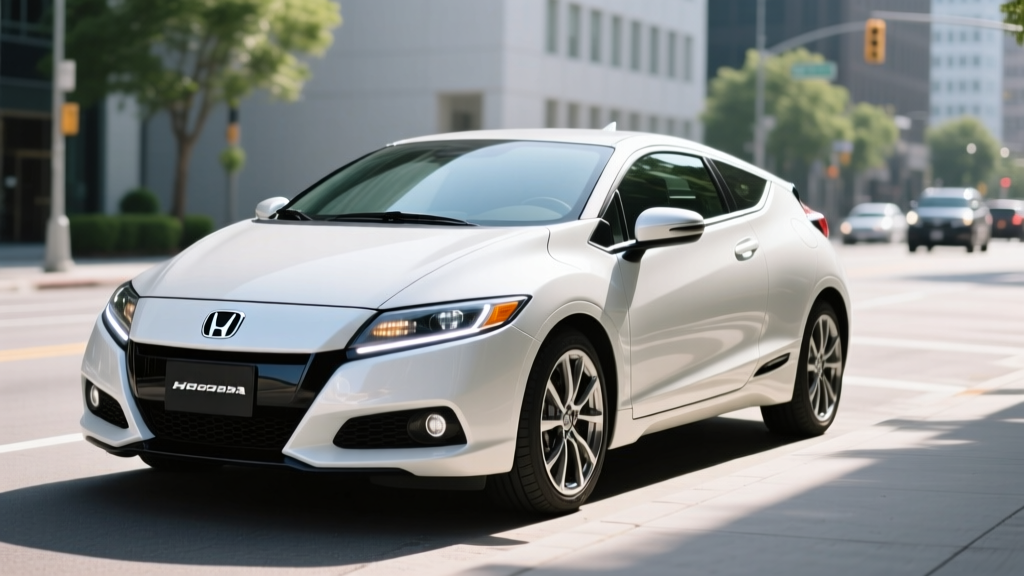
The 2016 Honda CR-Z occupies a strange corner of hybrid history: a two-seat sport coupe that prioritized driving engagement over maximum efficiency. Honda discontinued the CR-Z after the 2016 model year, making it strictly a used-market proposition today. But for buyers searching for a 2016 Honda CR-Z hybrid on the pre-owned market, the question remains — does this compact sport hybrid still deliver, or have time and battery degradation caught up with it?
This guide breaks down everything a used-car buyer needs to know: real-world MPG versus EPA estimates, the Integrated Motor Assist (IMA) system's long-term reliability, battery replacement costs, and how the CR-Z stacks up against modern hybrids and EVs in 2026.
2016 Honda CR-Z Hybrid: Quick Specs at a Glance
| Specification | Value |
|---|---|
| Powertrain Type | Conventional Hybrid (HEV) — no plug-in |
| Engine | 1.5L inline-4 + IMA electric motor |
| Combined Horsepower | 130 hp (manual) / 130 hp (CVT) |
| Combined Torque | 140 lb-ft (manual) / 127 lb-ft (CVT) |
| EPA MPG (CVT) | 36 city / 39 highway / 37 combined |
| EPA MPG (6-speed manual) | 31 city / 38 highway / 34 combined |
| Hybrid Battery | 0.5 kWh nickel-metal hydride (NiMH) |
| Fuel Tank | 10.6 gallons |
| Total Range | ~380–400 miles |
| 0–60 mph | ~8.5 seconds |
| Hybrid Battery Warranty (original) | 8 years / 80,000 miles (10 yr/150,000 mi in CARB states) |
| Original MSRP | $20,295–$24,590 (LX to EX-L Navi) |
| Typical Used Price (2026) | $10,000–$16,000 depending on mileage/condition |
Fuel Economy: EPA Numbers vs. Real-World MPG
The EPA rates the 2016 CR-Z with CVT at 36 mpg city, 39 mpg highway, and 37 mpg combined (fueleconomy.gov). The 6-speed manual version drops to 31/38/34 mpg — a penalty for the driving-engagement crowd.
The CR-Z's three driving modes — Econ, Normal, and Sport — meaningfully affect consumption. Econ mode dulls throttle response and optimizes the A/C system for efficiency, regularly yielding 2–4 mpg gains. Sport mode sharpens the electric motor assist but encourages the kind of acceleration that burns fuel faster.
How does the CR-Z's MPG compare to 2026 hybrids?
| Vehicle | City MPG | Highway MPG | Combined MPG |
|---|---|---|---|
| 2016 Honda CR-Z (CVT) | 36 | 39 | 37 |
| 2026 Toyota Prius LE | 57 | 56 | 57 |
| 2026 Honda Civic Hybrid | 50 | 47 | 49 |
| 2026 Hyundai Elantra Hybrid | 51 | 58 | 54 |
| 2026 Toyota Corolla Hybrid | 53 | 46 | 50 |
The verdict is clear: a decade of hybrid powertrain advancement has left the CR-Z behind on pure efficiency. Today's Toyota Prius delivers over 20 mpg more in combined driving. However, no current hybrid offers the CR-Z's two-seat coupe layout and manual transmission option.
Understanding the IMA Hybrid System: HEV, Not PHEV
Honda's Integrated Motor Assist (IMA) system sandwiches a thin electric motor between the 1.5-liter engine and the transmission. Unlike Toyota's Hybrid Synergy Drive, which can propel the car on electric power alone at low speeds, IMA is a parallel-assist system — the electric motor supplements the gas engine but cannot drive the wheels independently (except in rare, very specific low-load conditions at minimal speed).
This matters for buyer expectations: the CR-Z's hybrid system exists to boost fuel economy and provide a small torque fill, not to enable zero-emission driving or meaningful electric-only range.
IMA Powertrain Specifications
- Gas engine: 1.5L SOHC i-VTEC inline-4, 111 hp @ 6,000 rpm
- Electric motor: 14 kW (19 hp), IMA unit
- Combined output: 130 hp, 140 lb-ft torque (6MT) / 127 lb-ft (CVT)
- Hybrid battery: 0.5 kWh NiMH (nickel-metal hydride), 100.8V nominal
- Transmission options: 6-speed manual or CVT (continuously variable)
The 0.5 kWh NiMH battery is remarkably small by modern standards — a 2026 Toyota Prius Prime PHEV packs 13.6 kWh, and even a conventional 2026 Prius hybrid uses a ~1.3 kWh lithium-ion pack. Honda's approach was minimalism: the lightest, simplest hybrid system possible, prioritizing low weight (the CR-Z weighs roughly 2,800 lbs) over electric assist magnitude.
Hybrid Battery Longevity and Replacement Costs
This is the top concern for any used CR-Z buyer. The IMA battery is now 10 years old on a 2016 model, and NiMH chemistry degrades with both time and heat exposure.
Signs of IMA Battery Degradation
Watch for these indicators when test-driving a used CR-Z:
- IMA warning light on the dashboard — the most direct signal of battery or system fault
- Reduced assist: The electric motor provides noticeably less torque fill during acceleration
- Frequent recalibration: The battery gauge drops and refills rapidly, indicating the system is struggling to balance cells
- Poor fuel economy: A degraded IMA battery forces the gas engine to do all the work, dropping MPG by 3–6 mpg
- Stop-start system failure: The idle-stop feature requires a healthy IMA battery to restart the engine
IMA Battery Replacement Cost
| Option | Cost Range | Notes |
|---|---|---|
| New OEM Honda IMA battery | $2,000–$3,000 (parts + labor) | Dealership installation; availability may be limited as Honda phases out CR-Z parts |
| Refurbished/remanufactured IMA battery | $1,000–$1,800 | Aftermarket suppliers like Bumble Bee Batteries or Dorman; quality varies |
| Individual cell replacement (DIY/specialist) | $200–$600 | Replace only failed cells; requires technical knowledge; not for most buyers |
| Grid charger + battery conditioning | $150–$400 | Can extend life of a mildly degraded battery; not a fix for failed cells |
The good news: NiMH batteries degrade more gracefully than early lithium-ion packs. Rather than sudden capacity cliff, IMA batteries typically lose assist capability gradually. Many CR-Z owners report 150,000–200,000+ miles on the original IMA battery with moderate degradation. The bad news: OEM replacement parts are becoming harder to source as Honda winds down CR-Z support.
Reliability and Ownership Costs
The CR-Z benefits from Honda's generally strong reliability reputation, and the simplicity of the IMA system means fewer failure points than more complex hybrid designs. The 1.5L engine is under-stressed and well-proven. The manual transmission is a Honda staple. CVT reliability on the CR-Z has been acceptable, though not bulletproof — some owners report shuddering or whining at higher mileages.
Common issues reported by owners and tracked by NHTSA include:
- 12V auxiliary battery drain (the IMA system relies on a healthy 12V battery for electronics)
- A/C compressor failures (more costly than on non-hybrid Honda models)
- IMA battery degradation (as discussed above)
- CVT judder at low speeds (typically resolved with a fluid change and software update)
Insurance costs are moderate — the CR-Z's low power output and Honda badge keep premiums reasonable. Expect $900–$1,400 annually depending on your profile and state.
Tax Credits and Incentives: What Applies in 2026?
Here's the straightforward answer: the 2016 Honda CR-Z does not qualify for any federal EV tax credit. The IRS §30D Clean Vehicle Credit applies only to new plug-in electric vehicles (BEVs and PHEVs) meeting specific battery sourcing, MSRP, and buyer income requirements. The CR-Z is a conventional hybrid with no plug — it was never eligible for the federal credit, even when new.
For used-hybrid buyers in 2026, there is no federal tax credit specifically for conventional HEVs. The Used Clean Vehicle Credit (up to $4,000 under IRC §25E) applies only to used BEVs and PHEVs purchased from a dealer, not conventional hybrids.
Some states and local utilities offer rebates or incentives for hybrid purchases, but these typically target new vehicles and increasingly focus on plug-in models. Check your state's energy office and local utility for current programs — eligibility varies significantly by jurisdiction.
Who Should Buy the 2016 CR-Z vs. a Modern Hybrid or EV?
Choose the 2016 Honda CR-Z if:
- You want a two-seat sport coupe with a manual transmission and hybrid efficiency
- Your budget is $10,000–$16,000 and you accept a used vehicle
- You prioritize driving feel and lightweight handling over maximum MPG
- You drive under 15,000 miles/year and can absorb a potential IMA battery replacement
- You have no need for rear seats or significant cargo space
Choose a modern hybrid (Prius, Civic Hybrid) if:
- Fuel economy is your top priority (50+ mpg combined is now standard)
- You want a full new-vehicle warranty and modern safety tech (AEB, lane-keeping, adaptive cruise)
- You need four seats and practical cargo room
- You want the latest infotainment, Apple CarPlay/Android Auto, and connectivity
Choose a PHEV (Prius Prime, RAV4 Prime) if:
- You can charge at home and want 25–45 miles of electric-only commuting
- You want to drive electric daily but need gas-engine range for road trips
- You qualify for the federal §30D tax credit (up to $7,500 for eligible new PHEVs)
Choose a full BEV (Bolt, Model 3, Equinox EV) if:
- You have reliable home or workplace charging
- You want zero tailpipe emissions and minimal maintenance
- You're ready to move past fossil-fuel dependency entirely
Pros and Cons of the 2016 Honda CR-Z Hybrid
Pros
- Lightweight (~2,800 lbs) with sharp, engaging handling
- Available 6-speed manual — one of the last manual-transmission hybrids ever sold
- Distinctive two-seat coupe styling that stands out
- Solid Honda build quality and parts availability (mechanical)
- 37 mpg combined is respectable for a sport-oriented car
- Low used-market pricing ($10K–$16K)
- Simple IMA system with fewer failure points than complex hybrids
Cons
- MPG trails modern hybrids by 15–20 mpg combined
- Only two seats and limited cargo space
- IMA battery is 10 years old — replacement risk is real
- No plug-in capability, no electric-only range
- Lacks modern ADAS features (no automatic emergency braking, no lane-keeping)
- Infotainment is dated (small screen, no standard CarPlay/Android Auto on base trims)
- Honda has discontinued the model — long-term OEM parts support uncertain
- Not eligible for any federal tax credit
Frequently Asked Questions
How many MPG does the 2016 Honda CR-Z hybrid get?
The EPA rates the CVT-equipped 2016 CR-Z at 36 city / 39 highway / 37 combined mpg. The 6-speed manual version is rated at 31/38/34 mpg. Real-world reports cluster around 34–38 mpg combined for CVT models, with highway-heavy drivers occasionally exceeding 40 mpg. Aggressive driving and cold weather reduce these figures.
Is the 2016 CR-Z a plug-in hybrid? Can I charge it at home?
No. The CR-Z is a conventional hybrid (HEV). It has no charging port and no plug-in capability. The small 0.5 kWh NiMH battery charges exclusively through regenerative braking and the gas engine. You fuel it at a gas station like any other car.
How far can the CR-Z drive on electric power alone?
Essentially zero miles. Honda's IMA system cannot propel the CR-Z on electric power alone under normal conditions. The electric motor only assists the gas engine during acceleration. If electric-only driving matters to you, look at a PHEV like the Toyota Prius Prime (44 miles electric) or a full BEV.
Is the 2016 Honda CR-Z hybrid reliable?
Generally, yes. The 1.5L engine and Honda manual transmission are proven components. The IMA system is simpler than Toyota's hybrid system, meaning fewer potential failure points. The main reliability concern is IMA battery degradation due to age — a 10-year-old NiMH battery may need replacement ($1,000–$3,000 depending on source). Check for IMA warning lights and test the regenerative braking and idle-stop functions during any pre-purchase inspection.
What does a replacement IMA battery cost for the CR-Z?
A new OEM IMA battery from Honda costs approximately $2,000–$3,000 including labor, though availability is becoming limited. Refurbished aftermarket batteries run $1,000–$1,800. Some specialists and DIYers replace individual NiMH cells for $200–$600. A grid charger ($150–$300) can extend the life of a mildly degraded battery but won't fix failed cells.
Does the 2016 CR-Z qualify for any tax credits in 2026?
No. The CR-Z is a conventional hybrid and was never eligible for the federal plug-in vehicle tax credit. As a used conventional hybrid, it also doesn't qualify for the Used Clean Vehicle Credit (§25E), which covers only used BEVs and PHEVs. Some state or utility incentives for hybrids may exist — check your local jurisdiction.
Should I buy a 2016 CR-Z or a newer hybrid like the Prius?
It depends on priorities. If you want maximum fuel economy, modern safety tech, a warranty, and four seats, buy a new Prius or Civic Hybrid. If you specifically want a lightweight, two-seat sport coupe with a manual transmission and don't mind 37 mpg (versus 57 mpg in a Prius), the CR-Z fills a niche that no current vehicle replicates. Budget accordingly for a potential IMA battery replacement.
Sources: EPA Fuel Economy — 2016 Honda CR-Z, NHTSA — 2016 Honda CR-Z Safety & Recalls, IRS — Clean Vehicle Tax Credits