Quick Verdict: A 2016 BMW Hybrid SUV That Still Makes Sense for Some Buyers
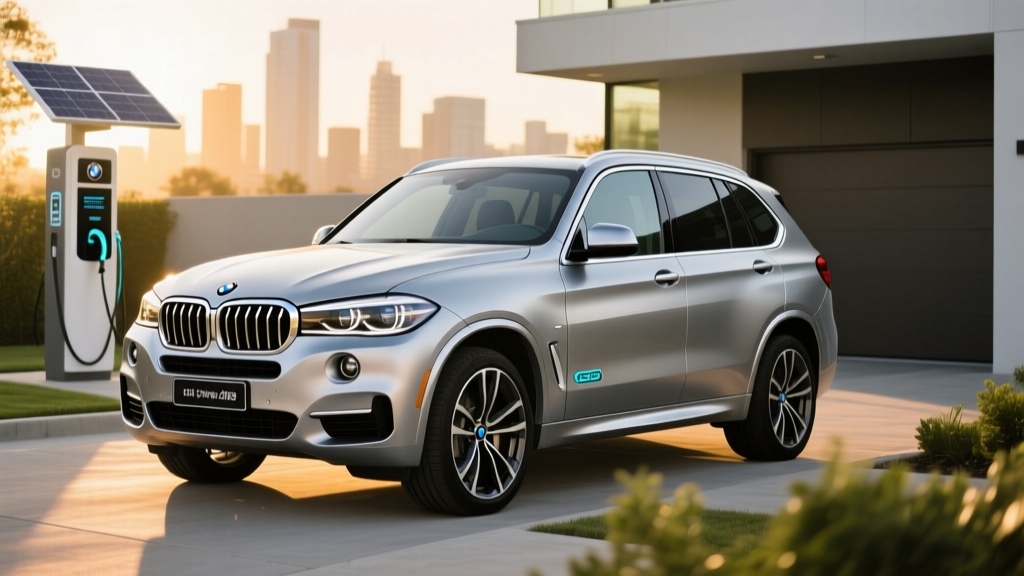
If you're researching a 2016 BMW hybrid SUV, you're almost certainly looking at the BMW X5 xDrive40e — BMW's first plug-in hybrid (PHEV) SUV sold in the United States. A decade after its debut, it remains a common sight on the used market, and its blend of turbocharged inline-four power, all-wheel drive, and a modest electric-only range still appeals to drivers who want BMW badge prestige without full-EV commitment.
But buying a 10-year-old PHEV in 2026 requires clear eyes. The high-voltage battery has aged, the electric-only range was never generous, and federal tax credits no longer apply to used PHEVs of this vintage. This guide walks through every spec that matters — EPA MPG, real-world efficiency, battery health, charging logistics, and whether this X5 still earns its place in your driveway versus a newer hybrid, PHEV, or full EV.
| Spec | Value |
|---|---|
| Powertrain | 2.0L turbo I-4 + electric motor (8-speed auto, AWD) |
| Combined Horsepower | 308 hp / 332 lb-ft torque |
| High-Voltage Battery | 9.2 kWh gross (~6.5 kWh usable), NMC lithium-ion |
| EPA Electric-Only Range | 14 miles |
| EPA MPGe (charge-sustaining + electric) | 56 MPGe combined |
| EPA MPG (gas only, charge-sustaining) | 24 city / 27 highway / 25 combined |
| Total Combined Range | ~330 miles (gas + electric) |
| Level 2 Charge Time (0–100%) | ~3 hours at 3.5 kW |
| DC Fast Charging | Not supported |
| 0–60 mph | 6.5 seconds |
| Original MSRP | ~$64,295 (base, before options) |
| Typical 2026 Used Price | $16,000–$24,000 depending on mileage/condition |
| Hybrid Battery Warranty (original) | 8 years / 80,000 miles |
HEV vs. PHEV: What the 2016 X5 xDrive40e Actually Is
Before evaluating this vehicle, it's critical to understand what type of hybrid it is — because the 2016 BMW X5 lineup included two very different hybrid approaches depending on market and trim.
| Feature | Conventional Hybrid (HEV) | Plug-In Hybrid (PHEV) — X5 xDrive40e |
|---|---|---|
| Plug-in charging? | No — charges via regen & engine | Yes — plug in to gain electric range |
| Electric-only driving? | Minimal (low-speed assist only) | Up to 14 miles EPA at up to 75 mph |
| Battery size | ~1 kWh or less | 9.2 kWh gross |
| Fuel economy advantage | Better highway regen, modest gains | Best when daily driving fits within EV range |
| Driver behavior required | None — drive like a gas car | Plug in nightly to maximize value |
The 2016 BMW X5 xDrive40e is a PHEV. It has a charge port (J1772 connector for Level 1 and Level 2 AC charging) and a 9.2 kWh battery that enables roughly 14 miles of electric-only driving. If you never plug it in, it operates as a heavy conventional hybrid and returns around 24–25 MPG combined — respectable for a 5,000-pound luxury SUV, but not exceptional. The efficiency advantage of a PHEV only materializes when you charge regularly.
Fuel Economy Breakdown: EPA Numbers vs. Real-World MPG
| Mode | City | Highway | Combined |
|---|---|---|---|
| Charge-depleting (electric + gas blended) | 56 MPGe | ||
| Charge-sustaining (gas engine only, battery depleted) | 24 MPG | 27 MPG | 25 MPG |
The EPA rates the X5 xDrive40e at 56 MPGe combined when you factor in the electric-only miles. But MPGe is a blended metric that assumes you're starting with a full battery and driving a mix of electric and gas miles. The more useful number for daily ownership is the charge-sustaining fuel economy: 24 city / 27 highway / 25 combined MPG. This is what you'll see on longer trips after the battery is depleted.
Real-world expectations: Owners who plug in nightly and commute under 14 miles report burning very little gasoline — sometimes achieving an effective 60–80 MPGe over weeks of short-trip driving. However, on highway road trips with a depleted battery, expect closer to 22–24 MPG at 70–75 mph. The 2.0-liter turbo four-cylinder is working hard to move 5,050 pounds of SUV, and real-world highway fuel economy tends to fall slightly below the EPA sticker. In cold weather (below 30°F), the engine fires up sooner for cabin heat, reducing electric-only range to approximately 10–11 miles.
According to fueleconomy.gov, the 2016 X5 xDrive40e's combined 25 MPG in gas-only mode compares favorably to the non-hybrid 2016 X5 xDrive35i (3.0L turbo I-6), which returns 20 MPG combined. That's a 25% improvement in fuel economy when the battery is depleted — meaningful savings over time, especially with premium fuel required.
Electric-Only Range, Battery, and Charging Logistics
The X5 xDrive40e's 9.2 kWh gross battery (approximately 6.5 kWh usable to protect longevity) delivers an EPA-rated 14 miles of electric-only range. By 2026 PHEV standards, that's modest — newer PHEVs like the Toyota RAV4 Prime offer 42 miles, and the BMW X5 xDrive50e (2024+) delivers roughly 38 miles. But in 2016, 14 miles was competitive for a luxury midsize SUV.
Charging specifications:
- Level 1 (120V household outlet): ~7 hours for a full charge at approximately 1.4 kW
- Level 2 (240V, J1772 connector): ~3 hours at 3.5 kW onboard charger limit
- DC fast charging: Not supported. The X5 xDrive40e cannot use CCS or CHAdeMO DC stations
The 3.5 kW onboard charger is the bottleneck. Even if you connect to a 7.2 kW or 11.5 kW Level 2 station, the X5 will only draw 3.5 kW. This is adequate for overnight home charging but means you can't take advantage of faster public Level 2 chargers during the day.
Battery Age Alert (2026): The original hybrid battery warranty on the 2016 X5 xDrive40e was 8 years / 80,000 miles, mandated by CARB-emissions-state rules and BMW's own policy. As of 2026, every 2016 model has exceeded the 8-year warranty window. If the high-voltage battery has degraded significantly or failed, replacement is an out-of-pocket expense. BMW dealerships have quoted $8,000–$12,000 for a replacement high-voltage battery pack, though independent hybrid-battery specialists may offer refurbished units for $4,000–$6,500. Before purchasing any used 2016 X5 xDrive40e, request a battery State of Health (SoH) diagnostic from a BMW dealer or qualified independent shop. A healthy pack should still retain 70–80% of original capacity; below 65%, electric range drops noticeably and replacement becomes a near-term concern.
The 12-volt auxiliary battery is separate and powers electronics, lights, and the starter sequence. Like any car, it will need replacement every 4–6 years — budget around $250–$400 for an AGM 12V battery.
Powertrain Performance: 308 Horsepower With Turbo + Electric
The xDrive40e pairs a 2.0-liter turbocharged inline-four (240 hp, 258 lb-ft) with an electric motor integrated into the 8-speed automatic transmission (111 hp, 184 lb-ft). Combined system output is 308 hp and 332 lb-ft of torque, routed through BMW's xDrive all-wheel-drive system.
The result is a 0–60 mph time of 6.5 seconds — only a few tenths behind the six-cylinder X5 xDrive35i of the same year. The electric motor fills in torque at low RPM before the turbo spools, giving the xDrive40e a responsive, linear feel around town. On the highway, the four-cylinder runs out of breath slightly sooner than BMW's inline-six, but passing power is adequate.
Three driving modes let you manage the powertrain:
- AUTO eDrive: Default mode — the car decides when to use electric, gas, or both based on speed and throttle input
- MAX eDrive: Forces electric-only driving up to 75 mph until the battery is depleted
- SAVE Battery: Reserves battery charge for later (useful when approaching a city zone where you want electric-only operation)
The regenerative braking system is moderate — it slows the car noticeably when you lift off the accelerator but does not enable true one-pedal driving. You'll still use the friction brakes for full stops.
Who Should Buy This 2016 BMW Hybrid SUV (and Who Shouldn't)
Choose the 2016 X5 xDrive40e if:
- Your daily commute is under 15 miles round-trip and you can charge at home every night
- You want BMW driving dynamics and a premium interior at a used-car price point ($16K–$24K)
- You need AWD for snow/rain but don't want a full EV due to apartment living or unreliable public charging
- You value the ability to take road trips without planning around charging stations
Look elsewhere if:
- Your commute exceeds 20 miles — you'll spend most of your driving in gas-only mode, negating the PHEV advantage
- You want a long electric range — newer PHEVs (2022+) offer 30–42 miles of EV driving
- You're not prepared for potential $5,000–$12,000 battery replacement costs on a 10-year-old high-voltage system
- You want DC fast charging or access to Tesla Superchargers — this PHEV has neither
- You prioritize cargo space — the battery pack reduces under-floor cargo volume compared to the non-hybrid X5
Hybrid vs. PHEV vs. Full EV: Which Fits Your Situation?
If you're weighing the 2016 X5 xDrive40e against other electrified options in 2026, here's how the three categories break down for a buyer in this segment:
| Factor | Conventional Hybrid (HEV) | Plug-In Hybrid (PHEV) | Full EV (BEV) |
|---|---|---|---|
| Plug-in required? | No | Yes, for maximum benefit | Yes, exclusively |
| Electric-only range | None meaningful | 10–42 miles (model dependent) | 200–400+ miles |
| Road-trip convenience | Identical to gas car | Gas engine takes over seamlessly | Requires DC fast-charge planning |
| Maintenance | Engine + hybrid system | Engine + hybrid + larger battery | Minimal — no engine, no oil changes |
| Best for | Drivers who can't charge at home | Short commutes + occasional road trips | Home chargers with predictable routes or good DC infrastructure |
| 2026 used-price example | Toyota Highlander Hybrid ~$22K | BMW X5 xDrive40e ~$18K | Tesla Model X (2016) ~$22K |
For the specific case of a used luxury midsize SUV, the X5 xDrive40e occupies a narrow middle ground. If you can charge at home and your commute is short, the PHEV saves real fuel. If you can't charge at home, a conventional hybrid like a Lexus RX 450h may be simpler. If you're ready to commit to electric-only and have home charging, a used Tesla Model X or newer BEV eliminates gasoline entirely.
Tax Credits and Incentives: What Applies in 2026?
The 2016 BMW X5 xDrive40e originally qualified for a $4,668 federal tax credit under the pre-2023 IRS §30D rules, based on its battery capacity. That credit was available only to the original purchaser when the vehicle was new.
For 2026 used-car buyers: Under current IRS used clean vehicle credit rules, you may be eligible for a credit of up to $4,000 or 30% of the sale price (whichever is lower) on a qualifying used PHEV or EV. However, several conditions apply:
- Vehicle price cap: The used vehicle must be sold for $25,000 or less
- Buyer income cap: Adjusted gross income must not exceed $75,000 (single), $112,500 (head of household), or $150,000 (joint)
- Vehicle age: Must be at least 2 model years old (the 2016 qualifies)
- Dealer requirement: Must be purchased from a licensed dealer (private-party sales do not qualify)
- Battery capacity: Must have at least 7 kWh (the X5's 9.2 kWh qualifies)
- One-time use: You can only claim the used-vehicle credit once every 3 years
Given that a well-maintained 2016 X5 xDrive40e typically sells for $16,000–$24,000 from a dealer, it may fall under the $25,000 cap — making eligible buyers potentially able to claim up to $4,000. However, confirm eligibility with a tax professional and verify the vehicle's battery hasn't been replaced with a non-qualifying unit. State incentives for used PHEVs vary widely — check your state's energy office or AFDC state law database for local programs.
Reliability, Maintenance Costs, and Long-Term Ownership
The 2016 X5 xDrive40e carries BMW's typical maintenance premium. Routine items — synthetic oil changes, brake fluid, cabin filters — cost 30–50% more than a comparable Toyota or Honda hybrid. The turbocharged four-cylinder is generally reliable, but the cooling system, turbo wastegate, and high-pressure fuel pump are known wear items past 80,000 miles.
The high-voltage battery is the single biggest financial risk. NMC lithium-ion batteries degrade with time, heat, and charge cycles. After 10 years, expect 15–30% capacity loss depending on climate and charging habits. A vehicle that originally delivered 14 electric miles may now deliver 10–12. This degradation is gradual and doesn't make the car undrivable — it simply reduces the electric-only benefit.
BMW's hybrid system uses an electric motor integrated into the ZF 8-speed transmission, which has proven robust. The electric motor itself rarely fails. The main concern is the high-voltage battery pack, which is mounted under the cargo floor and is not a simple swap.
Pros
- 308 hp combined — genuinely quick for a hybrid SUV of its era
- Premium interior, comfortable ride, strong highway refinement
- AWD standard — capable in snow and rain
- Electric-only mode is silent and smooth for short commutes
- Used pricing has dropped significantly from $64K MSRP
- May qualify for up to $4,000 used clean vehicle tax credit in 2026
Cons
- Only 14 miles EPA electric range — modest even for 2016
- Hybrid battery warranty expired; replacement costs $5K–$12K
- No DC fast charging — limited to 3.5 kW Level 2
- Cargo space reduced vs. non-hybrid X5 due to battery placement
- Premium fuel required — adds to operating cost
- BMW maintenance costs remain high as the vehicle ages
- Complex powertrain means more potential failure points long-term
Frequently Asked Questions
How many MPG does the 2016 BMW X5 xDrive40e hybrid get?
The EPA rates it at 56 MPGe combined when blending electric and gas driving. In gas-only (charge-sustaining) mode after the battery is depleted, it returns 24 city / 27 highway / 25 combined MPG. Real-world highway driving at 70+ mph typically yields 22–24 MPG.
How far can the 2016 X5 xDrive40e go on electric only?
The EPA rates it at 14 miles of electric-only range. In real-world conditions, expect 11–14 miles in mild weather and 9–11 miles in cold weather (below 30°F) when the engine starts earlier for cabin heat. After 10 years of battery degradation, some examples may deliver slightly less.
Is the 2016 BMW X5 hybrid reliable, and what does battery replacement cost?
The powertrain is generally reliable, but as a 10-year-old German luxury PHEV, maintenance costs are higher than mainstream brands. The high-voltage battery replacement costs approximately $8,000–$12,000 at a BMW dealer, or $4,000–$6,500 through an independent hybrid specialist using refurbished cells. Always get a battery State of Health diagnostic before purchasing.
Does the 2016 BMW X5 xDrive40e qualify for any tax credit in 2026?
The original federal tax credit is no longer available. However, under current IRS §30D used clean vehicle rules, eligible buyers purchasing from a dealer for $25,000 or less may qualify for up to $4,000 (30% of sale price, capped at $4,000). Income limits apply: $75K single / $150K joint. Consult a tax professional to confirm eligibility.
Should I buy a 2016 BMW X5 PHEV or a newer hybrid SUV?
If budget is your primary constraint and you can charge at home, the used X5 xDrive40e offers luxury and performance at a steep discount. If you prioritize reliability, longer electric range, and warranty coverage, a newer PHEV like the 2024+ Toyota RAV4 Prime (42 miles EV) or BMW X5 xDrive50e (38 miles EV) will cost more upfront but deliver better daily electric usability and lower maintenance risk.
Can the 2016 X5 xDrive40e charge at Tesla Superchargers or DC fast stations?
No. The X5 xDrive40e only supports AC charging via a J1772 connector at up to 3.5 kW (Level 2). It cannot use DC fast chargers (CCS, CHAdeMO, or NACS/Tesla). A full charge takes approximately 3 hours on a 240V Level 2 outlet or 7 hours on a standard 120V household outlet.