Quick Verdict: A Futuristic PHEV Sports Car, Now a Used-Car Bargain
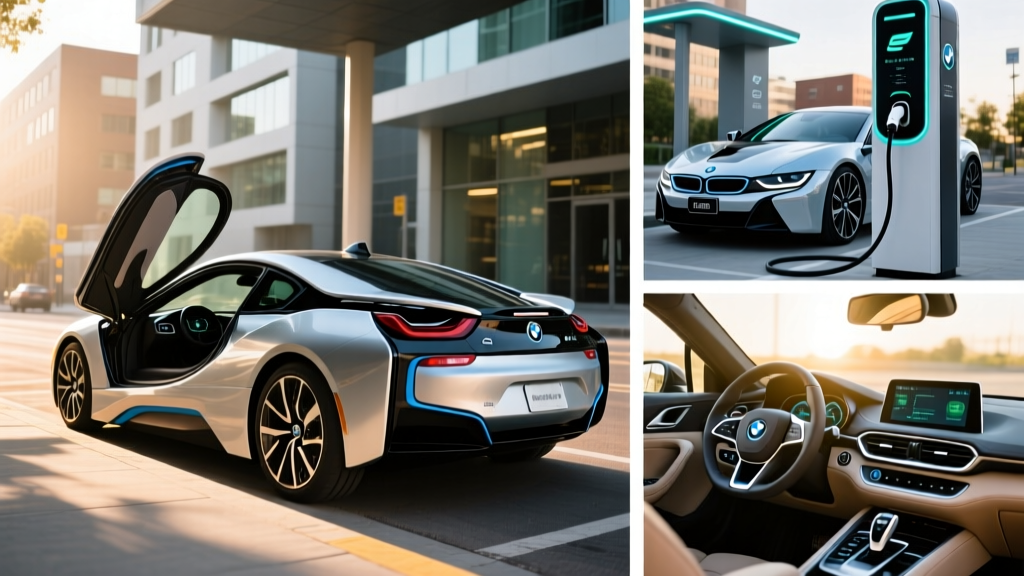
The 2016 BMW i8 is a plug-in hybrid (PHEV) sports car that pairs a turbocharged three-cylinder engine with an electric motor for a combined 357 horsepower. A decade after its launch, it remains one of the most visually striking hybrid vehicles ever built — and on the used market, it has depreciated into an intriguing proposition for enthusiasts who want exotic-car looks with hybrid efficiency.
But the i8's numbers tell a complicated story. Its EPA-rated electric-only range is just 15 miles. Combined fuel economy in hybrid mode sits at 28 MPG. And while the 7.1 kWh battery pack was advanced for 2014-2016, it is modest by today's PHEV standards. This guide covers everything a 2026 used-car buyer needs to know before purchasing a 2016 BMW i8 hybrid — from real-world MPG to battery replacement costs.
HEV vs. PHEV: Where the BMW i8 Fits
The BMW i8 is a plug-in hybrid electric vehicle (PHEV), not a conventional hybrid (HEV). Understanding this distinction is critical before you buy:
| Feature | Conventional Hybrid (HEV) | Plug-in Hybrid (PHEV) — BMW i8 |
|---|---|---|
| Plug-in charging | No — charges via engine and regen | Yes — Level 1/Level 2 AC charging |
| Electric-only driving | Minimal (under 1 mile at low speed) | 15 miles EPA (up to ~18 real-world at low speed) |
| Battery size | 1-2 kWh | 7.1 kWh (2016 i8) |
| Gas engine | Primary power, electric assist | Engine + motor work independently or together |
| Fuel economy | Consistent MPG in all conditions | MPGe when charged; MPG once battery depletes |
The i8 can operate as a pure electric vehicle for short commutes, a conventional hybrid once the battery depletes, or in a combined mode where both powertrains deliver maximum performance. You do not need to plug it in to drive — the gasoline engine will recharge the battery and propel the car independently. But to extract the efficiency and electric-only driving the car was designed for, regular plug-in charging is strongly recommended.
Fuel Economy: EPA Ratings vs. Real-World MPG
The 2016 BMW i8 carries two efficiency ratings depending on whether you're driving on electricity, gasoline, or both:
| Metric | EPA Rating | Real-World Expectation |
|---|---|---|
| Combined MPGe (electric + gas) | 76 MPGe | 65-80 MPGe depending on charging habits |
| City MPG (hybrid mode, battery depleted) | 28 MPG | 26-32 MPG (regen helps in stop-and-go) |
| Highway MPG (hybrid mode, battery depleted) | 29 MPG | 25-28 MPG at sustained 70+ mph |
| Combined MPG (hybrid mode, battery depleted) | 28 MPG | 26-30 MPG mixed driving |
| Electric-only range | 15 miles | 12-18 miles (varies with speed, temperature) |
| Total combined range (electric + gas) | 330 miles | 290-340 miles depending on conditions |
Source: fueleconomy.gov — 2016 BMW i8
Real-world context: The i8's efficiency heavily depends on your charging discipline. If you plug in nightly and your commute is under 15 miles, you may go weeks without burning fuel. On long highway road trips with no charging, expect the depleted-battery MPG to settle around 26-28 — respectable for a 357-hp sports car, but not Prius territory. Cold weather reduces electric-only range by roughly 20-30%, dropping it to 10-12 miles in freezing temperatures.
Powertrain, Battery, and Charging Specs
| Specification | 2016 BMW i8 |
|---|---|
| Powertrain type | Plug-in hybrid (PHEV) |
| Gasoline engine | 1.5L turbocharged 3-cylinder, 228 hp / 236 lb-ft |
| Electric motor | Front-axle eDrive, 129 hp / 184 lb-ft |
| Combined system output | 357 hp / 420 lb-ft |
| 0-60 mph | 4.2 seconds |
| Battery capacity (total / usable) | 7.1 kWh total / ~5.0 kWh usable |
| Battery chemistry | Lithium-ion (NMC) |
| Level 1 charging (120V, 1.4 kW) | ~7 hours (empty to full) |
| Level 2 charging (240V, 3.7 kW) | ~2.5 hours (empty to full) |
| DC fast charging | Not supported |
| Transmission | 6-speed automatic (rear) / 2-speed auto (front eDrive) |
| Drivetrain | All-wheel drive (engine drives rear, motor drives front) |
| Curb weight | 3,455 lbs |
Key charging note: The 2016 i8 does not support DC fast charging. Maximum AC charge rate is 3.7 kW on Level 2, which is slow by 2026 standards. Most owners charge overnight at home on Level 1 (standard 120V outlet), which is adequate given the small 7.1 kWh battery. A Level 2 home charger cuts that time to roughly 2.5 hours — useful if you want to top up between errands.
The battery's usable capacity is approximately 5.0 kWh out of 7.1 kWh total. BMW engineered a substantial buffer (roughly 30%) to protect long-term battery health by preventing deep discharge and overcharge at the cell level. This conservative approach is one reason i8 batteries have held up well over time.
Battery Health, Warranty, and Replacement Cost
Original BMW i8 Battery Warranty: 8 years / 80,000 miles (whichever comes first), covering defects and capacity loss below approximately 70% of original capacity.
2026 status: The 8-year warranty on a 2016 model expired in 2024. Most 2016 i8s are now out of factory battery warranty unless an extended CPO warranty was purchased.
Real-world battery degradation: The i8's conservative battery management system has proven effective. Owner reports and service data suggest most 2016 i8s have experienced 10-15% capacity loss after 8-10 years, retaining roughly 12-13 miles of electric range from the original 15. This is better than many early PHEVs, largely because BMW's large buffer prevents the deep cycling that accelerates degradation.
Battery replacement cost: If the high-voltage battery fails outside warranty, expect a replacement to cost between $12,000 and $18,000 including parts and labor at a BMW dealership. Independent EV specialists may offer refurbished modules for $8,000-$12,000. Fortunately, complete battery failure is rare — individual module replacement (the i8 uses multiple modules rather than a single monolithic pack) can sometimes be performed for $2,000-$4,000 if only one section has degraded.
Pre-purchase tip: Before buying a used 2016 i8, request a battery health report from a BMW dealer or use an OBD2 scanner with BMW-specific software (such as BimmerCode or ISTA) to check the State of Health (SoH) percentage. A healthy 2016 i8 battery should show 85%+ SoH. Anything below 80% warrants negotiation on price or a plan for eventual module replacement.
Used Pricing and Tax Credit Eligibility
The 2016 BMW i8 originally carried an MSRP starting around $137,450 (Coupe) and up to $147,000+ with options. As of early 2026, used-market pricing has settled significantly:
| Condition / Mileage | Typical Used Price Range (2026) |
|---|---|
| Excellent, under 30,000 miles | $65,000 - $80,000 |
| Good, 30,000-60,000 miles | $50,000 - $65,000 |
| Fair, 60,000+ miles | $40,000 - $50,000 |
Tax credit eligibility: The 2016 BMW i8 originally qualified for the full $7,500 federal tax credit under pre-2023 rules. Under current IRS §30D rules (effective 2023 onward), the used EV/PHEV credit (§25E) offers up to $4,000 or 30% of the sale price (whichever is lower) for qualified used plug-in hybrids purchased from a dealer. To qualify:
- Sale price must be $25,000 or less (most 2016 i8s exceed this threshold and will not qualify)
- Buyer income caps: $75,000 single / $112,500 head of household / $150,000 joint
- Vehicle must be at least 2 model years old (2016 qualifies)
- Must be purchased from a licensed dealer
- Battery must have at least 4 kWh capacity (i8's 7.1 kWh qualifies)
Source: IRS §25E Used Clean Vehicle Credit
Bottom line: Because the $25,000 sale-price cap effectively disqualifies the i8 from the used-vehicle credit, most buyers should expect to pay full used-market price without federal incentive assistance. Check with a tax professional for your specific situation.
Reliability and Ownership Costs
The 2016 i8 occupies an unusual reliability position. The powertrain — particularly the B38 1.5L three-cylinder engine and the eDrive system — has proven mechanically robust. BMW's carbon-fiber-reinforced plastic (CFRP) passenger cell is corrosion-proof and structurally excellent. However, ownership costs reflect the car's exotic construction:
- Carbon fiber body panels: Minor collision damage that would cost $1,500 on a steel-bodied car can run $8,000-$15,000 on the i8 due to specialized repair requirements.
- Insurance: Expect premiums 30-50% higher than a comparable BMW 4 Series, due to carbon fiber repair costs and exotic-car classification.
- Maintenance: BMW recommends annual service. The gasoline engine requires standard oil changes and spark plug replacement. The electric motor and high-voltage system are essentially maintenance-free.
- Tires: The i8 uses specific 20-inch tires (215/45 front, 245/40 rear) that cost $300-$450 per corner and wear faster than standard touring tires due to the car's weight distribution and performance orientation.
- Butterfly doors: The hydraulic struts supporting the dihedral doors are a known wear item, with replacement running $800-$1,200 per pair.
Overall, the i8 has proven more reliable than many expected for a low-volume exotic, but maintenance and repair costs remain firmly in premium-BMW territory.
Who Should Buy the 2016 BMW i8 Hybrid?
Pros
- Exotic supercar styling at a fraction of McLaren/Porsche pricing
- 357 hp combined with all-wheel drive — 4.2-second 0-60
- Carbon fiber construction keeps weight to 3,455 lbs
- 15-mile electric-only range covers short commutes emission-free
- Strong community and enthusiast following supports resale value
- Conservative battery management has yielded excellent long-term SoH
Cons
- 15-mile electric range is very limited by 2026 PHEV standards
- No DC fast charging; Level 2 max is only 3.7 kW
- 2+2 seating is impractical — rear seats barely fit children
- Carbon fiber repair costs make insurance and collision damage expensive
- Infotainment and driver-assist tech are dated (2016-era iDrive)
- Out of factory battery warranty; replacement cost $12,000-$18,000
Choose the 2016 BMW i8 if:
You want a head-turning sports car with hybrid efficiency, your daily commute is short enough to exploit the 15-mile electric range, you have access to home charging, and you're prepared for exotic-car insurance and repair costs. It's a collector-grade PHEV that offers a unique ownership experience.
Consider a different PHEV or full EV if:
You need practical daily transportation with 30+ miles of electric range (look at the Toyota RAV4 Prime, BMW 330e, or Chrysler Pacifica Hybrid), you want DC fast charging for road trips, you need rear-seat space for adults, or you want to minimize long-term maintenance risk. Modern PHEVs like the 2026 BMW XM or the Toyota Prius Prime offer substantially more electric range and current warranty coverage.
Choose a full EV (BEV) if:
You have reliable home charging, your commute doesn't require gasoline backup, and you want zero tailpipe emissions with minimal maintenance. Vehicles like the BMW i4, Tesla Model 3, or Hyundai Ioniq 5 offer 250+ miles of range, DC fast charging, and no gasoline engine to maintain.
Frequently Asked Questions
How many MPG does the 2016 BMW i8 hybrid get?
The EPA rates the 2016 i8 at 28 MPG combined (28 city / 29 highway) in hybrid mode after the battery is depleted. In real-world driving, owners report 26-32 MPG depending on driving style and conditions. When regularly charged, the combined rating is 76 MPGe.
How far can the 2016 BMW i8 go on electric only?
The EPA-rated electric-only range is 15 miles. In real-world conditions, expect 12-18 miles depending on speed, temperature, and terrain. Highway speeds and cold weather reduce this figure; gentle city driving in mild weather can extend it slightly. The top speed in electric-only mode is 75 mph.
Is the 2016 BMW i8 reliable, and what does battery replacement cost?
The i8's powertrain has proven reliable, with the B38 engine and eDrive motor showing few systemic failures. The high-voltage battery has degraded gracefully thanks to BMW's conservative buffer management. Full battery replacement costs $12,000-$18,000 at a dealer, though individual module repairs can be significantly less. Most 2016 examples still retain 85%+ battery State of Health.
Does the 2016 BMW i8 qualify for any tax credit in 2026?
Under the current IRS §25E used clean vehicle credit, the i8 would need a sale price of $25,000 or less to qualify for up to $4,000. Since most 2016 i8s sell for $40,000-$80,000 on the used market, they do not meet the price cap and will not qualify. Consult a tax professional for your specific situation. See IRS guidelines.
Can the 2016 BMW i8 charge at public fast-charging stations?
No. The i8 does not support DC fast charging. It can only charge on Level 1 (120V, ~7 hours) or Level 2 (240V, ~2.5 hours at 3.7 kW max). Public Level 2 chargers (ChargePoint, EVgo Level 2 stations, etc.) will work, but plan for multi-hour sessions rather than quick top-ups.
How does the 2016 i8 compare to newer BMW PHEVs?
Modern BMW PHEVs like the 2026 BMW 330e (22-mile electric range, 75 MPGe) and the BMW XM (30+ mile electric range) offer significantly more electric-only range, faster Level 2 charging, DC fast charging capability (on some models), and current-generation infotainment and ADAS technology. The i8's advantage is its exotic carbon-fiber construction, unique styling, and collector appeal — attributes no current BMW PHEV replicates.
What should I check before buying a used 2016 BMW i8?
Request a battery State of Health (SoH) report (target: 85%+), verify service history for the gasoline engine, inspect the carbon fiber body panels for cracks or repairs (which are extremely costly), check the butterfly door hydraulic struts, and confirm the high-voltage system shows no fault codes. A pre-purchase inspection at a BMW dealer or i8-experienced specialist is strongly recommended.