Quick Verdict: The Original Full-Size Hybrid SUV
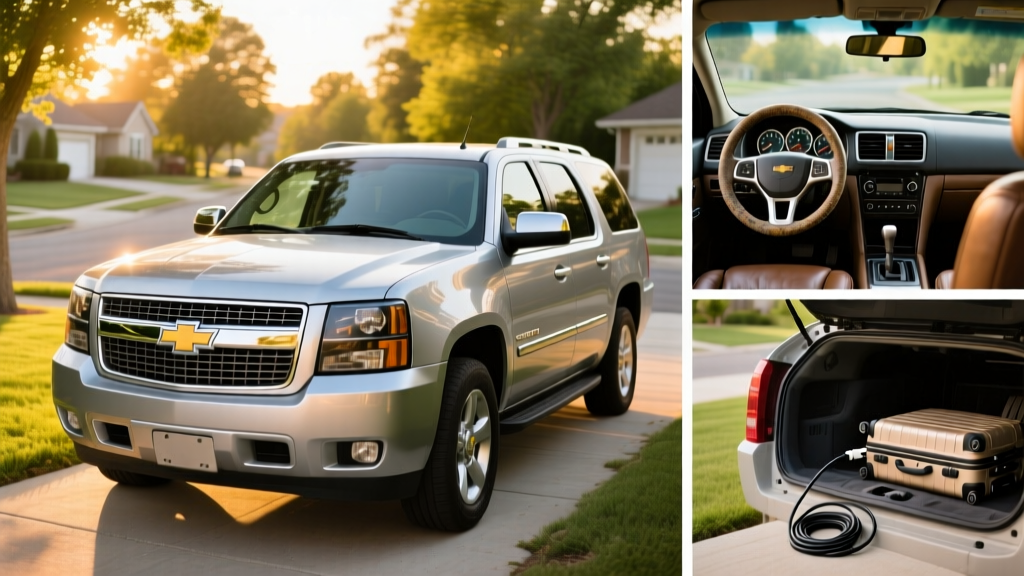
The 2012 Chevrolet Tahoe Hybrid was a bold experiment: a three-row, body-on-frame SUV that paired GM's 6.0-liter V8 with a two-mode hybrid system to achieve 21 MPG combined — a remarkable figure for a 5,800-pound vehicle when it was new. Over a decade later, it remains one of the only true hybrid full-size SUVs ever sold in the US, and it attracts used buyers who need serious towing and cargo capacity without the fuel bill of a conventional Tahoe.
But buying a 13-year-old hybrid SUV in 2026 raises legitimate questions. How does the nickel-metal hydride (NiMH) battery hold up? What does a replacement cost? And does this HEV still make financial sense versus a modern PHEV or a newer gas-only SUV? This guide answers every question a used buyer needs to ask.
2012 Tahoe Hybrid: Powertrain and Specifications
| Specification | Value |
|---|---|
| Powertrain Type | Two-Mode HEV (no plug) |
| Engine | 6.0L V8 with Active Fuel Management (cylinder deactivation) |
| Electric Motors | Two 60 kW motors inside the 2-Mode Hybrid transmission |
| Combined Horsepower | 379 hp (net system) |
| Transmission | Electrically Variable Transmission (EVT), two-mode |
| Battery Chemistry | Nickel-Metal Hydride (NiMH), 1.8 kWh (nominal) |
| Drivetrain | RWD (standard) or 4WD (optional) |
| Towing Capacity | ~5,800 lbs (4WD Hybrid) |
| 0-60 mph | ~7.8 seconds |
| Curb Weight | ~5,841 lbs (4WD) |
| Seating | Up to 8 passengers (front bench) or 7 (bucket seats) |
| Original MSRP | ~$54,990 (Hybrid trim, 2012) |
| Used Price Range (2026) | $6,000 – $13,000 depending on mileage/condition |
The heart of this system is GM's Two-Mode Hybrid transmission, co-developed with BMW and Chrysler (then DaimlerChrysler). Unlike Toyota's single-mode power-split system, the Two-Mode can operate in two distinct electrically-variable ranges: one optimized for low-speed city driving and one for highway cruising. This is why the Tahoe Hybrid manages surprisingly competitive highway fuel economy for a vehicle of its era and size.
Fuel Economy: EPA MPG and Real-World Results
| Configuration | City MPG | Highway MPG | Combined MPG |
|---|---|---|---|
| 2WD Hybrid | 21 | 22 | 21 |
| 4WD Hybrid | 20 | 22 | 21 |
| 2WD Gas (5.3L V8, for comparison) | 15 | 21 | 17 |
Source: EPA fueleconomy.gov
Real-World MPG vs EPA Sticker
The 2012 Tahoe Hybrid's EPA rating of 21 MPG combined was genuinely impressive for a full-size SUV in 2012. In real-world ownership, results vary based on driving patterns:
- City-dominant driving: 19–22 MPG. The two-mode system excels here, with frequent regenerative braking and engine-off stops. Owners who do heavy stop-and-go commuting often match or slightly beat the EPA city figure.
- Highway-dominant driving: 20–23 MPG. The second hybrid mode and cylinder deactivation (Active Fuel Management drops the V8 to four cylinders under light load) keep highway consumption reasonable. Unloaded, flat-terrain highway driving can yield 22–23 MPG.
- Towing/hauling: 13–16 MPG. The hybrid system provides minimal benefit under heavy load. Expect a significant drop when towing near the 5,800-lb limit.
- Cold weather: 17–19 MPG combined. The NiMH battery is less efficient in cold temperatures, and the engine runs more frequently to provide cabin heat.
Compared to the conventional 5.3L V8 Tahoe (17 MPG combined), the Hybrid delivers roughly a 23% fuel economy improvement — translating to about 60–80 fewer gallons per year for a driver covering 15,000 miles annually, or roughly $180–$250 in annual fuel savings at $3.20/gallon.
Hybrid Battery: Lifespan, Reliability, and Replacement Cost
The NiMH battery in the Tahoe Hybrid is a mature technology — the same chemistry Toyota used in millions of Prius hybrids. NiMH is less energy-dense than modern lithium-ion but has a well-documented longevity profile. Here's what used buyers need to know:
Expected Battery Lifespan
NiMH hybrid batteries in GM's Two-Mode system typically last 120,000–180,000 miles before significant capacity loss triggers a check-engine light or noticeable fuel economy degradation. Many examples exceed 200,000 miles with the original pack, though performance gradually declines. Unlike a BEV battery, the small 1.8 kWh NiMH pack doesn't face the same deep-cycle wear — it operates in a narrow state-of-charge window (roughly 40–60%), which dramatically extends cycle life.
Battery Replacement Cost
If the hybrid battery fails, replacement options include:
- OEM dealer replacement: $3,000–$4,500 (part + labor). GM original packs are increasingly scarce.
- Aftermarket/remanufactured pack: $1,800–$2,800. Companies like Green Bean Battery and Dorman offer reconditioned NiMH packs with 1–3 year warranties.
- Individual cell/module replacement: $400–$900. A hybrid-specialist shop can identify and replace only the failed modules within the pack. This is the most cost-effective option but requires a technician experienced with the Two-Mode system.
For context, a conventional Tahoe of this era may need a $2,500–$4,000 transmission replacement at similar mileage. The hybrid battery cost is comparable to a major repair on any 13-year-old SUV.
Other Reliability Considerations
The Two-Mode Hybrid transmission itself has proven robust, but several ancillary components deserve inspection on a used example:
- Electric power steering: The Tahoe Hybrid uses an electrically-assisted system that can develop faults (fault code C0545). Replacement runs $800–$1,200.
- Active Fuel Management (AFM) lifter failure: The 6.0L V8's cylinder-deactivation system has a known failure mode where lifters collapse, causing misfires and expensive engine repairs. Listen for ticking on cold starts. An AFM disabler module ($250–$350) is a common preventive modification.
- Hybrid inverter cooling: The power electronics have a dedicated cooling loop. Check coolant levels and inspect for leaks.
- Brake actuator: Regenerative braking means the friction brakes last longer (80,000+ miles is common), but the electrohydraulic brake booster can fail ($600–$1,000 replacement).
HEV vs PHEV vs Full EV: Which Fits Your Needs in 2026?
The 2012 Tahoe Hybrid occupies a specific niche. Here's how it compares to the alternatives a buyer might consider:
| Factor | 2012 Tahoe Hybrid (HEV) | Modern PHEV SUV (e.g., Chrysler Pacifica Hybrid) | Full BEV SUV (e.g., Rivian R1S, Tesla Model X) |
|---|---|---|---|
| Plug-in Required? | No | Yes (Level 2 recommended) | Yes (Level 2 essential) |
| Electric-Only Range | 0 miles (motor-assist only) | 32–42 miles | 250–400 miles |
| Combined MPG / MPGe | 21 MPG | 30 MPG + 82 MPGe | 100+ MPGe |
| Towing Capacity | ~5,800 lbs | ~3,600 lbs | 7,700 lbs (R1S) |
| 3rd Row Seating | Yes (up to 8) | Yes (up to 7) | Yes (R1S: 7; Model X: 7) |
| Used Price (2026) | $6,000–$13,000 | $22,000–$35,000 | $40,000–$75,000 |
| Home Charging Needed? | No | Recommended | Essential |
| Federal Tax Credit (Used) | Not eligible | Up to $4,000 (used §25E) | Up to $4,000 (used §25E) |
- Your budget is under $15,000
- You need 5,800+ lbs towing and true 8-passenger seating
- You cannot install a home charger (apartment, street parking)
- You drive 15,000+ miles/year and want lower fuel costs without plug-in infrastructure
- You have home Level 2 charging access
- Your daily commute is under 40 miles (PHEV covers it on electricity)
- You want significantly lower per-mile fuel costs and reduced maintenance
- You qualify for the §25E used EV tax credit (up to $4,000 for qualifying pre-owned PHEVs and BEVs)
Tax Credits: Does the 2012 Tahoe Hybrid Qualify?
No. The 2012 Chevrolet Tahoe Hybrid does not qualify for any current federal tax credit. Here's why:
- §30D New Clean Vehicle Credit: Only applies to new vehicles. The Tahoe Hybrid was discontinued after 2013.
- §25E Used Clean Vehicle Credit: This credit (up to $4,000 or 30% of sale price) applies only to plug-in electric vehicles — BEVs and PHEVs with at least 7 kWh of battery capacity. The Tahoe Hybrid's 1.8 kWh NiMH pack and conventional HEV architecture do not meet the threshold. Source: IRS §25E guidelines.
- State incentives: Most state hybrid incentives expired years ago or apply only to PHEVs/BEVs. Check your state's current energy office for any remaining programs.
The financial case for the Tahoe Hybrid rests entirely on its lower fuel consumption relative to a gas-only Tahoe — not on government incentives.
Total Cost of Ownership: Is It Worth It in 2026?
Let's compare the 5-year cost of owning a 2012 Tahoe Hybrid versus a 2012 Tahoe with the 5.3L V8, assuming 15,000 miles/year and $3.20/gallon fuel:
| Cost Factor | Tahoe Hybrid (21 MPG) | Tahoe Gas (17 MPG) |
|---|---|---|
| Purchase Price (est.) | $9,500 | $8,000 |
| Fuel (5 years, 75k miles) | $11,429 | $14,118 |
| Fuel Savings vs Gas | +$2,689 saved | — |
| Insurance (est. 5 yr) | $7,500 | $7,200 |
| Maintenance (est. 5 yr) | $3,500 | $3,200 |
| Potential Hybrid Battery Replacement | $2,000 (remanufactured, if needed) | $0 |
| Estimated 5-Year Total | ~$33,929 | ~$32,518 |
The Hybrid's fuel savings partially offset its higher purchase price and the risk of a battery replacement. If you find a well-maintained example with a recently replaced battery (or one under 120,000 miles with strong hybrid system diagnostics), the math tilts further in the Hybrid's favor. If the battery fails in year one and requires a $3,000+ OEM replacement, the gas Tahoe wins on pure economics.
For buyers doing 20,000+ miles per year — especially city-heavy routes — the annual fuel savings increase to $350–$450, making the Hybrid a clearer financial winner.
What to Inspect Before Buying a Used 2012 Tahoe Hybrid
If you're seriously considering one, insist on these checks:
- Hybrid system diagnostic scan: A GM dealer or hybrid-specialist shop can pull the battery state-of-health (SoH) data and check for stored hybrid-related fault codes. Look for battery voltage balance across all modules.
- AFM system check: Confirm cylinder deactivation is functioning (the Driver Information Center can display "Eco" mode when running on 4 cylinders). Listen for valvetrain ticking that may indicate AFM lifter wear.
- Transmission operation: The Two-Mode EVT should shift seamlessly between modes. Any clunking, hesitation, or "Service Hybrid System" messages are red flags.
- Cooling system integrity: The Hybrid has three separate cooling loops (engine, hybrid inverter, battery). Check all coolant levels and inspect for leaks at each reservoir.
- Vehicle history report: Confirm no prior hybrid battery or inverter replacements. A Carfax or AutoCheck report showing dealer service history is a strong positive.
Frequently Asked Questions
How many MPG does the 2012 Chevrolet Tahoe Hybrid get?
The EPA rates the 2012 Tahoe Hybrid at 20 MPG city / 22 MPG highway / 21 MPG combined for 4WD models, and 21/22/21 for 2WD. Real-world results typically range from 18–23 MPG depending on driving style, load, and climate. Highway towing drops this to 13–16 MPG.
Does the 2012 Tahoe Hybrid need to be plugged in?
No. It is a conventional hybrid (HEV), not a plug-in hybrid. The 1.8 kWh NiMH battery charges exclusively through regenerative braking and the gasoline engine. You fuel it like a normal vehicle — there is no charging port.
How far can the 2012 Tahoe Hybrid drive on electric power alone?
The Tahoe Hybrid cannot drive on electric power alone at meaningful speeds. The electric motors assist the V8 and enable engine-off stops at idle, but sustained electric-only propulsion is limited to very low speeds (under ~25 mph, brief distances). It is not a PHEV and offers no usable electric-only range.
Is the 2012 Tahoe Hybrid reliable, and what does a battery replacement cost?
The Two-Mode Hybrid powertrain has proven reasonably reliable, with NiMH batteries commonly lasting 120,000–200,000 miles. The main risk areas are the Active Fuel Management lifters on the 6.0L V8 and the electric power steering system. A remanufactured hybrid battery costs $1,800–$2,800 installed; individual module replacement can be done for $400–$900 at a specialist shop.
Does the 2012 Tahoe Hybrid qualify for any federal tax credit?
No. Federal tax credits under §30D (new vehicles) and §25E (used vehicles) require plug-in capability and minimum battery capacity thresholds. The Tahoe Hybrid, as a conventional HEV with a 1.8 kWh battery, does not qualify for any current federal incentive.
How does the 2012 Tahoe Hybrid compare to a modern hybrid SUV?
Modern hybrids like the Toyota Grand Highlander Hybrid (35 MPG combined) or the Ford Explorer Hybrid (23 MPG combined) significantly outperform the Tahoe Hybrid on fuel economy while offering updated safety technology and infotainment. However, none match the Tahoe Hybrid's combination of sub-$15,000 used pricing, body-on-frame durability, and 5,800-lb towing. If budget is the primary constraint, the 2012 Tahoe Hybrid remains a unique option.
Is the 2012 Tahoe Hybrid the same as the GMC Yukon Hybrid or Cadillac Escalade Hybrid?
Yes, mechanically. The Chevrolet Tahoe Hybrid, GMC Yukon Hybrid, and Cadillac Escalade Hybrid all share the same GM Two-Mode Hybrid powertrain, 6.0L V8, and NiMH battery pack. The Escalade Hybrid adds luxury features and a higher original MSRP. All three were discontinued after the 2013 model year, and parts interchangeability is excellent across the three nameplates.