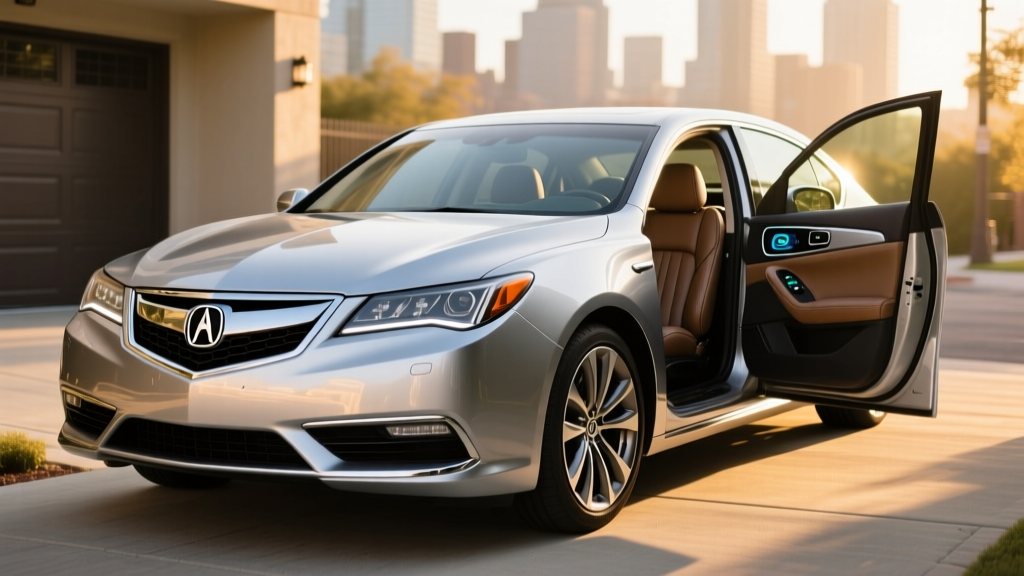
The 2016 Acura RLX Sport Hybrid occupies a rare spot in the luxury sedan market: a full-size, all-wheel-drive flagship packing 377 horsepower that returns nearly 30 MPG combined. A decade after its debut, it remains one of the most technically ambitious hybrid sedans Honda ever built — and in the 2026 used-car market, it's a compelling alternative to both aging German rivals and newer plug-in hybrids that sacrifice complexity for efficiency.
This guide breaks down everything a prospective used buyer needs to know: real-world fuel economy, the RLX Sport Hybrid's unique three-motor powertrain, battery longevity and replacement costs, and whether this conventional hybrid (HEV) still makes sense versus a modern PHEV or full EV.
HEV vs PHEV: What the 2016 RLX Hybrid Actually Is
The 2016 Acura RLX Sport Hybrid is a conventional hybrid (HEV), not a plug-in hybrid (PHEV). This is a critical distinction for used-car shoppers:
- HEV (Conventional Hybrid): Charges its battery through regenerative braking and the gasoline engine. No plug, no electric-only driving range. The RLX Sport Hybrid falls here.
- PHEV (Plug-in Hybrid): Has a larger battery you charge via a plug, offering 20–50 miles of electric-only driving before the gas engine kicks in. Examples include the Toyota RAV4 Prime or Chrysler Pacifica Hybrid.
- BEV (Battery Electric Vehicle): Runs entirely on electricity with no gasoline engine — Tesla Model S, Lucid Air, etc.
The RLX Sport Hybrid's 1.5 kWh lithium-ion battery is far too small to provide meaningful electric-only range. Its electric motors assist the V6 during acceleration and enable brief low-speed electric creep, but you will never plug this car in.
Fuel Economy: EPA Ratings and Real-World MPG
| Metric | RLX Sport Hybrid (AWD) | RLX V6 FWD (Gas Only) |
|---|---|---|
| City MPG | 28 | 20 |
| Highway MPG | 31 | 31 |
| Combined MPG | 29 | 24 |
| Fuel Tank (gal) | 15.3 | 18.5 |
| Est. Total Range (mi) | ~444 | ~444 |
Source: EPA / fueleconomy.gov
Real-World MPG: What Owners Actually Report
The RLX Sport Hybrid's EPA combined rating of 29 MPG is respectable for a 4,300-pound AWD luxury sedan, but real-world results vary significantly by driving style:
- City / suburban driving: 28–33 MPG. The three-motor system shines here, recapturing energy during frequent stops and providing electric assist from low speeds. Many owners report beating the EPA city estimate in stop-and-go traffic.
- Highway cruising (70+ mph): 27–30 MPG. At sustained highway speeds, the electric motors contribute less and the 3.5L V6 does most of the work. The hybrid advantage narrows considerably.
- Cold weather (below 35°F): Expect a 5–10% drop, landing around 25–27 MPG combined. The engine runs more frequently to maintain cabin heat and battery temperature.
- Aggressive / sport driving: 22–25 MPG. The SH-AWD system and 377 HP tempt spirited driving, which erodes the efficiency advantage quickly.
For a used luxury sedan of this size and power, 29 MPG combined remains genuinely impressive in 2026 — particularly compared to the non-hybrid RLX V6's 24 MPG combined or competitors like the BMW 550i xDrive (19 MPG combined from that era).
Powertrain: 377 HP and Honda's Sport Hybrid SH-AWD
| Specification | Detail |
|---|---|
| Engine | 3.5L SOHC i-VTEC V6 |
| Engine Output | 310 HP @ 6,500 rpm / 272 lb-ft @ 4,500 rpm |
| Electric Motors | 3 total (1 front, 2 rear) |
| Front Motor Output | 47 HP / 109 lb-ft |
| Rear Motor Output (each) | 36 HP / 54 lb-ft per wheel |
| Combined System Output | 377 HP |
| Transmission | 7-speed dual-clutch automatic (DCT) |
| Drivetrain | Sport Hybrid SH-AWD (torque-vectoring rear axle) |
| Hybrid Battery | 1.5 kWh lithium-ion (72 cells) |
| 0–60 mph | ~5.7 seconds |
| Curb Weight | ~4,343 lbs |
The RLX Sport Hybrid's powertrain is one of the most sophisticated Honda has ever produced. Unlike Toyota's series-parallel hybrid system, Acura uses a 7-speed dual-clutch transmission paired with a front-mounted motor-generator and two independent rear motors. Those rear motors don't just provide all-wheel-drive traction — they actively torque-vector, sending up to 100% of rear-axle power to the outside rear wheel during cornering. The result is handling agility that belies the car's 4,300-pound curb weight.
The 1.5 kWh battery pack is mounted behind the rear seats. It's small by modern PHEV standards (a 2026 RAV4 Prime carries 18.1 kWh), but it's sufficient for the RLX's regenerative-braking and electric-assist functions. This battery is not designed for plug-in charging or sustained electric-only driving.
Battery Longevity, Warranty, and Replacement Cost
Hybrid Battery Warranty
When new, the 2016 RLX Sport Hybrid's lithium-ion battery was covered by:
- Standard states: 8 years / 100,000 miles
- CARB states (CA, NY, MA, and others): 10 years / 150,000 miles
For a 2016 model, original factory warranty coverage has expired in most cases by 2026 (10 years from model year). Used buyers should budget for potential battery service.
How Long Does the RLX Hybrid Battery Last?
Honda's hybrid battery packs from this generation have proven durable. Based on owner reports and Honda technician data:
- Typical lifespan: 150,000–200,000+ miles before significant capacity loss
- Failure mode: Gradual capacity degradation rather than sudden failure. You'll notice reduced MPG and less electric assist before the battery fails outright.
- Known issues: The RLX Sport Hybrid's IMA (Integrated Motor Assist) system and 72-cell lithium-ion pack have had relatively few widespread failure reports compared to earlier Honda hybrid systems. The lithium-ion chemistry used here degrades more gracefully than the older NiMH packs in the first-generation Insight and Civic Hybrid.
Battery Replacement Cost
If the hybrid battery does require replacement on a 2016 RLX Sport Hybrid:
- OEM replacement (Honda dealer): $3,000–$5,000 including parts and labor. The battery pack is a dealer-only item.
- Refurbished / aftermarket pack: $1,500–$3,000. A growing number of hybrid battery specialists offer reconditioned packs with 1–3 year warranties.
- Individual cell replacement: $800–$1,500 if only a few cells have degraded. Requires a shop experienced in cell-level hybrid battery repair.
For context, the RLX's hybrid battery is smaller and less expensive to replace than a modern PHEV or BEV pack. A 2026 Toyota RAV4 Prime battery replacement runs $6,000–$8,000; a Tesla Model 3 pack can exceed $12,000.
Pricing in 2026: Used RLX Sport Hybrid Market
The 2016 Acura RLX Sport Hybrid launched with an MSRP of approximately $65,950 (including destination). Only one trim was offered — fully loaded with navigation, Krell premium audio, LED headlights, blind-spot monitoring, and AcuraWatch safety suite.
In the 2026 used-car market, pricing varies by mileage and condition:
- 80,000–100,000 miles: $18,000–$23,000
- 50,000–80,000 miles: $23,000–$28,000
- Under 50,000 miles (rare): $28,000–$33,000
The RLX Sport Hybrid depreciated heavily in its first five years — good news for used buyers who get a $65,000 flagship sedan for the price of a new Civic. However, this steep depreciation also means resale value will remain soft if you plan to sell again.
Tax Credit Eligibility
The 2016 Acura RLX Sport Hybrid does not qualify for any federal tax credit as a used purchase in 2026:
- §30D New EV/PHEV Credit ($7,500): Not applicable — the RLX is a conventional HEV, not a PHEV or BEV. Even when new, conventional hybrids have not qualified for the federal EV credit since the early Toyota Prius era. See IRS §30D guidelines for current eligibility rules.
- §25E Used Clean Vehicle Credit (up to $4,000): Not applicable — this credit applies only to used BEVs and PHEVs with at least 16 kWh of battery capacity. The RLX's 1.5 kWh pack doesn't qualify.
- State incentives: A handful of states offer rebates for hybrid purchases, but most have shifted focus to PHEVs and BEVs. Check your state's energy office for current programs.
Reliability and Ownership Costs
The 2016 RLX Sport Hybrid's reliability record is mixed — a reflection of its mechanical complexity:
Strengths
- Engine: Honda's 3.5L V6 (J35 series) is one of the most reliable V6 engines ever produced, routinely exceeding 250,000 miles with basic maintenance.
- Hybrid system: Fewer reported failures than Honda's earlier IMA systems. The lithium-ion pack and motor-generators have proven robust.
- Build quality: The RLX was assembled in Japan (Saitama) with high fit-and-finish standards. Interior materials and electronics have held up well at 10 years.
Known Concerns
- 7-speed DCT: The dual-clutch transmission can exhibit low-speed shudder, particularly when cold. Some owners report rough 1-2 shifts. A DCT fluid change every 30,000–50,000 miles helps.
- Rear motor units: The twin rear electric motors (part of the SH-AWD system) are generally reliable, but if one fails, replacement runs $1,500–$2,500 per unit.
- AcuraWatch sensors: The forward collision warning and lane-keeping systems can throw error codes if the windshield-mounted camera or radar unit is misaligned after windshield replacement.
- Infotainment: The dual-screen setup is slow by 2026 standards and lacks Apple CarPlay/Android Auto (added for 2018 model year).
For insurance, expect annual premiums of $1,800–$2,400 depending on your state and driving record — competitive with other V6 luxury sedans but higher than a Camry Hybrid.
RLX Sport Hybrid vs. Modern Alternatives
| Vehicle | Combined MPG | HP | Drivetrain | Used Price (2026) |
|---|---|---|---|---|
| 2016 Acura RLX Sport Hybrid | 29 | 377 | AWD | $18K–$33K |
| 2016 Lexus GS 450h | 31 | 338 | RWD | $22K–$32K |
| 2017 Lexus LS 500h | 29 | 354 | AWD | $30K–$42K |
| 2020 Toyota Avalon Hybrid | 44 | 215 | FWD | $22K–$30K |
| 2022 BMW 530e (PHEV) | 28 + 21 mi EV | 288 | RWD/AWD | $35K–$45K |
The RLX Sport Hybrid's unique value proposition is the combination of high power, all-wheel drive, and decent fuel economy at a steep discount from its original MSRP. No competitor in this price range offers 377 HP with AWD and 29 MPG. The Lexus GS 450h comes close on efficiency but is RWD-only. The Toyota Avalon Hybrid is far more efficient but lacks the RLX's performance and luxury appointments.
Pros
- 377 HP with AWD and 29 MPG combined — a rare combination
- Torque-vectoring SH-AWD provides genuinely engaging handling
- Massive depreciation makes it a luxury bargain used
- Honda J35 V6 is bulletproof with proper maintenance
- Fully loaded at a single trim — no options confusion
- Spacious rear seat and 14.9 cu ft trunk
Cons
- DCT can shudder at low speeds; not as smooth as a conventional auto
- No plug-in capability or electric-only range
- Dual-screen infotainment is dated; no CarPlay/Android Auto
- Low production volume means fewer used examples and parts scarcity
- Steep depreciation continues — poor resale outlook
- No federal or state tax credit eligibility
Who Should Buy the 2016 RLX Sport Hybrid?
Decision Framework
Choose the 2016 Acura RLX Sport Hybrid if:
- You want a powerful, AWD luxury sedan with better fuel economy than a V8 German rival
- You don't have access to home or workplace charging (ruling out PHEVs and BEVs)
- You appreciate Honda engineering and want something mechanically unique
- You're comfortable with a 10-year-old luxury car's maintenance costs
- You prioritize value — getting $65K of car for under $30K
Look at a PHEV instead (BMW 530e, Toyota RAV4 Prime) if:
- You have home Level 2 charging and a short commute you want to cover on electricity
- You want the ability to drive 20–40 miles without using gasoline
- You want a newer vehicle with modern infotainment and driver-assist features
Look at a full EV (Tesla Model S, Lucid Air) if:
- You want zero gasoline use and minimal drivetrain maintenance
- You have reliable home charging access
- You want the lowest cost-per-mile for daily driving
- You're eligible for the §30D federal tax credit on a new EV purchase
Frequently Asked Questions
How many MPG does the 2016 Acura RLX Hybrid get?
The EPA rates the 2016 RLX Sport Hybrid at 28 MPG city, 31 MPG highway, and 29 MPG combined. In real-world driving, owners typically see 28–33 MPG in city conditions and 27–30 MPG on the highway. Cold weather and aggressive driving can drop combined figures to 22–25 MPG.
Can the 2016 RLX Hybrid drive on electric power alone?
Not meaningfully. The RLX Sport Hybrid is a conventional HEV with a 1.5 kWh battery. It can creep at very low speeds (parking lots, stoplights) on electric power for brief moments, but it has no usable electric-only range like a PHEV. You cannot plug it in.
Is the 2016 RLX Sport Hybrid reliable?
Overall reliability is good, with Honda's proven 3.5L V6 being the strongest component. The hybrid system and lithium-ion battery have fewer reported issues than Honda's earlier hybrid generations. The main concerns are the 7-speed DCT (low-speed shudder) and occasional AcuraWatch sensor errors. With proper maintenance, these cars routinely reach 150,000–200,000 miles.
What does it cost to replace the hybrid battery?
OEM replacement through a Honda dealer runs $3,000–$5,000. Refurbished aftermarket packs are available for $1,500–$3,000, and individual cell repairs can cost $800–$1,500. The 1.5 kWh pack is smaller and less expensive to service than modern PHEV or EV batteries.
Does the 2016 Acura RLX Hybrid qualify for any tax credit?
No. As a conventional hybrid (HEV), the RLX Sport Hybrid does not qualify for the federal §30D clean vehicle credit (which requires plug-in capability and at least 7 kWh of battery). It also doesn't qualify for the §25E used clean vehicle credit. Check your state's energy office for any remaining hybrid-specific incentives, though most have shifted to PHEVs and BEVs.
How does the RLX Sport Hybrid compare to the non-hybrid RLX?
The non-hybrid 2016 RLX uses a 3.5L V6 (310 HP) with a 6-speed automatic and front-wheel drive, rated at 20/31/24 MPG (city/highway/combined). The Sport Hybrid adds 67 HP, all-wheel drive with torque vectoring, a 7-speed DCT, and gains 5 MPG combined (29 vs 24). The hybrid also loses 0.4 cu ft of trunk space due to the battery placement. For most buyers, the hybrid is the more capable and efficient choice.
What maintenance does the RLX Sport Hybrid require?
Follow Honda's maintenance minder system. Key items include: engine oil every 7,500–10,000 miles, DCT fluid every 30,000–50,000 miles (critical for shift quality), brake fluid every 3 years, and coolant every 100,000 miles. The regenerative braking system extends pad life significantly — many owners report 80,000+ miles on original brake pads. The hybrid system requires no separate maintenance beyond standard cooling system service.
For official fuel economy data, consult fueleconomy.gov. For federal tax credit eligibility rules, see the IRS clean vehicle credits page. Safety ratings and recall information are available at NHTSA.gov.